


- Region
- Hawaii, USA
- Best season
- Spring, Summer
- Permits
- A valid camping permit is required beyond …
- Managed by
- Hawaiʻi Department of Land and Natural Resources, Division of State Parks
Plan with verified data
Nā Pali Coast State Wilderness Park trip tools
Tools for a trip here
Picked for how, when and where you're going. Free, no signup.
Photos of Nā Pali Coast State Wilderness Park
How to get there
Hiking access is through Hā‘ena State Park on Kauaʻi. Arrange required entry and parking or shuttle reservations at gohaena.com. Overnight campers can arrive by North Shore Shuttle or private drop-off, or reserve limited overnight parking at Hā‘ena after obtaining a Kalalau camping permit. Overnight parking can also be arranged in coordination with the North Shore Shuttle at Aliʻi Kai Resort in Princeville. Do not rely on commercial boat drop-offs at Kalalau or Miloli‘i camping areas; these passenger drop-offs are prohibited.
- Hā‘ena State Park trailhead
Starting point for the Kalalau Trail and hiking access to Nā Pali Coast. Facilities include drinking water, restrooms, outdoor showers, trash cans and a payphone. Advance entry reservations apply unless exempt; parking or shuttle arrangements are separate from a camping permit.
- Aliʻi Kai Resort, Princeville
An off-site overnight parking option coordinated with the North Shore Shuttle, rather than a wilderness trailhead. Contact the shuttle at (808) 826-9988 for arrangements.
Sources: dlnr.hawaii.gov · Wikipedia. Confirm road and trailhead conditions with the managing agency before you leave.
Hawaii, USA · Season: Best: May to September
- Winter Camping
- Skiing
- Sea Kayaking
- Beachcombing
- Surfing
- Hiking
- Backpacking
- Wildlife Viewing
The country
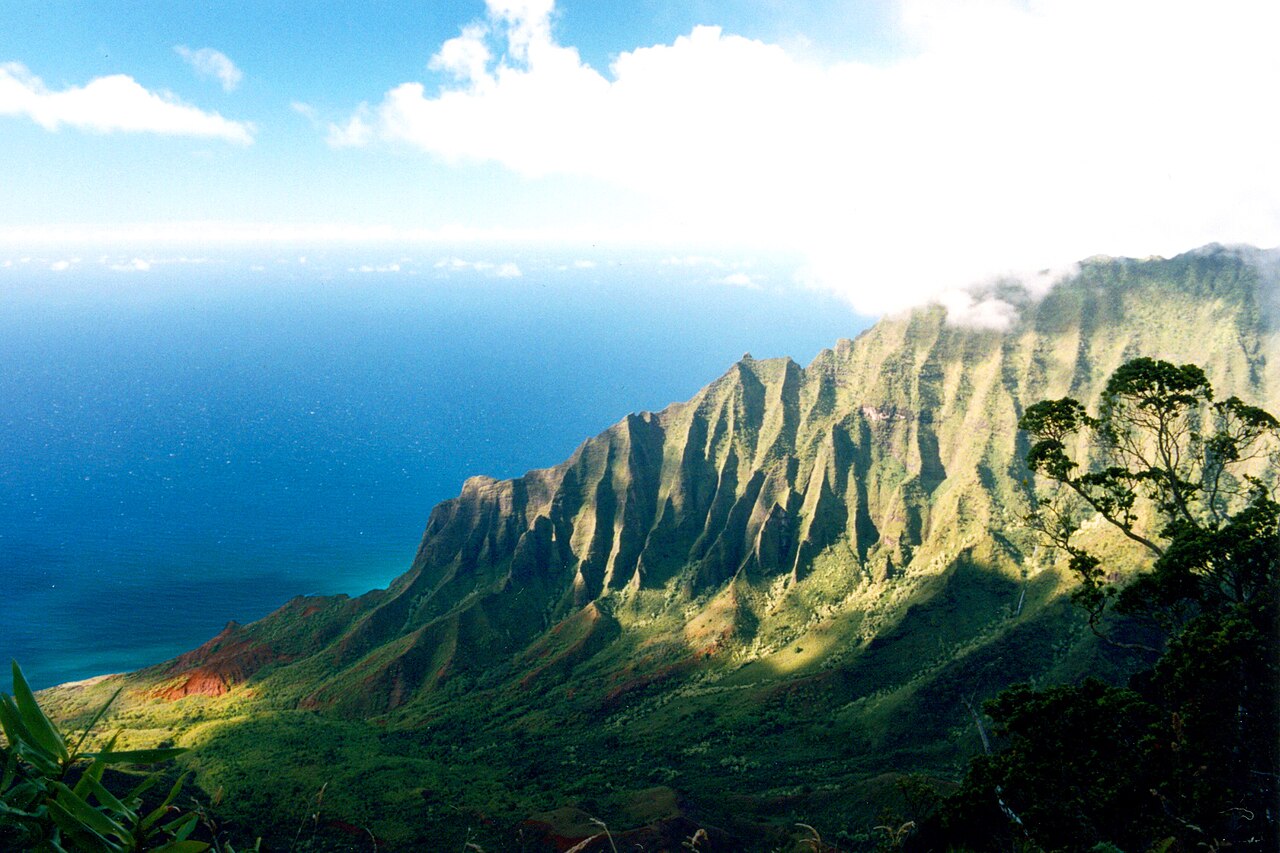
The Nā Pali Coast on the northwestern side of Kauai features dramatically fluted ridges forming steep, emerald-green valleys plunging into an aquamarine ocean. Millennia of water and wind erosion have carved sheer palis (cliffs) towering up to 4,000 feet. The environment alternates between dense tropical rainforest, cascading waterfalls, and exposed dry dirt ridges.
Why enthusiasts come
The Kalalau Trail is legendary in the hiking community, frequently cited as one of the most beautiful and dangerous coastal treks in the world. Backpackers must navigate washed-out gullies, crumbling ledges, and numerous flash-flood prone streams to reach the isolated paradise of Kalalau Beach. It provides unparalleled isolation on one of the most dramatic coastlines on Earth.
Top experiences
The heart-pounding traverse across Crawler's Ledge demands intense focus as the narrow dirt track clings to a sheer ocean cliff. Upon reaching Kalalau Beach, hikers camp at the base of monolithic cliffs and explore sea caves and hidden jungle waterfalls deeper in the valley. Watching the sunset light up the cathedral-like valley walls is a rite of passage.
Planner-relevant notes
Permits are mandatory for any travel past Hanakapiai Beach (mile 2) and sell out months in advance exactly when released. Parking and shuttle logistics to the Ke'e Beach trailhead require stringent pre-planning. High surf and heavy rains can make stream crossings deadly or entirely strand hikers.
Field notes
- Do not attempt stream crossings if water runs brown and fast; wait hours or days for the flash flood to recede.
- The humid heat causes rapid dehydration; carry ample water capacity and treat everything.
- Footing is treacherous when wet; microspikes can occasionally be useful on muddy, steep descents.
- Feral goats and incredibly aggressive rats are common at camp; hang or cache food securely.
Where on earth
Satellite imagery flying in from a world view to Nā Pali Coast State Wilderness Park, Hawaii, USA. Use the + / − buttons, or click the map to zoom with your scroll wheel; drag to pan and pinch to zoom on touch.
Coordinates
- Decimal degrees
- 22.1818, -159.6231
- Latitude (DMS)
- 22° 10′ 54.5″ N
- Longitude (DMS)
- 159° 37′ 23.2″ W
Coordinates are an access-point reference for Nā Pali Coast State Wilderness Park, not a route. Carry a paper map and confirm trailhead or put-in access with the managing agency before you go.
Topic summary
Traverse highly eroded tropical cliffs and deep jungle valleys dropping straight into the crashing Pacific ocean.
Key takeaways
- Region: Hawaii, USA
- Best season: Best: May to September
- Coordinates: 22.182, -159.623
Climate suitability
Best: May to September
Keep planning
Popular pursuits at Nā Pali Coast State Wilderness Park
- Sea Kayaking
Coastal crossings, tides, and protected camps.
- Beachcombing
Tide-line walking between camps.
- Surfing
Swell windows and access from camp.
- Hiking
Day miles on marked trail, with route notes and trail links below.
- Backpacking
Multi-day travel with everything on your back — see the packing blocks below.
- Wildlife Viewing
Best light, best season, and where animals move.
Animals around Nā Pali Coast State Wilderness Park

Cliffs, narrow valleys and a cultivated landscape
Nā Pali Coast State Wilderness Park lies on Kauaʻi, where steep pali, or cliffs, frame deep, narrow valleys that end at the sea. Waterfalls and swift-flowing streams continue to cut into the valleys, while the ocean shapes the cliffs at their mouths. The valley bottoms also hold evidence of a working Hawaiian landscape: extensive stone-walled terraces remain where people once lived and cultivated taro. Treat these cultural features with care and leave stonework undisturbed. The Kalalau Trail is the main hiking route, beginning at Hā‘ena State Park and reaching Kalalau Valley after 11 miles. A shorter outing can focus on Hanakāpī‘ai Beach or Hanakāpī‘ai Falls, while travel farther along the coast requires a camping permit even when no overnight stay is planned.
Reservations and overnight planning
Plan access and camping together. Hā‘ena State Park requires advance entry reservations, except for Hawaiʻi residents and visitors holding valid Nā Pali Coast camping permits. Arrange entry and parking or shuttle reservations through gohaena.com; campers arriving by private drop-off do not need parking or shuttle reservations. Travel beyond Hanakāpī‘ai Beach requires a valid camping permit. Kalalau permits become available 90 days in advance and often sell out well ahead, especially for summer. Camping costs $25 per night per campsite for residents and $35 for nonresidents. Along the trail, camping is authorized only at Hanakoa and Kalalau. The maximum stay is five nights, including any Hanakoa stopover. Secure a camping permit before purchasing overnight parking; a camping permit does not replace the parking reservation.
Self-sufficient travel on the coast
There is no drinking water, trash service or cell phone service inside Nā Pali Coast State Wilderness Park. Treat stream water and carry out everything brought in. Carry water-treatment supplies, rain protection, a first-aid kit, sunscreen and mosquito repellent, and wear hiking shoes with good traction. Overnight equipment should include shelter, bedding, a sleeping pad, and a cooking stove with fuel. Travel light without sacrificing preparation for adverse weather. Swift streams, fatigue and impending darkness deserve conservative decisions. Hanakoa, roughly six miles from the trailhead, provides rain shelters and an authorized camping stop for Kalalau permit holders who need to break up the trek. Composting toilets are available at Hanakāpī‘ai, Hanakoa and Kalalau. At the Hā‘ena trailhead, use the drinking water, restrooms, outdoor showers, trash cans and payphone before entering the wilderness.
Route options
- Hā‘ena to Hanakāpī‘ai Beach
A shorter Kalalau Trail outing from Hā‘ena State Park. Arrange required Hā‘ena entry and parking or shuttle reservations. Continuing beyond the beach along the Kalalau Trail requires a valid Nā Pali Coast camping permit, even for a day hike.
- Hanakāpī‘ai Falls outing
A waterfall-focused hiking option reached from Hā‘ena State Park. Required Hā‘ena entry and parking reservations cover this outing; no stand-alone hiking permit is offered. Prepare for adverse weather and treat any stream water used for drinking.
- Kalalau Trail to Kalalau Valley11 miles to Kalalau Valley
The full trail reaches Kalalau Valley and requires a valid camping permit beyond Hanakāpī‘ai Beach. Kalalau permit holders may stop overnight at Hanakoa, roughly six miles from the trailhead, to split the journey. Only Hanakoa and Kalalau are authorized camping areas along the trail.
Sample itineraries
- Hanakāpīʻai Beach day hike · 1 day
Start at Hāʻena State Park and follow the Kalalau Trail to Hanakāpīʻai Beach, then return. Arrange the required Hāʻena access reservations unless exempt. Do not continue beyond the beach without a valid Nāpali Coast camping permit, even if returning the same day.
- Kalalau Valley with a Hanakoa stopover · 4 days
With a Kalalau camping permit, hike to Hanakoa for the first night, roughly 6 miles from Hāʻena. Continue to Kalalau Valley, at the end of the 11-mile trail, for two nights before returning. This remains a demanding trip; assess fitness, weather and daylight before committing.
Seasonal conditions
Spring
Throughout spring
Plan around current weather and stream conditions rather than assuming an easy travel season. Swift streams cut the narrow valleys, and severe flooding has affected park access. Carry rain protection and check park notices before departure.
Summer
Throughout summer
Camping permits often sell out well in advance, particularly in summer. Secure the permit before arranging overnight parking. Carry sunscreen, water treatment and rain gear; summer planning should still allow for adverse weather.
Fall
Throughout fall
Prepare for adverse weather on this rugged coast. Let current forecasts, stream conditions and available daylight guide the day's objective. Permitted Kalalau hikers can use Hanakoa as an authorized stopover if fatigue or weather makes continuing unwise.
Winter
Throughout winter
Check current park conditions before committing to an overnight trip. Rain protection and reliable shelter remain important, and there is no cell phone service in the wilderness park. Build a plan that does not depend on a phone connection.
| Season | Window | Conditions |
|---|---|---|
| Spring | Throughout spring | Plan around current weather and stream conditions rather than assuming an easy travel season. Swift streams cut the narrow valleys, and severe flooding has affected park access. Carry rain protection and check park notices before departure. |
| Summer | Throughout summer | Camping permits often sell out well in advance, particularly in summer. Secure the permit before arranging overnight parking. Carry sunscreen, water treatment and rain gear; summer planning should still allow for adverse weather. |
| Fall | Throughout fall | Prepare for adverse weather on this rugged coast. Let current forecasts, stream conditions and available daylight guide the day's objective. Permitted Kalalau hikers can use Hanakoa as an authorized stopover if fatigue or weather makes continuing unwise. |
| Winter | Throughout winter | Check current park conditions before committing to an overnight trip. Rain protection and reliable shelter remain important, and there is no cell phone service in the wilderness park. Build a plan that does not depend on a phone connection. |
Permits, fees & closures
A valid camping permit is required beyond Hanakāpīʻai Beach, even without camping. Kalalau permits also allow a Hanakoa stopover; these are the only authorized trail camps. Camping is limited to five nights total, including Hanakoa. There are no standalone hiking permits.
Fees: Camping costs $25 per night, per campsite for residents and $35 for non-residents. Entrance and parking/shuttle fees apply through gohaena.com. Overnight parking is charged for each day the vehicle occupies the lot, not each night.
Reservations: Camping permits are available 90 days ahead. Obtain a Kalalau permit before buying overnight parking, available up to 90 days ahead. Parking or shuttle reservations are required unless dropped off. Hāʻena entry reservations are generally required, except for Hawaii residents and valid Nāpali camping permit holders.
Official source: Nāpali Coast State Wilderness Park – Division of State Parks · Verified October 2, 2026
Hazards & regulations
- Swift-flowing streams and severe flooding can disrupt travel. Check current conditions and avoid committing to unsafe crossings.
- Rugged cliffs and narrow valleys demand careful footing. Wear hiking shoes with good traction.
- The 11-mile trail to Kalalau can leave hikers fatigued or facing darkness. Permitted hikers can break the trek at Hanakoa.
- There is no drinking water in the wilderness park. Treat stream water before drinking.
- There is no cell phone service. Share trip plans beforehand and do not depend on calling from the trail.
- Adverse weather can complicate an exposed, remote hike. Carry rain gear and appropriate overnight shelter.
What to pack for Nā Pali Coast State Wilderness Park
- Lightweight hiking shoes with good traction
- Rain gear
- Sunscreen
- First aid kit
- Mosquito repellent
- Water containers
- Water purification tablets or filter
- Cooking stove and fuel
- Trip food
- Tent or tarp
- Sleeping bag or blanket
- Sleeping pad
- Toilet paper
- Biodegradable soap
- Bags to pack out all trash
Nā Pali Coast State Wilderness Park FAQ
- Where does trail access begin?
- Access to the Kalalau Trail passes through Hāʻena State Park on Kauaʻi. The trailhead has restrooms, outdoor showers, trash cans, drinking water and a payphone. Those services do not continue into the wilderness park.
- Can Hanakāpīʻai Falls be visited without a camping permit?
- Yes. Hikes from Hāʻena to Hanakāpīʻai Beach or Hanakāpīʻai Falls use Hāʻena parking and entry reservations, subject to applicable exemptions. A Nāpali camping permit is required to continue beyond Hanakāpīʻai Beach along the Kalalau Trail.
- Can hikers camp anywhere along the trail?
- No. Hanakoa and Kalalau are the only authorized camping areas along the trail. Permits are issued for Kalalau Valley, not separately for Hanakoa. Every Hanakoa night counts toward the park's five-night camping limit.
- What facilities are available in the wilderness park?
- Composting toilets are located at Hanakāpīʻai, Hanakoa, Kalalau, Nuʻalolo Kai and Miloliʻi. Hanakoa has rain shelters. Miloliʻi, accessible only by boat, has shelters with picnic tables. There is no drinking water, trash service or cell phone service; treat water and pack out all waste.
- Can a commercial boat replace the hike to Kalalau?
- Do not arrange commercial passenger drop-offs at Kalalau or Miloliʻi camping areas; these are not legal. Commercial operations within the park, including guided hikes, overnight trips and boat drop-offs or pickups, are prohibited except by Special Use Permit.
- What gives this coast its distinctive landscape and cultural history?
- The pali are cliffs above deep, narrow valleys that end at the sea. Waterfalls and swift streams cut the valleys while the sea shapes their mouths. Extensive stone-walled terraces remain on valley bottoms where Hawaiians once lived and cultivated taro. Leave these cultural features undisturbed.