


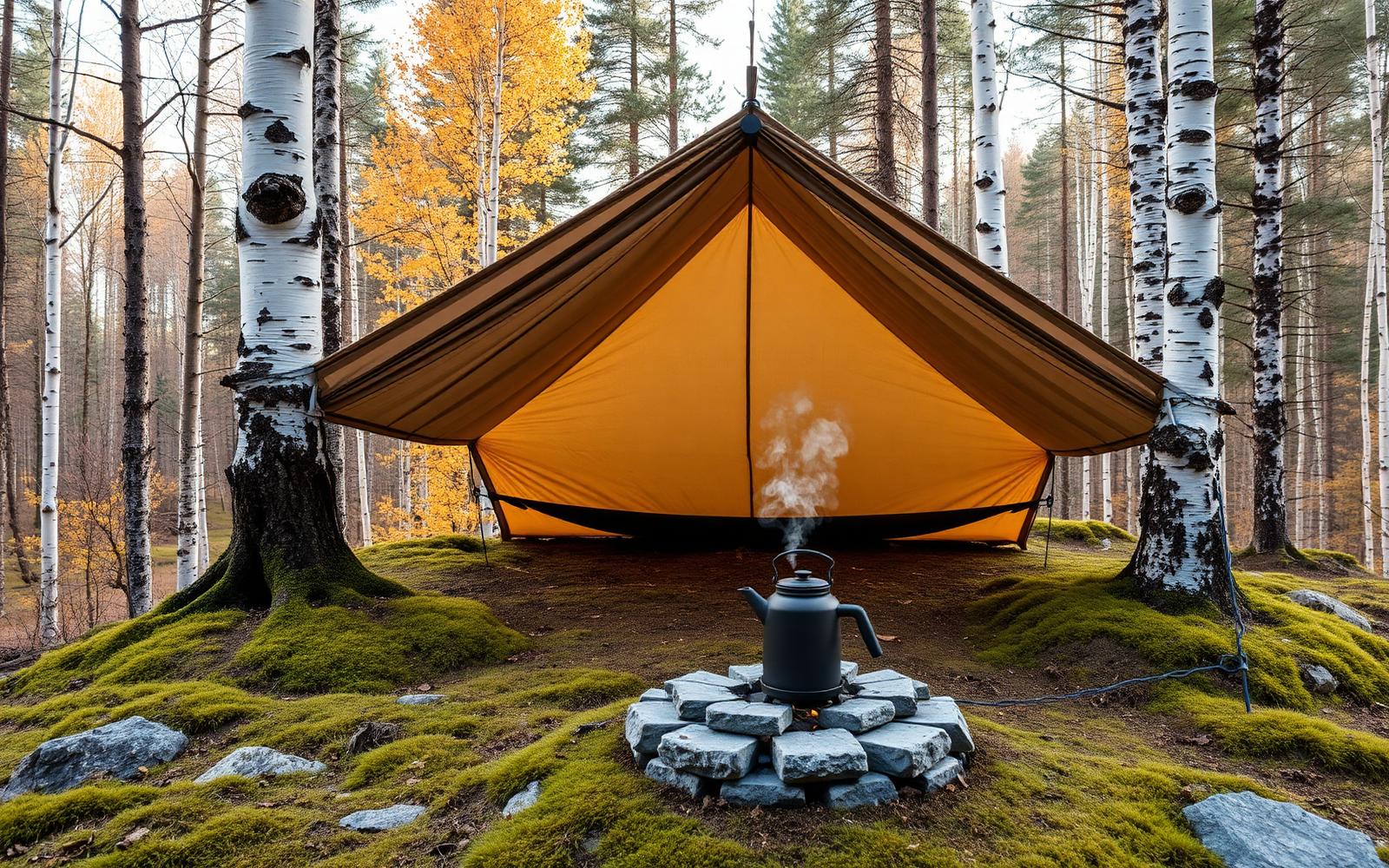
Thirty days is enough to create momentum, not mastery. A useful bushcraft challenge focuses on short, repeatable sessions, measurable standards, and safe progression. It should improve systems you will actually use outdoors rather than produce thirty photographs of slightly different feather sticks.
Week 1: tools, knots, and organization
Inspect and sharpen cutting tools using the correct method. Practice safe grips and controlled carving on stable material. Tie a bowline, adjustable guyline hitch, trucker’s hitch, sheet bend, and two half hitches until each is neat and repeatable. Pack the same small kit several times and assign a fixed location to lighting, first aid, rain protection, and water treatment.
Week 2: shelter and water
Pitch a tarp in an A-frame, lean-to, and low storm configuration. Time each setup, then repeat with gloves or fading light. Estimate water needs for a local route, inspect multiple treatment options, and practice using your primary method exactly as instructed. Simulate a failed filter by switching to the backup. Clean and dry equipment after every session.
Week 3: fire and campcraft
Where fire is legal, prepare a full fuel progression before ignition and light it with a lighter, match, and ferro rod on separate days. Practice splitting small wet wood to expose dry interior fibers. Build a safe cooking workflow, suspend a pot only with tested materials and stable supports, and extinguish every practice fire completely. On restricted days, practice stove setup and fire-free warmth systems.
Week 4: navigation and a simple overnight
Review map symbols, orient a map, follow a short bearing in a controlled area, and identify terrain features. Plan a conservative overnight at an established site using familiar gear. Set a turnaround time, share the plan, monitor weather, and document what was used. Finish by writing three improvements for the next month rather than buying three replacements.
Thirty-day schedule
| Days | Focus | Measure |
|---|---|---|
| 1-7 | Tool control, knots, kit organization | Accuracy and repeatability |
| 8-14 | Shelter and water systems | Setup time and backup readiness |
| 15-21 | Fire or stove, camp workflow | Fuel preparation and safe shutdown |
| 22-27 | Map, compass, route decisions | Correct orientation and route confirmation |
| 28-30 | Overnight, review, next plan | Safe completion and written lessons |
Common mistakes to avoid
- Practicing only favorite skills: Carving is pleasant; sanitation planning still matters.
- Adding difficulty too quickly: Stacked firsts create confused lessons.
- Measuring success by discomfort: Suffering is not a substitute for competence.
Field checklist
- Schedule sessions before the month begins
- Use legal, low-impact practice locations
- Define a measurable standard for each skill
- Keep a brief log of results and failures
- Finish with a conservative overnight and after-action review
Frequently asked questions
How long should each daily session be?
Twenty to sixty focused minutes is enough for many skills. Consistency matters more than exhausting weekend marathons.
What if fires are prohibited?
Practice fuel preparation without ignition, use a stove where permitted, and focus on shelter, water, navigation, repairs, and first aid.
Should I buy gear during the challenge?
Replace unsafe or unsuitable equipment, but otherwise delay purchases until repeated practice identifies a specific limitation.
Final word
At the end of thirty days, the best result is not a certificate. It is a smaller gap between what you think you can do and what you can perform calmly, legally, and safely.