


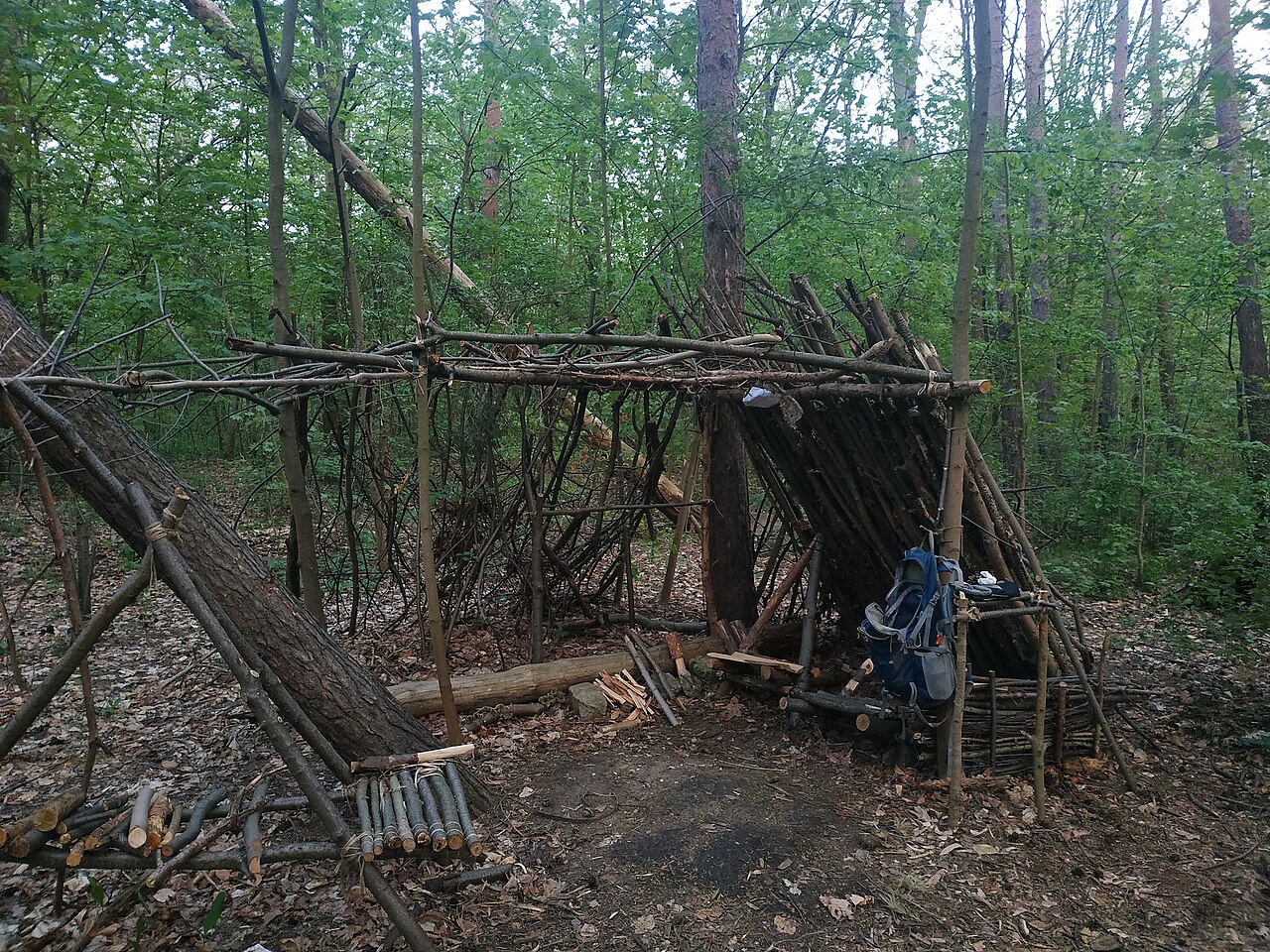
 A real solo bushcraft camp built with hand tools. Photo: Kiki63, Wikimedia Commons, CC BY-SA 4.0.
Imagine packing for months in the wilderness and being told you can bring ten items. Not ten tools. Ten items, total. Your shelter tarp, your sleeping bag, your fishing gear, your fire starter, your cooking pot and your bow all come out of the same ten.
Then look at the tool shelf: a survival shovel like the Cold Steel Special Forces Shovel, an axe, a fixed-blade knife, a folding or bow saw, and a multi-tool. Every one of them earns its keep in the bush. And almost nobody on Alone can afford to take more than two.
This is the quiet decision that shapes a whole season before the first episode airs.
The math that makes it brutal
Ten slots disappear fast. Most participants need something for each of these, in some form:
- Shelter and sleep: a tarp and a sleeping bag are close to non-negotiable in cold country.
- Fire: a ferro rod is light, cheap insurance.
- Food: fishing line and hooks, a gill net, snare wire, or a bow and arrows.
- Water and cooking: a pot is often the difference between drinking safely and getting sick.
- Comfort and calories: some gamble a slot on rations or extra cordage.
Count those up and you have six to eight slots gone before you think about a single cutting or digging tool. That leaves room for two tools, maybe three if you are willing to give up something like a net, a bow or extra food.
Note: the official allowed-item list and its rules have changed between seasons. Always treat a specific season's published list as the authority.
What each tool really buys you
The survival shovel
 Cold Steel Special Forces Shovel, from our pack shovels Top 10.
A shovel like the Cold Steel Special Forces Shovel is the oddball on the list, and that is why people love it. It digs: shelter foundations, fire pits, root cellars, drainage trenches, latrines, earth berms against the wind. Its sharpened edges let it chop light wood and split kindling in a pinch, and some people even use it as a cooking surface.
The catch: it chops worse than an axe and cuts worse than a saw or knife. It is a great second tool and a weak only tool. If you are building an earth-sheltered cabin or a dugout, though, it can do work nothing else on the list can.
The axe
 Gränsfors Bruk Outdoor Axe.
The axe is the classic. It fells trees, splits firewood, notches logs for a cabin, pounds stakes and, used carefully, can even do rough carving. In a cold location where firewood decides whether you make it through winter, the axe is often the first tool people pick.
The catch: it is heavy, it is dangerous when you are tired and hungry, and it is clumsy for fine work like gutting fish or carving trigger sticks. One bad swing can end a season.
The fixed-blade knife
 ESEE 6 fixed-blade knife.
The knife is the tool you use all day, every day: processing fish and game, carving traps, feathering fire sticks, making spoons, cutting cordage. Many survival instructors call it the single most important tool you can carry.

The catch: a knife alone is slow and exhausting for firewood and building. Batoning wood with a knife works, but it wears out both the blade and you.
The saw
 Bahco Laplander folding saw, from our camping and bushcraft saws Top 10.
A good folding or bow saw is the efficient choice. It cuts firewood and building logs with far less energy than an axe, and it is much safer when you are calorie-starved and shaky. Clean, square cuts make building a shelter easier, too.
The catch: it cannot split wood, cannot carve, and a broken blade can be very hard to replace in the field. It is a specialist.
The multi-tool
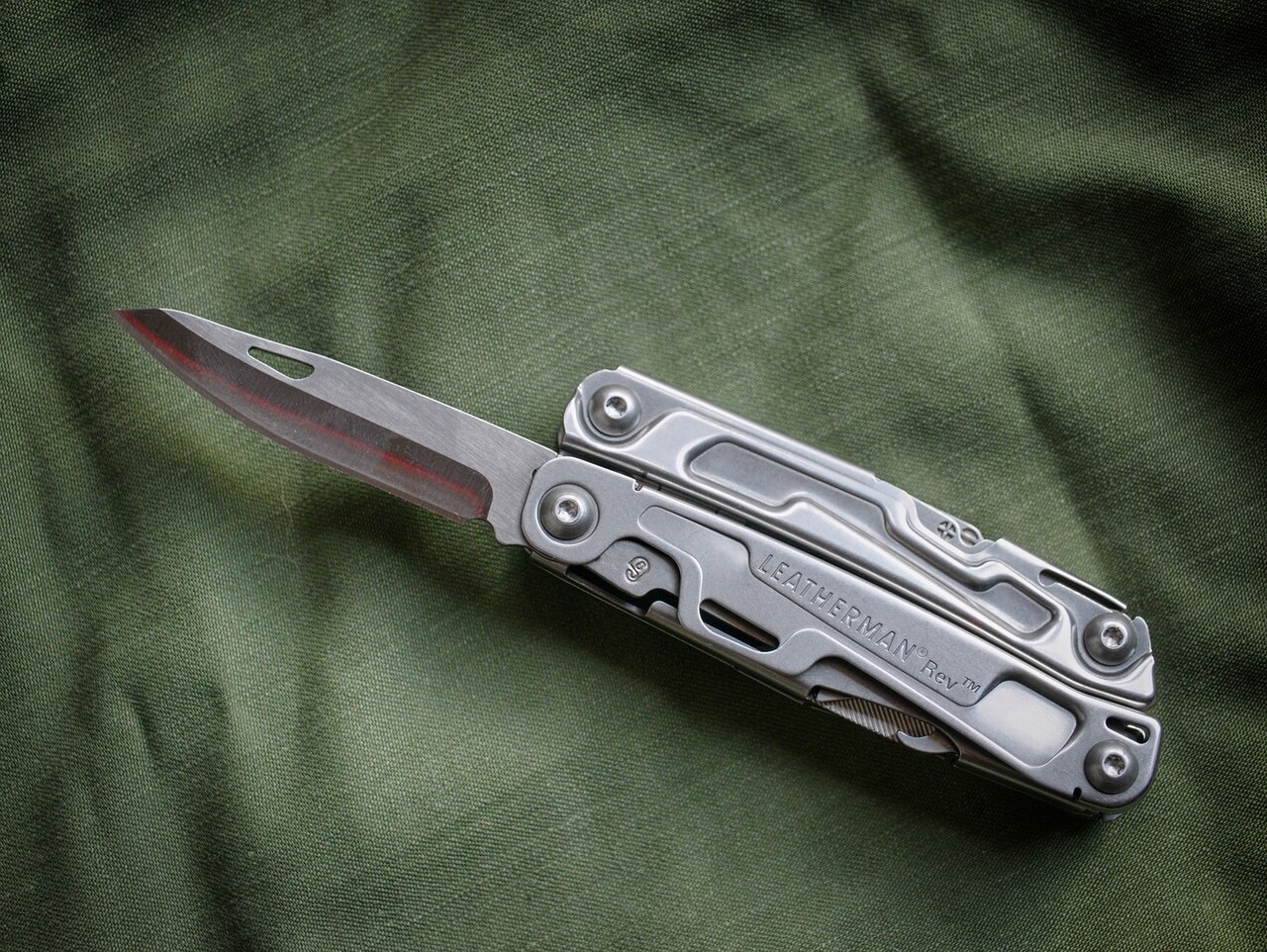 Leatherman Rev multi-tool. Photo: Olgierd, Wikimedia Commons, CC BY 2.0.
Pliers, a small blade, a file, and sometimes a small saw, all in one pocket. It shines for repairing gear, pulling hooks, bending snare wire and working with fishing tackle.
The catch: every tool on it is a smaller, weaker version of the real thing. It rarely replaces a knife, axe or saw, so many participants see it as a luxury they cannot afford.
The common two-tool combinations
| Combo | Strength | Weakness |
|---|---|---|
| Axe + knife | The classic all-rounder: big wood and fine work covered | Tiring firewood work; no digging |
| Saw + knife | Energy-efficient firewood and building, with a knife for detail | No splitting; harder to process big rounds |
| Axe + saw | Excellent for building cabins and stockpiling wood | Fine work and food processing suffer |
| Shovel + knife | Earth shelters, fire pits, digging plus daily cutting | Weak at felling and splitting |
| Knife + multi-tool | Light, great for repairs and fishing | Very weak at wood and building |
Many participants try to squeeze in three (often axe, saw and knife) and pay for it by giving up a food or comfort item. That is a real gamble: tools help you build and stay warm, but tools do not catch fish.
How the location changes the answer
- Cold, heavily forested sites: firewood is life. An axe or saw climbs to the top of the list, and many pick both.
- Coastal or rocky locations: less building timber, more fishing and foraging. A knife and maybe a multi-tool for tackle can make more sense.
- Soft ground and long stays: a shovel suddenly looks smart for dug-in shelters, food storage and fire pits.
- Where big game is possible: a strong knife moves up because processing meat is suddenly a priority.
Why it feels impossible
Every tool you leave behind is a job you will do badly for months. Leave the saw and you burn calories on every armful of wood. Leave the axe and splitting turns into a grind. Leave the knife and every fish is a struggle. Leave the shovel and digging means sticks and your hands.
The choice is not really about which tool is best. It is about which problems you are willing to solve the hard way, and you make that bet before you have seen your site.
If you were packing today
A sensible starting point for most forested, cold locations is a fixed-blade knife plus either a saw or an axe, then deciding whether a third tool is worth giving up a food item. If your shelter plan involves digging in, a survival shovel can earn that third slot or even replace the axe.
Whatever you choose, practice with it first: build a shelter, process firewood for a weekend, and cook a meal using only those tools. You will find out quickly which jobs you are willing to do the hard way.
Want to see what tools the winners actually carried? Browse our Alone winner loadouts and our axe and knife Top 10 lists.
Build the kit you just watched
Every item below is ranked from field use — no filler, no budget picks.
- The 10 items, rankedWhat actually survives 100 days — our tested picks for every slot on the list.
- Best bushcraft axesThe axe is the highest-leverage pick in the game. Here are the ones worth the weight.
- Best bushcraft knivesEvery winner carried one. These are the fixed blades that hold up to a full season.
- What the winners carriedSeason-by-season loadout analysis of every Alone champion.