



What Happened
Episode 8 of Alone Season 5, titled "Slayer II," marks the phase of the season where casual strategies lose all utility. By this point in the timeline, the field has been winnowed down to a small core of returnees—participants who brought previous multi-week field experience into northern Mongolia. The operational window for easy calories has shut tight. The late-autumn landscape offers negligible forage, forcing the remaining survivalists to rely strictly on hunting, trapping, or preserved reserves.
At this juncture, the competition ceases to be an exploratory wilderness experience and becomes an exercise in thermodynamic arithmetic. Every calorie spent gathering firewood, scouting snare lines, or drawing a hunting bow must yield a measurable return on investment. The synopsis for "Slayer II" emphasizes two interlocked variables: food security and mental endurance. In late-stage Alone, these are not separate disciplines; one directly dictates the other. When an individual operates under a severe daily caloric deficit, the central nervous system slows, thermoregulation fails, and cognitive clarity deteriorates.
The narrative weight of this episode rests on the reality of diminishing returns. The title itself suggests targeted pursuit—likely big game, large waterfowl, or critical small-game catches—because passive foraging for roots and berries is no longer viable. Active hunting demands substantial energy output and cold tolerance. For returnees who have experienced starvation before, the physical sensation of the late game carries familiar dread, heightening the stakes of every shot taken and every empty trap checked.
Who Is Under Pressure
Pressure in Episode 8 applies uniformly across the remaining cohort, though its manifestations vary depending on camp infrastructure and physical reserves. The remaining survivalists face systemic bodily breakdown. After weeks in the field, subcutaneous fat stores are heavily depleted. Once those reserves drop below a critical threshold, the body begins metabolizing muscle tissue, leading to accelerated lethargy, cold sensitivity, and orthostatic dizziness.
Psychological strain operates on a parallel track. The veterans left on the ground understand the timeline. They know that lasting beyond this stage requires enduring sub-freezing temperatures, long nights inside cramped shelters, and the silence of isolation. For a returning competitor, the mental pressure is compounded by expectation. Having reached significant milestones in their initial seasons, none of these individuals entered Mongolia to leave midway through the trial. Yet that internal standard can push people past safe margins, creating severe risks of hypothermia, accidental injury with edge tools, or sudden medical intervention.
Camp maintenance is another major pressure point. As daytime temperatures drop, wood consumption spikes. A survivalist must fell, haul, buck, and split enough deadwood to feed a hearth for fourteen or more hours of darkness. Doing this work on an empty stomach compounds physical exhaustion, leaving competitors caught in a cycle: they must burn hundreds of calories processing wood simply to survive the ambient air temperature, which leaves them too weak to hunt effectively.
Gear That Mattered
In the second half of a season, tool performance shifts from convenience to baseline life support. Several key items dictate whether an operative can sustain their position:
1. Archery Equipment
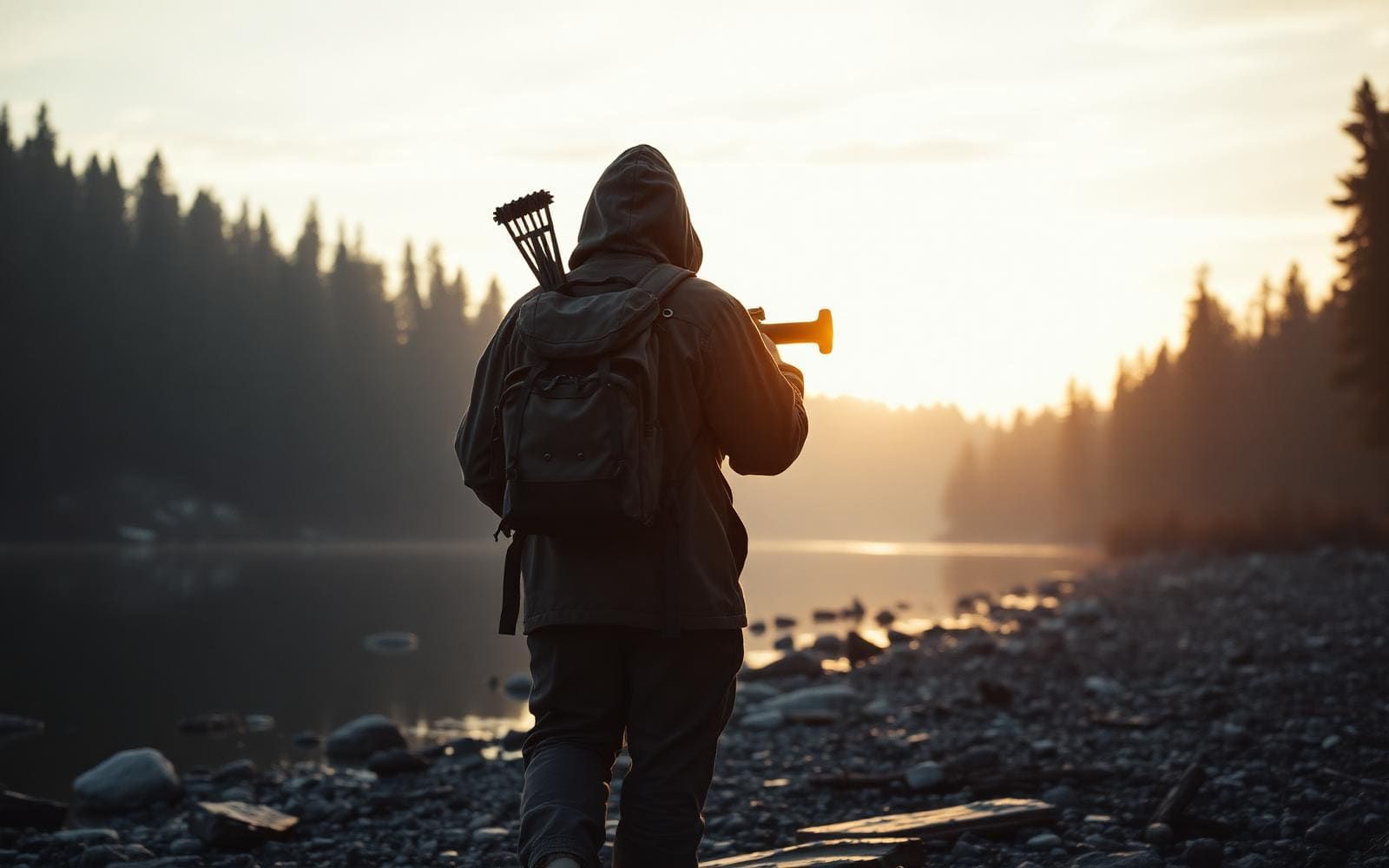
Traditional recurve or longbow setups carry massive upside if an archer can close the distance on game. However, cold conditions complicate archery mechanics. Freezing temperatures stiffen bow limbs, alter arrow flight dynamics, and reduce finger dexterity, which degrades release clean-lines. Carrying a bow across rough terrain burns substantial energy, making broadhead maintenance and shot discipline essential. A clean pass-through shot on small game or an ungulate alters the trajectory of an entire season, but empty stalks represent pure caloric loss.
2. High-Carbon Edge Tools
Axes and folding saws carry the primary burden of winter prep. In sub-freezing conditions, tool steel becomes more brittle, increasing the likelihood of chipping along the cutting apex when striking frozen deadwood. A loose axe head or a warped saw blade can derail an entire shelter heating strategy. Survivalists who properly maintain edge profiles and use their tools with disciplined, controlled swings avoid catastrophic mechanical failures and preserve physical stamina.
3. Sleeping Systems and Thermal Insulation
The multi-component sleeping bag setup is the single most vital piece of passive survival equipment at this stage. Competitors must protect their loft from external moisture and internal perspiration. If down or synthetic fill absorbs ambient humidity or sweat, its thermal resistance collapses. Bough beds, ground pads, and improvised insulation under the sleeping system are mandatory to block conductive heat loss to the frozen earth.
4. Wire Snares and Cordage
Passive procurement remains the most energy-efficient means of gathering protein. Brass or steel snare wire set along active runs functions while the participant rests. Success depends entirely on reading micro-topography and track patterns accurately. However, predators and scavengers present a continuous risk; an unchecked snare line often results in stolen game, leaving the survivalist with broken wire and zero nutrition.
Current Standings
While specific eliminations are not detailed in the available logs, the episode confirms that the field is down to a small handful of its most durable veterans. The initial group of ten returnees has experienced substantial attrition over the preceding weeks, leaving only those who established functional shelters, reliable water procurement, and baseline food strategies.
At this point in the season, the standings are dictated by physical sustainability rather than tactical novelty. The remaining participants can be grouped into two functional camps:
- The Sustained Hunters: Those who have secured sporadic, substantial meat caches and possess the infrastructure (smoke racks, secure caches) to defend those calories against scavengers. These individuals have a biological buffer that protects cognitive function.
- The Attrition Specialists: Those relying on deep internal resolve, minimal rations, and sheer caloric conservation. Survivalists in this category spend excessive hours inside their sleep systems to suppress metabolic output, hoping their baseline body mass outlasts the field.
Historically, the attrition strategy encounters a hard wall in late episodes. Medical teams monitor body mass index and vital signs closely, and competitors who cannot demonstrate an active caloric input inevitably face extraction on medical grounds.
Bottom Line
Episode 8 captures the inflection point where mental toughness alone is no longer adequate. In the early weeks of a survival trial, optimism, camp construction, and short-term fasting can carry a competitor forward. By the time an Alone season reaches this depth, the environment strips away all superficial factors.
The competitors remaining in Northern Mongolia are operating against fundamental physiology. Those who manage their energy expenditure, preserve the integrity of their gear, and capitalize on hunting opportunities will dictate the pace of the finale. Those who allow gear maintenance to slip or fail to replace burned calories will find the cold forcing their hand, regardless of past experience.
Build the kit you just watched
Every item below is ranked from field use — no filler, no budget picks.
- The 10 items, rankedWhat actually survives 100 days — our tested picks for every slot on the list.
- Best bushcraft axesThe axe is the highest-leverage pick in the game. Here are the ones worth the weight.
- Best bushcraft knivesEvery winner carried one. These are the fixed blades that hold up to a full season.
- What the winners carriedSeason-by-season loadout analysis of every Alone champion.