


What Happened
Season 2, Episode 4, titled "Hunger's Grip," marks the critical three-week threshold on northern Vancouver Island. Day 21 has historically served as a psychological and physiological reckoning on Alone. By the end of the third week, glycogen reserves are long exhausted, baseline body fat is burning at an unsustainable rate, and the cold, damp Pacific Northwest climate begins to penetrate every layer of clothing and shelter. In this episode, that confluence of starvation and solitary confinement forced two departures: Randy Champagne and Mike Lowe.
Food scarcity dictated the tempo of the camp routines across the board. When dietary caloric intake drops to near zero, the mundane tasks required for basic survival—splitting firewood, hauling freshwater, blowing life into banked embers, and checking foraging lines—demand energy that the body simply cannot replace. Both Champagne and Lowe felt the full weight of this deficit, but the breaking point arrived primarily through the psychological burden of absolute isolation.
Randy Champagne reached his limit after concluding that the solitary nature of the challenge was no longer worth enduring. Champagne, an experienced tracker and primitive skills practitioner, discovered that the absence of human community stripped the experience of its purpose. Disliking the state of being alone, he officially ended his stay on Day 21.
Around the same time, Mike Lowe made the identical decision. Lowe, an experienced wilderness survival instructor with a deep bench of bushcraft skills, had maintained clean camp organization and functional infrastructure. Yet, the physical reality of hunger accelerated an intense emotional toll. Missing his wife proved to be an insurmountable obstacle in the quiet hours inside the shelter. Recognizing that his emotional drive was broken, Lowe called for extraction, departing the competition on Day 21 alongside Champagne.
Who Is Under Pressure
With two major contenders walking away on the exact same day, the remaining survivalists face compounded systemic stress. The psychological shock of surviving past three weeks is profound. At Day 21, the initial phase of setting up camp, experimenting with local resources, and riding out early adrenaline is completely over. The competition enters its attrition phase.
Every remaining participant is now managing severe caloric deficits. In cold, wet environments, the body burns thousands of calories just to maintain homeostatic core temperature. When fishing nets come up empty and intertidal foraging yields little more than low-calorie limpets or sea lettuce, survivalists enter metabolic ketosis and rapid muscle catabolism.
This physical breakdown directly impacts executive cognitive function. Decisions take longer, simple knots become frustrating, and the mental defenses required to resist thoughts of home and comfort erode. The departure of skilled practitioners like Lowe and Champagne demonstrates that technical survival competence is merely a baseline requirement; the true differentiator is the capacity to sit with internal silence while starving in the rain.
Gear That Mattered
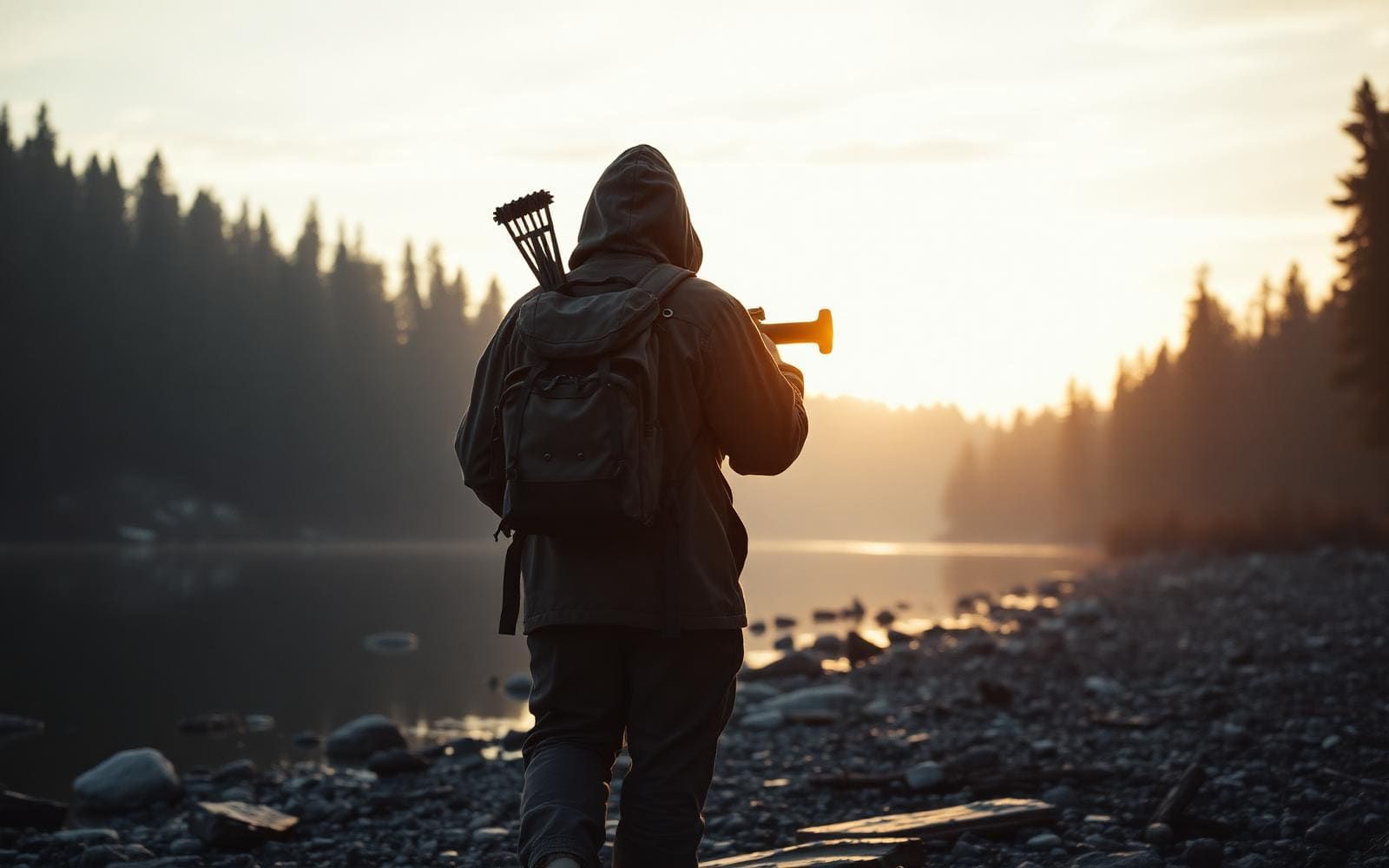
While neither tap-out in this episode was triggered by a mechanical gear failure, the reliance on essential equipment during the third week illustrates the shifting role of a ten-item kit as caloric starvation takes hold.
The Emergency Satellite Communication Device
The yellow brick tracker remains the most consequential piece of kit during transitions like those seen in Episode 4. When a participant decides that isolation has eclipsed their objective, this device represents safety, warm food, and an immediate reunion with family. The psychological friction between holding out another night and pushing the button is mediated entirely by having that communication unit sitting dry in the shelter pack.
Tarps and Cordage Systems
By Day 21, shelter engineering is subjected to sustained winds and constant driving rain. High-grade silnylon or heavy-duty polyurethane tarps, rigged with paracord or bank line, are the only barriers preventing hypothermia. When survivalists spend up to 16 hours a day confined to their bedding due to foul weather and energy conservation, the shelter transitions from a simple sleeping bivvy to a psychological prison. If the roof sags or moisture traps condensation on the bivy sack, mental morale degrades at an accelerated rate.
Cutting Tools: Axes and Bushcraft Knives
Maintaining an active fire when systemic fatigue sets in requires efficient tools. A well-balanced forest axe or heavy-duty full-tang fixed blade allows a starving participant to process dead standing wood down to dry, combustible heartwood without dangerous overexertion. Any dulling of the edge or inefficiency in the swing demands physical output that an empty stomach cannot sustain.
The Trade-Off: Active vs. Passive Food Procurement
Episodes defined by hunger highlight the equipment dilemma between active tools (like recurve bows) and passive tools (like gill nets and trotlines). A gill net works in the tidal zone while the survivalist rests in their sleeping bag, providing the highest potential caloric return on energy invested. However, when tides, debris, or poor placement render passive nets empty, the psychological blow is devastating. Active hunting burns critical calories for an uncertain return, often accelerating the decision to pull the pin.
Standings
The double departure on Day 21 significantly reduces the Season 2 roster, removing two highly capable survivalists whose foundational woodcraft was theoretically suited for a long stay.
- Randy Champagne: Out (Day 21) – Tapped out after reaching his threshold with prolonged isolation and disliking being alone.
- Mike Lowe: Out (Day 21) – Tapped out due to the emotional strain of separation from his wife, compounded by physical hunger.
- Remaining Field: Continues into late autumn on Vancouver Island, facing worsening weather, dwindling daylight, and escalating food scarcity.
Bottom Line
Season 2, Episode 4 reinforces the foundational reality of Alone: technical bushcraft capability cannot compensate for a fractured mental state. Mike Lowe and Randy Champagne possessed the practical skills to build adequate shelters and navigate rough terrain, yet neither lasted past the three-week mark.
Starvation on Vancouver Island is not merely an empty stomach; it is a catalyst that breaks down psychological resilience. When calories vanish, the mind looks for purpose, and if an individual cannot find peace in total isolation, the survival equation collapses immediately. Day 21 proved to be the filter that separated theoretical survival endurance from the harsh reality of living alone in the wilderness.
Build the kit you just watched
Every item below is ranked from field use — no filler, no budget picks.
- The 10 items, rankedWhat actually survives 100 days — our tested picks for every slot on the list.
- Best bushcraft axesThe axe is the highest-leverage pick in the game. Here are the ones worth the weight.
- Best bushcraft knivesEvery winner carried one. These are the fixed blades that hold up to a full season.
- What the winners carriedSeason-by-season loadout analysis of every Alone champion.