


What Happened: The Caloric Deficit Takes Hold
By the time an Alone season crosses into its seventh episode, the nature of the broadcast shifts. The frantic early milestones—establishing an initial base camp, finding potable water, clearing lines of sight, and testing immediate shoreline foraging—recede into the background. In their place emerges the grueling, slow-motion attrition phase of long-term wilderness survival.
In Season 2, Episode 7, titled "Trial By Fire," the field on northern Vancouver Island has contracted to a tight core of participants. At this stage, the initial fat stores that contestants carried into Quatsino Sound have largely been oxidized. Every physical task carried out around camp now operates at an objective biological loss. When a survivalist expends 400 calories dragging wet driftwood off the tide line to dry beside a fire pit, and returns with forty calories of limp sea lettuce or rock-clinging limpets, the thermodynamic math is unforgiving.
Episode 7 highlights this exact inflection point. The remaining survivalists face the stark reality that their survival systems—regardless of how cleanly designed or neatly notched their timber joinery might be—are only as viable as their net energy intake. With the damp Pacific Northwest weather continuing to soak the coastal rainforest, the physical toll of living on limited sustenance becomes visibly etched into faces, movement speeds, and basic motor skills. Routine chores take twice as long. Strategic plans narrow from long-term infrastructure improvements down to the single, fundamental problem of producing sustained BTUs inside the shelter without burning out the human engine fueling the work.
Who Is Under Pressure: The Compounding Cost of Isolation
At this juncture of Season 2, pressure is not a sudden emergency; it is an omnipresent background hum that erodes cognitive function. Every contestant remaining on the landscape is operating under deep systemic stress.
The physical toll documented in "Trial By Fire" manifests primarily as lethargy, muscle catabolism, and thermal instability. As peripheral body fat vanishes, the body struggles to maintain core temperature during the long, damp nights. In coastal rainforest environments where ambient humidity regularly hovers above ninety percent, convective and conductive heat loss are relentless. Contestants who cannot reliably dry their clothing or keep their core temperature elevated burn their internal reserves simply shivering in their sleeping bags.
Simultaneously, the psychological weight of the experience compounds. In the opening weeks of the competition, the mind is preoccupied with engineering: laying out A-frame poles, knotting gillnets, and identifying perimeter hazards. Once those systems are static, the mind has hours of dead time to process isolation. Without external human feedback or distraction, small physical setbacks—a dropped pot of water, a split handle on an improvised mallet, a line that tangles in the kelp—trigger acute emotional reactions. The discipline required to manage self-talk becomes just as critical as the discipline required to maintain an ember. The pressure on the remaining participants is the realization that no external rescue, seasonal shift, or sudden bounty is coming to stabilize their situation; the only path forward is enduring the day in front of them with fewer physical resources than they possessed the day before.
Gear That Mattered: Firecraft and Moisture Management
As the title "Trial By Fire" suggests, the ability to generate and sustain thermal energy is the single dividing line between staying on the island and calling for extraction. In the temperate rainforest of northern Vancouver Island, fire is not a luxury for morale; it is an industrial necessity for survival.
The Ferrocerium Rod
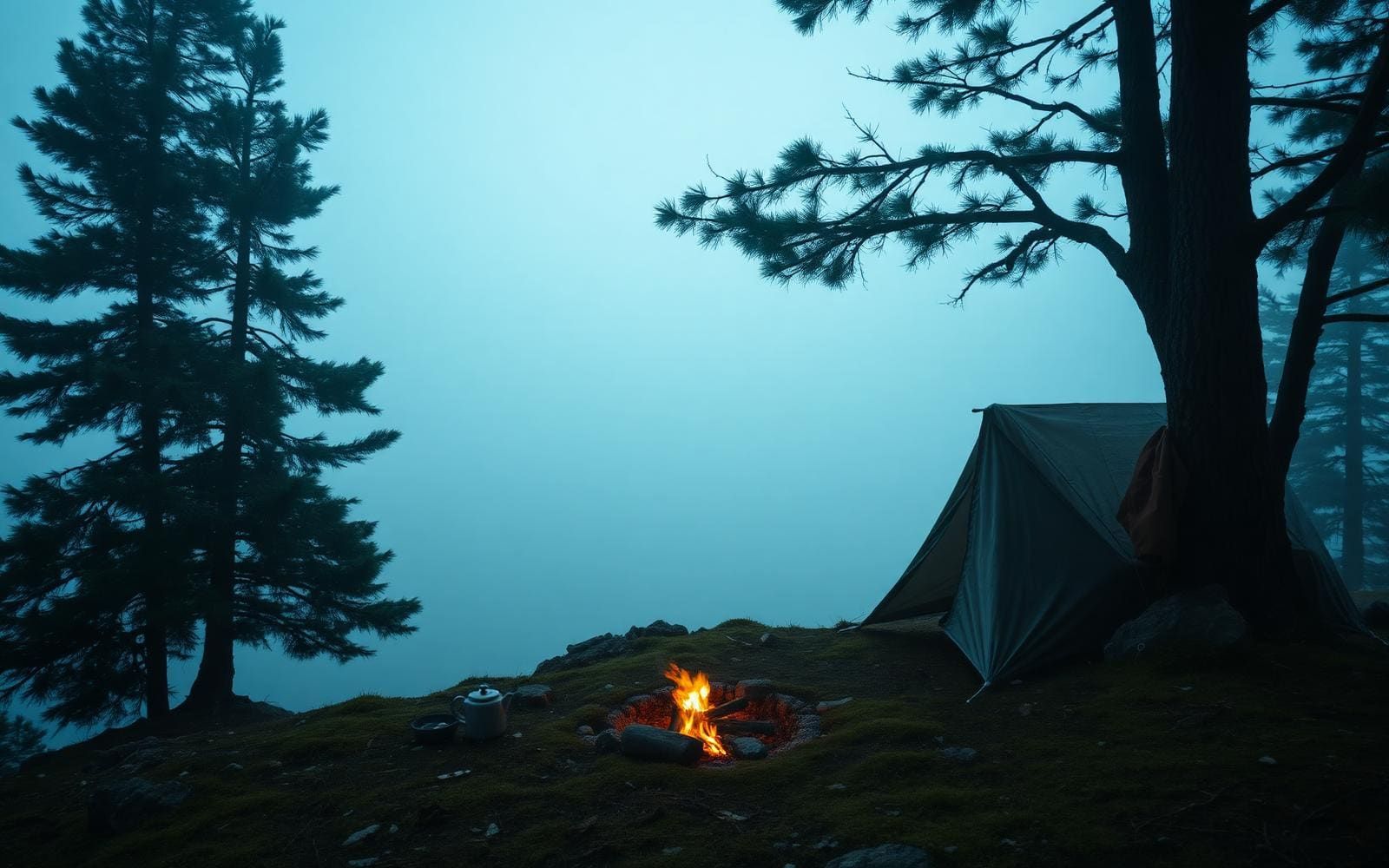
Under damp coastal conditions, natural ignition methods like bow drills require pristine dry materials that are virtually nonexistent unless banked deep inside a well-maintained shelter for days. The standard-issue ferrocerium rod remains the most critical small-footprint survival tool on the roster. In this phase of the season, technique with the ferro rod separates stable camps from failing ones. Striking showers of 3,000-degree sparks directly into processed tinder—such as shaved, resinous cedar fatwood or finely buffed inner bark from dead cedar trees—is mandatory. A participant suffering from depleted glycogen reserves loses fine motor control in their fingers; maintaining the dexterity to scrape a clean burst of sparks into an ember without scattering the tinder bundle becomes a daily test of physical composure.
Carbon Steel Cutting Tools: Axes and Saws
Processing fuel wood in these conditions requires significant leverage. Surface wood on the forest floor is thoroughly saturated. To reach combustible wood, survivalists must split dead-standing timber to access the dry internal heartwood. A quality carbon steel axe and a folding or buck saw are non-negotiable for this workload. However, working with sharp, heavy tools while in a caloric deficit represents one of the highest risk factors on Alone. A single glance off an axe head or a slipped saw blade can end a run instantly via catastrophic soft-tissue injury. The participants who stay viable are those who control their swings, use stable chopping platforms, and resist the temptation to rush through wood processing when fatigued.
Cast Iron and Stainless Steel Cookware
The humble bush pot serves as the hub of all camp nutrition and hydration. At this stage, cold water drawn from coastal seeps or rain catchments poses a thermal penalty if consumed cold. Boiling all drinking water warms the core while ensuring safety from waterborne parasites. Furthermore, contestants extracting minimal calories from limpets, snails, seaweeds, or small forage items rely entirely on their pots to render those nutrients into broths, preventing the loss of valuable micronutrients and fats that would otherwise render out and drip into the coals if roasted directly over open flames.
Standings and Camp Realities
No official tap-out was logged in this broadcast, meaning the attrition process continues to grind down the remaining field without a sudden subtraction. The dynamic on the ground in Season 2 has evolved into a war of personal thresholds.
The contestants who remain are divided not by their bushcraft knowledge, which is broadly comparable across the board, but by their baseline physiology and their capacity to sustain caloric deficits without compromising operational safety. Each camp is locked in its own private calculus:
- Shoreline Dependent Camps: Those banking on intertidal zones are subject to the lunar cycles and the pounding surf. High tides and rough water cut off limpet and crab foraging entirely, forcing survivalists to conserve movement and wait out the sea.
- Passive Trapping Systems: Survivalists running gillnets or figure-four deadfalls face the maintenance burden of clearing debris and resetting triggers. When these traps produce, they offer dense protein and fats; when they sit empty for consecutive days, the energy spent checking them represents an outright loss on the daily balance sheet.
The standings entering the back half of the season reflect a field that has transitioned from active colonization to sheer defensive endurance.
Bottom Line
Episode 7 demonstrates the brutal clarity of the Alone format. You cannot out-think cold rain, and you cannot bluff human metabolism. With the field thinned to a determined group of survivalists, Season 2 has cleared away the novelty of early camp construction and arrived at its core thesis: survival in a rainforest comes down to the relentless conversion of dead timber into heat, the conservation of every available calorie, and the mental fortitude to endure isolation while starving in the wet dark.
Build the kit you just watched
Every item below is ranked from field use — no filler, no budget picks.
- The 10 items, rankedWhat actually survives 100 days — our tested picks for every slot on the list.
- Best bushcraft axesThe axe is the highest-leverage pick in the game. Here are the ones worth the weight.
- Best bushcraft knivesEvery winner carried one. These are the fixed blades that hold up to a full season.
- What the winners carriedSeason-by-season loadout analysis of every Alone champion.