


What happened
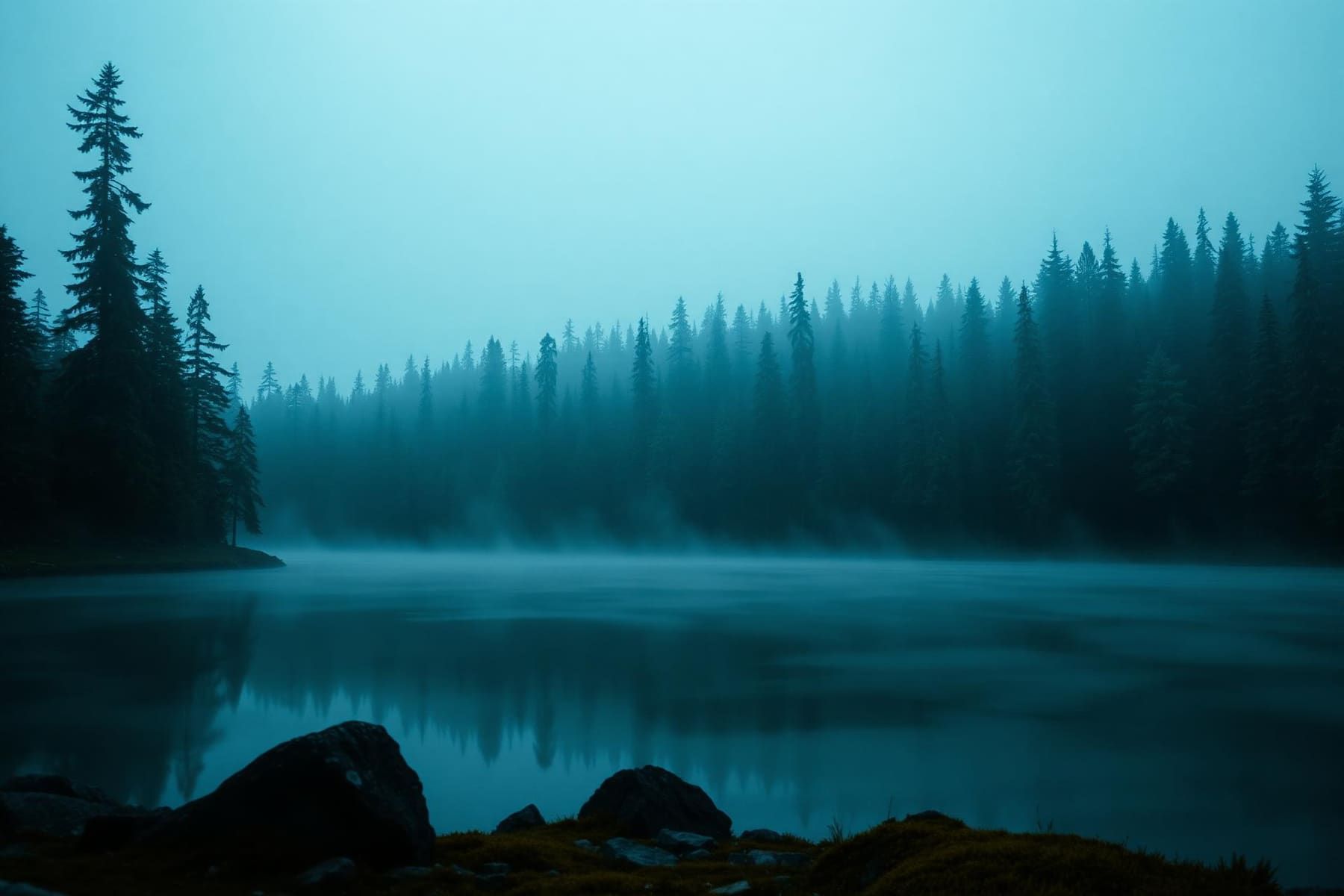
Season 3 marks the first time the production team shifted the series away from the dense, damp temperate rainforest of Northern Vancouver Island. The relocation to Patagonia, Argentina immediately resets the operational baseline for the entire roster. Ten survivalists were dropped into isolated plots along a massive, cold-water lake system flanked by windswept Andean foothills.
In the first two seasons, survival strategies on Vancouver Island revolved heavily around intertidal zones. Participants relied on marine biomass—crabs, limpets, rockfish, and edible seaweeds—to offset their initial caloric deficits while establishing camp. In Patagonia, that safety net disappears entirely. The inland freshwater lake environment forces participants to contend with steep drop-offs, oligotrophic waters that offer far lower immediate food density along the margins, and a radically different botanical profile.
Upon insertion, the ten contestants immediately dispersed across their allocated parcels to assess topography, establish baseline camps, and identify initial water and caloric sources. The terrain presents acute challenges: dense scrub, unfamiliar native timber, variable rocky shorelines, and notorious southern hemisphere winds. Rather than relying on familiar North American tree species like western red cedar or Douglas fir, competitors must immediately determine the structural integrity, splitting characteristics, and burning qualities of regional wood species such as southern beech (Nothofagus).
Despite the long preparation cycle leading into the season, the psychological shock of isolation took a rapid toll. Jim Shields faced an acute personal reckoning almost immediately after deployment. Cut off from his home support structure and confronting the barren reality of his designated lakeshore, Shields found himself consumed by remorse over leaving his family behind. By Day 3, the mental strain outweighed the drive to compete. Shields activated his emergency transponder, becoming the first participant of the season to tap out.
Who is under pressure
With Shields off the board on Day 3, the remaining nine contestants absorb immediate psychological and environmental pressure. Early exits in Alone operate as a sobering reminder of the format's primary mechanism: isolation breaks participants well before true starvation sets in.
The remaining field is now under intense pressure to bridge the gap between initial shelter construction and secure caloric acquisition. In an inland lake system, shoreline foraging rarely provides the energy needed to sustain heavy manual labor. Contestants must rapidly decode the local lake ecology. Passive fishing methods, primarily gill nets, must be deployed in functional depths without getting fouled on submerged snags or shredded by fluctuating wave action.
Furthermore, the sheer exposure of the Patagonian landscape elevates thermal pressure. Unlike the sheltered understory of Vancouver Island's old growth, the lakeside plots in this region offer minimal natural windbreaks against Patagonian gales. Anyone who spent their first seventy-two hours building an open, uninsulated lean-to is already behind schedule. With temperatures prone to rapid drops and relentless winds that sap core body heat through convection, the pressure is on the entire field to create microclimates that retain fire heat without burning down their shelters.

Gear that mattered
The environmental shift from coastal Canada to inland South America fundamentally alters the value of standard survival gear selections.
- The Gill Net vs. Fishing Line: In coastal environments, handlines and tidal traps can be rigged along rock pools. In Patagonia's deep freshwater lakes, a regulation gill net serves as the single most critical passive calorie engine. Setting a net from shore into deep, cold water requires either an improvised watercraft or an exceptionally steep drop-off. Contestants who prioritized heavy cordage and net-making capabilities—or selected a factory gill net as one of their ten items—hold a decisive advantage over those relying strictly on active angling.
- Cutting Tools (Axe vs. Saw): The native timber in Patagonia presents unique grain densities. Splitting deadfall and clearing dense brush demands efficient energy expenditure. A high-quality forest axe allows for rapid timber felling and splitting for shelter poles and hearth wood, while a folding or bow saw saves vital calories during initial bucking. Contestants who balance their cutting systems properly will avoid the blistered hands, dull edges, and high caloric expenditures that plague inefficient camp builds.
- Tarp Systems: A heavy-duty canvas or poly tarp remains the primary line of defense against the elements during the initial forty-eight hours. In Patagonia, the primary threat is not merely vertical precipitation, but horizontal, wind-driven moisture. Rigging a tarp securely requires robust ground stakes and heavy-duty ridgelines to prevent catastrophic tears in high-wind zones.
- Sleeping Systems: Sub-zero sleeping bags rated down to deep winter temperatures are non-negotiable. Without the moderating effect of a maritime coastline, inland Patagonia experiences sharp nighttime radiant cooling. A sleeping bag paired with an efficient ground insulation layer—spruce boughs, dried grasses, or a closed-cell pad—determines whether a survivalist recovers calories overnight or burns them through shivering thermogenesis.
Standings
Following the opening phase of the launch, the operational board stands as follows:
- Jim Shields: Tapped out on Day 3 due to the mental strain of isolation and regret over leaving his family.
- Active Field: 9 survivalists remain active across their respective lakeside zones, continuing shelter builds and preliminary foraging efforts.
Shields' departure on Day 3 marks an uncommonly early withdrawal, underscoring that technical knowledge and physical preparedness cannot compensate for a fractured mental state. The remaining nine contestants now carry the operational burden into the first full week of survival.
Bottom line
Season 3 establishes a clear thesis in its opening hour: Patagonia is not merely a visual backdrop change, but a complete structural reset for the competition. Survivalists cannot rely on the foraging scripts written during the show's first two seasons. The absence of tidal marine life means that passive freshwater food production and wind-resistant shelter engineering will dictate long-term viability.
Jim Shields' rapid exit reinforces the foundational truth of extreme isolation. Survival skills exist downstream of psychological resilience. When a competitor's conviction falters within the first forty-eight hours, high-end gear and bushcraft knowledge become completely irrelevant. As the remaining nine push past the initial shock of deployment, the season will be decided by who can successfully harvest protein from Patagonia's cold waters before the brutal southern winds exhaust their reserves.
Build the kit you just watched
Every item below is ranked from field use — no filler, no budget picks.
- The 10 items, rankedWhat actually survives 100 days — our tested picks for every slot on the list.
- Best bushcraft axesThe axe is the highest-leverage pick in the game. Here are the ones worth the weight.
- Best bushcraft knivesEvery winner carried one. These are the fixed blades that hold up to a full season.
- What the winners carriedSeason-by-season loadout analysis of every Alone champion.