



What Happened
Episode 3 of Alone Season 5, titled "The Serpent," centers on the critical transitional window between initial site establishment and long-term sustainability in Northern Mongolia. For this redemption season, the participants are all returning alumni from prior seasons in Vancouver Island and Patagonia. That background creates a unique dynamic: every competitor arrives with baseline field competence, an understanding of the production logistics, and acute awareness of past tactical mistakes. However, Northern Mongolia introduces environmental parameters markedly distinct from the damp coastal rainforests of British Columbia.
At this stage of the competition, the initial adrenaline of insertion has burned off. The daily routine pivots entirely to two competing priorities: securing reliable calories and finishing a cold-weather shelter before seasonal temperatures plunge. Unlike Vancouver Island, where moisture management and constant precipitation dominate every tactical choice, the Mongolian steppe presents an arid, wind-scoured river valley with dramatic diurnal temperature swings. Days can be warm enough to activate local reptiles—including venomous adders and vipers, the clear namesake of the episode—while nights rapidly drop toward freezing.
Participants this week worked to address these dual pressures. Foraging along the riverbanks and through the scrub requires constant vigilance underfoot. An accidental envenomation in a remote setting guarantees an immediate medical evacuation and potential tissue necrosis. Simultaneously, the participants are forced to balance the heavy caloric expenditure of dragging timber for semi-permanent structures against the immediate need to secure protein via angling and passive trapping.
Who Is Under Pressure
Every returning contestant is operating under intense self-imposed psychological pressure. Unlike first-time participants who may not fully comprehend how starvation erodes cognitive clarity, these alumni know precisely what lies ahead. That institutional memory is a double-edged sword. While it prevents rookie blunders, it also amplifies early physical setbacks.
Caloric deficits begin mounting rapidly around the first week to ten days if a participant fails to secure steady protein. In Mongolia, the primary food sources visible early on are river fish—such as lenok and grayling—small rodents, and limited forage. The pressure is highest on anyone who has over-invested in a massive shelter build without first establishing an active food procurement line. A log cabin demands thousands of calories in felling, hauling, and notching timber. If gillnets, trotlines, or deadfalls are not yielding returns while that timber is moving, the contestant enters an energetic deficit that is mathematically difficult to reverse.
Additionally, the psychological friction of second-guessing past performances looms over the camp. A participant who tapped early in a previous season due to cold or hunger tends to overcompensate, spending excessive effort overbuilding insulation or hoarding minimal resources. This overcompensation often manifests as physical exhaustion or acute homesickness once physical exhaustion lowers their mental defenses.
Gear That Mattered
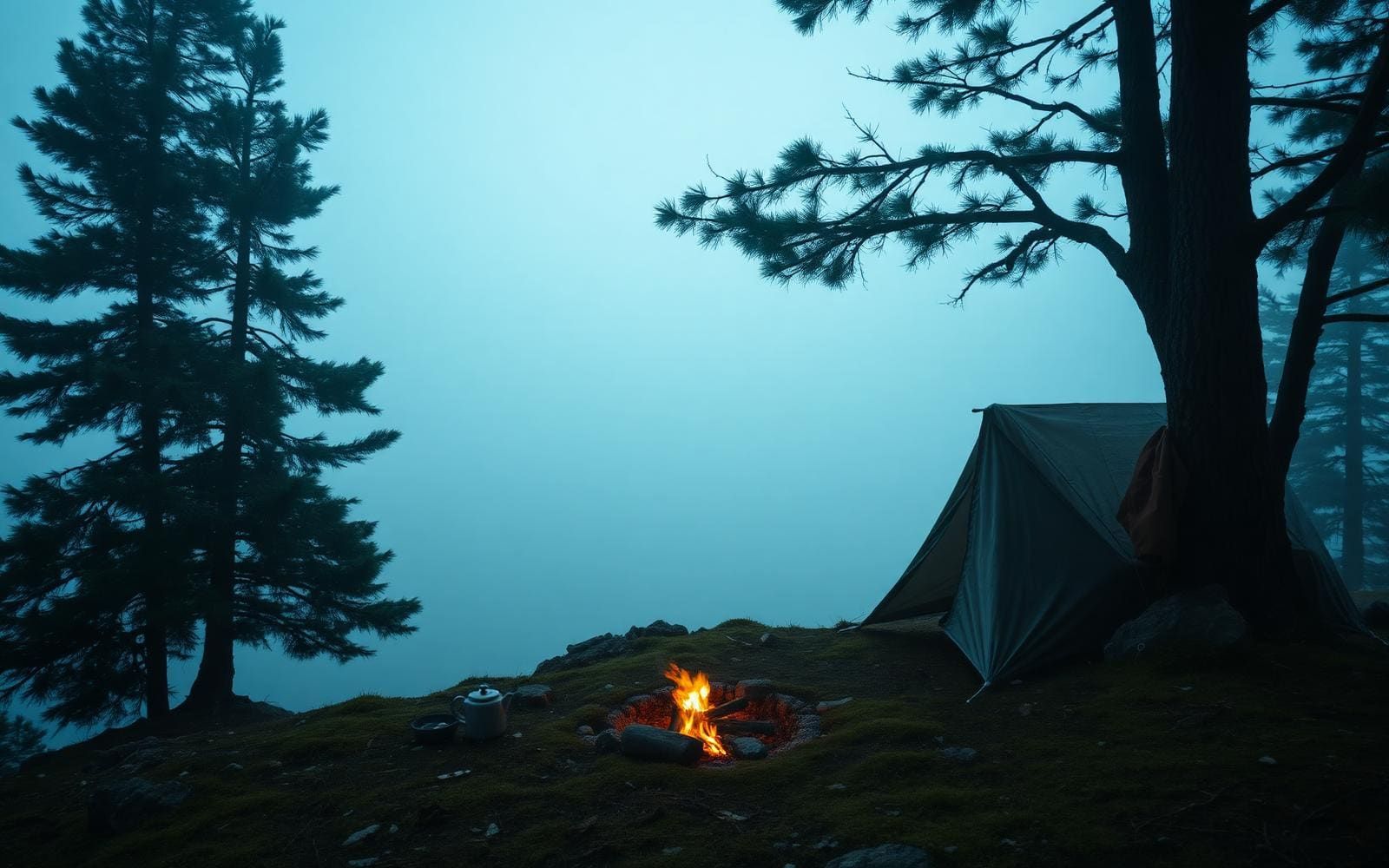
The gear choices for Season 5 reflect the specific demands of the Siberian-adjacent steppe. In Episode 3, several core kit items proved decisive in shaping camp efficiency and risk mitigation.
The Heavy Tarp
In this dry, high-exposure environment, the standard heavy-duty tarp serves multiple structural roles. Beyond acting as a primary roof barrier, it functions as a windbreak against the relentless steppe drafts. Participants utilizing their tarps to seal low, subterranean pit shelters (semi-dugouts) gain an immediate thermal advantage. Sealing out wind in an arid climate preserves ambient body heat far more efficiently than attempting to warm a sprawling, poorly draft-proofed ground structure.
The Cutting Edge: Saws vs. Axes
Processing dry, dense larch and birch timber requires significant mechanical efficiency. A folding or bow saw remains the most calorie-conservative tool for cross-cutting structural posts, minimizing the elevated risk of an errant axe strike when fatigued. However, the axe or heavy bushcraft knife is mandatory for splitting timber to access dry inner heartwood and for shaping structural joints. In an episode where venomous snakes and rough terrain present constant baseline hazards, tool discipline is paramount; any accidental slip resulting in an open wound compounded by an envenomation risk would end a run instantly.
Angling Gear and Paracord
Active fishing with improvised rod-and-reel setups allows participants to target deeper pools in the river system, but passive systems like trotlines and gillnets provide the continuous baseline yield required for long-term survival. Cordage selection is equally vital. Deconstructing standard 550 paracord into individual inner strands provides dozens of yards of high-tensile line for snaring small game, binding framing members, and rigging net anchors without exhausting the full kit within the first fortnight.
Current Standings
As the field continues to adapt to the Mongolian backcountry, the divide between sustainable strategies and high-risk gambles becomes clearer. The participants who entered with deep cold-weather experience are pacing themselves, accepting modest early meals while refining their primary shelters. Those relying on brute-force physical effort are already showing the initial physical signs of depletion: hollowed cheeks, sluggish movement patterns during morning routines, and extended rests between chores.
With the episode synopsis noting that the remaining field narrows as the challenge of returning contestants continues, attrition in Mongolia is driven by acute mistakes rather than slow erosion. When the baseline environment includes sharp elevation shifts, swift river currents, and venomous fauna, an elimination can occur in seconds via a single misstep or a sudden systemic failure to adjust to the ecosystem.
Bottom Line
Season 5, Episode 3 reinforces a fundamental truth of wilderness survival: prior experience is only valuable if it translates into adaptability. The competitors who thrive in Mongolia are not those trying to replay their previous seasons in Vancouver Island or Patagonia, but those who read the dry, rocky terrain for what it is. Success at this stage demands low-profile, energy-efficient shelters, strict ground awareness to avoid regional hazards, and the immediate establishment of passive food sources before the harsh inland winter closes in.
Build the kit you just watched
Every item below is ranked from field use — no filler, no budget picks.
- The 10 items, rankedWhat actually survives 100 days — our tested picks for every slot on the list.
- Best bushcraft axesThe axe is the highest-leverage pick in the game. Here are the ones worth the weight.
- Best bushcraft knivesEvery winner carried one. These are the fixed blades that hold up to a full season.
- What the winners carriedSeason-by-season loadout analysis of every Alone champion.