


What Happened
Episode 9 of Alone Season 7, titled "The Wolves," brings the surviving pool of participants to an unforgiving milestone: Day 80. At this stage of the competition, ambient temperatures have plunged, accessible forage has disappeared, and the physical margin for error has dropped to zero. Compounding the environmental pressure is an increase in apex predator activity, as wolves begin moving through camp perimeters, introducing an immediate security hazard to individuals who are already operating on minimal energy reserves.
The defining logistical event of the episode is the exit of Kielyn Marrone. Having endured 80 days in the subarctic wilderness, Marrone reached the absolute threshold of biological sustainability. Suffering from advanced starvation, her body could no longer compensate for the daily caloric deficit required to gather firewood, tend shelter, and maintain baseline thermal regulation. Faced with systemic physical depletion, Marrone made the call to tap out, ending an 80-day run marked by grit and persistence in deep winter conditions.
Simultaneously, wolf activity near the campsites elevated the operational stakes. Apex predators alter the psychological and practical reality of wilderness survival. When wolves enter an occupied zone, participants cannot afford carelessness during routine chores. Every trip to haul water, check traps, or process deadfall requires heightened situational awareness, consuming mental focus and physical energy that starving bodies simply do not have to spare.
Who Is Under Pressure
Kielyn Marrone entered Day 80 under severe physiological duress. Starvation at this level is not simply acute hunger; it is a progressive systemic breakdown. After nearly three months in the field, subcutaneous fat stores are entirely exhausted, forcing the body to break down muscle tissue to sustain core metabolic functions. The practical consequences include orthostatic hypotension, impaired thermoregulation, loss of motor coordination, and deep lethargy. For Marrone, the balance tipped from calculated endurance to an unsustainable health emergency. Tapping out on Day 80 was not a failure of will, but an inevitable collision with the laws of human thermodynamics.
The remaining participants are under immense combined pressure. Surviving past Day 80 in subarctic winter demands an active defense against two competing vectors: caloric collapse and predator proximity. As wolves move closer to camp, the remaining field must evaluate whether their shelters offer adequate deterrence and whether their daily routines leave them exposed. Wolves are opportunistic hunters, and depleted humans operating alone in poor visibility represent a vulnerable profile. Maintaining camp hygiene, securing any preserved food stores from scavengers, and remaining vigilant while gathering firewood places an added tax on participants whose physical reserves are down to single-digit percentages.
Gear That Mattered
At Day 80, gear utility shifts entirely from baseline camp construction to immediate life preservation and risk mitigation. Several critical categories dictated survival outcomes in this phase of the season.

The Axe and Saw Combination
When calories run dry and predators move into the immediate area, firewood processing becomes the single most important daily task. An axe and a reliable folding or bucksaw are essential to maintain an all-night fire. A persistent hearth fire serves a dual purpose: it acts as a visual and olfactory deterrent against curious wolves, and it provides radiant heat to an occupant whose body can no longer generate internal warmth through food metabolism. However, swinging an axe with depleted muscle mass carries high risk. Dull blades or mishandled tools lead to catastrophic glancing blows, making well-maintained cutting edges critical.
The Bow and Arrow
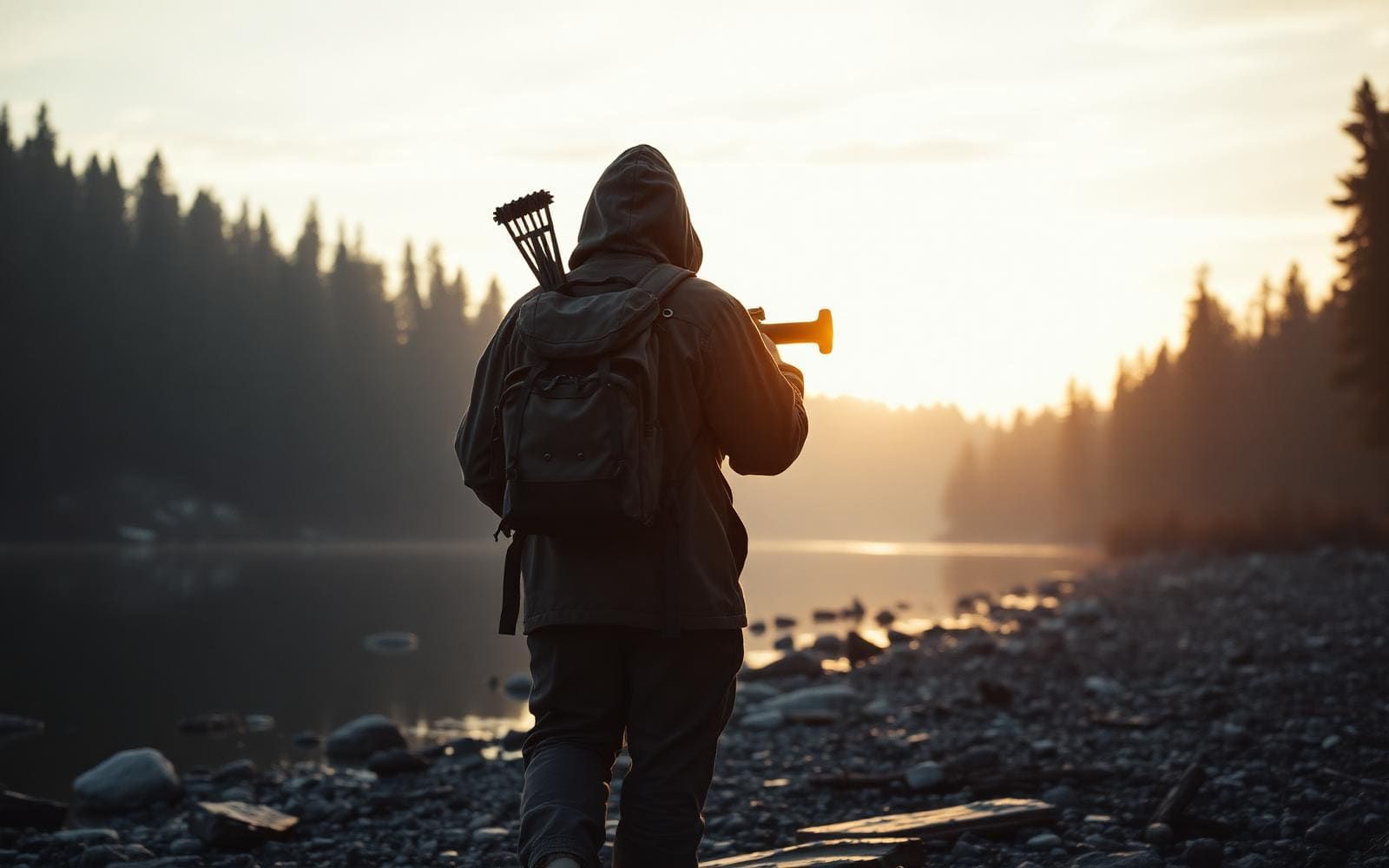
With large predators circling camp, a traditional bow transitions from a hunting implement to an immediate defense tool. Unlike a firearm, a traditional recurve or longbow requires significant upper-body strength to draw and hold on target. A starving archer faces degraded draw weight, muscle tremors, and compromised fine motor skills. Keeping bowstrings dry, un-iced, and strung within arm's reach inside the shelter becomes an absolute necessity when wolf presence increases near camp perimeters.
High-Loft Sleep Systems
In the late stages of winter starvation, ambient temperatures well below zero Fahrenheit pose an immediate hypothermia threat. The human body requires roughly 2,000 to 2,500 calories a day merely to maintain core temperature in freezing environments without exertion. When caloric intake is near zero, the sleeping bag acts as the primary life-support system. Multi-bag setups or high-fill down systems paired with elevated bough beds or foam pads prevent conductive heat loss to the frozen ground. For someone like Marrone, surviving to Day 80 without adequate fat stores relies entirely on the mechanical dead air space provided by the sleeping bag loft.
Satellite Communication Devices
While not traditional bushcraft equipment, the emergency communication beacon and tracker provided by production is the most critical safety item on Day 80. When a participant crosses into acute starvation, organ failure and cognitive collapse can accelerate quickly. The ability to deploy a clear extraction signal ensures that an endurance attempt ends safely before permanent physiological damage occurs.
Standings
The leaderboard shifted significantly on Day 80 with the departure of one of the season's longest-lasting competitors.
- Kielyn Marrone: Tapped out on Day 80 due to severe starvation. Her 80-day stay stands as an exceptional endurance performance, marked by extensive shelter maintenance and mental resolve under escalating subarctic cold.
- The Remaining Field: The remaining survivalists push beyond Day 80, navigating extreme caloric deficits, encroaching wolves, and the relentless approach toward the 100-day threshold.
With Marrone extracted, the physical and psychological toll on the remaining camp occupants will compound daily. Those left on the ground must balance aggressive calorie procurement against the reality that every calorie spent hunting or securing the perimeter could accelerate a forced extraction.
Bottom Line
Episode 9 demonstrates that the end stage of Alone Season 7 is a war of attrition where the landscape actively pushes back. Kielyn Marrone's Day 80 exit underscores the biological reality that grit alone cannot replace calories; when the human engine runs completely out of fuel, extraction is the only rational decision. As wolves close the perimeter and winter solidifies, the remaining participants face an unforgiving question: who can withstand the combined weight of starvation, cold, and predatory pressure long enough to outlast the calendar?
Build the kit you just watched
Every item below is ranked from field use — no filler, no budget picks.
- The 10 items, rankedWhat actually survives 100 days — our tested picks for every slot on the list.
- Best bushcraft axesThe axe is the highest-leverage pick in the game. Here are the ones worth the weight.
- Best bushcraft knivesEvery winner carried one. These are the fixed blades that hold up to a full season.
- What the winners carriedSeason-by-season loadout analysis of every Alone champion.