



Bushcraft relies on fundamental tools, and few are as essential as the knife. For a beginner, the sheer number of options can be overwhelming. This isn't about collecting; it’s about choosing a reliable, practical tool that will serve you well in the field.
The Fixed Blade Advantage
When we talk bushcraft knives, we're almost exclusively talking fixed blades. Folders have their place for everyday carry or light tasks, but for the rigors of batoning wood, carving, and general camp craft, a fixed blade offers superior strength and reliability. There are no moving parts to fail, and the full tang construction (more on that later) provides unparalleled durability.
Steel Types: A Practical Look
The heart of any knife is its blade. For bushcraft, the two main contenders are carbon steel and stainless steel. Each has its pros and cons.
- Carbon Steel:
- Pros: Generally easier to sharpen to a very keen edge, holds an edge well, and is tougher and less prone to chipping than many stainless steels. Sparks well with a ferro rod.
- Cons: Prone to rust and requires more maintenance. Will develop a patina with use.
- Stainless Steel:
- Pros: Excellent corrosion resistance, requires less maintenance, and is often a good choice for wet environments.
- Cons: Can be harder to sharpen, and some varieties can be more brittle or not hold an edge as long as good carbon steels.
For a first knife, a high-quality carbon steel like 1095 is a strong contender due to its ease of sharpening and toughness. If you anticipate primarily wet conditions and want minimal maintenance, a good stainless like Sandvik 12C27 or AEB-L is worth considering.
Blade Geometry: Grinds and Thickness
The grind of a blade refers to the shape of the cross-section, influencing its cutting performance and strength. For bushcraft, certain grinds excel.
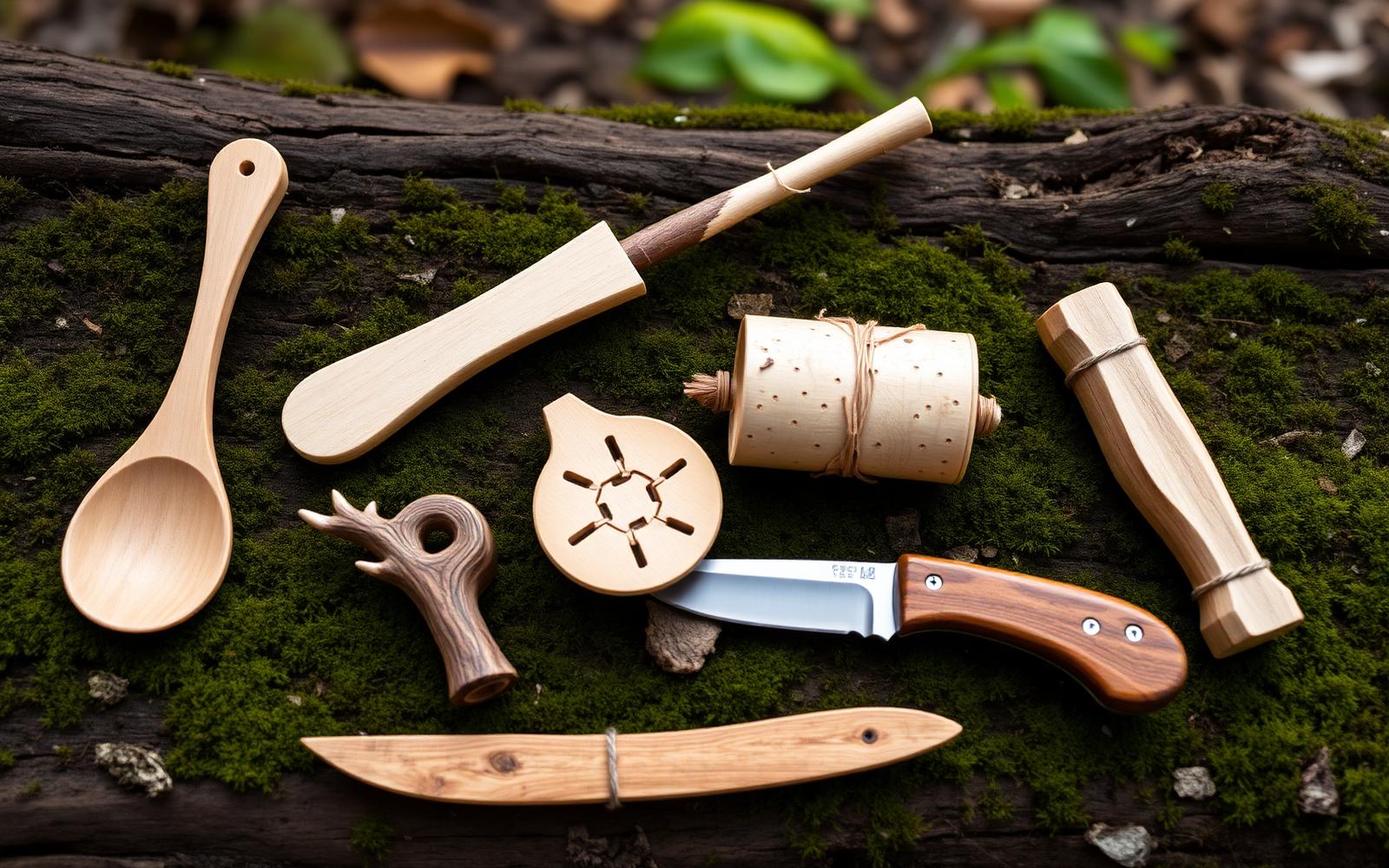
- Scandi Grind: Very common in bushcraft knives. It features a long, single bevel that starts relatively high on the blade, leading to a very robust and easy-to-sharpen edge. Excellent for wood carving and splitting smaller pieces.
- Full Flat Grind: The blade tapers uniformly from the spine to the edge. Good for slicing and general-purpose cutting, but the edge can be thinner and potentially less robust for heavy wood processing.
- Convex Grind: A very strong grind, where the sides of the blade curve outward all the way to the edge. Excellent for heavy-duty tasks and holds up well to abuse, but can be more challenging to sharpen without specialized equipment.
Blade thickness is also important. For general bushcraft, a thickness between 3mm and 4.5mm (approx. 1/8" to 3/16") strikes a good balance between strength for batoning and fine work capability. Overly thick blades can be clumsy for detailed carving.
Handle Materials and Ergonomics
The handle is your connection to the blade. It needs to be comfortable, secure, and durable.
- Wood: Classic and often aesthetically pleasing. Can offer good grip wet or dry. Look for stabilized woods or resilient hardwoods like curly birch or walnut. Can be prone to swelling/shrinking if not properly sealed.
- Micarta/G10: Synthetic materials made from layers of fabric or fiberglass infused with resin. Extremely durable, stable, and offer excellent grip even when wet. More practical than traditional aesthetics.
- Rubber/Thermoplastic Elastomers (TPE): Offer superb grip, especially in wet or cold conditions, and provide some shock absorption. Generally very durable and low maintenance.
Above all, the handle must fit your hand comfortably, allow for a secure grip in various positions (including reversed grip for carving), and not cause hot spots during extended use. Avoid handles that are too small, too slick, or have aggressive finger grooves that don't match your hand.
Tang Construction: The Backbone
The tang is the part of the blade that extends into the handle. For bushcraft, a full tang is almost universally recommended.
- Full Tang: The tang extends the full length and width of the handle. The handle scales are typically riveted or bolted to either side of it. This creates an incredibly strong, durable, and reliable knife that can withstand significant abuse without fear of the blade separating from the handle.
- Partial Tangs (e.g., stick tang, hidden tang): While strong examples exist, they are generally less robust than a full tang for the kind of heavy work a bushcraft knife often performs. Avoid for your primary bushcraft knife.
When selecting your first bushcraft knife, prioritize function over fashion. A robust full-tang carbon steel blade with a comfortable handle and a scandi or convex grind will serve you well for years of outdoor adventure. It's an investment in your skills and safety in the wild.