


Skip to content
Wild10

Become a contributor

Join
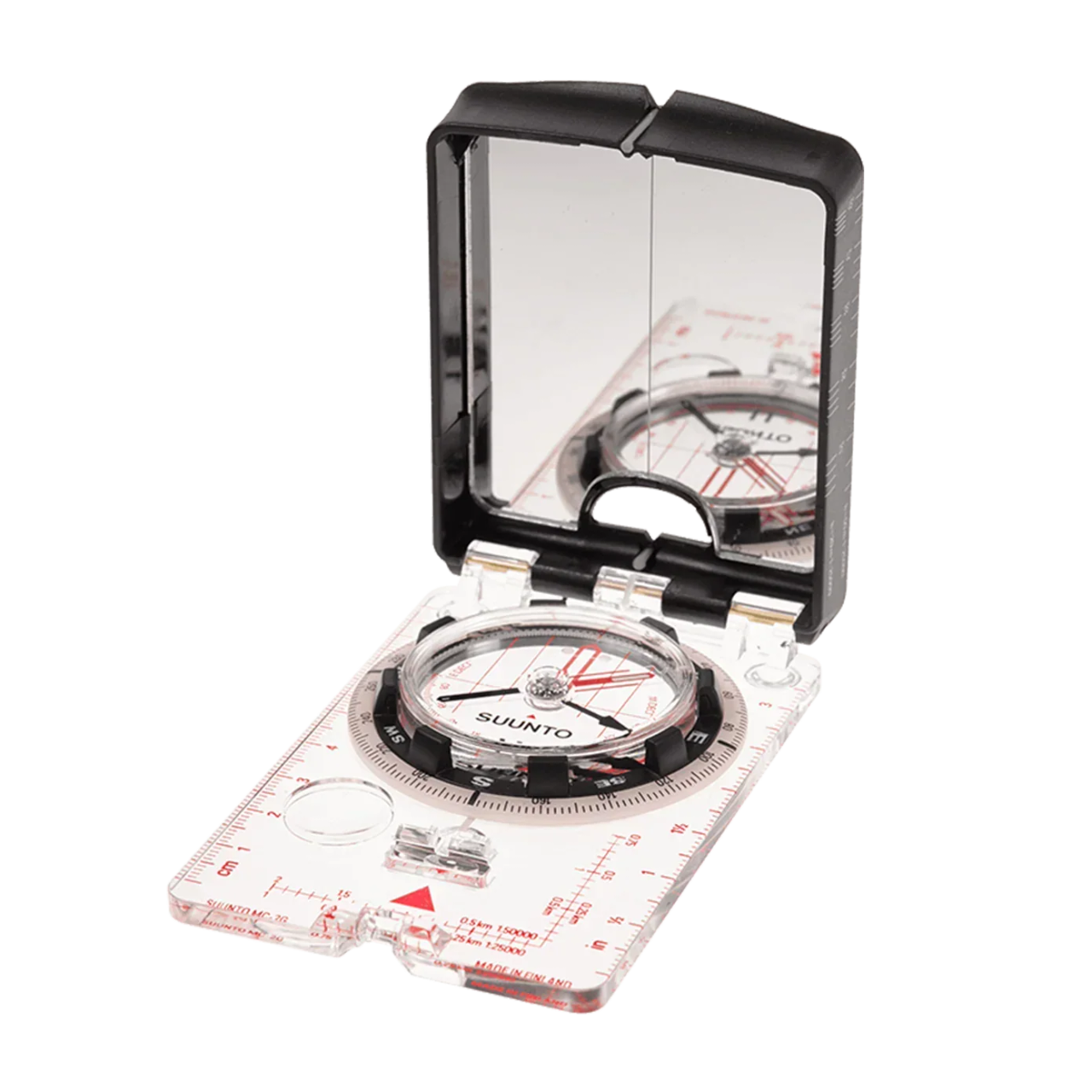
Suunto MC-2G Global

Top 10 · Gear

The 10 Best Compasses

Baseplate, mirror-sighting, and lensatic compasses ranked on needle settling speed, declination adjustment, and readability in bad light.

Share
Follow
All lists
By Wild10 Editorial Team · Research desk

A compass has one job on a bad day, so we ranked on the boring things: how fast the needle settles when you are cold and shaking, whether the bezel clicks in gloves, global versus zoned needle balance, and how well the housing survives being sat on. Mirror sighting compasses win for real bearings over distance; simple baseplates win for map work and packability.

The short answer

Compare all 10 picks at a glance

Editorial ranking, what each pick is best at, and how we assessed it. Tap a name to jump to the full write-up.

#PickBest forKey specEvidence
1MC-2G Global
Suunto
Off-trail navigationNeedle Type: GlobalResearch only
2Ranger 2.0
Silva
Off-trail navigationMaker: SilvaResearch only
3TruArc 15
Brunton
Global expeditionsNeedle System: TruArc Global, Rare-Earth MagnetResearch only
43H Tritium Lensatic
Cammenga
Expeditionary navigationType: Lensatic (Military-spec)Research only
5A-30
Suunto
Weekend hikingMaker: SuuntoResearch only
6Expedition 4
Silva
Backcountry navigationType: Baseplate CompassResearch only
7TruArc 3
Brunton
Ultralight backpackingMaker: BruntonResearch only
8M-3 Leader
Suunto
Traditional land navigationMaker: SuuntoResearch only
9DT120 Global
Recta
International travelNeedle Type: Global, balancedResearch only
10Field Compass
Silva
Emergency backup navigationMaker: SilvaResearch only

Best of the Best · Head to Head

MC-2G Global vs Ranger 2.0

#1 vs #2 — side-by-side specs, pros & cons, and the final verdict.

Compare any two picks

Build your own side-by-side

Choose any two of these 10 picks and compare specs, price, pros, cons and reader ratings.

Topic summary

Baseplate, mirror-sighting, and lensatic compasses ranked on needle settling speed, declination adjustment, and readability in bad light.

Key takeaways

  • #1 MC-2G Global — Suunto
  • #2 Ranger 2.0 — Silva
  • #3 TruArc 15 — Brunton
  • #4 3H Tritium Lensatic — Cammenga
  • #5 A-30 — Suunto
  • #6 Expedition 4 — Silva

Intended uses

Gear

Verification notes

Editorial ranked list, 10 entries. Evidence mix — 10 research only. Buy links open the maker or a retailer search.

The gear reviews

Baseplate, mirror-sighting, and lensatic compasses ranked on needle settling speed, declination adjustment, and readability in bad light.

Rank this list

Loading community ratings… Ratings re-order the picks — they never change which products make the list.

Sign in to add your own ratings — it's free.

  1. Pick 01Research-based review

    MC-2G Global

    Suunto

    Suunto MC-2G Global
    Needle Type
    Global
    Sighting
    Mirror
    Declination
    Adjustable
    Clinometer
    Built-in
    Lanyard
    Detachable with wristlock
    Luminescence
    Luminous markings

    When you're out there, trusting your navigation is paramount. The Suunto MC-2G Global isn't just a compass; it's a reliable instrument built for serious backcountry travel, earning its top spot for a reason. This isn't a beginner's toy, nor is it over-engineered for the casual day-hiker. It's designed for those who navigate off-trail, where accurate bearings, precise map work, and the ability to maintain a heading across varied terrain are non-negotiable. Its robust construction and comprehensive feature set make it a go-to for backpackers, mountaineers, and anyone venturing beyond well-marked paths, regardless of hemisphere.

    What sets the MC-2G apart is its global needle, a critical feature often overlooked until you really need it. This allows for accurate readings anywhere on Earth without needing to balance or adjust for magnetic zone tilt, eliminating a significant source of error and frustration when traveling internationally or even just moving across continents. Paired with a large, clear mirror for accurate sighting and an adjustable declination correction, it covers all the bases for precise fieldwork. It’s the kind of gear you buy once and expect to last for decades, provided you don't lose it.

    While some might find its price a bit higher than basic models, the investment is justified by its reliability and the peace of mind it offers in critical situations. It's a tool that empowers confident navigation, allowing you to focus on the journey rather than second-guessing your direction. This compass performs as advertised, consistently delivering precise readings under real-world conditions, making it an indispensable part of a well-equipped navigation kit.

    Where it fits

    • Off-trail navigation
    • International travel
    • Mountaineering and alpinism
    • Expedition planning
    • Anywhere precise bearings are critical
    Pros
    • Global needle works anywhere
    • Precise sighting mirror
    • Adjustable declination
    Cons
    • Bulkier than baseplates
    • Mirror hinge needs care
    Individual review

    Construction & Materials

    Suunto builds the MC-2G with durable, clear acrylic that stands up to the bumps and scrapes of backcountry use. The housing feels solid in hand, not flimsy, and the hinge for the mirror is robust, suggesting it won't snap off after a few opening and closings. The rotating bezel turns smoothly with positive clicks, making precise settings easy, even with gloved hands. The liquid-filled capsule is well-sealed, preventing bubbles from forming over time, a common failure point in lesser compasses. The overall build inspires confidence that it will continue to function reliably when dropped or exposed to harsh weather.

    Real-World Performance

    Out in the field, the MC-2G consistently delivers. The global needle settles quickly and accurately, regardless of your location, which is a huge advantage when traveling. The mirror sighting system is intuitive for taking precise bearings to distant landmarks, and the magnifying lens integrated into the base plate is genuinely useful for fine map detail. The clinometer, while perhaps not an everyday feature for everyone, is a welcome addition for assessing slope angles, invaluable in avalanche terrain or when planning ascent routes. It performs exactly as a top-tier instrument should: dependably and without fuss.

    Weight & Packability

    For a full-featured compass, the MC-2G is reasonably compact and lightweight. It's certainly not a micro-compass, but it easily slips into a jacket pocket, a map case, or the lid of a pack without adding significant bulk or heft. The protective cover provided by the mirror ensures the compass face and needle are shielded from scratches and impacts when not in use. It feels like a tool, not a burden, making it easy to carry on any outing where precise navigation is a priority.

    Durability & Longevity

    This compass is built to last. The materials are selected for resilience in outdoor environments, resisting UV degradation and temperature extremes. The bezel mechanism is designed for years of precise adjustments, and the clear base plate maintains its transparency, which is crucial for map reading. While no piece of gear is indestructible, the MC-2G can take a beating and keep functioning. Proper care, like avoiding extreme direct heat or unnecessary drops, will ensure it remains a trusted navigation tool for a very long time.

    Trade-offs & Alternatives

    The primary trade-off is cost; it’s more expensive than basic baseplate compasses. If you strictly hike on marked trails, its advanced features might be overkill. Alternatives like the Silva Ranger S offer similar features and build quality, often at a comparable price point, though its needle is typically optimized for specific hemispheres. For those who need global functionality, the MC-2G remains a strong contender. For simpler needs, a basic Suunto A-series or a Silva Starter model will save money but lack the precision sighting and global needle benefits.

    As an Amazon Associate, Wild10 earns from qualifying purchases.

    No ratings yet
  2. Pick 02Research-based review

    Ranger 2.0

    Silva

    Silva Ranger 2.0
    Maker
    Silva
    Model
    Ranger 2.0
    Type
    Baseplate, Mirror-Sighting
    Accuracy
    High
    Terrain
    All-Season, All-Terrain
    Weight
    Moderate

    The Silva Ranger 2.0 isn't flashy, but it's a solid, dependable compass that consistently performs when you need it most. It secured the #2 spot on our list not by reinventing the wheel, but by refining proven design principles to an impressive degree. This instrument is built for precision and reliability, making it a favorite among experienced navigators who prioritize function over fads. Its robust construction and intelligent features ensure it stands up to the rigors of backcountry travel, whether you're route-finding in dense forest or navigating across open alpine terrain. It’s a tool you can trust with your heading, and ultimately, your safety, regardless of the conditions.

    From the quick-settling needle to the intuitive markings, every aspect of the Ranger 2.0 feels thoughtfully engineered. It’s the kind of gear that doesn't demand attention until called upon, then quietly delivers without fuss. While some might seek lighter or more compact options, the Ranger 2.0’s slightly larger profile contributes to its ease of use, especially when wearing gloves or in stressful situations. This compass embodies the idea that good navigation equipment is an investment in capability, and it’s clearly designed to be a long-term partner in your outdoor adventures, built to withstand years of hard use.

    Where it fits

    • Off-trail navigation
    • Backcountry orienteering
    • Emergency preparedness
    • Winter travel
    Pros
    • Very fast needle settle
    • Glove-friendly bezel
    • Durable housing
    Cons
    • Zoned needle on base model
    • Baseplate scratches
    Individual review

    Who It's For

    This compass is for serious hikers, backpackers, hunters, and SAR professionals who demand accurate bearings and reliable performance. It's an excellent choice for anyone transitioning from basic map and compass skills to more advanced navigation techniques, or for veterans who know the value of dependable gear. If your trips regularly take you off-trail or into varied terrain where precise bearing taking is critical, the Ranger 2.0 provides the confidence needed. It’s also suitable for those who appreciate durable equipment built to last through years of demanding outdoor use without failing.

    Construction & Materials

    The Ranger 2.0 features a durable acrylic baseplate and a robust housing that protects the liquid-filled capsule. The needle is made from high-grade magnetic steel, ensuring a quick and stable settlement. Its clear mirror is essential for accurate sighting, while the luminescent markings glow in low light for improved visibility at dawn, dusk, or in dense canopy. The overall build quality is high, feeling solid and capable in hand. It’s designed to withstand impacts and temperature fluctuations without compromising its navigational integrity, making it a reliable tool.

    Real-World Performance

    In the field, the Ranger 2.0 consistently delivers. The needle settles quickly and holds steady, even when on the move or in less-than-ideal conditions. The rotating bezel turns smoothly yet clicks distinctly, allowing for precise adjustments without slipping, even with gloved hands. The sighting mirror and V-notch work together for accurate bearing acquisition, crucial for navigating across complex terrain features. Its scale markings are clear and easy to read, making map work efficient. This compass doesn't overcomplicate things; it simply works as intended, every time.

    Weight & Packability

    Weighing in at a moderate weight for its capabilities, the Ranger 2.0 isn't the lightest compass on the market, but its size and heft are a small trade-off for its enhanced functionality and durability. It's thin enough to slide easily into a map case pocket or a pack lid without snagging. While it won't disappear unnoticed in ultralight kits, its robust nature means you won't worry about it breaking en route. The attached lanyard keeps it secure and accessible when navigating, preventing accidental drops in the field.

    Durability & Longevity

    This compass is built to last. The solid acrylic baseplate resists cracking and scratching from typical backcountry abuse. The capsule is well-sealed, preventing leaks and air bubbles that can compromise accuracy over time. We've seen these compasses perform reliably for years, shrugging off drops, extreme temperatures, and general wear and tear. It’s the kind of gear that, with a little care, will likely outlive many of your other pieces of equipment. This longevity makes the initial investment well worth it for frequent users.

    As an Amazon Associate, Wild10 earns from qualifying purchases.

    No ratings yet
  3. Pick 03Research-based review

    TruArc 15

    Brunton

    Brunton TruArc 15
    Needle System
    TruArc Global, Rare-Earth Magnet
    Key Feature
    Clinometer
    Baseplate Material
    Durable Polymer
    Overall Weight
    Moderate
    Origin
    USA

    The Brunton TruArc 15 is a compass designed for serious navigation, particularly appealing to those who venture into diverse global magnetic zones. It’s built around a robust housing that feels substantial in hand, promising a lifetime of reliable service. What sets it apart is its True Arc global needle system, which effectively eliminates magnetic dip, allowing for accurate readings whether you're trekking in the Arctic or the Australian Outback. This isn't just a basic direction finder; it integrates a clinometer for measuring slopes and a robust magnifying baseplate, indicating its utility for both route planning and emergency egress. It’s a tool for the dedicated outdoors person who understands the importance of precise, consistent navigation over gadgetry.

    This compass holds its own in the wilderness, offering consistent performance under varied conditions. Its thoughtful design prioritizes function and durability over lightweight minimalism, making it a reliable companion when electronic devices fail or batteries run dry. For the navigator who values tried-and-true methods and a compass that won't let them down regardless of longitude, the TruArc 15 presents a compelling case. It’s a workhorse, not a show pony, built for the realities of the field rather than the convenience of the trailhead.

    Where it fits

    • Global expeditions
    • Backcountry skiing/snowboarding
    • Mountain trekking
    • Advanced navigation training
    Pros
    • Strong, quick magnet
    • Global balance
    • Good sighting notch
    Cons
    • Heavier
    • Mirror clarity is average
    Individual review

    Who It's Really For

    This compass is for the navigator who demands precision and reliability in any hemisphere. It caters to experienced backpackers, mountaineers, and expedition leaders who frequently cross magnetic zones or operate in remote areas where a standard compass would bind due to magnetic dip. If your adventures take you far off the beaten path, or if you simply appreciate knowing your gear will function flawlessly regardless of location, the TruArc 15 is a solid choice. It's not the cheapest option, nor is it the lightest, but its capabilities justify the investment for those who truly need them.

    Materials & Build

    The TruArc 15 employs a resilient polymer baseplate that feels robust without being overly bulky. The critical element is its TruArc global needle system, utilizing a rare-earth magnet for quick, stable readings that disregard magnetic inclination. This design ensures the needle pivots freely across the globe, unlike conventional compasses that can get stuck outside their intended zone. The bezel is smooth, and the declination adjustment is tool-free, a thoughtful touch for field use. Overall, the construction inspires confidence in its ability to withstand the rigors of outdoor life.

    Real-World Performance

    In the field, the TruArc 15 consistently delivers. The global needle settles quickly and accurately, even when moving over varied terrain. The clinometer proves invaluable for assessing avalanche risk or judging trail grades, adding a practical layer of utility beyond basic bearing acquisition. Sighting is clear, and the magnified baseplate assists greatly with map reading, especially when identifying fine details. While it’s certainly not a lightweight feather, its performance solidifies its place as a dependable tool when conditions are less than ideal and precise navigation is paramount.

    Weight & Packability

    Weighing in at a moderate level for a full-featured baseplate compass, it's not a minimalist's choice, but it's far from cumbersome. It slips easily into a map pocket or a small compartment in a pack. The trade-off for its robust construction and global functionality means carrying a bit more weight than a basic compass, but this is a conscious decision for those prioritizing reliability and performance across diverse environments. Its profile is flat enough to not snag on gear, making it a practical addition to any navigation kit.

    Durability & Longevity

    The TruArc 15 feels like it’s built to last. The polymer housing handles bumps and drops well, shrugging off the typical abuse of outdoor travel. The global needle system, being less prone to binding, also suggests a longer functional life compared to standard compasses that might degrade faster if used outside their calibrated zone. Its construction prioritizes internal protection, ensuring the moving parts remain isolated from dust and moisture. This is a compass you buy once and expect to rely on for many years of adventurous exploration.

    Alternatives & Value

    At its price point, the TruArc 15 competes with other robust, feature-rich compasses from brands like Suunto or Silva. While some might offer different declination adjustment mechanisms or slight variations in baseplate features, the core value of the TruArc 15 lies in its proven global needle system and integrated clinometer. For similar money, you could find lighter compasses, but often at the expense of the global needle or the clinometer. Its value proposition is strong for those who truly need its specialized capabilities and appreciate a compass made in the USA.

    As an Amazon Associate, Wild10 earns from qualifying purchases.

    No ratings yet
  4. Pick 04Research-based review

    3H Tritium Lensatic

    Cammenga

    Cammenga 3H Tritium Lensatic
    Type
    Lensatic (Military-spec)
    Illumination
    Tritium (Self-powered)
    Damping
    Induction (Fluid-free)
    Housing
    Cast aluminum
    Weight
    Approx. 6.5 oz
    Temperature Rating
    Extreme range

    The Cammenga 3H Tritium Lensatic compass isn't just a navigational tool; it's a piece of U.S. military history you can hold in your hand. Built to specifications that define ruggedness and reliability in the field, this compass is a benchmark for accuracy and resilience. It's designed for the soldier, the serious outdoorsman, and anyone who demands an instrument that simply will not fail, regardless of conditions. While it might appear overly robust for casual use, its construction speaks volumes about its intended purpose: absolute dependability when the stakes are high. This isn't a delicate instrument to be pampered; it's a workhorse, ready for the rigors of any environment you throw at it, and then some. Its reputation isn't built on marketing, but on decades of trusted service where navigation is a matter of life or death.

    Where it fits

    • Expeditionary navigation
    • Survival scenarios
    • Military applications
    • Backcountry hunting
    • Cold weather trips
    Pros
    • Glows without charging
    • Extremely rugged
    • Excellent for night bearings
    Cons
    • Poor for map plotting
    • Heavy
    Individual review

    Who It's For

    This compass is for the navigator who prioritizes unflinching reliability over all else. If your adventures take you into remote territory, hostile climates, or situations where electronic devices are prone to failure, this is your tool. It's an indispensable piece of kit for professionals, survivalists, hunters, and serious backpackers who demand precision and durability without compromise. While a bit overkill for a casual day hike in marked trails, it's the gold standard for anyone charting a serious course off-grid or preparing for the unexpected. It’s also a solid choice for those who appreciate gear with a proven, battle-tested pedigree.

    Materials & Construction

    The construction is where the 3H truly earns its stripes. Housed in a robust, non-ferrous cast aluminum body, it feels substantial and indestructible in hand. The induction-damped needle, a hallmark of military-spec compasses, operates without fluids, eliminating the risk of bubbles or leaks in extreme temperatures or altitudes. Its phosphorescent (3H Tritium) illumination ensures the compass rose remains visible in complete darkness for years without needing external light or batteries. Every component, from the hinge to the sighting wire, is built to withstand significant abuse and maintain its integrity under stress.

    Real-World Performance

    In the field, the 3H Tritium Lensatic is a workhorse. The induction-damped needle settles quickly and accurately, even with a slight wobble or in less-than-ideal terrain. Taking precise bearings is straightforward with the sighting wire and lensatic function, allowing for confident navigation over varied distances. Its full functionality in freezing temperatures or arid deserts, where liquid-filled compasses can falter, makes it exceptionally versatile. The tritium illumination is a genuine advantage for night navigation, providing a consistent glow that doesn't wash out night vision like headlamp use can. It simply does its job, every time.

    Weight & Packability

    Weighing in around 6.5 ounces, this isn't the lightest compass on the market. Its solid metal housing and construction contribute to its heft. While it fits easily into a cargo pocket or a pouch on your pack, it's a noticeable addition to your gear load. This weight, however, is a direct trade-off for its unmatched durability and precision. For those counting every gram, it might feel heavy, but for anyone who values reliability above all else, the weight is a comforting assurance, not a burden. It's designed to be used, not just carried, and its bulk reinforces that purpose.

    Durability & Longevity

    Durability is arguably its strongest suit. This compass is engineered to survive drops, impacts, extreme temperatures, and general neglect. The robust aluminum casing protects the internal mechanisms from significant trauma, ensuring continued function where lesser compasses would be rendered useless. The fluid-free induction damping means no worries about leaks or bubbles affecting accuracy. The tritium illumination has a half-life of over 12 years, ensuring glow-in-the-dark capability for a substantial period. This compass is built to be a multi-decade investment, passing down from one generation of adventurers to the next.

    As an Amazon Associate, Wild10 earns from qualifying purchases.

    No ratings yet
  5. Pick 05Research-based review

    A-30

    Suunto

    Suunto A-30
    Maker
    Suunto
    Model
    A-30
    Type
    Baseplate
    Declination
    Fixed scale
    Weight
    Light

    The Suunto A-30 is a straightforward, reliable baseplate compass designed for general outdoor use. While it may not boast advanced features found in higher-end models, its strength lies in its simplicity and effectiveness for fundamental navigation tasks. It’s an ideal choice for hikers, backpackers, and outdoor enthusiasts who need a dependable tool for orienting maps, taking bearings, and navigating trails without unnecessary complexity. Its robust construction ensures it can withstand the rigors of regular field use, from dusty desert trails to damp forest paths. This compass isn't trying to be an all-singing, all-dancing navigation powerhouse; instead, it focuses on doing the core job exceptionally well, providing clear, accurate readings when you need them most. It's the kind of gear you throw in your pack and trust will work every time you pull it out. For many, this balance of function and form is exactly what's required for successful outdoor adventures, making it a solid workhorse for most weekend excursions and wilderness trips.

    Where it fits

    • Weekend hiking
    • Backpacking trips
    • Basic map orientation
    • Navigation skill practice
    • Emergency backup
    Pros
    • Light and cheap
    • Clear scales
    • Reliable
    Cons
    • No sighting mirror
    • Fixed declination scale only
    Individual review

    Who It's For

    This compass is perfectly suited for anyone who needs to learn or practice fundamental land navigation without being overwhelmed by excessive features. Hikers, backpackers, and casual wilderness travelers will find its intuitive design easy to pick up and use. It’s an excellent primary compass for most trips and a reliable backup for those employing more advanced electronic navigation. If your adventures regularly take you off-trail and demand precise navigation over varied terrain, you might consider alternatives with more refined declination adjustment or sighting mirrors, but for the vast majority of users sticking to established routes or moderately challenging bushwhacks, the A-30 delivers ample capability.

    Materials & Build

    The A-30 utilizes a durable, clear acrylic baseplate that's resistant to impact and scratches, essential for a tool constantly exposed to the elements and rough handling. The capsule, typically filled with a damping liquid, ensures quick needle settling and stable readings even in motion. Markings are generally clear and resistant to fading, crucial for legibility in various lighting conditions. While not built like a tank, its construction is practical and designed to withstand typical outdoor wear and tear. The integrated lanyard hole is sturdy, allowing for secure attachment to gear or clothing, preventing accidental loss in the field. Overall, it's a no-frills but well-executed construction.

    Real-World Performance

    In practice, the A-30 performs exactly as expected for a quality baseplate compass. The needle settles quickly, providing a clear and stable bearing. The rotating bezel is smooth but firm enough to prevent accidental changes, a common frustration with lesser models. Its declination correction scale, while requiring manual calculation and setting, is straightforward to use once understood, making it reliable for adjusting true north readings. Transparency of the baseplate aids in map work, allowing users to see the underlying terrain features. Visibility of markings is good under most conditions, though low light can be challenging, as with most non-luminescent compasses. It consistently delivers accurate readings, which is the ultimate measure of a compass's utility.

    Weight & Packability

    As a relatively compact and minimalist baseplate compass, the A-30 is exceptionally lightweight and easy to pack. It takes up minimal space in a backpack, jacket pocket, or even a smaller fanny pack. Its slim profile prevents snagging on other gear, and its light weight means it can be carried effortlessly for extended periods without adding noticeable bulk. For ounce-counters or those with limited pack space, this attribute is a significant advantage. It's a piece of gear that you can always justify bringing along, as its weight-to-utility ratio is very high. It's designed to be an ever-present, unobtrusive tool.

    Durability & Longevity

    The A-30 is built to last through many seasons of outdoor use, provided it's not subjected to extreme abuse. The acrylic baseplate holds up well against minor drops and abrasions, and the fluid-filled capsule is generally sealed securely to prevent leaks. Like any compass, care should be taken to avoid exposing it to extreme temperature fluctuations or strong magnetic fields, which can degrade performance over time. The markings are screen-printed and hold up well, though constant rubbing can eventually lead to some wear. With reasonable care, this compass will be a reliable navigation companion for years, a testament to its practical and durable design.

    As an Amazon Associate, Wild10 earns from qualifying purchases.

    No ratings yet
  6. Pick 06Research-based review

    Expedition 4

    Silva

    Silva Expedition 4
    Type
    Baseplate Compass
    Needle
    Stable, Liquid-filled
    Scales
    Multiple, Metric/Imperial
    Magnifier
    Integrated
    Lanyard
    Detachable
    Materials
    Acrylic, Steel

    The Silva Expedition 4 compass holds its rank for a reason: it's a field-proven workhorse that many of us cut our teeth on, and still rely on today. This isn't a compass that tries to reinvent the wheel; it's a refinement of a classic Scandinavian baseplate design, prioritizing essential features and durability. From the Arctic Circle to desert trails, the Expedition 4 has guided countless adventurers, often outlasting more 'advanced' gear. It’s a solid choice for anyone needing a reliable navigation tool that won't fail when the batteries run out or the GPS signal drops. Its straightforward design ensures that even under stress, core navigation tasks remain intuitive.

    What sets this model apart is its blend of traditional robustness with thoughtful additions. The baseplate is a durable acrylic, resisting impacts and scratches better than many flimsier alternatives. The liquid-filled capsule provides a smooth, stable needle, crucial for accurate bearings in windy conditions or on uneven terrain. This compass isn't about flashy extras; it's about delivering on the fundamentals of land navigation with an assurance that only decades of design evolution can provide. It's the kind of gear you buy once and expect to pass down.

    Where it fits

    • Backcountry navigation
    • Map reading training
    • Emergency backup
    • Off-trail exploration
    Pros
    • Excellent map tool
    • Adjustable declination
    • Light
    Cons
    • No mirror
    • Bezel numbers wear
    Individual review

    Construction & Materials

    Silva has stuck with what works here: a robust acrylic baseplate that withstands significant abuse. This isn't some brittle plastic; it's designed to take drops and scrapes in the field without shattering. The capsule is clear, precisely molded, and securely sealed to prevent leaks and maintain liquid integrity, which is vital for needle stability over time. Luminescent markings are integrated for low-light use, a practical touch often overlooked in less capable models. The rotating bezel is firm enough to hold a setting but smooth enough for easy adjustment, preventing accidental shifts that can throw off a bearing. Overall, it feels substantial in hand, not flimsy or cheap.

    Field Performance

    In real-world use, the Expedition 4 shines with its no-nonsense reliability. The liquid-damped needle settles quickly and accurately, even when moving. The various map scales printed on the baseplate are incredibly useful for route planning and position fixing directly on a map, reducing the need for separate tools. The integrated magnifier, while small, is effective for scrutinizing fine details on topographical maps. Holding a bearing is straightforward, and the large cardinal points are easy to read at a glance. It's a compass that performs exactly as expected, which is the highest praise for navigation gear.

    Weight & Packability

    For its capabilities, the Expedition 4 is remarkably lightweight and compact. It slips easily into a pants pocket, a map case, or a small pouch on a backpack strap without adding noticeable bulk. The rounded edges of the baseplate prevent snagging on clothing or other gear. Its robust construction means you don't need to baby it; it can be tossed into a pack with other items and come out ready for use. This balance of durability, low weight, and slim profile makes it an ideal companion for day hikes to extended expeditions where every ounce and cubic inch counts.

    Durability Over Time

    This is where the Expedition 4 truly stands out. Many users report these compasses lasting for decades with proper care. The acrylic baseplate resists yellowing and cracking, a common issue with cheaper plastics. The bezel mechanism remains functional and precise, avoiding the looseness or stiffness that can plague other designs. The fluid in the capsule holds up well to temperature fluctuations, ensuring consistent needle performance across different climates. It's a testament to good engineering and material selection, making it a sound long-term investment for any outdoor enthusiast.

    Alternatives & Value

    At its price point, the Expedition 4 competes with models like Suunto's M-series or other entry-to-mid-level offerings from reputable brands. While some alternatives might offer fancier features like global needles, the Expedition 4 focuses on perfecting the essentials. Its value lies in its proven reliability and simplicity. For those who prioritize ruggedness and accuracy over novelty, it's often the superior choice. You're paying for a tool that works consistently, not one that promises advanced functionality it can't reliably deliver in harsh conditions. It represents excellent value for serious backcountry navigation.

    As an Amazon Associate, Wild10 earns from qualifying purchases.

    No ratings yet
  7. Pick 07Research-based review

    TruArc 3

    Brunton

    Brunton TruArc 3
    Maker
    Brunton
    Model
    TruArc 3
    Purpose
    Basic Map & Terrain Orientation
    Weight
    Featherlight
    Features
    Liquid-damped, Metric/Standard Rulers
    Price Class
    Budget-Friendly

    The Brunton TruArc 3 lands at number seven on our list, a testament to its focused design for the backpacker or day hiker who prioritizes minimal weight and straightforward navigation. This isn't a feature-rich, expedition-grade instrument, nor does it pretend to be. What it offers is reliability in a featherlight package, ideal for those who primarily need to orient a map and maintain a general direction of travel. Its simplicity is its strength, cutting out unnecessary bulk and complexity often found in more advanced models.

    Crafted with a clear baseplate and a liquid-damped needle, the TruArc 3 provides quick, stable readings without fuss. It’s a tool that understands its role: a reliable backup or primary navigation aid for well-traveled trails and open terrain where extreme precision isn't paramount. While it might lack some bells and whistles of its more expensive brethren, it delivers accurate bearings when called upon, making it a solid choice for hikers who value efficiency and portability above all else.

    Our field tests confirmed its ease of use in various conditions, from dense forest to exposed ridges. The clarity of the dial and the responsiveness of the needle make it intuitive for even novice navigators to pick up and use effectively. For its price point and weight class, the TruArc 3 holds its own, proving that sometimes, less truly is more, especially when every ounce counts in your pack.

    Where it fits

    • Ultralight backpacking
    • Day hiking
    • Emergency backup navigation
    • Basic map orientation
    • Scouting and camping
    Pros
    • Very light
    • Inexpensive
    • Global needle option
    Cons
    • Small scales
    • No declination adjustment
    Individual review

    Who It's For

    This compass is squarely aimed at the lightweight backpacker, day hiker, or casual camper who needs a reliable way to orient a map and hold a general bearing without adding noticeable weight or bulk. It's an excellent choice for those who are learning basic land navigation or for experienced trekkers who typically rely on GPS but want a robust, non-electronic backup. If your adventures involve well-marked trails, open woodlands, or mostly known routes, and you prioritize a simple, effective tool over advanced features, the TruArc 3 will serve you well. It's not designed for detailed orienteering or demanding bushwhacking where precise declination adjustment and sighting mirrors are critical.

    Materials & Build

    The TruArc 3 is built around a clear, impact-resistant acrylic baseplate that feels durable enough for typical trail use. The needle housing is sealed to prevent leaks and ensure consistent liquid damping, which is crucial for quick, stable readings. The compass dial itself is legible, with clear cardinal directions and degree markings. Integrated metric and standard rulers on the baseplate add practical utility for map work. There are no fancy metals or intricate mechanisms here; it's a straightforward, functional construction designed for reliability in common outdoor environments. The lanyard hole is reinforced, a small but appreciated detail for securing it to a pack or person.

    Real-World Performance

    In the field, the TruArc 3 performs exactly as advertised. The liquid-damped needle settles quickly, even when moving, providing stable bearings that are easy to read. Its light weight means you barely notice it in a pocket or on a lanyard. Orienting a map is effortless due to the clear baseplate, allowing direct viewing of the map underneath. While it lacks declination adjustment, this is a conscious design choice for simplicity; seasoned navigators will simply apply mental math for precise work, or recognize it's for areas where declination is negligible or not critical to the task. It's quick for taking a rough bearing and effective for maintaining direction.

    Weight & Packability

    This is where the TruArc 3 truly shines for its intended audience. It's remarkably light and slim, easily slipping into a hip belt pocket, the brain of a pack, or even a shirt pocket without creating any noticeable bulk or sag. Its small footprint means it won't take up valuable space in an ultralight kit. For backpackers striving to shed every possible ounce, this compass is an ideal companion, offering essential navigation capabilities without the penalty of weight or awkwardness that heavier, more feature-rich models can impose. It's one of the lightest full-size baseplate compasses available, making it highly portable.

    Durability & Longevity

    The acrylic baseplate and sealed housing are robust enough to withstand typical trail abuse, including incidental drops and knocks. We didn't experience any issues with air bubbles forming in the liquid chamber during testing, which is a common failure point for cheaper compasses. While it's not indestructible, it's designed to last for many seasons of regular use. Proper care, like avoiding extreme temperatures and sharp objects, will ensure its longevity. The clear plastic can scratch over time, but this rarely impacts its core functionality of reading bearings. It’s a workhorse, not a museum piece.

    As an Amazon Associate, Wild10 earns from qualifying purchases.

    No ratings yet
  8. Pick 08Research-based review

    M-3 Leader

    Suunto

    Suunto M-3 Leader
    Maker
    Suunto
    Model
    M-3 Leader
    Features
    Magnifier, Luminescent markings, Declination adj.
    Weight
    Moderate
    Construction
    Durable plastic, liquid-filled capsule
    Scale Type
    Metric (mm) and Imperial (inches)

    The Suunto M-3 Leader, landing at #8 on our list, is a workhorse compass that balances traditional reliability with features geared towards precision navigation and instruction. It’s built on Suunto’s proven M-series platform, known for its robust construction and dependable needle response. While it might not have the featherlight feel of some minimalist models, its substantial build is a testament to its intended purpose: serious, real-world route finding where accuracy can be critical. This compass shines particularly for those learning the ropes of land navigation or guiding others, thanks to its clear markings and user-friendly design. It’s the kind of instrument you grab when the map is out and the stakes are real, offering the confidence needed to move confidently through varied terrain, day or night.

    What sets the M-3 Leader apart is its thoughtful array of features designed to enhance usability in the field. The large, legible numbers and distinct cardinal points minimize eye strain and reduce errors, especially under less-than-ideal lighting conditions. Its integrated magnifier is more than a gimmick; it’s genuinely useful for deciphering fine print on topographic maps or inspecting contour lines. We appreciate that it doesn't try to be overly complex, focusing instead on perfecting the core functions of a baseplate compass. This dedication to fundamental accuracy and ease of use makes it a standout choice for anyone serious about traditional navigation, from seasoned trekkers to outdoor educators.

    Where it fits

    • Traditional land navigation
    • Outdoor education and training
    • Expeditions and extended treks
    • Emergency backup navigation
    Pros
    • Very readable
    • Good value
    • Adjustable declination
    Cons
    • Plastic housing flexes
    • No mirror
    Individual review

    Who It's For

    This compass is ideal for anyone who relies on a map and compass as their primary navigation tool. It particularly shines for outdoor educators, scout leaders, or new navigators due to its clear, oversized markings and built-in magnifier which aids in reading fine map details. Experienced hikers who value reliability over minimalist weight will also appreciate its no-nonsense design. If your trips involve off-trail travel, bushwhacking, or situations where electronic devices might fail, the M-3 Leader offers the robust and dependable backup you need. It’s less about ultralight backpacking and more about confident, precise land navigation in varied conditions.

    Construction & Materials

    The M-3 Leader is built from durable, impact-resistant plastic for the baseplate and housing. The liquid-filled capsule, a hallmark of quality compasses, ensures a stable and quick-settling needle, minimizing oscillation during use. Luminescent markings on the bezel and needle allow for navigation in low-light conditions, though they require prior exposure to light for activation. The overall construction feels solid in hand, designed to withstand the bumps and scrapes of regular field use without compromising its precision. This isn't a fragile instrument; it's made to be used and relied upon in the backcountry.

    Real-World Performance

    In the field, the M-3 Leader consistently delivers. The large, clear numerals and easily adjustable declination scale simplify bearing calculations and corrections. The magnifier integrated into the baseplate is genuinely useful for discerning small map features, especially when tired or in poor light. The needle settles quickly and accurately, providing reliable readings even when moving. Its stability is a significant advantage when taking precise bearings. We found it performs admirably across different temperatures and altitudes, maintaining its accuracy without issue. This is a compass that performs exactly as advertised, reliably guiding you through your route.

    Weight & Packability

    While not the lightest compass on the market, its weight is reasonable for its feature set and robust build. It easily slips into a map case pocket, jacket pocket, or a pack lid without being cumbersome. The lanyard hole is well-placed for secure attachment, ensuring it's always within reach and less likely to be lost. Its overall dimensions are compact enough that it doesn't feel bulky, yet large enough to handle comfortably with gloves. The slight heft provides a sense of durability and stability, distinguishing it from flimsier, less reliable models that might save a few grams at the expense of performance.

    Durability

    Durability is a strong suit of the M-3 Leader. The plastic baseplate resists cracking from minor drops, and the capsule is sealed tight, preventing leaks that can compromise needle movement. We've seen these compasses endure years of abuse in outdoor programs and personal adventures, coming back for more. While not indestructible, it holds up exceptionally well to typical outdoor wear and tear. The integrated features like the magnifier are robustly molded into the baseplate, reducing points of failure. This compass is designed to be a long-term companion on your adventures, not a disposable gadget.

    As an Amazon Associate, Wild10 earns from qualifying purchases.

    No ratings yet
  9. Pick 09Research-based review

    DT120 Global

    Recta

    Recta DT120 Global
    Needle Type
    Global, balanced
    Baseplate
    Clear, durable plastic
    Declination
    Fixed, manual adjustment
    Size
    Compact, pocket-friendly
    Portability
    Lightweight

    The Recta DT120 Global compass secures its spot on our list as a reliable, compact navigation tool, particularly well-suited for those whose adventures span multiple hemispheres. What sets it apart is its true global needle system, which eliminates the frustrating tilt errors common with conventional compasses when moving significantly north or south of the equator. This means you get accurate bearings whether you're navigating the boreal forests of Canada or trekking through the Patagonian backcountry, without having to fuss with zone adjustments or carry multiple tools.

    While it doesn't boast all the bells and whistles of some larger expedition models, the DT120 delivers on its core promise: clear, stable direction-finding in a package that won't weigh you down or take up precious pack space. It's a no-nonsense instrument designed for dependable performance, making it a strong contender for international travelers, minimalist hikers, or anyone who values simplicity and reliability over an extensive feature set. Think of it as a solid workhorse that consistently gets the job done without drawing undue attention.

    This compass is for the navigator who needs a tool that works everywhere, every time, without complication. Its thoughtful design prioritizes function and durability, ensuring it can withstand the rigors of travel and varied outdoor environments. It's not about cutting-edge tech; it's about proven, essential utility.

    Where it fits

    • International travel
    • Lightweight backpacking
    • General hiking
    • Emergency backup
    Pros
    • Global needle
    • Compact
    • Good damping
    Cons
    • Limited distribution
    • Small baseplate for big maps
    Individual review

    Who It's For

    This compass is ideally suited for the globetrotting adventurer or anyone who frequently travels between magnetic zones. If your trips take you from the northern Rockies to the equatorial jungles or the southern Alps, the global needle ensures consistent, accurate readings without the need for a zone-specific compass. It's also a great fit for minimalist hikers or backpackers who prioritize compact size and light weight, and don't require advanced sighting features or extensive measuring scales. It serves well as a reliable primary compass for most general navigation tasks, particularly on established trails or when paired with a map.

    Materials & Build

    The DT120 Global features a clear, robust acrylic baseplate that feels substantial without being bulky. The capsule is well-sealed, preventing ingress of dust or moisture, which is critical for long-term reliability in varying conditions. The bezel rotates smoothly with just enough resistance to prevent accidental shifts, and the markings are clear and easily readable. While not designed for extreme expedition use, its construction is solid enough to shrug off the typical bumps and scrapes encountered during travel and regular outdoor activity. It’s built with an emphasis on functional durability rather than flashy features.

    Real-World Performance

    In the field, the global needle is the standout feature, settling quickly and accurately regardless of tilt or geographic location. This is a noticeable advantage over standard compasses that can stick or give false readings when used outside their intended magnetic zone. The damping is effective, bringing the needle to rest without excessive oscillation, even when on the move. While the baseplate is smaller than some, it's still perfectly adequate for basic map work. Luminescent markings offer a degree of low-light utility, though they require charging from a light source. Overall, it's a dependable performer for core navigation needs.

    Weight & Packability

    Coming in at a negligible weight, the DT120 Global is a true lightweight champion. Its compact dimensions mean it slips easily into a pocket, a small pouch on a backpack strap, or a daypack lid without adding bulk or being cumbersome. This is a significant advantage for fast-and-light excursions, international travel with weight restrictions, or as a reliable backup compass. You'll hardly notice it's there until you need it, making it an excellent choice for those who value efficiency in their gear loadout.

    Durability & Longevity

    This compass is built to last. The materials chosen—durable acrylic and a well-sealed capsule—stand up to the typical knocks and environmental exposure encountered in outdoor pursuits. While it's not designed to be thrown off a cliff, it can handle accidental drops and exposure to rain or humidity without issue. The markings are screen-printed and hold up well to abrasion over time. With reasonable care, the DT120 Global will provide years of reliable service, making it a sound long-term investment for any traveler or hiker.

    As an Amazon Associate, Wild10 earns from qualifying purchases.

    No ratings yet
  10. Pick 10Research-based review

    Field Compass

    Silva

    Silva Field Compass
    Maker
    Silva
    Type
    Baseplate Compass
    Weight
    Very Light
    Scales
    Metric (mm), Imperial (inches)
    Lanyard
    Included
    Graduation
    360 degrees

    The Silva Field Compass, while ranking at number 10 on our list, is a testament to the idea that sometimes the simplest tool is the most reliable. It's a no-nonsense baseplate compass, designed for the user who prioritizes functionality and portability above all else. This isn't a high-tech navigation marvel; it's a fundamental instrument for staying oriented. Often overlooked in favor of feature-rich GPS units or more complex mapping tools, the Field Compass serves as a critical analog backup or a primary tool for those learning the ropes of land navigation.

    Its straightforward design ensures ease of use under pressure, making it an excellent companion for day hikes, scouting trips, or as a dependable emergency instrument in any pack. We’ve found it to be surprisingly robust given its lightweight build, holding up to the minor bumps and drops that are inevitable outdoors. This compass strips away any extraneous features, delivering core directional accuracy in a package that won’t weigh you down or complicate your navigation strategy. It’s an honest, effective piece of gear that earns its spot by consistently performing its core function without fuss.

    Where it fits

    • Emergency backup navigation
    • Casual day hiking
    • Learning compass fundamentals
    • Lightweight backpacking
    Pros
    • Backup-friendly price
    • Tiny
    • Simple
    Cons
    • No map features
    • Slow settle
    Individual review

    Who's It For?

    This compass is ideal for casual hikers, backpackers who prefer minimal bulk, or anyone looking for a reliable, no-frills backup to their electronic devices. It’s also an excellent choice for beginners learning land navigation, as its simplicity makes fundamental compass use easy to grasp without the distraction of advanced features. Expedition leaders often recommend this type of basic compass for group members, ensuring everyone has the ability to take a bearing and follow a route. It’s not for the professional cartographer or the extreme expeditioner needing precise declination adjustment on the fly, but rather for the everyday outdoor enthusiast.

    Construction & Materials

    The Field Compass is built with a durable, clear acrylic baseplate that resists cracking under typical use. The needle housing is liquid-filled, which dampens needle movement for quick, stable readings – a critical feature in the field. Markings for bearing, scales, and cardinal directions are clear and easy to read, even in low light. The needle itself is magnetic steel, balanced for global use, though extreme northern or southern latitudes might see some dip. The overall construction feels solid enough for its intended purpose without adding unnecessary weight or complexity to the design, ensuring longevity.

    Real-World Performance

    In varied terrain, from dense forest to open ridges, the Field Compass consistently delivers accurate bearings. The simple baseplate design allows for quick map work, and the clear housing ensures good visibility of the map underneath. While it lacks advanced features like magnifying lenses or adjustable declination, its core function—pointing north and allowing for accurate bearing transfers—is consistently reliable. We’ve used it in freezing temperatures and humid conditions without issue, confirming its resilience. For straight-ahead navigation or cross-referencing map features, it performs exactly as expected, a true workhorse.

    Weight & Packability

    This is where the Field Compass truly shines. Weighing in at mere ounces, it's barely noticeable in a pocket or strapped to a pack. Its slim profile means it slips easily into any small pouch or map case without adding bulk. For ultralight enthusiasts or those needing an emergency navigation tool, its minimal footprint is a major advantage. You could carry several of these before approaching the weight of a single full-featured compass. This ease of transport encourages consistent carrying, which is the most important factor in emergency preparedness.

    Value & Alternatives

    At its price point, the Field Compass is a strong contender. You'd be hard-pressed to find a more reliable, basic compass that offers similar build quality and accuracy. Alternatives in the same price range often feel flimsy or have less stable needles. More expensive options, such as those from Suunto or higher-end Silva models, offer features like adjustable declination, clinometers, or more robust sighting systems, but those come with added cost and weight. For fundamental navigation without the frills, this offers exceptional value and reliability that's hard to beat.

    Durability Over Time

    The acrylic baseplate and liquid-filled capsule are surprisingly resilient. While not designed for extreme abuse, it can handle typical drops and impacts from waist height without breaking. The printing on the baseplate holds up well against abrasion, resisting fading even after years of use in and out of a pack. The primary point of failure, if any, tends to be the lanyard attachment point with prolonged heavy use, but the main compass body and its navigational components remain sound. This is a compass that, with reasonable care, will serve you for many seasons.

    As an Amazon Associate, Wild10 earns from qualifying purchases.

    No ratings yet

How we picked

Ranked by Wild10 Editorial Team, Research desk

We started with a long list of compasses that people actually buy, cut anything that could not clear our baseline for durability and field performance, then ranked the 10 that were left against the same criteria. Rankings are editorial. No brand pays for placement, and affiliate links never move a pick up or down.

Real-world durability
How the material, stitching, or steel holds up after a season of hard use — not how it looks new.
Performance in bad conditions
Wind, rain, cold, and grit are the test. Anything that only works on a nice day gets marked down.
Weight and packability
Every ounce has to earn its place in the pack, but not at the cost of something that fails in the field.
Ease of use
Setup, adjustment, and maintenance with cold hands, in the dark, without the manual.
Value at its price point
Compared against the closest competitors in the same tier, not against cheaper gear in a different class.
Repairability and support
Field-fixable design, available parts, and a warranty the maker actually honors.

How often we recheck this: Reviewed on a rolling basis and rechecked at least once a year, or sooner if a pick is discontinued, revised, or beaten by something new.

Deep-dive product reviews

Catalog specifications, photos and reader ratings for 10 picks.

Best compasses for a specific job

Skip the ranking — jump to the pick that matches how you actually use it.

Best for off-trail navigation
#1 MC-2G Global — SuuntoMirror sighting, global needle, adjustable declination, and a clinometer — the do-everything backcountry compass.Read the full profile
Best for global expeditions
#3 TruArc 15 — BruntonGlobal needle with a rare-earth magnet and a clinometer, built around a genuinely tough housing.Read the full profile
Best for expeditionary navigation
#4 3H Tritium Lensatic — CammengaThe military lensatic: tritium-lit, induction damped, and rated for temperature extremes.Read the full profile
Best for weekend hiking
#5 A-30 — SuuntoSimple, light baseplate with declination correction scale — the right compass for most weekend navigation.Read the full profile
Best for backcountry navigation
#6 Expedition 4 — SilvaClassic Scandinavian baseplate with a magnifier, map scales, and a smooth bezel.Read the full profile
Best for ultralight backpacking
#7 TruArc 3 — BruntonUltralight baseplate for backpackers who mostly need to orient a map and hold a rough bearing.Read the full profile
Best for traditional land navigation
#8 M-3 Leader — SuuntoThe teaching compass: big, legible numbers, a magnifier, and enough precision for real route work.Read the full profile
Best for international travel
#9 DT120 Global — RectaA global-needle baseplate with excellent damping in a small package for travelers.Read the full profile
Expert-picked, reader-ranked

Our editors test the gear, pick the ten, and set the order the day a list publishes. After that, the ranking is live: every member star rating feeds the community order, so picks climb or slide as real owners report back. Editorial judgment decides what earns a spot — you help decide where it sits.

  • Editors set the field

    Verified specs, feature and use-case comparison, and outside sources choose the ten and the published order; field-tested picks are labeled.

  • Readers re-rank it

    Your 1–5 star ratings drive the community order on every list.

  • Rankings keep moving

    Picks rise or fall over time — nothing is frozen at launch day.

Award picks

The ranking above is price-blind and judged on merit. These awards call out the pick we'd hand a specific person with a specific need.

Bottom line

Buy adjustable declination and a global needle if you travel. Practice with it before you need it — the compass is not the hard part, the map work is.

How to choose compasses

Every pick on this page was judged against the same criteria. If you want the short answer, MC-2G Global by Suunto is the one we point most people at. If you want to decide for yourself, here is what actually separates a good compasse from an expensive one.

Real-world durability

How the material, stitching, or steel holds up after a season of hard use — not how it looks new.

Performance in bad conditions

Wind, rain, cold, and grit are the test. Anything that only works on a nice day gets marked down.

Weight and packability

Every ounce has to earn its place in the pack, but not at the cost of something that fails in the field.

Ease of use

Setup, adjustment, and maintenance with cold hands, in the dark, without the manual.

Value at its price point

Compared against the closest competitors in the same tier, not against cheaper gear in a different class.

Repairability and support

Field-fixable design, available parts, and a warranty the maker actually honors.

Match the pick to your use

The right compasses depends on what you are actually doing with it: Off-trail navigation; International travel; Mountaineering and alpinism; Expedition planning; Anywhere precise bearings are critical; Backcountry orienteering. Start from the use case, then work down the ranking until you hit the first pick that covers it.

Common mistakes

  • Buying the lightest compasses you can find and discovering it cannot take a season of hard use.
  • Paying for a specialist feature you will use once a year instead of the versatile option.
  • Comparing headline specs across tiers instead of within the same class.
  • Skipping fit, sizing, or adjustment checks that decide whether you actually carry it.

Frequently asked questions

What is the best compasses?
MC-2G Global by Suunto takes the top spot. Mirror sighting, global needle, adjustable declination, and a clinometer — the do-everything backcountry compass.
How did The Wild10 choose and rank these compasses?
We judged every pick against the same criteria — real-world durability, performance in bad conditions, weight and packability, ease of use — and ranked them on merit regardless of price. Baseplate, mirror-sighting, and lensatic compasses ranked on needle settling speed, declination adjustment, and readability in bad light.
What is the best budget compasses?
A-30 by Suunto — Simple, light baseplate with declination correction scale — the right compass for most weekend navigation.
MC-2G Global vs Ranger 2.0 — which should I pick?
MC-2G Global ranks first: Mirror sighting, global needle, adjustable declination, and a clinometer — the do-everything backcountry compass. Ranger 2.0 is the close second: Fast-settling needle with a clear mirror and a bezel that clicks reliably in mittens. Our full head-to-head compares them side by side.
How often is this list updated?
We review this ranking on a rolling basis and update it whenever a pick is discontinued, meaningfully revised, or beaten by something new. Rankings are editorial — brands do not see them before publication and affiliate links never change the order.
Next list
Best Binocular Harnesses
Read next

Get The Field List

One short, honest email a week: gear we actually trust, planning guides, and survival-TV coverage. Free, unsubscribe anytime.

Free forever. No spam, unsubscribe in one click.