



#5 on this list
Evo Ascent
MSR
The MSR Evo Ascent takes the ultra-durable, cost-effective platform of the classic Evo Trail and equips it for steeper, more aggressive backcountry terrain. It is built specifically for snowshoers, winter peak baggers, and snowboarders who require the rock-defying toughness of a molded plastic UniBody deck but need technical climbing features to handle steep, icy terrain safely. The key upgrade over the base Evo Trail is the inclusion of the steel Ergo Televator heel lift bar. On sustained uphill climbs, engaging the heel lift keeps the foot in a neutral position, substantially reducing strain on calf muscles and tendons. Grip is provided by steel traction rails molded directly into the underside of the deck, paired with a robust steel toe crampon that drives deep into hard snowpack. The shoe utilizes MSR's secure, freeze-proof TriFit binding system, wrapping three rugged elastomer straps over the instep and one behind the heel. Because it shares the UniBody construction of the Evo line, the Evo Ascent is rigid and noticeably loud on firm, frozen crust. Its relatively short base length is nimble and easy to maneuver through thick trees, but heavier users or those in deep, uncompressed powder will definitely need to purchase the optional modular tails to stay afloat. For steep, rugged routes where durability is paramount, it is a proven workhorse. **Highlights** - UniBody plastic deck offers near-indestructible defense against rocks and roots. - Ergo Televator heel lift significantly eases steep mountain ascents. - Steel side rails and forward crampon provide aggressive hardpack grip. - Multi-strap elastomer binding remains flexible and reliable in deep sub-zero cold. - Compact frame enhances agility in dense forest cover. **Watch-outs** - Stiff plastic construction creates loud clatter on firm, crusty snow. - Short base footprint provides limited flotation without accessory tails.
- Price
- Check current price
- Reader rating
- No reader votes yet
- How we assessed it
- Specification researched
#6 on this list
Drifter
Retrospec
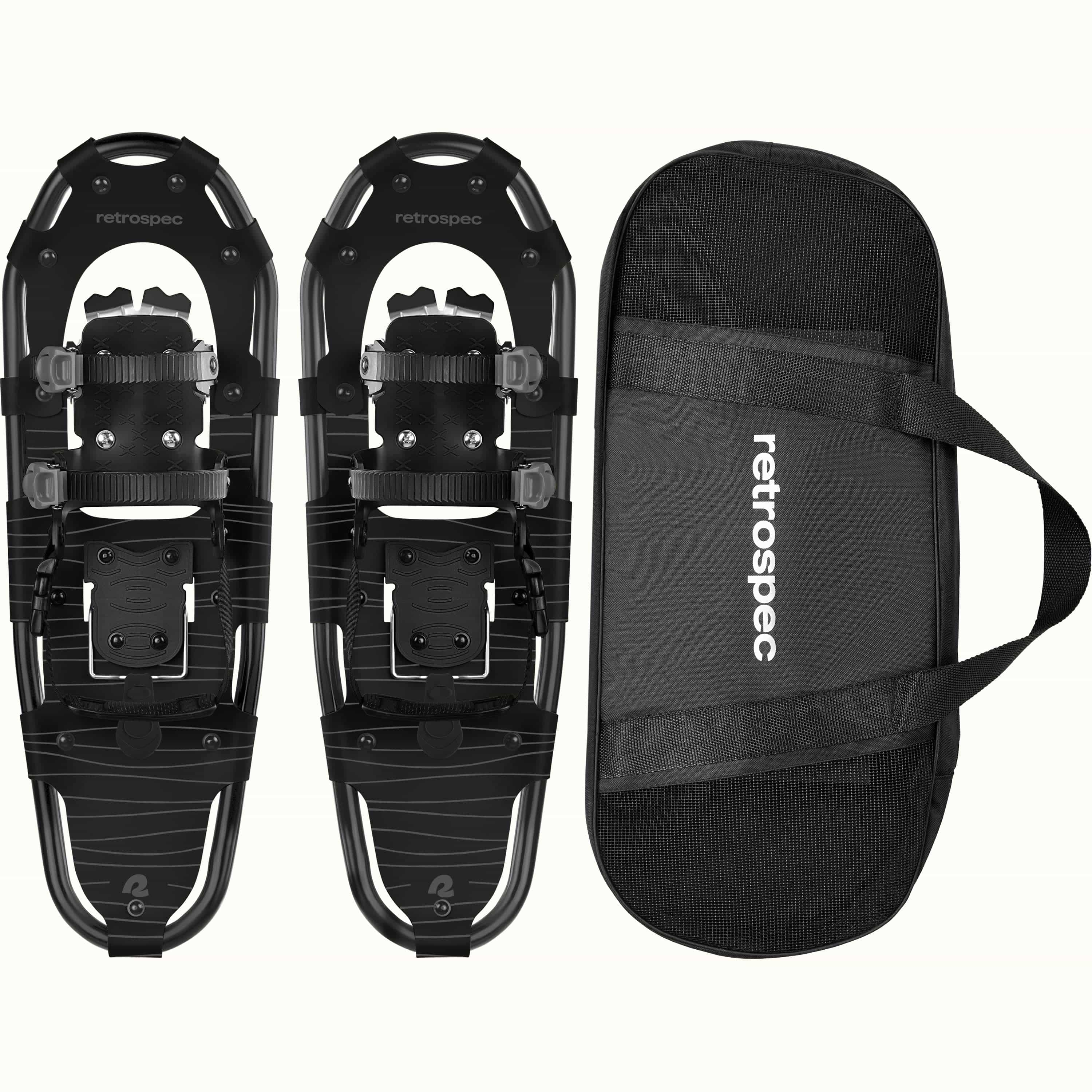
The Retrospec Drifter targets casual winter walkers, families, and budget-conscious hikers looking to explore packed trails, rolling parkland, and mild woodland terrain. Rather than chasing technical mountain summits, this snowshoe focuses on affordability and accessible ease of use. It is constructed with a classic round aluminum frame and a flexible polyethylene (HDPE) deck, a proven combination that keeps the initial cost well below that of technical models. On the snow, the Drifter performs reliably on flat to moderately rolling terrain. The aluminum frame provides reasonable flotation for its length, and the front and rear aluminum crampons offer adequate traction for packed snow and light crust. The binding system utilizes a dual-ratchet strap design over the instep paired with a molded heel band, making it relatively quick to put on and take off for beginners who do not want to wrestle with complex webbing setups. The limitations become evident if you take the Drifter outside its intended recreational comfort zone. The aluminum crampons wear faster on rock than hardened steel, and the absence of aggressive perimeter side rails means the shoe can slip sideways on steep or icy traverses. Additionally, it lacks a heel lift for sustained uphill climbing. For relaxed weekend outings on established trails, however, it delivers honest, capable performance at a wallet-friendly price. **Highlights** - High-value pricing makes winter hiking accessible for casual trail users. - Lightweight aluminum tubing frame paired with durable HDPE deck. - Double-ratchet binding system enables quick, intuitive adjustments. - Dual crampon layout handles packed trails and moderate rolling slopes. - Available in multiple sizing lengths to match different user weights. **Watch-outs** - Lacks edge traction rails for secure traversing on icy sidehills. - Aluminum crampons are prone to wearing down quickly on rocky stretches.
- Price
- Check current price
- Reader rating
- No reader votes yet
- How we assessed it
- Specification researched
Specs side by side
| Spec | Evo Ascent | Drifter |
|---|---|---|
| Deck Material | Injection-molded plastic | High-density polyethylene (HDPE) |
| Weight | 3 lbs, 15 oz per pair | — |
| Binding Style | TriFit freeze-proof elastomer | Dual ratchet straps with molded heel band |
| Traction System | Steel side rails and toe crampon | — |
| Heel Lift | Ergo Televator wire bar | — |
| Standard Length | 22 inches | — |
| Frame Material | — | Round tubular aluminum |
| Available Lengths | — | 21 in, 25 in, 30 in |
| Weight per Pair | — | 4 lb. 3 oz. (25 in.) |
| Traction Type | — | Front and rear aluminum crampons |
What our reviewers liked and didn't
Evo Ascent
- Molded UniBody plastic deck shrugs off direct hits from rocks and roots.
- Ergo Televator heel lift substantially reduces calf fatigue on sustained climbs.
- Full-length steel rails provide exceptional purchase during icy sidehill traverses.
- Freeze-proof elastomer straps remain completely flexible in severe cold.
- Rigid plastic deck is noticeably loud on hard, frozen crust.
- Short 22-inch footprint requires purchasing accessory tails for deep powder.
- Multiple individual straps take longer to secure than modern dial bindings.
Drifter
- Accessible price point makes winter trail exploration affordable
- Dual-ratchet bindings adjust easily even while wearing thick winter gloves
- Proven aluminum frame and HDPE deck deliver dependable flotation
- Available in three sizes to accommodate different body weights and loads
- No perimeter traction rails, causing slippage on icy sidehills
- Aluminum crampons wear quickly if exposed to rock or gravel
- Lacks an uphill heel television bar for sustained steep climbing
Prices change constantly — the figure shown is the last verified catalog price, and the buy buttons always go to the current listing.