



Reader rating
Rate it and you move it. Community ratings re-rank this product inside its Top 10 list.
Expert-picked, reader-ranked. Our editors choose the products and the launch order; member star ratings move picks up or down over time.
Late salmon runs keep bears at Brooks Falls.
Pros
- Unmatched density and visibility of coastal brown bears in their natural habitat
- August brings lighter day-use crowds than the peak July salmon run
- Access to the surreal volcanic expanse of the Valley of Ten Thousand Smokes
- Elevated viewing platform system allows safe, ethical wildlife observation
Cons
- Extremely expensive floatplane access vulnerable to chronic weather delays
- Campground and lodge reservations require booking up to a year or more ahead
- Foot travel is frequently halted by hours-long bear jams on camp paths
Best uses
- Dedicated wildlife photography
- Fly-in backcountry wilderness hiking
- Catch-and-release fly fishing
- Multi-day remote packrafting
Specifications
- Location
- Alaska Peninsula, Southwest Alaska
- Access
- Floatplane or boat via King Salmon
- Primary Hub
- Brooks Camp
- Managing Agency
- National Park Service
- Peak Season
- Late June through September
- Backcountry Permits
- Required for camping; free of charge
Best for
Dedicated wildlife photography, Fly-in backcountry wilderness hiking, Catch-and-release fly fishing, Multi-day remote packrafting
Situated on the rugged Alaska Peninsula, Katmai protects over four million acres of wild volcanic country, coastal fjords, and braided river drainages. While famous for colossal brown bears intercepting jumping sockeye, the park is raw wilderness where humans are distinctly secondary. August marks a shifting phase across the ecosystem as the manic July feeding frenzy transitions to bears patrolling the lower river, lake shores, and coastal flats. Visiting in late summer strips away some of the peak crowd chaos seen earlier in the season. The sockeye run tapers from high-energy waterfall leaping to spawning gravel beds downriver, giving visitors a chance to observe varied foraging behaviors, from snorkeling to scavenging spawned-out carcasses. Beyond the bear viewing stands at Brooks Camp, the backcountry stretches into the surreal ash plains and steaming fumaroles of the Valley of Ten Thousand Smokes. Getting here requires absolute logistical self-sufficiency and significant financial commitment. There are no roads into the park; every visitor arrives via floatplane or water taxi, leaving your itinerary at the mercy of unpredictable North Pacific weather fronts. If you can handle the logistics, flight holds, and strict bear safety protocols, it delivers an unmatched wilderness immersion.
Geography and Volcanic Terrain
Katmai encompasses a dramatic collision of active volcanism, glacial lakes, and coastal tundra spanning millions of acres along the Alaska Peninsula. At the park's heart sits the Valley of Ten Thousand Smokes, a moonscape created by the catastrophic 1912 eruption of Novarupta, the largest volcanic eruption of the twentieth century. Ash flows up to several hundred feet deep filled the Ukak River valley, which has since been carved into steep canyons by ongoing erosion. Surrounding this volcanic desert are enormous freshwater bodies like Naknek Lake and Lake Grosvenor, bordered by rolling subalpine tundra and dense alder thickets. This lack of trail infrastructure outside the immediate Brooks Camp perimeter forces hikers to navigate via dry creek beds, ridgelines, and game trails. Traveling across this terrain demands route-finding competency, solid creek-fording skills, and footwear capable of handling abrasive pumice and saturated muskeg without breaking down.
August Weather and Conditions
August weather in southwest Alaska is notoriously fickle and maritime, dominated by moisture sweeping off the Bering Sea and Gulf of Alaska. Average daily temperatures hover in the mid-fifties to low-sixties Fahrenheit, but high humidity and constant precipitation can make conditions feel substantially colder. Rain is a near certainty; prolonged multi-day drizzles interspersed with gusty squalls are standard operating procedure. Gale-force winds can whip across Naknek Lake, grounding air taxis in King Salmon and leaving travelers stranded on either side of the flight path. Fog and low ceilings frequently delay morning departures well past scheduled takeoff windows. Packing requires bombproof three-layer hardshells, synthetic insulation layers that retain loft when wet, and rugged waterproof bags for all optics and electronics. Expect saturated trails around camp and muddy riverbanks that demand sturdy knee-high rubber boots or chest waders for any meaningful exploration.
Brown Bears and Salmon Runs
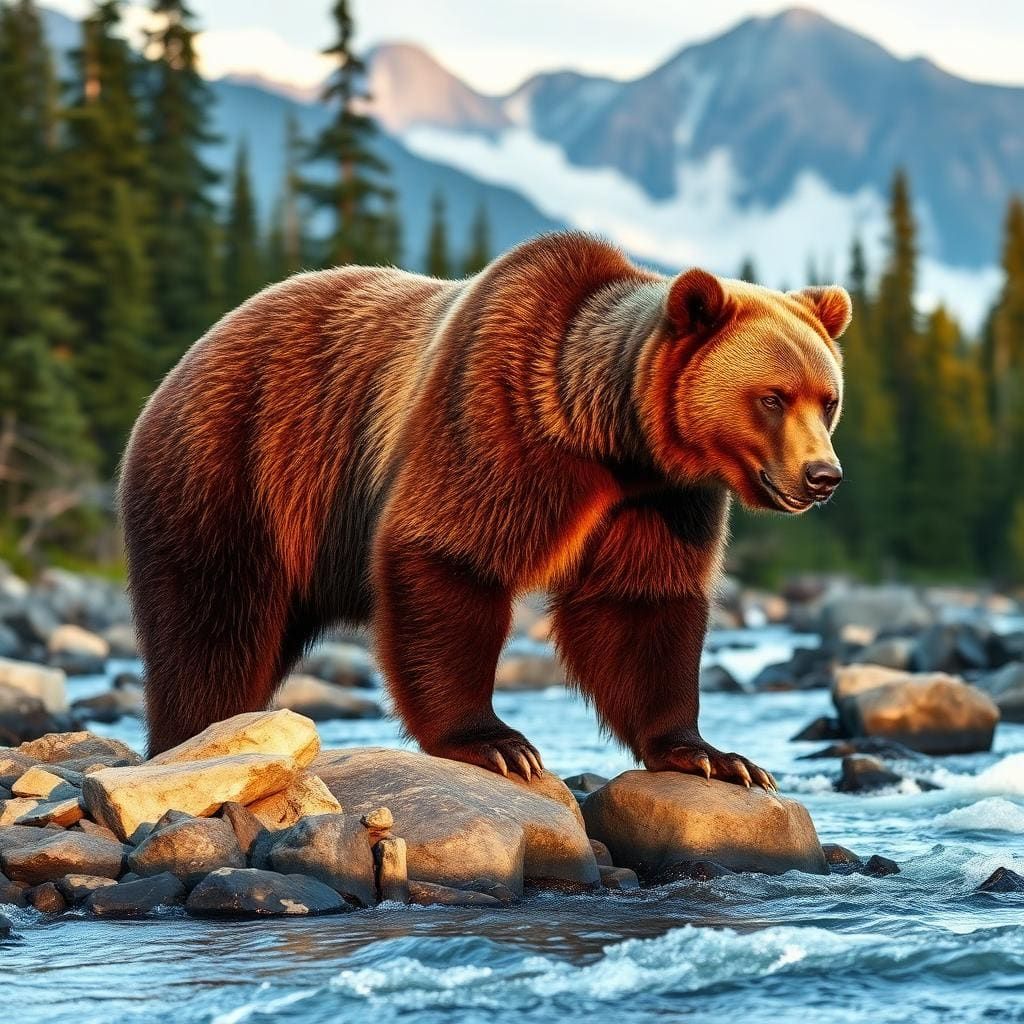
Wildlife viewing here centers on one of the densest protected populations of coastal brown bears on the planet. By August, the energetic spectacle of bears snatching leaping sockeye out of midair at Brooks Falls gives way to a more methodical, widespread feeding pattern. Sockeye disperse into spawning gravels throughout the river system and lake margins, prompting bears to patrol the lower Brooks River, oxbows, and open beaches. Visitors often witness bears snorkeling—submerging their faces to scan the riverbed—and diving for spent carcasses or sluggish post-spawn fish. Sows with spring cubs, often displaced by aggressive boars during the peak July run, become far more visible in August along the open flats. The sheer mass of these animals is staggering as they enter hyperphagia, packing on hundreds of pounds of fat ahead of winter denning. Bald eagles and river otters scavenge the leftovers along the riverbanks.
Brooks Camp and Route Options
The operational hub is Brooks Camp, where boardwalks and elevated viewing platforms minimize direct bear-human conflicts along the river corridor. Beyond the falls platform, self-directed exploration requires stepping into raw backcountry. The cultural trail leads through ancestral Alutiiq homesites, while the Dumpling Mountain trail climbs roughly a thousand vertical feet through spruce forest and alpine tundra to panoramic overlooks of Naknek Lake. For an expansive wilderness excursion, the daily concessioner bus takes visitors out to the Valley of Ten Thousand Smokes road terminus, where a steep trail drops to the edge of the Ukak River canyon. Multi-day backpackers can drop into the valley from here, traversing wind-scoured pumice flats toward Mount Katmai and the Novarupta caldera. Kayakers frequently put in at Lake Camp or the Brooks River mouth, navigating chain lakes via historic portages where high winds and bears dictate camp selection.
Access, Logistics, and Regulations
Reaching the park requires multi-leg logistics and zero room for rigid timing. Visitors typically fly commercial into Anchorage, take a regional turboprop to King Salmon, and board an amphibious floatplane to land directly on Naknek Lake. Accommodations at Brooks Lodge are booked via a competitive lottery nearly two years in advance, while the adjoining 60-person national park campground sells out within minutes when reservations open each January. Upon landing, every traveler must complete mandatory bear school orientation at the visitor center before being allowed onto the trails or platforms. Backcountry campers outside the developed corridor do not pay campground fees, but they must adhere strictly to food storage regulations, carrying certified bear-resistant canisters and camping at least 1.5 miles from Brooks Falls. Proper wilderness stewardship requires staying calm during bear jams, when movement on boardwalks is paused until bears clear the trail.
Crowd Dynamics and Realities
The primary drawback of a late-summer trip is navigating the high demand and restricted movement inherent to bear safety protocols. Brooks Camp can feel congested during mid-day hours when day-trippers arrive from Homer, Anchorage, and King Salmon. Visitors on the Brooks Falls platform are often placed on a waiting list, capping viewing time to thirty-minute windows when crowds peak. Walking between camp cabins, the lodge, and platforms frequently grinds to a halt during bear jams—situations where a bear naps or forages on the footpath, freezing all human traffic until the animal wanders off. Backcountry trips eliminate the crowds entirely but swap them for logistical severity: relentless swarms of whitesox flies and mosquitoes, treacherous glacial river crossings, and complete self-reliance in remote terrain. It is not a place for casual travelers expecting seamless connections or hotel-style amenities.
How we picked
We built this ranking from trip reports, agency data, permit records, and our editors' own time on the ground. 10 places made the final cut out of a much longer working list, and each one had to clear the same set of criteria before it earned a spot.
- Quality of the terrain
- Landscape, route variety, and whether the place rewards multiple days rather than one overlook.
- Season and weather windows
- How long the reliable window is, and how badly the shoulder seasons punish a bad forecast.
- Access and permits
- Trailhead logistics, permit odds, quotas, and how much lead time a trip realistically takes.
- Solitude vs. crowding
- How far you have to walk before the place feels like wilderness instead of a queue.
- Wildlife and ecology
- What you can reasonably expect to see, and what you have to plan around.
- Risk and skill required
- Navigation, water crossings, exposure, and rescue distance — stated plainly.
Katmai National Park — frequently asked questions
- Is Katmai National Park worth the trip?
- We rank it #5 in US Destinations in August. Late salmon runs keep bears at Brooks Falls.
- Who is Katmai National Park best for?
- Best for dedicated wildlife photography, fly-in backcountry wilderness hiking, catch-and-release fly fishing and multi-day remote packrafting. Standouts: unmatched density and visibility of coastal brown bears in their natural habitat and august brings lighter day-use crowds than the peak july salmon run.
- What are the drawbacks of Katmai National Park?
- Extremely expensive floatplane access vulnerable to chronic weather delays, Campground and lodge reservations require booking up to a year or more ahead and Foot travel is frequently halted by hours-long bear jams on camp paths.
- What are the key details for Katmai National Park?
- Location: Alaska Peninsula, Southwest Alaska · Access: Floatplane or boat via King Salmon · Primary Hub: Brooks Camp · Managing Agency: National Park Service · Peak Season: Late June through September
- Geography and Volcanic Terrain — what should I know about the Katmai National Park?
- Katmai encompasses a dramatic collision of active volcanism, glacial lakes, and coastal tundra spanning millions of acres along the Alaska Peninsula. At the park's heart sits the Valley of Ten Thousand Smokes, a moonscape created by the catastrophic 1912 eruption of Novarupta, the largest volcanic eruption of the…
- August Weather and Conditions — what should I know about the Katmai National Park?
- August weather in southwest Alaska is notoriously fickle and maritime, dominated by moisture sweeping off the Bering Sea and Gulf of Alaska. Average daily temperatures hover in the mid-fifties to low-sixties Fahrenheit, but high humidity and constant precipitation can make conditions feel substantially colder.
Where on earth
Satellite imagery flying in from a world view to Katmai National Park, Alaska, United States. Use the + / − buttons, or click the map to zoom with your scroll wheel; drag to pan and pinch to zoom on touch.
Katmai National Park and Preserve, Alaska, USA · 58.586, -154.970
Wildlife found around Katmai National Park



Compare side by side
Put the Katmai National Park against any other pick on this list — specs, price, pros, cons and reader ratings.