


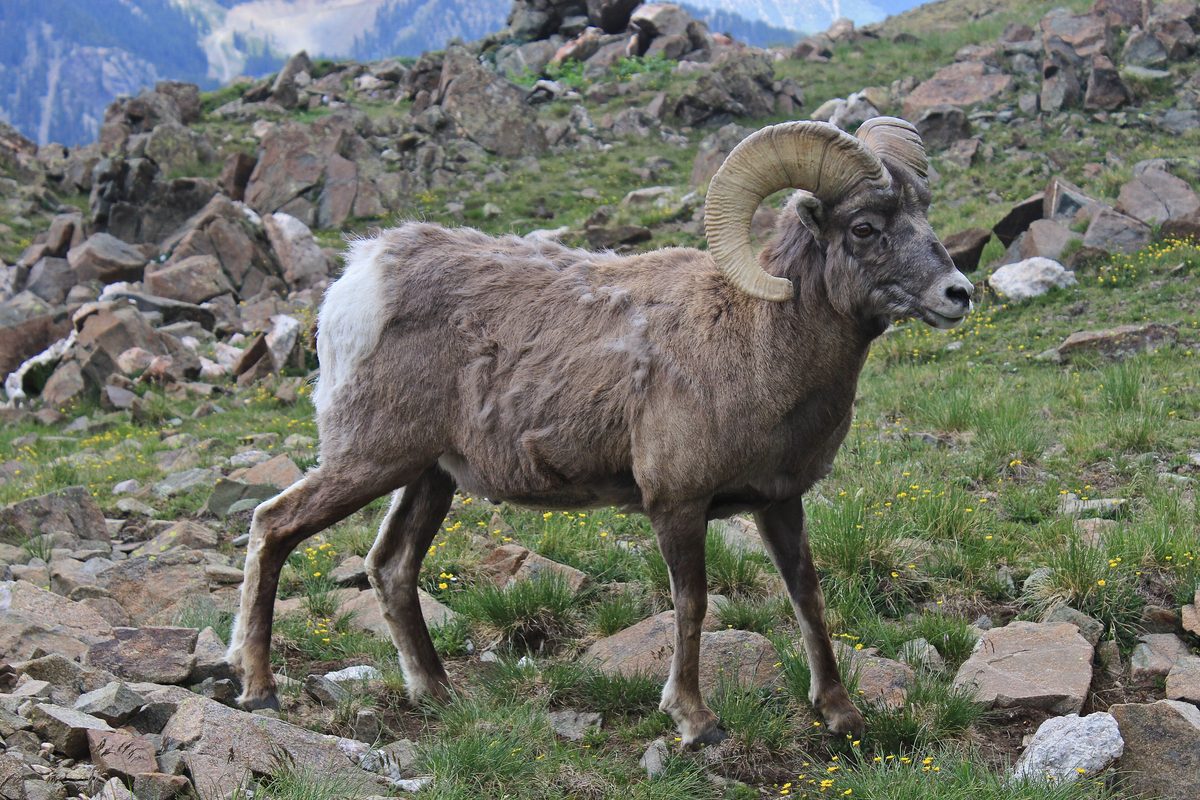
From the north · Wildlife
Bighorn Sheep
The most difficult tag to draw and the most physically demanding hunt in North America — a genuine once-in-a-lifetime pursuit.
Ovis canadensis
- Range
- Rockies, desert SW & Canada
- Season
- Aug – Nov, unit specific
- Tag access
- Once-in-a-lifetime draw / raffle
- Live weight
- 120–300 lb rams
Regulations by region
Bighorn Sheep rules where you're headed
Seasons, tags, limits, and legal methods for bighorn sheep are set jurisdiction by jurisdiction. Pick your state or province and we'll point you at the agency that writes the rules.
Jump to another species
About the bighorn sheep
Wild sheep are the trophy at the center of North American mountain hunting. Rocky Mountain bighorns live on cliffs and alpine benches; desert bighorns survive on rock and cactus in country that hits 100°F with no water for miles. Bighorn populations crashed to a few thousand animals by 1900 and have been rebuilt to roughly 80,000 by transplant programs funded largely by hunters. That recovery is why tags exist at all — and why there are so few of them. Almost every state issues bighorn permits as once-in-a-lifetime licenses with sub-1% draw odds. A small number of governor's and raffle tags sell at auction for six figures, and the proceeds fund the habitat work that keeps the herds alive.
Range and habitat
There are four huntable wild sheep in North America: Rocky Mountain bighorn, desert bighorn, Dall sheep, and Stone sheep. Only the first two are bighorns; Dall sheep in Alaska is the one wild sheep hunt a nonresident can reliably buy. Montana & Wyoming: The best Rocky Mountain bighorn units in the Lower 48. Colorado, Idaho & Utah: Strong bighorn herds and some desert units in Utah. Nevada & Arizona: The premier desert bighorn states. New Mexico: Both Rocky Mountain and desert bighorn, pure random draw. Alberta & British Columbia: World-record Rocky Mountain bighorn genetics. Alaska (Dall sheep): The realistic 'buyable' wild sheep hunt.
Behavior and field method
A sheep hunt is a multi-day mountaineering operation built around glassing from above, executing a long careful stalk on a legal ram, and then getting everything off the mountain safely. Move camp into position over several days, gaining elevation to glassing points that let you look down and across at cliffs and alpine benches where rams live. Glass for hours at a time with tripod-mounted optics, then confirm curl and age with a spotting scope before deciding a ram is legal and worth pursuing. Plan a stalk that uses ridgelines and terrain to stay above or level with the ram, since sheep watch below and across far more than they watch up. Close the distance methodically, often over a full day, using rock and terrain for cover and keeping the wind in your favor. Set up a stable rest on rock or a pack, range the shot with an angle-compensating rangefinder given the steep terrain, and confirm your dial or holdover before shooting. Take the shot only when you have a clean broadside angle within your verified precision range, given the difficulty of a follow-up in that terrain. Cape and bone out the ram immediately, salt or cool the cape and meat, and plan multiple trips to move meat, horns, and gear back to camp or the trailhead.
Tracks, droppings, and sign
Sheep sign is written on rock and it lasts. Bedding ledges and trails on a cliff face persist for years, which makes scouting sign as valuable as spotting the animals. Tracks — Blocky and squared-off with straight edges and a hard rim — built for grip, not soft ground. In dust and snow on a rock ledge, the straight outer edge distinguishes sheep from deer. Droppings — Small, hard, dark pellets that pile up in quantity on bedding ledges — sometimes inches deep where a band has used a ledge for generations. Bedding ledges — Flat, pawed-out shelves on cliff faces with a commanding view and dung accumulation. A ledge with fresh green droppings and hair is in current use. Rub sign & hair — Wool caught on rock edges and brush along the narrow traverse trails they use between feeding basins and bedding cliffs. Mineral licks — Eroded, chewed banks and seeps where sheep dig for minerals — heavily tracked and worth glassing at first light.
In the field
A sheep hunt is a mountaineering trip with a rifle. You are living at 9,000–12,000 feet for ten to fourteen days, moving camp on your back, and glassing cliff faces for hours at a time in weather that changes hourly. Days start before dawn with a climb to a glassing position above the sheep, because bighorns look down for danger far less reliably than they look across and below. Finding rams may take days; a stalk on a bedded ram may take a full day of movement measured in yards. The terrain is genuinely dangerous. Exposure, loose rock, and weather account for more sheep-hunting injuries than anything else, and a broken ankle at 11,000 feet ten miles from a trailhead is a rescue event. Shots are often long and at steep angles, which means angle-compensated ranging and a rifle you can shoot precisely from improvised rests on rock. Everyone who has done it describes the same thing: the hardest and best hunt of their life. Judging the ram, making the stalk, and then getting the meat, cape, and horns off the mountain is the full expression of mountain hunting.
Regulations, tags, and seasons
You need a strategy that assumes you will not draw. Apply every year in every state you can afford, buy raffle tickets, and plan a Dall sheep hunt if you want to actually hunt sheep in this lifetime. Apply in every once-in-a-lifetime state annually. Application and point fees run $10–$150 per state — a modest yearly line item for a lottery with a life-changing payoff. Add New Mexico. It runs a pure random draw with no points, so a first-year applicant has the same odds as anyone. Buy raffle and 'super tag' tickets. Montana, Utah, Nevada, Wyoming, and several conservation groups sell tickets for a handful of unrestricted statewide tags each year. Understand the once-in-a-lifetime consequence: harvesting a ram usually ends your eligibility in that state forever. For a hunt you can book, look at Alaska Dall sheep with a registered guide ($18,000–$30,000) or a Canadian Stone or bighorn hunt ($30,000+). Learn to judge a legal ram before you ever draw. Most states define legality by a curl fraction (three-quarter or full curl) or by an age determined from horn annuli, and the burden is on you.
Harvest and processing
You may only ever draw one sheep tag. Do not rush the field work after the most important shot of your hunting life. Watch the bighorn after the shot instead of running to the spot. Mark the exact stance with a landmark, note the direction of travel, and listen — a crash you hear is worth more than a blood trail you guess at. Give a body-hit animal 30–45 minutes before you take up the trail, and a gut-hit animal 6–8 hours. Pushing a wounded animal is the single most common way hunters lose one. Trail with flagging tape at each blood spot so you can see the line of travel and back up to the last sign if you lose it. Bright blood with bubbles is lungs; dark blood with green flecks is paunch. Confirm the animal is dead by touching an open eye with a stick or the muzzle before you set the gun down and start handling it. Tag the animal immediately if your state requires it, and photograph it where it fell before you move anything — that photo is also your proof of legal harvest in most jurisdictions. Roll the animal onto its back or downhill on its side. Ring the anus with a knife and tie it off with a zip tie or twine so nothing spills into the body cavity. Cape work matters more here than on any other animal, and you are doing it on a cliff.
Meat care and what you take home
A ram yields 60–90 pounds of boneless meat, and sheep is widely considered the best-eating wild meat in North America — mild, fine-grained, and almost sweet. Every state requires full salvage of sheep meat. Bone it out on the mountain, bag it, and cool it in the shade of a rock face while you make multiple trips. Most states also require the horns to be plugged or sealed by an officer within a set number of days. Know that requirement before you leave the field.
Field notes
- Precision mountain rifle: 6.5 PRC, .270 Win, .28 Nosler, or .300 Win Mag in a light package with a quality scope you can dial. Verified drops to 500 yards and an angle-compensating rangefinder.
- Top-tier optics: 15x binoculars on a tripod plus a spotting scope. Judging curl and annuli at a mile is a legal requirement, not a luxury.
- Backpacking system: Sub-4-pound shelter, quality sleeping bag rated below freezing, stove, and 12+ days of food. Every ounce is carried up thousands of feet.
- Mountaineering boots & trekking poles: Stiff, high-cuff boots with real edging ability, plus poles that save your knees on the descent under a meat load.
- Satellite communicator & first aid: No cell service, extreme terrain, and multi-day evacuation times. Carry a communicator, a real trauma kit, and know how to use both.
- Cape & horn care kit: Sharp small blades for caping, salt, and knowledge of your state's mandatory horn plugging and check-in process.
Bighorn Sheep questions, answered
- What are the odds of drawing a bighorn tag?
- For nonresidents, typically 0.1%–1% per year depending on state and unit, even at maximum points. New Mexico's pure random draw gives every applicant the same small chance. Apply every year and treat it as a lottery, not a plan.
- What is a legal ram?
- Definitions vary: many states require a three-quarter-curl or full-curl ram, others use age determined from horn growth rings, and some units allow any ram. Misjudging a ram is a serious violation, so study the state's official judging materials before you hunt.
- Can I buy a sheep hunt?
- Yes, but not a Lower 48 bighorn. An Alaska Dall sheep hunt with a registered guide runs about $18,000–$30,000 and is the realistic entry point. Canadian Stone and bighorn hunts start around $30,000 and go far higher.
- How fit do I need to be?
- This is the fittest you will ever need to be to hunt. Realistically: multi-hour climbs with a 50-pound pack at altitude, day after day, and a meat pack-out at the end. Train for a year, not a month.
- Why is sheep hunting so expensive and restricted?
- Because there are only about 80,000 bighorns in North America and they are vulnerable to pneumonia transmitted from domestic sheep. Tag revenue, raffle tags, and auction tags fund the transplants, disease research, and habitat work that rebuilt the herds.
Official sources and further reading
- Wild Sheep Foundation
Conservation funding, raffle and auction tags, and the definitive sheep-hunting community.
- Montana FWP sheep licenses
Once-in-a-lifetime bighorn application, districts, and legal ram definitions.
- Alaska Department of Fish & Game — Dall sheep
Full-curl regulations and the guide requirement for nonresidents.
- Boone and Crockett Club — sheep
Scoring categories and fair-chase standards for the four North American wild sheep.