


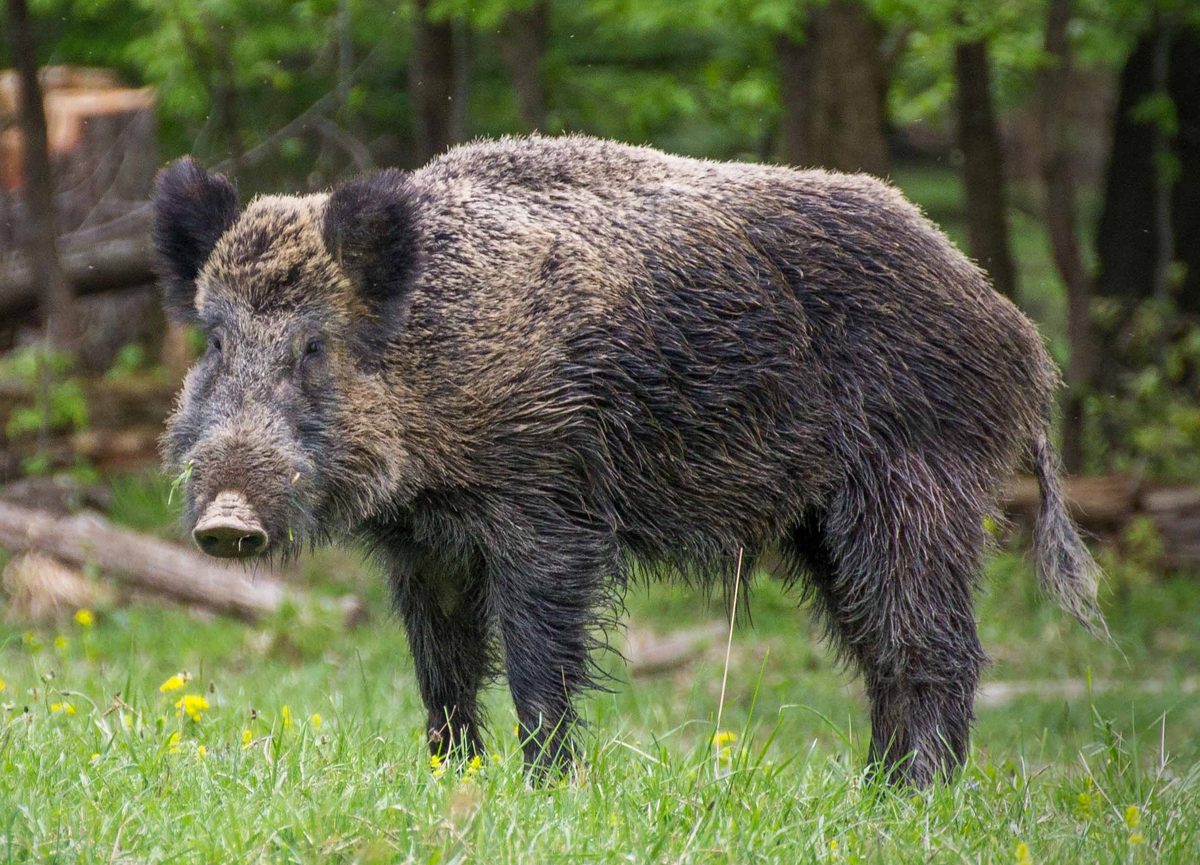
From the north · Wildlife
Wild Hog
An invasive species with no closed season in most of its range — the most available, most repeatable big-game hunting in America.
Sus scrofa
- Range
- 35+ states, worst in TX & the South
- Season
- Year-round in most states
- Tag access
- License only; often no tag
- Live weight
- 100–300+ lb
Regulations by region
Wild Hog rules where you're headed
Seasons, tags, limits, and legal methods for wild hog are set jurisdiction by jurisdiction. Pick your state or province and we'll point you at the agency that writes the rules.
Jump to another species
About the wild hog
Feral hogs are an invasive species that cause an estimated $1.5–2.5 billion in agricultural damage annually in the United States. Texas alone holds several million. Because they are classified as nuisance or exotic animals in most states, there is frequently no closed season and no bag limit. For a hunter, that means the one big-game animal you can hunt in July, at night, with a semi-automatic rifle, on a landowner's invitation, without a draw or a point system. Hogs are intelligent, nocturnal under pressure, and travel in groups called sounders. They also have a phenomenal nose, poor eyesight, and a habit of destroying the same field repeatedly — which is what makes them patternable.
Range and habitat
Hog hunting follows the damage. Agricultural river bottoms, creek drainages, and any thick bedding cover adjacent to a food source. Texas: Millions of hogs; year-round, day and night, on private and some public land. Florida: Second-highest population; excellent public WMA hog hunting. Georgia, Alabama & Mississippi: River-bottom hogs with generous rules and public national forest. Louisiana & Arkansas: Delta and bottomland hardwood populations. California & Hawaii: Established populations with a formal tag system. Oklahoma, Tennessee & the Carolinas: Expanding populations, often unwelcome.
Behavior and field method
Hogs are patternable nuisance animals: find where they're rooting, hunt the wind, and be ready to work fast when a sounder appears, day or night. Get landowner permission on ground with visible rooting, wallows, or crop damage — access is the real currency of hog hunting. Scout creek bottoms, thick bedding cover, and field edges for fresh rooting, wallows, and tracks with wide-printing dewclaws. For daytime hunts, still-hunt slowly into the wind along travel corridors between bedding and feed, since a hog's nose is sharper than a deer's and a sounder busts as one unit. For night hunts where thermal or night vision is legal, set up over a field or feeder and glass patiently until a sounder commits to the open. Aim slightly forward and low on a hog — behind the shoulder crease or at the ear-butt for a head shot — since the vitals sit further forward and mature boars carry a cartilage shield over the shoulder. Try to take a follow-up shot on a second hog in the sounder if it's legal and safe, since sounders often hesitate for a few seconds after the first shot. Skin and quarter quickly in warm weather and get meat on ice within an hour or two; wear gloves throughout for disease precautions.
Tracks, droppings, and sign
Hogs are the easiest big game on the continent to read, because they destroy everything they touch. Fresh hog sign is obvious even to a first-time hunter. Tracks — Rounder and wider than a deer's with blunt toes that splay outward, and dewclaws that register wide and low beside the main toes — a deer's dewclaws sit directly behind. That wide dewclaw spread is the reliable tell. Droppings — Segmented, tubular, and highly variable with the diet — corn, acorns, roots, and carrion all show up in it. Often deposited in trails and on road edges. Rooting — Ground plowed up as if a rototiller ran through it, from a few square feet to acres. Wet, dark, freshly turned soil with clean root ends means last night; dried, greying edges mean a week ago. Wallows & rubs — Muddy pits at seeps and creek edges with hog hair in the rim, and rub trees or fence posts caked with dried mud at 18–30 inches. Mud height on a rub estimates hog height. Beds & travel — Matted nests hollowed into cane, palmetto, or brush, often lined with grass. Tunnels through thick cover connect bedding to feeding, and hogs use the same runs nightly.
In the field
Daytime hog hunting is a stalking and sign-reading hunt. You look for fresh rooting, wallows, rubs on trees at knee height, and tracks with the dewclaws printing wide, then still-hunt into the wind along creek bottoms and thick bedding cover. Night hunting with thermal is a completely different sport: sitting over a field with an optic that turns a black night into a gray scene, watching a sounder of fifteen pigs walk out of the timber, and taking multiple animals in seconds. Hogs run in groups. A sounder detects one thing wrong and evaporates into the brush at once, so the wind is everything — their nose is far better than a deer's and they use it constantly. Shots are usually close, 30 to 100 yards. Shot placement is different from deer: aim slightly forward and lower, at the ear-butt for a head shot or tight behind the shoulder crease — a hog's vitals sit further forward and are shielded by a heavy shoulder shield of cartilage on mature boars. It is hot, buggy, and full of thorns for much of the year. Snake gaiters in the South are not paranoia; they are equipment.
Regulations, tags, and seasons
Hog regulations are the most inconsistent in North American hunting. Some states encourage unlimited killing; others restrict hunting specifically so hogs are not deliberately spread by hunters. Buy a basic hunting license for the state. In Texas, on private land with landowner consent, even that requirement can be waived for landowners controlling damage. Verify night-hunting law. Thermal and night vision are legal for hogs in Texas and much of the South but require a permit or are outright banned elsewhere. Confirm whether the land is public. Public wildlife management areas usually restrict hogs to specific weapons and seasons, unlike private land. Get access. Hog hunting is almost entirely a landowner-relationship sport — farmers with damaged fields are frequently glad to have you. Check California-style tag states: a per-animal wild pig tag is required, unlike the no-limit model in the South. Never transport live hogs. It is a serious crime in every state and the primary way the invasion has spread.
Harvest and processing
Hogs are tough, thick-skinned, and armored across the shoulders. Shot placement is further forward and lower than on a deer. Watch the wild hog after the shot instead of running to the spot. Mark the exact stance with a landmark, note the direction of travel, and listen — a crash you hear is worth more than a blood trail you guess at. Give a body-hit animal 30–45 minutes before you take up the trail, and a gut-hit animal 6–8 hours. Pushing a wounded animal is the single most common way hunters lose one. Trail with flagging tape at each blood spot so you can see the line of travel and back up to the last sign if you lose it. Bright blood with bubbles is lungs; dark blood with green flecks is paunch. Confirm the animal is dead by touching an open eye with a stick or the muzzle before you set the gun down and start handling it. Tag the animal immediately if your state requires it, and photograph it where it fell before you move anything — that photo is also your proof of legal harvest in most jurisdictions. Roll the animal onto its back or downhill on its side. Ring the anus with a knife and tie it off with a zip tie or twine so nothing spills into the body cavity. Cook hog to 160°F internal, always. Beyond that, a young sow is as good as any pork you will buy.
Meat care and what you take home
Hogs under about 150 pounds are excellent eating — mild, dark, and genuinely better than commercial pork. Big mature boars can be strong and are often better used for sausage. Always wear gloves when handling feral swine, and cook all pork to 160°F. Brucellosis is transmitted by contact with blood and fluids, not just by eating. Whole-hog barbecue, shoulder braises, and sausage are the classic uses. The fat is worth rendering from a well-fed corn-fed pig.
Field notes
- Semi-auto or bolt rifle: A .223 works on smaller hogs with good bullets; .243, 6.5 Creedmoor, .308, or .300 Blackout are better on mature boars. Suppressors, where legal, let you take more than one animal from a sounder.
- Thermal or night vision: The single biggest force multiplier in hog hunting. Verify legality in your state and on the specific property before you buy.
- Snake boots or gaiters: Cottonmouths, rattlesnakes, and copperheads share hog habitat, especially at night in warm months.
- Gloves and disease precautions: Wear gloves when field dressing. Feral swine carry brucellosis, pseudorabies, and other pathogens transmissible by contact.
- Ice and a cooler: Hot weather plus pork is the fastest spoilage combination in hunting. Skin, quarter, and ice within an hour or two.
Wild Hog questions, answered
- Do I need a tag to hunt hogs?
- In most southern states, no — a basic hunting license is enough and there is no bag limit or closed season on private land. California requires a per-animal wild pig tag, and public land everywhere has its own rules. Check the current regulation booklet.
- Is night hunting legal?
- In Texas and much of the South, yes, with thermal or night vision on private land, sometimes requiring a permit. In other states it is banned entirely. Never assume — the penalties for illegal night hunting are severe.
- Are wild hogs dangerous?
- A cornered or wounded boar with cutters will charge and can do serious damage to a leg or a dog. Do not follow a wounded hog into thick brush without a clear plan and a partner.
- Where do I get permission to hunt hogs?
- Talk to farmers and ranchers with visible rooting damage in food plots, hay fields, or row crops. Show up in daylight, be polite, offer to report what you kill, and clean up after yourself. Most hog access is earned this way, not paid for.
- Is hog meat safe to eat?
- Yes, when handled with gloves and cooked to 160°F. The risk is contact transmission during field dressing, so gloves matter more than they do with deer.
Official sources and further reading
- USDA APHIS feral swine program
Population maps, damage data, and disease risk information.
- Texas Parks & Wildlife — feral hogs
The most permissive hog regulations in the country, explained officially.
- CDC — brucellosis and hunters
Safe handling guidance for feral swine carcasses.
- Florida FWC wild hog hunting
Public WMA hog opportunities and permit requirements.