


From the north · Wildlife
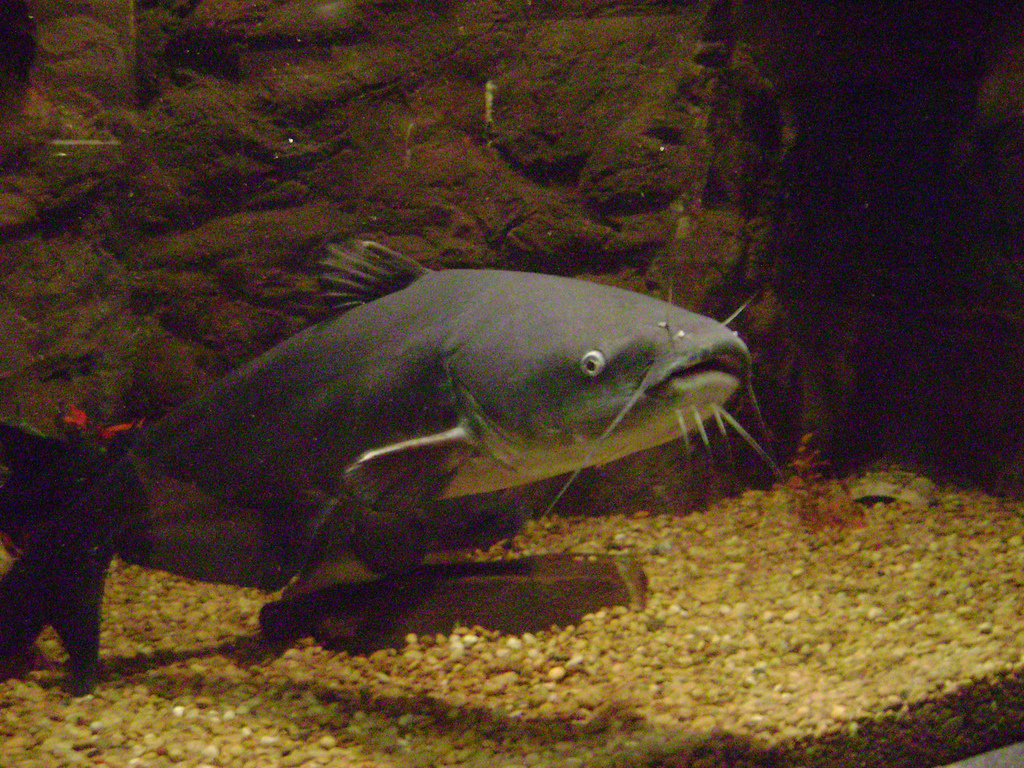
Blue Catfish
The largest catfish in North America and the most attainable genuine trophy fish in fresh water — 40-pounders come from public river water within an hour of most southern cities.
Ictalurus furcatus
- Range
- Mississippi, Missouri, Ohio, Chesapeake tribs
- Prime season
- Late fall through winter for size
- Access
- Basic state license; bank or boat
- Table quality
- Excellent under 10 lb; release the giants
Regulations by region
Blue Catfish rules where you're headed
Seasons, tags, limits, and legal methods for blue catfish are set jurisdiction by jurisdiction. Pick your state or province and we'll point you at the agency that writes the rules.
Jump to another species
About the blue catfish
Blue catfish are current fish. Where channel cats will settle into a still backwater, blues sit behind hard structure in moving water and let the river deliver food to them. That single habit dictates everything about how you fish for them. They also grow bigger than any other North American catfish — 100-pound fish are documented from the Mississippi and the James, and a healthy river will produce 30- to 50-pound fish for an angler with fresh bait and patience. The best fishing is cold. From November through February, blues stack in deep holes and on wintering flats, and the average size climbs sharply while the crowds disappear.
Range, water, and where they live
Blues need volume — big rivers, big reservoirs, and tidal systems. These are the fisheries where a genuine trophy is a reasonable goal rather than a lottery. James & Rappahannock Rivers, Virginia: Introduced population with extraordinary numbers of 30 lb-plus fish. Mississippi River, Tennessee to Louisiana: Native river fish holding on wing dams and scour holes. Santee Cooper lakes, South Carolina: The lakes that created modern trophy catfishing. Missouri River below the dams: Deep tailrace holes with year-round current. Lake Texoma, Oklahoma/Texas: Shad-driven population with reliable winter schooling.
Behavior and how they feed
A blue catfish trip is a hunt for current seams and fresh bait, in that order. Skip either and you will catch small fish. Catch fresh bait first — gizzard shad or skipjack that morning. Frozen bait catches a fraction of what fresh does. Find the break: a wing dam, an outside bend hole, a bridge pier, or the lip where a flat drops into the channel. Anchor or spot-lock upstream of the break and fan a spread of rods so baits sit at three different depths. Rig a Santee-style slip rig — 3–8 oz sinker, 40 lb leader, 8/0 circle hook, and a small peg float to lift the bait off bottom. Use a half or whole shad, head-hooked, with the skin cut so scent releases; refresh bait every 20 minutes. Give a spot 30 minutes. Blues are aggressive; if fish are there and feeding, you will know quickly. In winter, switch to drifting or slow-trolling 0.4–0.8 mph across deep flats to cover water until you find a school. Let circle hooks load against the rod — never swing. Lift steadily and let the fish turn into the hook.
Where they hold
Blues are open-water, current-oriented predators that follow shad. They are far more nomadic than channel cats. Main channel ledges — The break from the flat into the old river channel, 20–50 feet, especially where current runs across it. Shad schools — Blues sit under and behind shad balls; graph bait first, then position on the fish beneath them. Tailraces — The boil below a dam when water is running is the highest-density blue catfish spot in a system. Winter deep holes — Deep bends and dam pools stack big fish in 40–70 feet in January and February. Flats at night — Blues push shallow after dark on windy flats to feed on shad pushed by wave action.
What they eat and what they hit
These are the presentations that consistently produce blue catfish, with the conditions each one is actually for — not a tackle-shop wall. Fresh cut shad or skipjack — Cut in chunks with the skin on; freshness matters more than size or species. Anchored spread with circle hooks — Five to eight rods fanned on a ledge with 6/0–10/0 circle hooks and 2–8 oz sinkers. Drifting / controlled drift — A drift sock and santee-cooper rigs at 0.4–0.8 mph across flats finds scattered fish. Suspended float rig — Keeps bait off a rocky bottom and in the strike zone over ledges. Heavy jig / gizzard shad head — For winter fish stacked in a hole, a big head or a slow-dropped bait right on their nose.
In the field
Cold weather is the price of admission for size. The best blue catfish bite of the year happens in the same weeks most people winterize the boat. The fight is a long, heavy, head-down grind rather than a run-and-jump. Expect to spend several minutes on a 40 lb fish with the drag set firm. Bring more bait than you think you need. A good day burns through a full cast net of shad, and running out ends the trip.
Licenses, stamps, and limits
No draw, no tag — but catfish rules are the most locally variable in fresh water, and several states now protect the big fish specifically. Buy the state freshwater license online; most tidal reaches also require a separate saltwater registration. Read the trophy provision — many waters now limit you to one fish over 32 or 34 inches per day. Confirm whether cut bait from gamefish species (shad, skipjack, gizzard) is legal to take and how. Check jug, trotline, and limb-line rules separately; rod-and-reel rules do not cover them. On border rivers, verify which state's license the water body honors before you launch.
Landing, release, and cleaning
What happens between the hookset and the cooler decides whether you land the fish and whether it is worth eating. Do not set the hook on a circle hook. Let the rod load in the holder, pick it up, and reel steadily until the weight is solid. Big blues need a landing net or a boca grip and two hands. Support the belly of any fish over about twenty pounds. To keep the fish, dispatch it immediately — a firm rap with a priest or knife spine at the top of the skull, just behind and above the eyes. A blue catfish killed instantly tastes better than one that suffocates in a bucket. Bleed it right away: cut the two gill arches on one side, or make a single cut behind the pectoral fin to the artery, and hold it in the water for thirty seconds while it pumps out. Get it on ice — slurry ice (ice plus water plus a little salt) if you have it — within minutes, not at the end of the day. Cold, bled fish is the entire difference between good and muddy-tasting fillets. Release trophy fish over about 25 pounds — those are decades-old females that carry the fishery, and the eaters are the 3–10 lb fish. Cleaning a blue catfish the right way takes about four minutes once you know the sequence.
On the table
Blues under about ten pounds are outstanding — firm, white, and cleaner-tasting than most other catfish because they live in moving water. Trim the red lateral line and any fat along the belly; that tissue carries whatever the river carries. Release the giants. A 50 lb blue is decades old, is the breeding stock of the fishery, and eats poorly compared to a five-pounder.
Field notes
- 7'6" to 8' medium-heavy catfish rod: Long enough to control a spread of baits and cushion a heavy head shake.
- Baitcaster with clicker, 300-size: Line-out clicker lets a fish take without pulling the rod overboard.
- 50–65 lb braid main, 40 lb mono leader: Braid for hooksets at distance; mono leader for abrasion and shock.
- 8/0–10/0 circle hooks: Corner-of-the-mouth hookups that release big fish alive.
- No-roll sinkers, 3–8 oz: Hold bottom in current without tumbling downstream.
- Cast net, 6–8 ft radius: Fresh shad is the actual key to this fishery — everything else is secondary.
Blue Catfish questions, answered
- What is the best bait for blue catfish?
- Fresh cut gizzard shad or skipjack herring, caught the same day. Blues feed by scent and vibration, and the oil in fresh bait is what pulls them off the break. Frozen bait works when nothing else is available, but it catches noticeably fewer and smaller fish.
- When do blue catfish bite best?
- November through February is the trophy window, when fish stack in deep holes and feed hard between fronts. Summer fishing is faster for numbers, especially at night, but the average size is much smaller.
- Can you catch blue catfish from the bank?
- Yes — bridge abutments, tailrace walls, and outside river bends put deep current within casting range. Use a heavier sinker than you think and keep baits pinned to the seam edge.
- How do blue catfish differ from channel catfish?
- Blues have a straight-edged anal fin with 30–36 rays, no spots as adults, and a slate-blue back. Channel cats have a rounded anal fin, spots on younger fish, and rarely exceed 20 pounds.
- Are blue catfish invasive?
- In the Chesapeake Bay tributaries, yes — they were introduced and now dominate. Several states actively encourage harvest there and have removed limits entirely to reduce the population.
Official sources and further reading
- Virginia DWR — Blue Catfish
Regulations and trophy-fish provisions for the James and Rappahannock.
- USGS — Ictalurus furcatus
Native and introduced range data with documented impacts.
- NOAA Chesapeake Bay — Invasive Catfish
Population status and management guidance in the Bay watershed.