


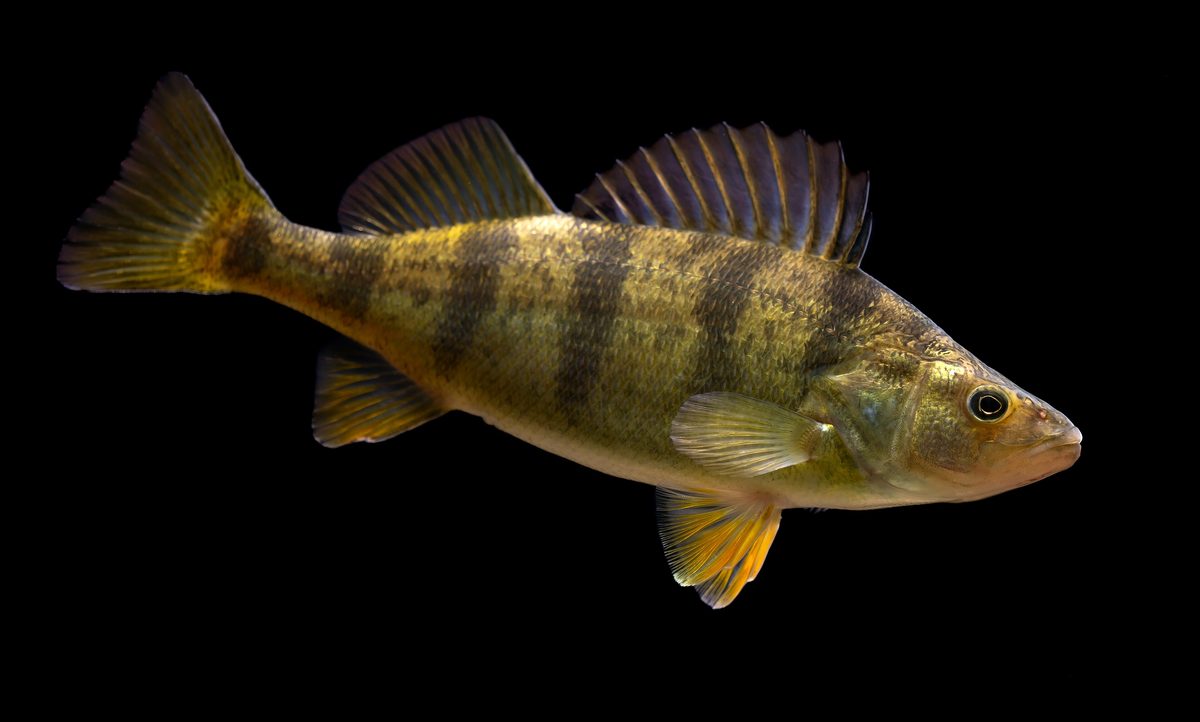
From the north · Wildlife
Yellow Perch
A schooling, bottom-oriented panfish that gets better the colder it gets — and the best-eating small fish in fresh water.
Perca flavescens
- Range
- Great Lakes, Northeast, upper Midwest, Canada
- Prime season
- Ice season and late fall
- Access
- Basic license; some perch-specific limits
- Table quality
- Excellent — rivals walleye
Regulations by region
Yellow Perch rules where you're headed
Seasons, tags, limits, and legal methods for yellow perch are set jurisdiction by jurisdiction. Pick your state or province and we'll point you at the agency that writes the rules.
Jump to another species
About the yellow perch
Yellow perch are a schooling fish that lives on the bottom in sand, gravel, and the outside edges of weed beds. Where you find one you'll find a hundred, and they move as a unit. They peak in cold water. Late fall and the ice season produce both the most fish and the largest ones, and Lake Erie's fall perch run is a legitimate destination fishery. They also happen to be one of the two or three best-eating fish in fresh water, which is why the limits on productive water get filled every day of the season.
Range, water, and where they live
Perch are widespread in the north. These are the places where 'jumbo' perch over 12 inches are a realistic target. Lake Erie (all states): The best jumbo perch fishery in the world. Devils Lake, North Dakota: Huge perch under the ice. Lake Simcoe, Ontario: Famous ice perch and whitefish fishery. Chesapeake tributaries (MD/VA): Spring yellow perch runs up feeder creeks. Minnesota/Wisconsin lakes: Reliable numbers alongside walleye.
Behavior and how they feed
Find the bottom, find the school, and use small baits presented tight to the bottom. Start on sand or gravel bottom near a weed edge or drop-off in 15–40 feet, depending on season. Fish directly on the bottom — perch feed down, and a bait a foot too high will be ignored. Use a small jig tipped with a minnow head, a perch rig with two small hooks, or a 1/8 oz spoon with a minnow head. Jig aggressively to call fish in, then hold the bait still; the strike usually comes on the pause. Move when the bite dies — the school shifts, and staying put on an empty spot wastes the day. On the ice, drill a line of holes across a break and hop between them until you find the school. Use two rods where legal, one aggressive and one dead-stick, to figure out the mood quickly. Keep the school fired up by getting your bait back down immediately after every fish.
Where they hold
Perch roam in tight schools along the bottom over sand, gravel, and weed edges, and they move constantly. Sand and gravel flats — 8–25 feet of clean bottom near weeds; the school patrols it in a loop, so stay put once you find them. Deep weed edges — The outside cabbage line holds perch feeding on bugs and minnows all day. Basin holes — Perch shift to soft basin bottom for bloodworms under the ice; jumbo perch live here. Harbor and pier structure — Break walls, harbor mouths, and pier ends concentrate perch in fall.
What they eat and what they hit
These are the presentations that consistently produce yellow perch, with the conditions each one is actually for — not a tackle-shop wall. Small jig + minnow head — 1/16–1/8 oz jig tipped with a minnow head or a soft plastic worm, pounded on the bottom. Perch rig (two-hook drop) — Two hooks above a bell sinker, baited with minnows or worms, fished vertically. Small blade bait / jigging spoon — The flash pulls in a school; switch to bait once they are under you. Soft plastic ringworm — Keeps you fishing instead of re-baiting when the school is on top of you.
In the field
Perch fishing is a numbers game, and on a good school it is fast, social, and productive — often a limit in an hour or two. Ice fishing is where perch shine. A portable shelter, a flasher, and a bucket of small jigs is the whole kit. The Lake Erie fall bite is the biggest event — head boats and private boats limit out on jumbos through October and November.
Licenses, stamps, and limits
Basic licensing, but perch limits are among the most actively managed panfish rules in the country. Buy the basic state or provincial fishing license. Check the perch daily limit; Lake Erie allows 30 in most states, inland waters far fewer. Confirm whether perch fall under a combined panfish limit on that water. Verify the season — spring closures protecting spawning perch are common in tidal and inland waters. For ice fishing, check shelter registration and removal-date rules for that state.
Landing, release, and cleaning
What happens between the hookset and the cooler decides whether you land the fish and whether it is worth eating. Perch bite lightly and let go quickly. Set the hook on any weight change and reel steadily; they do not fight hard but they shake off easily. To keep the fish, dispatch it immediately — a firm rap with a priest or knife spine at the top of the skull, just behind and above the eyes. A yellow perch killed instantly tastes better than one that suffocates in a bucket. Bleed it right away: cut the two gill arches on one side, or make a single cut behind the pectoral fin to the artery, and hold it in the water for thirty seconds while it pumps out. Get it on ice — slurry ice (ice plus water plus a little salt) if you have it — within minutes, not at the end of the day. Cold, bled fish is the entire difference between good and muddy-tasting fillets. Keep the school by re-dropping fast and keeping a bait in the water — perch schools move on when the activity stops. Cleaning a yellow perch the right way takes about four minutes once you know the sequence.
On the table
Yellow perch fillets are the equal of walleye — sweet, firm, and completely mild. They're small, so filleting a limit takes time; an electric fillet knife pays for itself in one trip. Ice them immediately and fry them fresh. Perch is the classic Friday fish fry of the upper Midwest for good reason.
Field notes
- 6'6" light spinning rod: Fast tip to detect a light take on bottom.
- 28" medium-light ice rod: Short enough for a shelter, sensitive enough for a perch bite.
- 6 lb line or 6 lb braid to fluoro leader: Thin diameter keeps small baits on bottom in current.
- Perch spreader rig with #6 hooks: The Lake Erie standard — two hooks, a sinker, and minnow heads.
- 1/16–1/8 oz tungsten jigs: Tungsten gets down fast and holds bottom in wind or current.
- Minnows or minnow heads: Perch key on live scent; plastics work but bait wins on tough days.
Yellow Perch questions, answered
- How do I find perch schools?
- Look for hard bottom — sand or gravel — near a weed edge or depth break, and fish directly on the bottom. If you don't get a bite in ten minutes, move; perch are almost always tightly schooled.
- What's the best perch bait?
- A minnow or a minnow head on a small jig or a spreader rig. Perch eat by sight and scent, and live bait consistently beats plastics on pressured water.
- Are perch better than walleye on the table?
- Many anglers say yes. The fillets are smaller but the flavor is arguably cleaner and sweeter — the tradeoff is the amount of cleaning.
- When is the best perch fishing?
- Late fall and mid-winter. Cold water schools them tightly and produces the largest fish; summer perch are scattered and generally smaller.
Official sources and further reading
- Ohio DNR — Lake Erie Yellow Perch
Weekly perch locations, depths, and daily limits.
- Ontario Fishing Regulations
Zone limits for perch and ice shelter rules.