


From the north · Wildlife
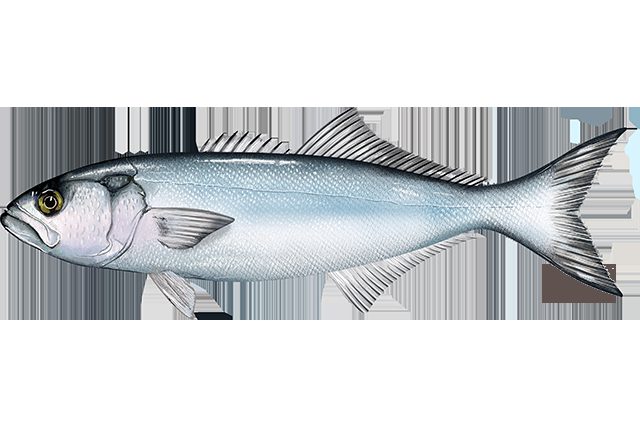
Bluefish
The most aggressive fish in the surf — a schooling predator that destroys bait, plugs, and leaders alike.
Pomatomus saltatrix
- Range
- Maine to Florida, seasonally
- Prime season
- Spring and fall migrations
- Access
- State saltwater registry/license
- Table quality
- Good if bled and eaten fresh
Regulations by region
Bluefish rules where you're headed
Seasons, tags, limits, and legal methods for bluefish are set jurisdiction by jurisdiction. Pick your state or province and we'll point you at the agency that writes the rules.
Jump to another species
About the bluefish
Bluefish are pure aggression. A school will drive bait to the surface and feed until the water is foam, and every lure that lands in it gets hit. They're the fish that keeps surfcasters busy between striper runs, and for anyone learning saltwater fishing they are the most forgiving target on the coast. They also have genuinely dangerous teeth and a habit of thrashing at the moment you reach for them. Wire leaders, long pliers, and a plan for landing the fish are not optional.
Range, water, and where they live
Bluefish follow the bait north in spring and south in fall. Intercept them on the migration. New Jersey and Long Island surf: Fall blitzes visible from the beach. Cape Cod and the Islands: Summer and fall blues on rips and flats. Chesapeake Bay: Spring and fall runs of school-size fish. Outer Banks, North Carolina: Big spring choppers off the beach. Florida east coast: Winter run of school blues.
Behavior and how they feed
Find the bait, cast metal, and rig so their teeth don't end the day early. Watch for birds. Diving terns and gulls over nervous water is the single most reliable bluefish sign there is. Cast beyond the edge of the blitz and retrieve through it; casting into the middle often spooks the bait ball. Retrieve fast. Bluefish chase and commit at speed, and a slow retrieve gets refused more than you'd expect. Use metal lures — diamond jigs, casting spoons, and metal-lip swimmers — that survive being bitten repeatedly. Run a short wire leader or 50–60 lb fluorocarbon; blues cut straight mono and braid instantly. When the blitz is out of casting range, drift or troll the edges of the school rather than running through it. Land the fish with a net or a lip grip and keep your hands away from the head; a bluefish bites hard. Bleed anything you're keeping immediately at the gills and get it on ice — this is the single decision that determines whether it's good to eat.
Where they hold
Blues follow bait relentlessly and are found where bait is being pushed — on the surface, in a rip, or against a beach. Surface blitzes — Birds working over churning water; blues are the fish most likely to be feeding visibly at the surface. Rips and inlets — Moving water that pins bait against structure concentrates blues on every tide cycle. Beach troughs — Blues run the first trough chasing bunker and mullet, often within casting range of dry sand. Nearshore bunker schools — Blues sit under and around adult bunker pods; snag-and-drop and live-line around the edges.
What they eat and what they hit
These are the presentations that consistently produce bluefish, with the conditions each one is actually for — not a tackle-shop wall. Metal lure / diamond jig — Casts a mile, sinks fast, and survives being chewed; the classic bluefish tool. Popper — Loud surface baits produce explosive strikes; expect to lose hooks and rear grommets. Bucktail with a pork or plastic trailer — Fish below the surface feeders — they are often bigger. Cut bunker on a fish-finder rig — The surf standard: a fresh bunker chunk on a wire-leadered circle hook. Wire or heavy fluoro leader — Bluefish teeth cut everything. A short wire bite trace saves lures and keeps you fishing.
In the field
A fall blitz is chaos in the best way — fish breaking as far as you can see and hookups on nearly every cast. Between blitzes, blues are still catchable on rips and along beaches, and they are the reliable saver of an otherwise blank surf trip. Bring extra leaders and lures. You will lose both, and a plug that survives a good bluefish day is a rare thing.
Licenses, stamps, and limits
Simple licensing; bag limits have been reduced coastwide as the stock rebuilds. Register with the state saltwater angler registry or buy the state saltwater license. Check the daily bag — three fish from shore and five from a for-hire vessel has been the recent coastwide framework. Confirm whether your state has a minimum size for bluefish. Note circle hook requirements if you're bait fishing near striped bass. Check consumption advisories; large bluefish accumulate PCBs and mercury.
Landing, release, and cleaning
What happens between the hookset and the cooler decides whether you land the fish and whether it is worth eating. Never put your fingers near a bluefish's mouth. Their teeth cause serious injuries and they thrash without warning. Use long pliers or a de-hooker, and pin the fish to the deck with a wet towel over the head while you work. Decide keep or release before you unhook. A bluefish you intend to release should never leave the water for more than the length of one held breath. For release: support the belly, keep the fish horizontal, back the hook out with pliers, and hold it into the current until it kicks off on its own. To keep the fish, dispatch it immediately — a firm rap with a priest or knife spine at the top of the skull, just behind and above the eyes. A bluefish killed instantly tastes better than one that suffocates in a bucket. Bleed it right away: cut the two gill arches on one side, or make a single cut behind the pectoral fin to the artery, and hold it in the water for thirty seconds while it pumps out. Cleaning a bluefish the right way takes about four minutes once you know the sequence.
On the table
Bluefish is a genuinely good fish that gets a bad reputation from bad handling. Bled and iced within minutes, it's rich and excellent. It does not freeze well and it does not keep. Eat it within a day. Remove the dark red bloodline entirely, and grill or broil rather than fry — the oil content suits high heat. Smaller fish (2–6 lb) are much better eating than large choppers, which also carry higher contaminant loads.
Field notes
- 9–10' surf rod or 7' boat rod: Distance from the beach; leverage from a boat.
- 30–40 lb braid: Enough backbone to horse fish out of a blitz before they cut off.
- Short wire or 60 lb fluoro leader: The single most important piece of bluefish rigging.
- Metal casting jigs (1–3 oz): Cast far, sink fast, and survive teeth better than plastic.
- Diamond jig: The classic boat presentation vertically under a school.
- Long pliers and a lip grip: Never put a hand near a bluefish's mouth.
Bluefish questions, answered
- Do bluefish really bite?
- Yes. They have sharp shearing teeth and they thrash when landed. Always unhook with long pliers and never grab across the head.
- Why did my line just get cut?
- A bluefish. They cut mono, fluorocarbon under about 50 lb, and braid effortlessly. Add a short wire or heavy fluoro leader and the problem stops.
- Are bluefish good to eat?
- Very good if bled at the gills immediately and iced, and eaten within a day. Poorly handled bluefish is where the bad reputation comes from.
- How do I find a blitz?
- Watch for diving birds and disturbed water, especially at dawn and dusk on the fall migration. Once you learn to read birds, you'll find blitzes from a mile away.
Official sources and further reading
- NOAA Fisheries — Bluefish
Stock status and coastwide recreational bag limits.
- Atlantic States Marine Fisheries Commission — Bluefish
Management plan and annual specifications.