


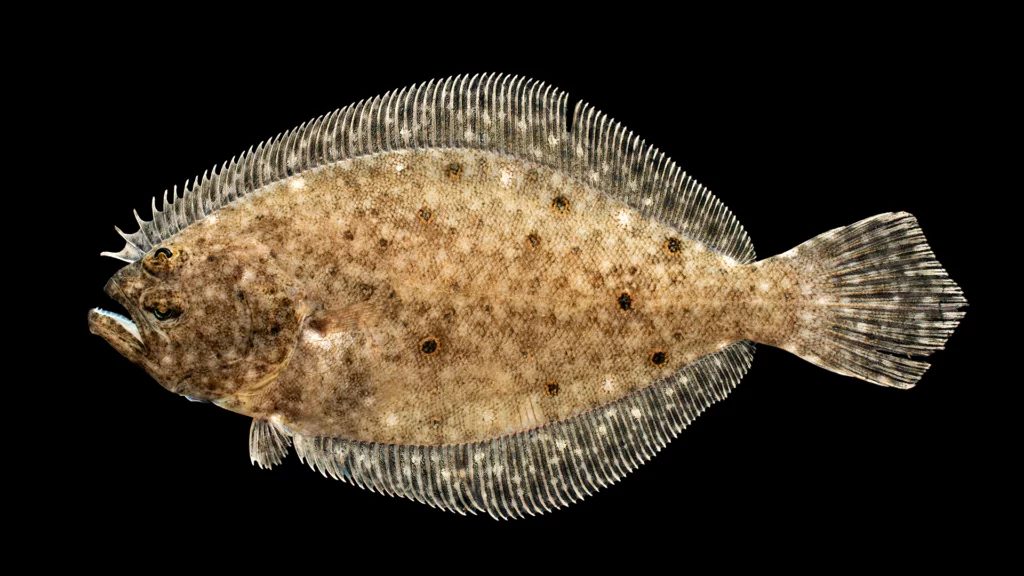
From the north · Wildlife
Flounder
A flatfish that buries in the sand, ambushes upward, and rewards a bait dragged slowly across the bottom.
Paralichthys spp.
- Range
- Texas to New England, inshore and nearshore
- Prime season
- Late summer through the fall run
- Access
- State license; short seasons in places
- Table quality
- Outstanding — top-tier white fillet
Regulations by region
Flounder rules where you're headed
Seasons, tags, limits, and legal methods for flounder are set jurisdiction by jurisdiction. Pick your state or province and we'll point you at the agency that writes the rules.
Jump to another species
About the flounder
Flounder do one thing: lie on the bottom, half buried, and wait for something to swim overhead. Every effective flounder technique is built around that. They hold on the sand-to-structure edge — the lip of a channel, the base of a jetty, the down-current side of a bar — and they feed on moving tide when bait is being swept past them. The fall run is the event. As water cools, flounder migrate from back bays out through the inlets to offshore spawning grounds, and they concentrate at those inlets in numbers.
Range, water, and where they live
Flounder are inshore fish that stack at pinch points. These are the places worth planning a trip around. Texas coastal passes: Concentrated fall run through the passes. North Carolina inlets: Strong fall migration fishery. New Jersey and Delaware Bay: Summer flounder (fluke) drifting. Long Island and Montauk: Nearshore fluke drifting over sand. Louisiana and Mississippi marsh: Southern flounder along marsh drains.
Behavior and how they feed
Drag a bait slowly along the bottom, on the tide, at the edge where sand meets structure. Fish moving tide at an inlet, channel edge, bridge, or drain — flounder set up facing into the current. Drift or slowly work the boat along the sand edge in 8–30 feet, keeping the bait in contact with bottom the entire time. Rig a bucktail or jig head tipped with a strip of squid, a mullet strip, or a live mud minnow. Alternatively, use a fluke rig: a bank sinker, a swivel, and a two-foot leader with a live minnow or a Gulp swimming mullet. Drag and lift — a slow, deliberate bounce along the bottom, never a fast swim. When you feel weight, drop the rod tip and give the fish two or three seconds to turn the bait before setting. Set with a steady sweep; flounder are boney-mouthed and a snap set pulls the bait away. Net every fish. Flounder come off at the surface constantly if you try to lift them.
Where they hold
Flounder lie buried on the bottom facing into current, waiting for bait to pass. You are fishing the bottom, always, and the ambush edge. Channel edges and drop-offs — The transition from flat to channel, where current sweeps bait over a waiting fish. Inlet mouths — Flounder stack at the mouths on moving tide, especially the last hours of the outgoing. Structure ambush points — The sand pocket beside a piling, jetty rock, or bridge abutment holds a fish almost every time. Sandbars and troughs — The cut through a bar in the surf funnels bait and holds flatfish on both sides. Nearshore reefs — Migrating fish stage on nearshore hard bottom before moving offshore in late fall.
What they eat and what they hit
These are the presentations that consistently produce flounder, with the conditions each one is actually for — not a tackle-shop wall. Live mud minnow or finger mullet — On a Carolina rig with a 2/0–4/0 hook, dragged slowly along the bottom. Bucktail + Gulp swimming mullet — The most consistent artificial flounder combination anywhere on the coast. Carolina rig with strip bait — A squid or belly strip drifted with the tide along a channel edge covers ground. Jigging with a soft plastic — Vertical hops right against a piling or rock where the fish is lying. Flounder rig with spinner blade — The blade adds flash and vibration in stirred-up surf where visibility is short.
In the field
Flounder fishing is patient bottom work punctuated by the most subtle bite in inshore fishing — often just added weight. The fall inlet run is the exception: fast, concentrated, and often shared with a crowd of boats working the same edge. Gigging at night, where legal, is a completely different and very effective way to hunt them in shallow water.
Licenses, stamps, and limits
Flounder are among the most restricted inshore fish right now; several states have cut seasons dramatically. Buy the state saltwater license or registry. Check the season carefully — some states now open flounder for only a few weeks a year. Confirm the minimum size; 15 to 18 inches is typical and it varies a lot by state. Note the daily bag, often one to four fish. Check gigging rules separately if you plan to fish at night with lights.
Landing, release, and cleaning
What happens between the hookset and the cooler decides whether you land the fish and whether it is worth eating. Flounder mouth a bait before they take it. Drop the rod tip, count several seconds, then come tight with a slow sweep rather than a snap set. Always net a flounder at the boat or gaff a keeper. They shake at the surface and come off constantly. Decide keep or release before you unhook. A flounder you intend to release should never leave the water for more than the length of one held breath. For release: support the belly, keep the fish horizontal, back the hook out with pliers, and hold it into the current until it kicks off on its own. Size and season restrictions are tight and shifting — several states now have closed seasons. Check current regulations every trip. To keep the fish, dispatch it immediately — a firm rap with a priest or knife spine at the top of the skull, just behind and above the eyes. A flounder killed instantly tastes better than one that suffocates in a bucket. Cleaning a flounder the right way takes about four minutes once you know the sequence.
On the table
Flounder is a top-tier table fish — thin, white, sweet fillets that need almost nothing done to them. Each fish yields four fillets, two per side; a sharp flexible knife makes the job easy. Pan-fry, broil, or stuff them. Overcooking is the only real risk with flesh this delicate. Respect the tight seasons — flounder stocks along much of the Atlantic are under active rebuilding.
Field notes
- 7' medium spinning or casting rod: Sensitive tip for the soft bite, backbone to sweep-set.
- 20 lb braid to 25 lb fluorocarbon leader: Feel is everything; braid transmits the light take.
- Bucktail jig, 1/2–2 oz: Tipped with squid or a Gulp trailer, it out-fishes most rigs.
- Fluke rig with bank sinker: The simple, effective drift rig for live minnows and strip baits.
- Live mud minnows or finger mullet: The best natural bait; keep them lively in an aerated bucket.
- Wide-mouth landing net: Flounder shake free at the boat more than any other inshore fish.
Flounder questions, answered
- How do I know I have a bite?
- Usually it just feels heavier, like you've dragged into a piece of cloth. Drop your rod tip, count to three so the fish can turn the bait, then sweep-set.
- When is the flounder run?
- Late September through November in most of the range, as cooling water pushes fish from back bays out through the inlets. That's when they're most concentrated and most catchable.
- What's the difference between fluke and flounder?
- Summer flounder (fluke) are left-eyed and toothy; southern and winter flounder differ in eye side and range. All are fished essentially the same way, but the size limits differ substantially by state.
- Best bait for flounder?
- A live mud minnow or finger mullet, or a bucktail tipped with squid or a Gulp swimming mullet. Presentation on the bottom matters more than the specific bait.
Official sources and further reading
- NOAA Fisheries — Summer Flounder
Stock status and federal size/bag framework.
- NC Wildlife / Marine Fisheries — Flounder
Season announcements and current harvest rules.