


From the north · Wildlife
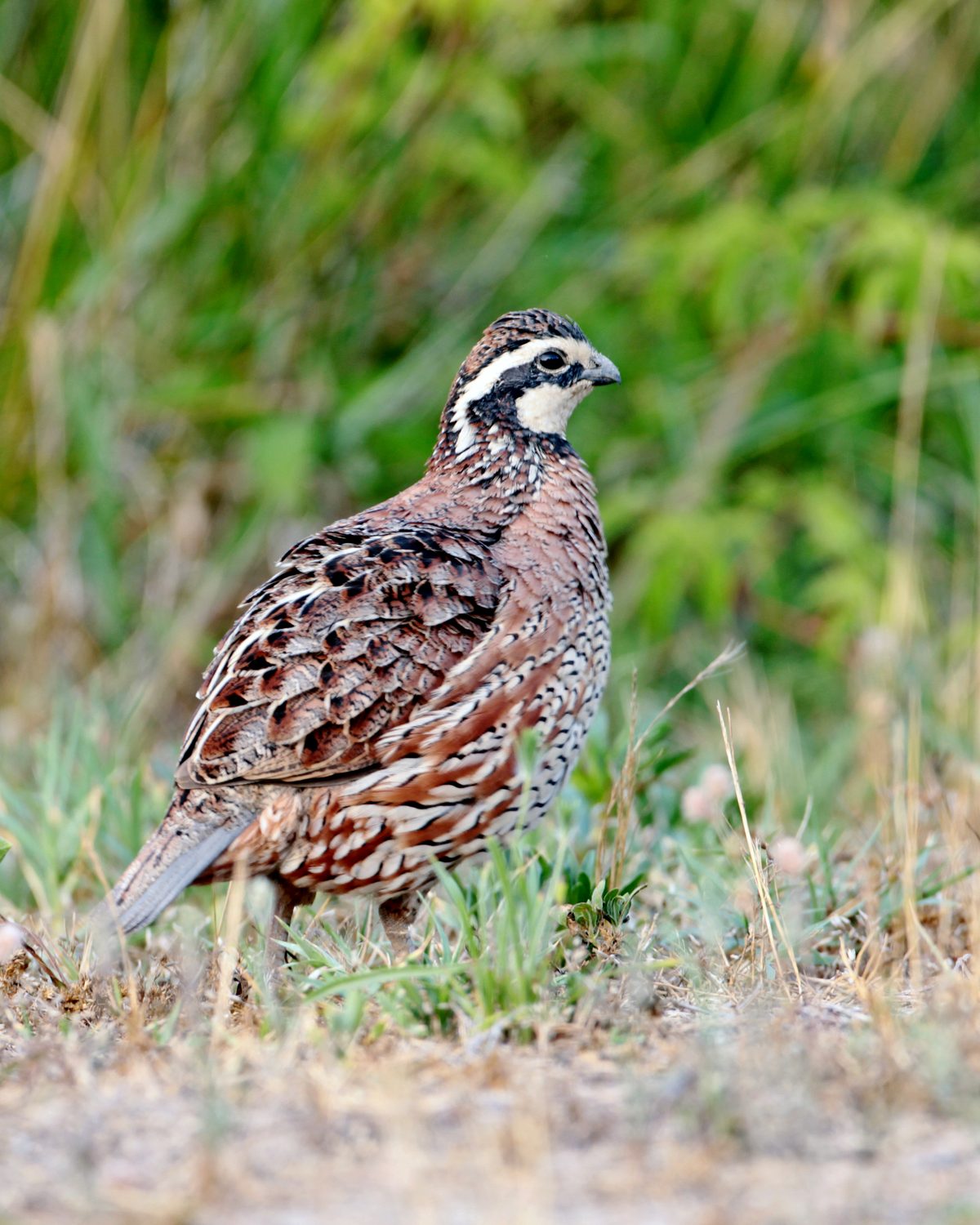
Northern Bobwhite Quail
The classic Southern gentleman's game bird — pointing dogs, a whistled covey call, and the most explosive close-range flush in wingshooting.
Colinus virginianus
- Range
- Southeast & south-central U.S.
- Peak season
- Nov – Feb
- Tag access
- Over-the-counter
- Live weight
- 6 oz
Regulations by region
Northern Bobwhite Quail rules where you're headed
Seasons, tags, limits, and legal methods for northern bobwhite quail are set jurisdiction by jurisdiction. Pick your state or province and we'll point you at the agency that writes the rules.
Jump to another species
About the northern bobwhite quail
The bobwhite quail is the bird most associated with classic American wingshooting tradition — pointing dogs, plantation quail walks in Georgia and Florida, and the unmistakable 'bob-white' whistle that gives the species its name. Wild bobwhite populations have declined significantly across their range over the past half-century due to habitat loss from clean farming and fire suppression, so much of today's hunting happens on managed plantations and put-and-take preserves alongside a smaller amount of genuine wild-bird hunting on well-managed public and private land. Quail live in coveys of 10-20 birds in brushy field edges, broomsedge, and pine woodland understory, and the classic hunt uses well-trained pointing dogs to locate a covey, hold point, and let hunters walk in for a close, explosive flush.
Range and habitat
Genuine wild bobwhite hunting is concentrated where fire-managed pine and native grass habitat still exists, while managed shooting preserves extend opportunity nationwide. Georgia (Red Hills region): The heart of managed quail plantation hunting with excellent habitat. Texas: Strong wild-bird populations in South Texas brush country in good rain years. Kansas & Oklahoma: Some of the best remaining wild bobwhite hunting on public and walk-in land. Florida: Combination of wild birds and managed plantations in the panhandle. Missouri: Public conservation areas managed specifically for quail habitat.
Behavior and field method
Classic bobwhite hunting revolves entirely around pointing dog work — locating coveys, holding a point, and executing a controlled flush. Hunt brushy field edges, broomsedge fields, hedgerows, and open pine woodland with a grassy understory — classic quail cover. Use well-trained pointing dogs (English pointers or setters are traditional) to range ahead and locate coveys by scent. Approach calmly once a dog is on point, keeping the dog steady and walking in from an angle that gives a clear shooting lane. Expect an explosive, close-range covey flush — most quail rise within 10-20 feet and scatter in multiple directions at once. Pick a single bird before the shot rather than flock-shooting into the rising covey, which usually results in a clean miss on all of them. Mark where singles land after the covey breaks, then work that area again with the dog for a second round of closer, more deliberate flushes. Hunt mid-morning through afternoon once dew has burned off, since dogs scent better in drier conditions. Rotate dogs periodically on longer hunts, since pointing breeds work hard and fast in the brush.
Tracks, droppings, and sign
Bobwhite sign is tiny and concentrated. Coveys use the same handful of loafing spots on a property all season long. Tracks — Very small three-toed prints in sandy soil and field-road dust, in clusters — a covey moves as a unit. Droppings — Tiny cylinders with white caps found in a dense circular cluster where a covey roosted tail-in, facing outward. That roost ring is the single most useful bobwhite sign there is. Dusting bowls — Small dust hollows on sandy field roads and firebreak edges with fine feathers in them. Loafing cover — Plum thickets, brush piles, and shrubby field corners with droppings and scratched litter underneath — coveys loaf in overhead cover with bare ground below. Whistling — The two-note 'bob-WHITE' whistle in spring and summer, and the covey's scattered 'koi-lee' regrouping call after a flush — follow that call to find scattered singles.
In the field
A traditional bobwhite hunt moves at a horseback or walking pace behind pointing dogs ranging the field ahead, handlers calling and whistling to keep dogs working the right cover. When a dog locks on point, everything stops — hunters walk in calmly, guns ready, and the covey erupts in a thunderous, close-range burst of a dozen or more birds scattering in every direction at once. It's an intensely social, tradition-steeped hunt, often ending with singles work through broomsedge in the afternoon light — a slower, more deliberate follow-up to the chaos of the initial flush.
Regulations, tags, and seasons
Bobwhite hunting requires a basic small-game license — the bigger consideration is whether you're booking a managed plantation hunt or pursuing wild birds on public/walk-in land. Buy a small-game or upland bird license online from the relevant state wildlife agency. Decide between a managed preserve hunt (higher cost, near-guaranteed birds, dogs and guide provided) and a DIY wild-bird hunt. For DIY hunts, use state walk-in access or public wildlife management area maps focused on quail habitat management. Confirm season dates and bag limits, typically 8-12 birds per day depending on the state. If bringing your own dog, verify any preserve or WMA-specific dog training or trial rules before the season.
Harvest and processing
Quail are small, fast, and easy to lose in cover. Discipline on marking beats a bigger shotgun every time. Mark the fall the moment the quail folds. Pick a landmark behind the bird — a stump, a color change in the cover — and walk straight to it without taking your eyes off it. Send the dog immediately if you have one; a runner covers a shocking amount of ground in thirty seconds. If you are hunting without a dog, walk a tight grid from the fall and look for feathers, not the whole bird. Pick one bird out of the covey rise rather than shooting at the whole flush — flock shooting is the most common reason hunters miss the entire covey. Dispatch a cripple immediately by pressing your thumb behind the head and firmly extending the neck, or by cervical dislocation with a quick pull. Do not wring wings or crush the breast. Check your bird against the daily limit and, where required, leave a fully feathered wing or head attached for species identification during transport. Field dress hot birds right away: open the vent, hook two fingers in, and pull the entrails out in one motion. This drops core temperature immediately and keeps the meat sweet. Whole quail, plucked and grilled, is the point of quail hunting. Breasting them wastes half the bird.
Meat care and what you take home
Bobwhite quail yields very small portions, roughly 2-3 ounces of breast meat per bird, mild and delicate in flavor. Traditionally cooked whole, pan-seared or grilled, often wrapped in bacon; a proper meal requires two birds per person minimum. The delicate meat cooks fast — a few minutes per side is usually enough, and overcooking dries it out quickly given how lean it is.
Field notes
- Light 20-gauge or 28-gauge with open choke: Quail flush inside 20 feet routinely; an open cylinder or skeet choke with 7.5 or 8 shot handles the typical close-range shot.
- Trained pointing dog: English pointers and setters are the traditional breeds; a well-trained dog transforms quail hunting from a long shot to a near-certainty of finding birds.
- Brush pants and light upland shirt: Quail season runs through mild Southern winters; lighter layering than northern upland hunting is usually appropriate.
- Whistle and check cord: Essential tools for directing pointing dogs across open field terrain and reinforcing steadiness on point.
- Snake gaiters: Quail habitat overlaps with venomous snake range in much of the Southeast; gaiters are cheap insurance.
Northern Bobwhite Quail questions, answered
- Is wild bobwhite hunting still good anywhere?
- Yes, though it's much reduced from historical numbers. Parts of Kansas, Oklahoma, South Texas in good rain years, and fire-managed pine country in the Southeast still hold huntable wild populations.
- What's the difference between wild-bird and preserve hunts?
- Preserve hunts release pen-raised birds onto managed land shortly before the hunt, offering near-guaranteed dog work and shooting; wild-bird hunts pursue naturally reproducing coveys and require more scouting and lower success rates.
- Do I need my own dog?
- No — many plantations and guides provide trained pointing dogs and handlers as part of a booked hunt, making it accessible to hunters without dog-training experience.
- How many birds are in a typical covey?
- Wild coveys typically run 10-20 birds, though heavily hunted or declining populations may show smaller covey sizes.
- What shot size and choke work best?
- 7.5 or 8 shot with an open cylinder or skeet choke handles the close-range covey flush that defines quail hunting.
- Why have wild bobwhite populations declined?
- Primarily habitat loss from clean farming practices, fire suppression that lets brush and woodland understory become too dense, and loss of the early-successional grassland habitat quail need.
Official sources and further reading
- Quail Forever
Habitat programs, wild-bird research, and state hunting information.
- Tall Timbers Research Station
Leading bobwhite quail and fire-managed habitat research in the Red Hills region.
- Kansas Dept. of Wildlife & Parks
Walk-in access maps for public wild-bird quail hunting.
- USFWS — Hunting
Federal hunting resources and public land access information.