


From the north · Wildlife
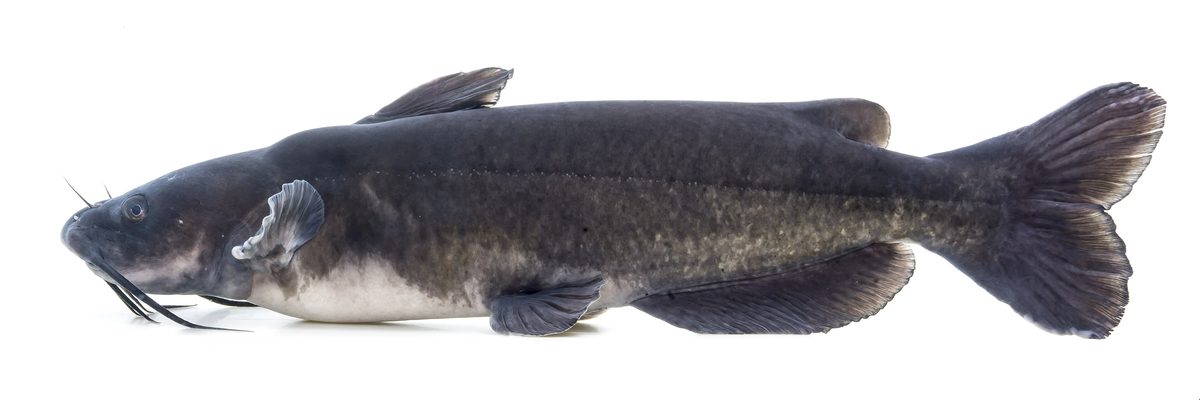
Channel Catfish
The most available big fish in America, catchable from the bank, at night, with simple gear.
Ictalurus punctatus
- Range
- Nearly nationwide, rivers and reservoirs
- Prime season
- May–September, best after dark
- Access
- Basic state license; bank access everywhere
- Table quality
- Excellent — the classic fry fish
Regulations by region
Channel Catfish rules where you're headed
Seasons, tags, limits, and legal methods for channel catfish are set jurisdiction by jurisdiction. Pick your state or province and we'll point you at the agency that writes the rules.
Jump to another species
About the channel catfish
Channel cats are the most democratic gamefish in the country. They live in muddy rivers and clean reservoirs alike, they bite from shore, and a five-pounder on a cheap rod is a genuinely good fight. They're also smarter than their reputation. Channel cats feed by smell and by lateral line, they move on current and temperature, and they hold on specific structure rather than roaming randomly. The nighttime bias is real: catfish feed hardest from dusk through midnight in the warm months, and one summer night on a good hole will out-produce a week of daytime effort.
Range, water, and where they live
Almost every state has good channel cat water. These are the ones known for both numbers and size. Red River of the North (ND/MN/MB): Trophy channel cats over 20 lb. Mississippi River pools: Endless bank access and current structure. Kansas and Nebraska reservoirs: Abundant, well-managed cat fisheries. Santee Cooper, South Carolina: Big channels alongside blues and flatheads. Farm ponds and city lakes: Stocked catfish within a short drive of most people.
Behavior and how they feed
Put a smelly bait on the bottom in current-adjacent structure, at night, and wait properly. Pick a spot with current or wind moving past structure — an outside river bend, a hole below a riffle, a dam tailrace, or a creek mouth. Fish the deep side of the break and the mud-to-gravel transition; catfish patrol edges rather than open flats. Rig a slip sinker (1–3 oz) above a swivel with an 18-inch leader and a 3/0–5/0 circle hook. Use cut shad or bluegill for larger fish and chicken liver, shrimp, or prepared dip bait for numbers. Cast out, keep a slightly slack line with the clicker on or the rod in a holder, and let the fish take it. With circle hooks, do not swing — let the fish load the rod and simply lift; the hook sets in the corner of the jaw. Fish from an hour before dark through midnight in summer; move spots every 30–45 minutes if nothing bites. Grip behind the pectoral fins, mind the three spines, and use pliers — channel cat spines cause real injuries.
Where they hold
Channel cats work current edges and scent lanes. Find where food collects and slows down, and you have found the fish. Outside river bends — The deep, scoured side of a bend with wood in it holds fish all day. Current breaks and eddies — Behind wing dams, bridge piers, and log jams, where the drift of food slows and drops. Flats at night — Cats move onto shallow 3–8 foot flats after dark to hunt, especially on warm, still nights. Reservoir creek channels — The old channel edge running into a flat concentrates fish; anchor upstream and fan baits across it. Tailraces — Below dams in high water, cats stack in the slack behind the boil to eat what the current delivers.
What they eat and what they hit
These are the presentations that consistently produce channel catfish, with the conditions each one is actually for — not a tackle-shop wall. Cut shad or skipjack — Fresh cut bait beats prepared bait on almost every water; the fresher, the better. Chicken liver — Cheap, scent-heavy, and effective on eater-size fish; use a bait-holder or a scrap of nylon to keep it on. Dip / punch bait — On a ribbed dip worm in summer heat, this out-fishes everything for 1–4 lb fish. Nightcrawler gob — Two crawlers on a 2/0 circle hook drifted along a bend works when nothing else is available. Live bluegill (where legal) — For channel cats over ten pounds, a live sunfish under a float near cover is the trophy bait. Slip-sinker / three-way rig — A 1–3 oz no-roll sinker above a swivel and an 18" leader with a 5/0 circle hook holds bottom in current and hooks fish in the corner of the jaw.
In the field
Catfishing is the most relaxed serious fishing there is: a bank, a couple of rods in holders, a lantern, and hours of conversation punctuated by a bent rod. It's also the most family-friendly big fish in the country — no boat, no expensive tackle, and a very real chance at a fish over ten pounds. Spring, right after the water hits 60 degrees, and post-rain rising water are the two most reliable bite triggers.
Licenses, stamps, and limits
The simplest license situation in fresh water — but bait and line rules vary more than people expect. Buy the basic state fishing license; no stamp is normally required for catfish. Check the daily limit and any length restriction on trophy-managed rivers. Confirm the legal number of lines or poles — many states allow multiple set lines for catfish with a permit. Verify whether jug lines, trotlines, or limb lines are legal on that water and whether they need tagging. Check live-bait and cut-bait rules; some waters restrict transporting live baitfish.
Landing, release, and cleaning
What happens between the hookset and the cooler decides whether you land the fish and whether it is worth eating. Use circle hooks with bait and do not set the hook. Let the rod load and reel steadily — the hook finds the jaw hinge and deep hooking almost disappears. Grip small catfish from the top with your hand behind the pectoral spines, or from below with a thumb in the mouth on larger fish. The spines will puncture a palm. To keep the fish, dispatch it immediately — a firm rap with a priest or knife spine at the top of the skull, just behind and above the eyes. A channel catfish killed instantly tastes better than one that suffocates in a bucket. Bleed it right away: cut the two gill arches on one side, or make a single cut behind the pectoral fin to the artery, and hold it in the water for thirty seconds while it pumps out. Get it on ice — slurry ice (ice plus water plus a little salt) if you have it — within minutes, not at the end of the day. Cold, bled fish is the entire difference between good and muddy-tasting fillets. Release fish over about eight pounds. Big catfish are the breeders and they grow slowly; the 2–5 lb fish are better eating anyway. Cleaning a channel catfish the right way takes about four minutes once you know the sequence.
On the table
Channel catfish is the classic American fry fish — firm, white, mild, and forgiving. Skin them rather than scaling, remove the dark lateral meat, and soak fillets briefly in cold saltwater or milk if the water was muddy. Two- to six-pound fish are the best eating; very large fish are better released as breeders. Cornmeal, hot oil, hush puppies. There is no need to improve on this.
Field notes
- 7' medium-heavy casting rod: Enough backbone for a 3 oz sinker and a heavy fish in current.
- Baitcasting reel with clicker, 30 lb braid: The clicker lets you fish rods in holders and hear a take.
- 3/0–5/0 circle hooks: Hooks in the jaw corner, which means better hookups and clean releases.
- Slip sinkers, 1–3 oz: Match to current; heavy enough to hold, light enough for the fish to move off with the bait.
- Cut shad or chicken liver: Cut bait for size, liver and dip bait for numbers.
- Headlamp, rod holders, pliers: The whole practical difference between a good night and a frustrating one.
Channel Catfish questions, answered
- What's the best catfish bait?
- Fresh cut shad or bluegill for size, chicken liver or a commercial dip bait for numbers. Freshness matters far more than the specific bait — day-old cut bait catches a fraction of what fresh does.
- Do I have to fish at night?
- No, but in summer it roughly triples your odds. In spring and after a rain, catfish feed actively in daylight, especially in stained rising water.
- Circle hook or J-hook?
- Circle hooks, almost always. They hook in the jaw corner, reduce gut-hooking, and require no hookset — just lift when the rod loads.
- How do I hold a catfish safely?
- Grip from above, behind the pectoral fins, with your thumb and fingers in the hollows behind those spines. On big fish use a lip grip or a wet towel, and always use pliers for hook removal.
Official sources and further reading
- Kansas Dept. of Wildlife & Parks — Catfish
Reservoir catfish forecasts and regulations.
- Minnesota DNR — Catfish
Red River trophy catfish management and limits.