


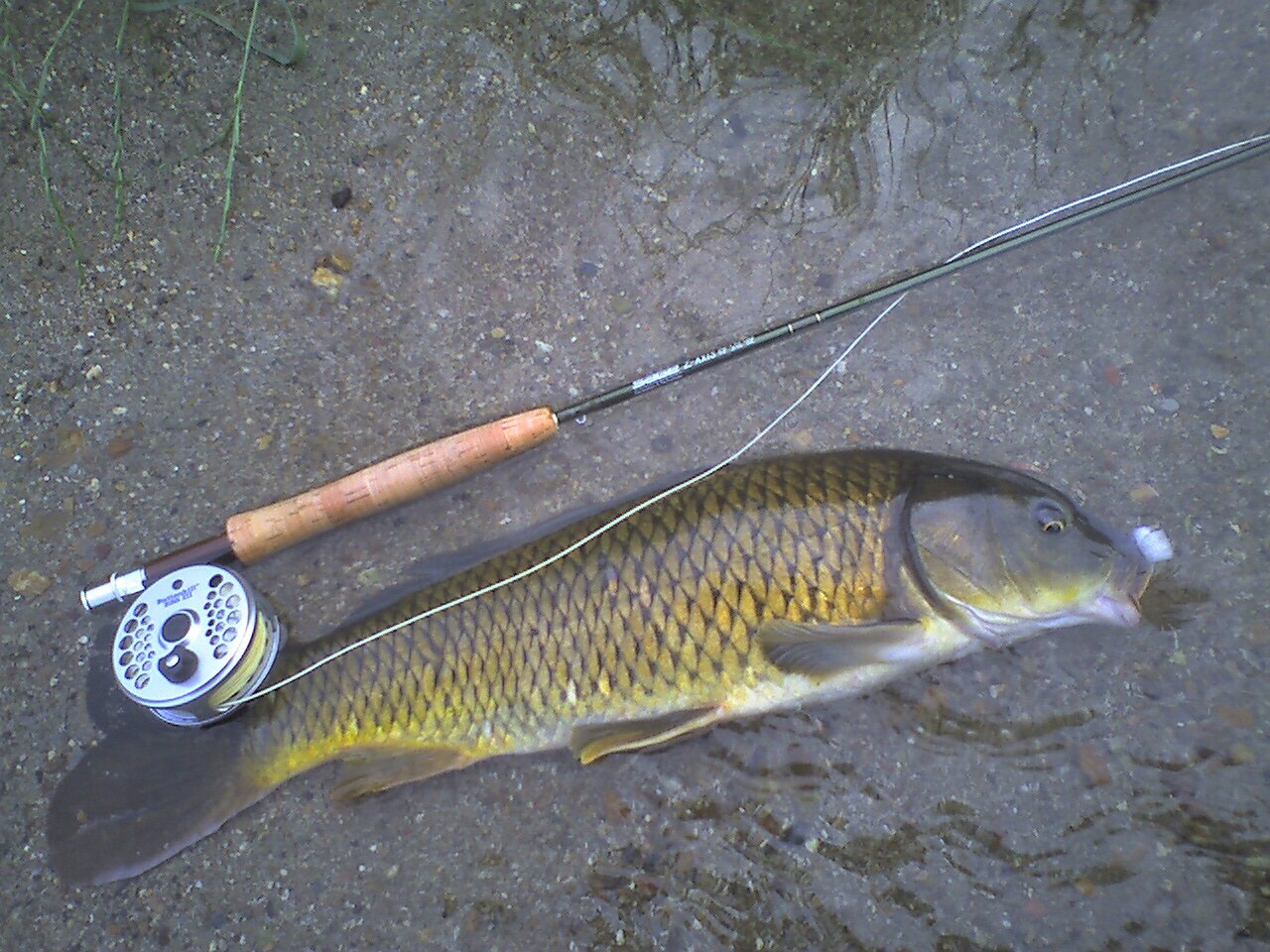
From the north · Wildlife
Common Carp
The most difficult, hardest-pulling, most widely available fish in North America — and the one almost nobody fishes for on purpose.
Cyprinus carpio
- Range
- Every state except Alaska
- Prime season
- May–September in shallow warm water
- Access
- Basic state license; often no limit
- Table quality
- Good smoked; poor handled carelessly
Regulations by region
Common Carp rules where you're headed
Seasons, tags, limits, and legal methods for common carp are set jurisdiction by jurisdiction. Pick your state or province and we'll point you at the agency that writes the rules.
Jump to another species
About the common carp
Carp are the fish American anglers walk past. They are also, objectively, one of the hardest fish in fresh water to fool and one of the strongest to fight — a ten-pound carp on an 8-weight fly rod runs into the backing. Two very different games exist. The European-style bait approach uses a static rig, prepared baits, and long waits for very large fish. The American approach is sight fishing shallow flats with a fly or a small soft plastic, which plays exactly like saltwater flats fishing. Best of all, the water is everywhere. City park lakes, industrial canals, big-river backwaters, and reservoir flats all hold carp, and none of them are crowded.
Range, water, and where they live
You do not need to travel. What you need is shallow water where carp feed visibly and enough clarity to see them. Lake Michigan harbors and flats: World-class sight fishing over sand and rock. Columbia River backwaters, Washington: Big fish on shallow warm-water flats. Urban park lakes anywhere: Least pressured big-fish water in America. Beaver Island / Lake Erie shallows: Trophy flats fishing with true 20 lb targets. Colorado Front Range reservoirs: Clear water and visible feeders all summer.
Behavior and how they feed
Sight fishing is the discipline worth learning. Everything depends on identifying a feeding fish before you cast. Walk the shallow edges in the morning with polarized glasses and look for mudding clouds, tailing fish, and slow cruisers. Distinguish feeding from cruising. A tailing or head-down fish is catchable; a fast-moving fish with its back out is not. Approach from behind and to the side, moving slowly. Carp feel footfalls through the bank. Lead a feeding fish by two to three feet and let the fly or bait sink to bottom in its path — never land it on top of the fish. Watch the fish, not your line. The take is a small tilt, a flare of the gills, or the tail dropping — set on the behavior. For bait fishing, pre-bait a spot with sweet corn for a day or two, then fish a hair rig with a small inline lead over the same patch. Set the drag light. The first run of a big carp is long and fast, and locked drag breaks leaders. Fight it off the reel with steady pressure and expect three or four hard runs before it comes in.
Where they hold
Carp feed by rooting and grazing, so you are looking for evidence of feeding — mud clouds, bubbles, and tailing fish — not for structure. Mud flats — Shallow silt and gravel flats where carp root; look for muddy plumes and rising bubble trails. Tailing shallows — Fish with tails out of the water in a foot of water are actively feeding and catchable on the fly. Warm-water discharges — Power plant outflows and urban warm seeps hold active carp year-round. Marina and dock edges — Carp cruise where people feed them; these fish are used to food arriving from above. River eddies — Slack water below wing dams where food collects on the bottom.
What they eat and what they hit
These are the presentations that consistently produce common carp, with the conditions each one is actually for — not a tackle-shop wall. Corn on a hair rig — The European method: bait presented off the hook shank on a short hair so the hook is free to turn into the lip. Boilies / pack bait — A method feeder loaded with pack bait creates a scent bed and holds fish over your hook bait. Bread flake or dough — Free-lined bread on the surface for cruising fish is the simplest and most exciting carp method. Carp fly (mulberry/crayfish) — Drop a small weighted fly two feet ahead of a feeding fish and let it sink into the mud plume. Nightcrawler on a small hook — Works anywhere, especially in rivers where carp eat drifting invertebrates.
In the field
The refusal rate is high. Ten good shots for one eat is a normal ratio, which is exactly why carp make you a better angler. The fight is genuinely long. A twelve-pound fish on a fly rod is five to ten minutes of work. Wind is your ally. A light chop hides your approach and keeps fish feeding shallow longer.
Licenses, stamps, and limits
Carp are usually classed as a rough or non-game fish, which means minimal regulation — but bowfishing and transport rules still apply. Buy the state freshwater license; carp are typically included with no additional stamp. Check whether carp count as a non-game species — most states have no limit and no closed season. Read the bowfishing rules separately if you plan to shoot rather than angle for them. Confirm that chumming and prepared baits are legal on that water; some states restrict them. It is illegal in nearly every state to release a live carp into a different water body — never transport them.
Landing, release, and cleaning
What happens between the hookset and the cooler decides whether you land the fish and whether it is worth eating. Carp run hard and long. Set the drag loose enough that a running fish does not break the rod holder or the leader. Use an oversized landing net and a wet unhooking mat. Carp thrash on hard ground and injure themselves. Support the fish under the belly with both hands and keep it low. Never hold a carp vertically by the jaw. Decide keep or release before you unhook. A common carp you intend to release should never leave the water for more than the length of one held breath. For release: support the belly, keep the fish horizontal, back the hook out with pliers, and hold it into the current until it kicks off on its own. Carp are invasive in North America and many states prohibit returning them alive to certain waters — check local rules before you release or transport one. Cleaning a common carp the right way takes about four minutes once you know the sequence.
On the table
Carp are a staple food fish across Europe and Asia, and they can be very good — but only from cool, clean water and only with proper handling. Bleed immediately, remove the dark lateral meat entirely, and smoke or grind the flesh; carp cakes and smoked carp are the two preparations that consistently work. Fish from warm, muddy summer water taste like the water they came from. Most American anglers release them.
Field notes
- 8-weight fly rod or 7' medium spinning rod: Enough backbone to turn a heavy fish away from structure.
- Reel with a real drag and 100 yd backing: Carp run. A click-and-pawl reel is not enough.
- 12–15 lb fluorocarbon leader: Low visibility for clear flats, tough enough for rock and mussel beds.
- Rubber-legged carp flies, size 6–10: Backstabber, hybrid, and small crayfish patterns fished on bottom.
- Hair rig with sweet corn or boilies: The classic bait approach; pre-bait the spot first.
- Polarized glasses, copper or amber lens: You cannot sight fish what you cannot see.
Common Carp questions, answered
- Are carp actually hard to catch?
- Yes. They have excellent hearing and vibration sense, feed by touch and taste on the bottom, and refuse presentations that land wrong. Ten quality sight-fishing shots for one hookup is a normal ratio even for good anglers.
- What is the best bait for common carp?
- Sweet corn is the classic and it works everywhere. Fish it on a hair rig so the hook sits below the bait, and pre-bait the spot for a day or two beforehand if you can.
- Can you catch carp on a fly rod?
- It is one of the best fly-fishing games in fresh water. Sight fish shallow flats with a weighted crayfish or rubber-legged pattern, lead a feeding fish, and set on the behavior rather than on feel.
- Are common carp invasive?
- In North America, yes — they were introduced in the 1800s and their bottom-feeding increases turbidity and damages aquatic vegetation. That is why most states set no limit and prohibit moving live carp between waters.
- Do carp fight hard?
- Extremely. A ten-pound carp makes long, powerful runs and will take a fly reel into the backing. Pound for pound they pull harder than any common freshwater gamefish.
Official sources and further reading
- USGS — Cyprinus carpio
Introduction history, range, and documented ecological impacts.
- Carp Anglers Group
Rig diagrams, pre-baiting guidance, and regional fishery reports.
- Wisconsin DNR — Rough Fish Regulations
Non-game classification, bowfishing rules, and transport law.