


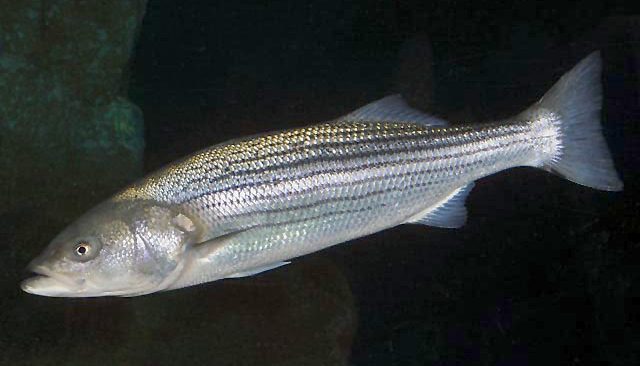
From the north · Wildlife
Striped Bass
The great migratory gamefish of the Atlantic coast — and a legitimate landlocked reservoir target too.
Morone saxatilis
- Range
- Maine to NC; landlocked in many reservoirs
- Prime season
- Spring and fall migrations
- Access
- State saltwater registry + slot limits
- Table quality
- Very good within the slot
Regulations by region
Striped Bass rules where you're headed
Seasons, tags, limits, and legal methods for striped bass are set jurisdiction by jurisdiction. Pick your state or province and we'll point you at the agency that writes the rules.
Jump to another species
About the striped bass
Striped bass move. The coastal population winters off Virginia and the Carolinas, spawns in the Chesapeake and Hudson, and pushes north through spring, reaching Maine by June and reversing in the fall. That migration is what makes them the most obsessively followed fish on the Atlantic coast — the run arrives, everybody fishes, and it leaves again. Landlocked stripers in southern reservoirs are the same fish with a different life history: they chase open-water shad schools and are usually fished by trolling live bait or running to surface blitzes.
Range, water, and where they live
Striper fishing is timing as much as place. These are the spots where the run is reliable. Cape Cod Canal, Massachusetts: Land-based access to big fish on moving tide. Montauk, New York: Fall blitz fishing from boat and shore. Chesapeake Bay (MD/VA): Spring spawning run and fall light-tackle. New Jersey surf: Long, accessible beach fishing on the fall run. Lake Texoma & Lake Cumberland: Landlocked stripers in open water.
Behavior and how they feed
Fish moving water on a moving tide, at low light, where bait is present. Learn the tide for your spot. Stripers feed on current — the middle of a moving tide beats slack water every time. Find the structure that breaks current: a jetty tip, a rip line, a bar cut, a bridge piling, or a river mouth. Fish dawn, dusk, and the whole night. Big stripers are heavily nocturnal, especially in shallow water. Look for bait — birds working, silversides flipping, bunker schools nervous on the surface — and cast to the edge of the school, not the middle. From the surf, cast a swimming plug, a bucktail, or a metal lure across the current and let it swing down and across. From a boat, drift live bunker or eels near structure, or troll tube-and-worm or umbrella rigs at 2–3 mph. Use circle hooks on bait and simply lift when the rod loads; never snap-set with a circle hook. Revive released fish fully in the water, especially in warm months, and never drag a fish up dry sand.
Where they hold
Stripers are current feeders. They set up where moving water pushes bait against structure, and the tide decides the timing of everything. Rips and current seams — The white water where a tide accelerates over a bar or around a point; fish sit in the slack behind it. Rocky points and boulder fields — Structure that breaks the sweep and creates eddies; work the down-current side. Inlets and bridge lights — The shadow line on a lit bridge at night is one of the most reliable striper spots on the coast. Estuary flats and marsh drains — Falling tide flushes bait out of a marsh drain; stripers wait at the mouth. Reservoir humps and channels — Inland stripers school over 20–50 foot structure and follow shad; the same rules apply without the tide.
What they eat and what they hit
Striped bass eat almost anything alive, so lure choice is really about matching the current speed and depth. These cover the whole range. Bucktail jig — 1/2–3 oz depending on current; the single most versatile striper lure, from surf to bridge to deep rip. Soft plastic paddle tail — 5–9" swimbaits on a jig head match bunker and herring and swim well in current. Topwater pencil popper — Big surface baits over bar and blitz situations; long casts and a steady rhythm. Metal lip / large swimming plug — Slow-swum plugs in the wash after dark are the classic big-fish tool from the beach. Live eel or bunker — Slow-drifted or live-lined on a circle hook is the highest-percentage way to catch a 40+ inch fish. Deceiver / clouser fly — Sink tip and a 4–7 inch baitfish pattern swung through a rip at night or on the flats at dawn.
In the field
Surf fishing for stripers is a nighttime, weather-driven pursuit. Waders, a headlamp, and a willingness to fish an outgoing tide at 2 a.m. define the serious side of it. The fall blitz — birds, bait, and fish breaking the surface as far as you can see — is the single most exciting thing that happens on the Atlantic coast. Expect regulation changes. The coastal stock has been under rebuilding measures and the rules genuinely differ year to year.
Licenses, stamps, and limits
Coastal stripers are the most tightly regulated inshore fish on the Atlantic. Rules change annually. Register with the state saltwater angler registry (free in some states, a paid license in others). Check the current slot limit — a one-fish 28–31 inch slot has been common coastwide and is revised often. Confirm the season dates; several states close striper fishing during the spawn or in summer heat. Use circle hooks with bait — this is legally required in most Atlantic states. For reservoirs, check the separate landlocked striper limits, which are far more generous.
Landing, release, and cleaning
What happens between the hookset and the cooler decides whether you land the fish and whether it is worth eating. Fish circle hooks with bait — they are required for striped bass bait fishing throughout the Atlantic coast, and they cut release mortality sharply. Use a lip grip or wet hands and support the belly. Never hold a big striper vertically by the jaw; it damages the jaw and the spine. Decide keep or release before you unhook. A striped bass you intend to release should never leave the water for more than the length of one held breath. For release: support the belly, keep the fish horizontal, back the hook out with pliers, and hold it into the current until it kicks off on its own. Slot limits are strict and change year to year. Measure the fish in the water and know the current slot before you decide to keep one. To keep the fish, dispatch it immediately — a firm rap with a priest or knife spine at the top of the skull, just behind and above the eyes. A striped bass killed instantly tastes better than one that suffocates in a bucket. Cleaning a striped bass the right way takes about four minutes once you know the sequence.
On the table
Striped bass within the slot are very good eating — firm, white, and mild, excellent grilled or broiled. Bleed and ice immediately; the flesh is much better for it. Remove the dark red lateral meat and the skin for the cleanest flavor, and follow state consumption advisories for large fish. Handle released fish gently — the coastal stock depends on release mortality staying low.
Field notes
- 9–11' surf rod: Distance and leverage over the break; 10 feet is the all-round choice.
- 7' medium-heavy boat rod: For live bait, jigging, and casting to blitzes.
- 30–50 lb braid with 40 lb fluorocarbon leader: Abrasion resistance around rock, jetties, and pilings.
- Bucktail jig, 1–3 oz: Works in the surf, in a rip, and under a boat all season.
- Swimming plugs and metal lures: Plugs for night and calm water; metal for distance and blitzes.
- Circle hooks, 6/0–8/0: Reduces gut-hooking dramatically on released fish.
Striped Bass questions, answered
- When is the striper run in my area?
- It follows water temperature. Fish move north through spring — Chesapeake in April, New Jersey in May, Massachusetts in June — and reverse in October and November. Local reports track it week by week.
- Do I need circle hooks?
- With bait, yes, in nearly every Atlantic state. It's a coastwide conservation measure and it substantially reduces mortality on released fish.
- What's the best striper lure?
- A bucktail jig, for range of application. For the surf specifically, a needlefish or darter plug at night and a metal lure when fish are on the outer bar.
- Can I keep a striped bass?
- Usually one fish inside a narrow slot, but the exact slot and season change every year and by state. Check the current regulation the day you fish.
Official sources and further reading
- Atlantic States Marine Fisheries Commission — Striped Bass
Coastwide stock status and the current management addenda.
- NOAA Fisheries — Atlantic Striped Bass
Biology, regulations, and rebuilding plan detail.