


From the north · Wildlife
Chain Pickerel
The little pike of eastern swamps and ponds — a savage striker that bites when it is too cold for anything else to move.
Esox niger
- Range
- Maine to Florida, west to the Mississippi
- Prime season
- October–April; excellent through ice
- Access
- Basic state license; classic bank fishery
- Table quality
- Excellent flavor, notoriously bony
Regulations by region
Chain Pickerel rules where you're headed
Seasons, tags, limits, and legal methods for chain pickerel are set jurisdiction by jurisdiction. Pick your state or province and we'll point you at the agency that writes the rules.
Jump to another species
About the chain pickerel
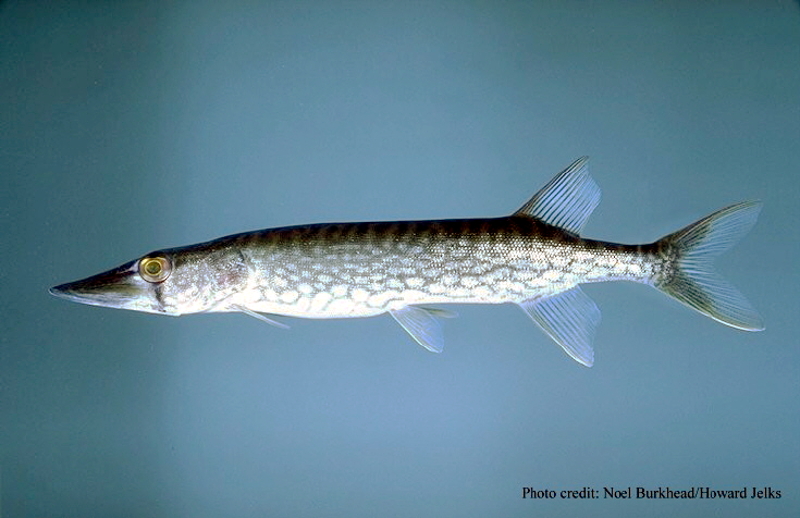
Chain pickerel are the fish that keeps eastern anglers sane in winter. When bass have shut down and the water is in the high 30s, pickerel are still sitting on the weed edge waiting to kill something. They are built like a small pike — long, green, and marked with a distinctive dark chain-link pattern — and they hunt exactly the same way, sitting motionless in cover and accelerating hard at anything that passes. They are also badly underrated. A four-pound pickerel on light tackle is a genuinely violent fight, and they are the easiest predator fish in the East to catch from the bank.
Range, water, and where they live
Pickerel want shallow, weedy, tannic water. The nastier the pond looks, the better it usually fishes. Maine and New Hampshire ponds: Big average size and reliable hard-water fishing. New Jersey Pine Barrens: Tannic, weedy water with heavy pickerel densities. Chesapeake tidal creeks: Winter fish in brackish grass edges. Adirondack and Catskill lakes, New York: Excellent ice fishery with easy shoreline access. Southeastern blackwater rivers: Year-round fish along cypress and lily edges.
Behavior and how they feed
Pickerel fishing is edge fishing. Find the last line of standing vegetation before deeper water and work it methodically. Locate the outside weed edge, standing pads, or submerged grass in 3–8 feet of water. Cast parallel to the edge rather than across it so the lure stays in the strike zone longer. Start with a flashy moving bait — an inline spinner, a small spoon, or a lipless crank — and retrieve steadily. Add a short pause every few turns of the handle. Pickerel commit on the pause more often than on the retrieve. Always use a short wire or 30 lb fluorocarbon leader; their teeth cut light line instantly. In cold water, slow down dramatically — a suspending jerkbait twitched and left still for five seconds is the winter answer. Through the ice, set tip-ups with lively shiners two feet under the ice along the same weed edges. Handle them with a jaw grip and long pliers. The teeth are small, numerous, and very sharp.
Where they hold
Pickerel hang in shallow, weedy, tannic water where bigger pike would not survive, and they hold ridiculously tight to cover. Lily pads and weed mats — Pickerel lie motionless just inside the edge of the vegetation, facing the opening. Blowdowns and stumps — Any wood in 2–6 feet of dark water is worth three casts. Tannic backwaters — Slow, dark coves stay slightly warmer and hold active pickerel through the cold months. Creek channel edges — The slight depth change through a shallow pond concentrates fish and forage.
What they eat and what they hit
These are the presentations that consistently produce chain pickerel, with the conditions each one is actually for — not a tackle-shop wall. In-line spinner — A #3–#4 spinner burned just under the surface over weeds draws vicious strikes. Small spoon — A weedless Johnson silver minnow with a trailer skated over pads is the traditional pickerel bait. Soft jerkbait — A weightless fluke twitched in pockets when the fish are following but not committing. Chatterbait — Comes through sparse grass and calls fish in low visibility. Live shiner under a float — The highest-percentage cold-water method for big pickerel in New England ponds.
In the field
The strike is the whole reason to fish for them — a hard, sideways hit that often happens six feet from your boots. Expect to lose lures to weeds. Bring doubles of whatever is working and fish it confidently rather than tentatively. Winter is the season. A 35-degree day with a light chop on a shallow pond is prime pickerel weather.
Licenses, stamps, and limits
No draw or tag. Rules focus on ice-fishing gear and live bait, both of which vary substantially by state. Buy the state freshwater license; short-term nonresident options are widely available. Check tip-up limits and required labeling if you plan to fish through the ice. Confirm live baitfish rules — many states restrict transport of live bait between watersheds. Read the creel; pickerel limits are usually generous, often five or more fish per day. Verify whether the water is open year-round; some northern lakes close during pike and pickerel spawning.
Landing, release, and cleaning
What happens between the hookset and the cooler decides whether you land the fish and whether it is worth eating. Use a light wire or 30–40 lb fluorocarbon leader. Pickerel teeth cut braid and mono without effort. Grip behind the head with a glove or use a jaw gripper; the teeth are needle-sharp even on small fish. Decide keep or release before you unhook. A chain pickerel you intend to release should never leave the water for more than the length of one held breath. For release: support the belly, keep the fish horizontal, back the hook out with pliers, and hold it into the current until it kicks off on its own. To keep the fish, dispatch it immediately — a firm rap with a priest or knife spine at the top of the skull, just behind and above the eyes. A chain pickerel killed instantly tastes better than one that suffocates in a bucket. Bleed it right away: cut the two gill arches on one side, or make a single cut behind the pectoral fin to the artery, and hold it in the water for thirty seconds while it pumps out. Cleaning a chain pickerel the right way takes about four minutes once you know the sequence.
On the table
Pickerel flesh is white, firm, and genuinely excellent — the flavor is better than most people who have never eaten one expect. The obstacle is the Y-bones. Either learn the pike filleting method that removes them in strips, or score the fillet finely and fry it hot so the small bones dissolve. They freeze poorly compared to walleye or perch; eat them fresh within a couple of days.
Field notes
- 6'6" medium spinning rod: Light enough to enjoy the fight, strong enough to pull fish from grass.
- 2500 reel with 20 lb braid: Braid cuts through weeds and drives hooks on a slack-line strike.
- 12" wire or 30 lb fluoro leader: Pickerel teeth will shear straight braid on the strike.
- Inline spinner, 1/4 oz: The single most effective pickerel lure ever made.
- Suspending jerkbait: The cold-water bait; long pauses trigger the winter bite.
- Long-nose pliers and jaw grip: Non-negotiable for unhooking a mouth full of teeth.
Chain Pickerel questions, answered
- What is the difference between a chain pickerel and a northern pike?
- Pickerel are much smaller — typically 1–4 pounds — and carry a bold dark chain-link pattern over green. Pike are larger, marked with light bean-shaped spots on a darker body, and have fewer fully scaled cheek areas. Both are Esox and both hunt the same way.
- Do I need a wire leader for pickerel?
- Effectively yes. Their teeth will cut 10 or 15 lb line on the strike. A short single-strand wire leader or 30 lb fluorocarbon bite guard solves it without hurting the number of bites.
- Can you catch pickerel in winter?
- They are one of the best cold-water bites in the East. Open-water fishing stays good into the 30s with slow jerkbaits, and tip-ups with shiners over weed edges produce all through the ice season.
- Are chain pickerel good to eat?
- The flavor is excellent — clean, white, and firm. The bones are the problem. Learn to remove the Y-bones or score the fillets finely before frying.
- What is the best lure for chain pickerel?
- A 1/4 oz inline spinner in silver or gold, retrieved steadily along a weed edge with occasional pauses. In cold water, switch to a suspending jerkbait with long stops.
Official sources and further reading
- New Jersey Fish & Wildlife — Freshwater Fishing
Pine Barrens access, seasons, and pickerel limits.
- Maine Department of Inland Fisheries and Wildlife
Ice-fishing regulations and tip-up rules.
- USGS — Esox niger
Range map and introduction records.