


From the north · Wildlife
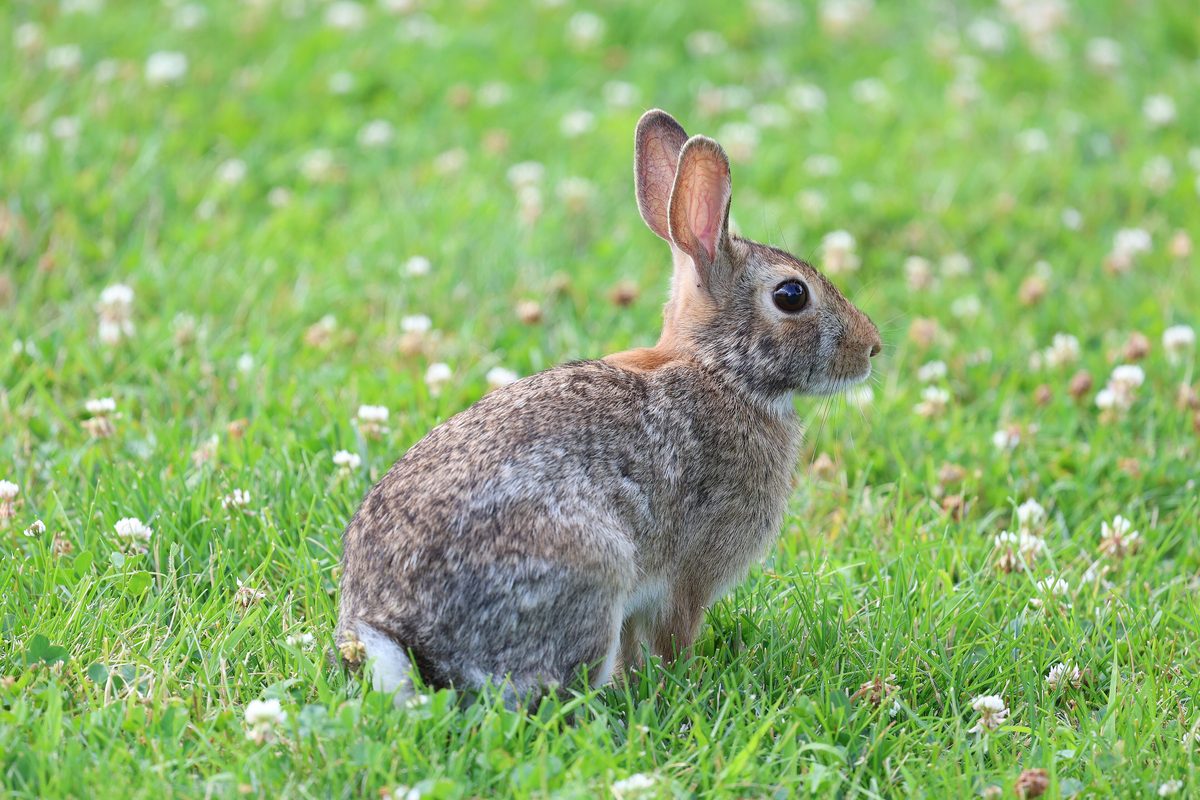
Eastern Cottontail Rabbit
The classic beginner's small-game hunt — a pack of baying beagles pushing a rabbit in a circle back toward the gun.
Sylvilagus floridanus
- Range
- Eastern & central U.S.
- Peak season
- Nov – Feb
- Tag access
- Over-the-counter
- Live weight
- 2–3 lb
Regulations by region
Eastern Cottontail Rabbit rules where you're headed
Seasons, tags, limits, and legal methods for eastern cottontail rabbit are set jurisdiction by jurisdiction. Pick your state or province and we'll point you at the agency that writes the rules.
Jump to another species
About the eastern cottontail rabbit
Eastern cottontails are one of the most widespread and accessible small-game animals in the country, living in brush piles, fencerows, briar tangles, and field edges across the eastern two-thirds of the U.S., and requiring nothing more than a basic small-game license to hunt. The classic method uses beagles, whose job is to trail a rabbit by scent and push it in a wide circle that eventually brings it back past the hunters standing near where it was jumped — rabbits rarely run in a straight line and almost always circle back toward familiar cover. It's a social, low-cost, forgiving hunt that works well for new hunters and kids: seasons are long, limits are generous, cover is close to home in many areas, and a day in the field yields plenty of shooting opportunity even for beginners.
Range and habitat
Cottontail hunting quality tracks brushy edge habitat — overgrown fencerows, clear-cuts, and field-edge brush piles hold the highest rabbit densities. Midwest farm country (Iowa, Illinois, Indiana): Abundant fencerow and CRP edge habitat holding good rabbit numbers. Southeast briar and clear-cut country: Thick brush and young timber regrowth ideal for cottontails. Pennsylvania & the Mid-Atlantic: Strong public game-land populations with a long tradition of beagle hunting. Kansas & Missouri: Good rabbit numbers on public walk-in access land. Ohio: Widespread brush and fencerow habitat close to population centers.
Behavior and field method
Cottontail hunting is typically done with beagles working thick brush, pushing rabbits in a circle back toward standing hunters. Hunt thick brush piles, briar tangles, fencerows, and overgrown field edges where rabbits hold tight during the day. Release beagles to work the cover, following their bark and bay to track the rabbit's movement by ear. Position hunters at likely crossing points — rabbits almost always circle back toward the area where they were originally jumped. Stay still and quiet once dogs strike a trail, listening for the changing pitch of the bark that signals the rabbit is closing the loop. Take the shot when the rabbit crosses an open lane, leading appropriately for its running speed and direction. Kick or stomp thick brush piles directly if hunting without dogs, since rabbits often hold tight until nearly stepped on. Hunt after a light snow when possible — fresh tracks make locating active brush piles and rabbit trails far easier. Rotate to a new brush pile or fencerow section if dogs lose the trail, rather than spending excessive time on cold scent.
Tracks, droppings, and sign
Rabbit sign is everywhere in the right cover, and in snow it is a complete record of the animal's night. Tracks — The classic bounding pattern: two long hind prints land ahead and side by side, with two smaller front prints behind and offset, forming a Y. Hind prints run 3–4 inches; a snowshoe hare's are far larger and rounder. Droppings — Round, flattened, pea-sized pellets of dry fibrous plant matter, scattered widely rather than in tight piles. Green-tinged and soft means very fresh. Browse sign — Twigs and canes clipped at a clean 45-degree angle, as if snipped with pruners — rabbits have upper incisors and cut cleanly, while deer tear ragged ends. Height is under about 20 inches. Forms & burrows — Shallow oval hollows pressed into grass, brush piles, and briar edges. Cottontails do not dig their own burrows but will use groundhog holes as escape cover. Bark stripping — Gnawed bark on young trees and shrub stems at snow height, with visible parallel incisor grooves.
In the field
A cottontail hunt is loud and social in a way many other hunts aren't — the constant chorus of baying beagles working a scent trail through brush is half the appeal for many hunters who grew up running dogs. The shooting itself is fast and close, often through gaps in brush as a rabbit crosses a lane at a dead run, testing quick reflexes more than distance shooting skill. It's an easy hunt to bring new hunters or kids along on — limits are generous, action is frequent, and a missed shot rarely ends the day since dogs will often push the same rabbit back around again.
Regulations, tags, and seasons
Cottontail hunting requires only a basic small-game license, making it one of the cheapest and simplest hunts to get started with. Buy a small-game hunting license online from the state wildlife agency, usually inexpensive and available year-round. Confirm season dates, which typically run long, often from fall through late winter. Check daily bag limits, generally generous, often 5-10 rabbits per day depending on the state. Identify brush-heavy public land or secure permission on private fencerows and field edges. If running dogs, check any state-specific rules about beagle use during other concurrent hunting seasons like deer.
Harvest and processing
Rabbits circle. Shoot, then hold your position, because a jumped cottontail often comes back around to the same brush pile. Take the shot on a running rabbit only when you have a clear background — rabbits run low and shot travels. Mark the fall precisely; a brown rabbit in brown cover disappears instantly. Dispatch any cripple immediately with a sharp blow behind the ears or by cervical dislocation. Put on nitrile gloves before you touch the animal. Tularemia transmits through cuts and it is the reason for the traditional 'wait for frost' rule. Field dress within the hour: a shallow belly slit, sweep the entrails out, and check the liver for white spots — discard the animal if you find any. Let the carcass cool with airflow rather than stuffing it warm into a game bag. A cottontail skins in under a minute with no knife once you learn the pinch-and-pull.
Meat care and what you take home
A cottontail yields roughly 1 pound of lean, mild white meat, similar in texture and flavor to chicken. Classic preparations include frying, braising with vegetables in a stew, or slow-cooking with a mustard-based sauce. Skin and quarter promptly after the hunt, especially in warmer weather, and always cook rabbit meat thoroughly given the risk of tularemia in wild populations.
Field notes
- 12- or 20-gauge with improved cylinder choke: An open choke with 6 shot handles the typical close, brush-obscured rabbit shot without over-restricting pattern spread.
- Beagles or other rabbit hounds: Well-trained beagles dramatically increase both the number of rabbits jumped and the enjoyment of the hunt through their vocal trailing.
- Briar-resistant brush pants: Cottontail cover is often dense briar and thorny brush; faced brush pants save your legs on a full day of pushing through it.
- Blaze orange: Rabbit season often overlaps with deer season in many states — high-visibility orange is essential in shared woods.
- Sturdy leather boots: Brush-pile and fencerow terrain is uneven and often thorny; solid boots with good ankle support help all day.
Eastern Cottontail Rabbit questions, answered
- Do I need dogs to hunt rabbits successfully?
- No, still-hunting brush piles and kicking cover without dogs works too, especially in snow when tracks reveal active areas, but dogs significantly increase the number of rabbits jumped and the pace of the hunt.
- Is rabbit meat safe to eat?
- Yes, when properly cooked, but wild rabbits can carry tularemia; wear gloves when field dressing, avoid handling visibly sick animals, and cook the meat thoroughly to a safe internal temperature.
- What's the best weather for rabbit hunting?
- A light fresh snow is ideal, since tracks reveal exactly where rabbits have been moving and holding, making brush piles and cover far easier to identify as productive.
- How does the beagle-and-circle method work?
- A rabbit, when jumped, almost always runs a wide loop back toward its home cover rather than fleeing in a straight line, which is why hunters position themselves near the jump point rather than chasing the dogs.
- What choke and shot size work best?
- An improved cylinder choke with 6 shot handles the typical close-range, brush-obscured rabbit shot effectively.
- Is cottontail a good hunt for beginners?
- Yes — inexpensive tags, long seasons, generous limits, frequent action, and forgiving shot opportunities make it one of the best introductory hunts for new hunters or kids.
Official sources and further reading
- National Beagle Club of America
Beagle trialing, training resources, and rabbit hunting tradition information.
- Find state wildlife agencies
Directory of every state wildlife agency for current tags and regulations.
- USDA Forest Service — find a forest
Locate national forest land open to public small-game hunting.
- USFWS — Hunting
Federal hunting resources and public land access information.