


From the north · Wildlife
Mahi-mahi
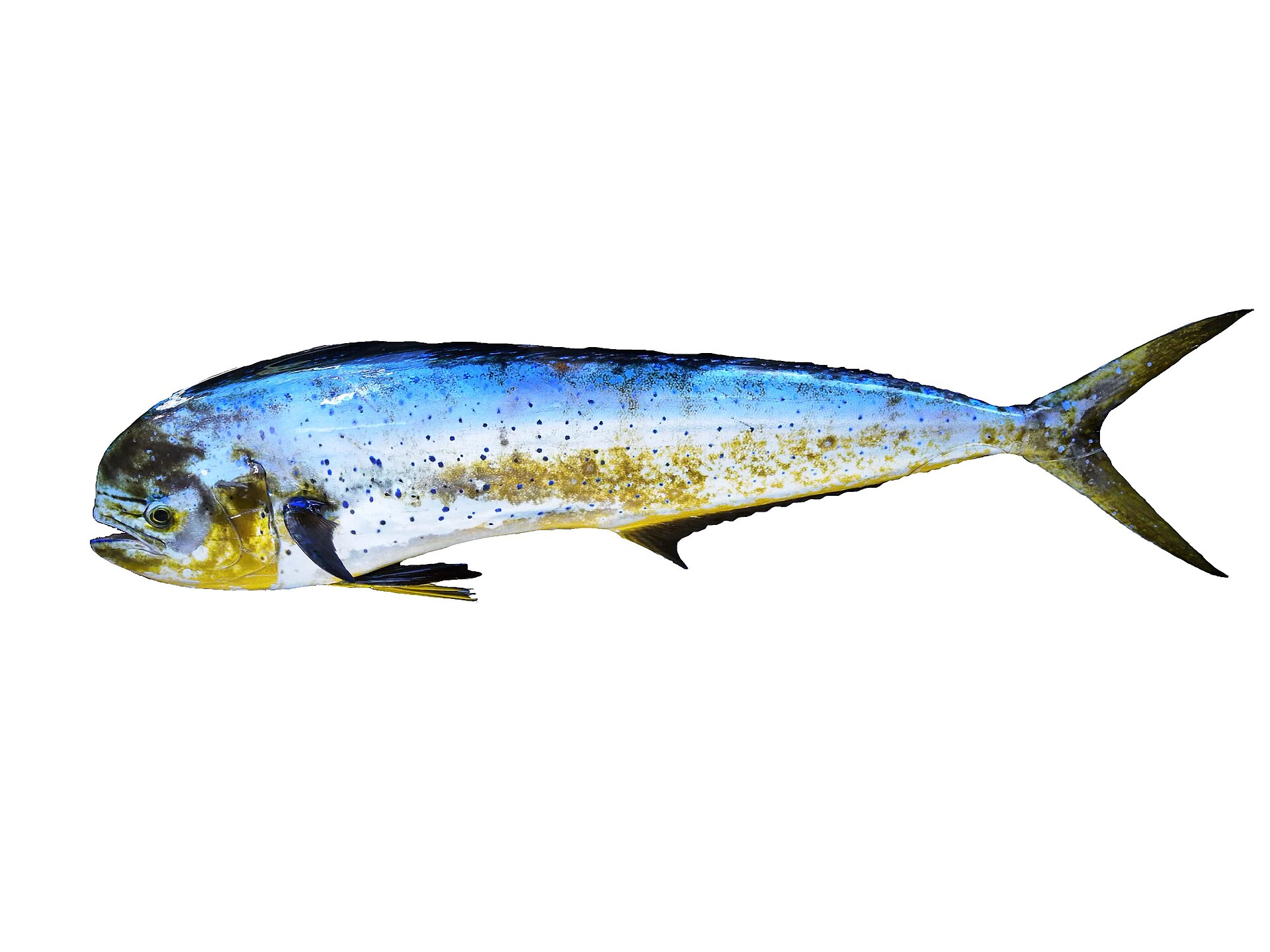
The fastest-growing gamefish in the ocean — electric blue and gold, willing to eat almost anything, and the best fillet you can bring home from blue water.
Coryphaena hippurus
- Range
- Warm blue water worldwide; Gulf Stream and Gulf
- Prime season
- April–September in most U.S. waters
- Access
- State saltwater license or federal HMS permit
- Table quality
- Exceptional — firm, mild, versatile
Regulations by region
Mahi-mahi rules where you're headed
Seasons, tags, limits, and legal methods for mahi-mahi are set jurisdiction by jurisdiction. Pick your state or province and we'll point you at the agency that writes the rules.
Jump to another species
About the mahi-mahi
Mahi-mahi live short, fast lives. They can grow more than four feet in a single year, they spawn multiple times a season, and they rarely live past four or five years. That biology is why the fishery is resilient and why the average fish you catch is young and hungry. Finding them is about finding structure in open water. Weed lines, floating pallets, current rips, buoys, and even a single drifting palm frond will hold a school, because everything from bait to predator organizes around any object in blue water. They are aggressive, they jump, they light up gold and electric blue when hooked, and they are the best-eating fish most people will ever catch offshore. There is very little not to like.
Range, water, and where they live
Mahi follow warm water and structure. These are the U.S. fisheries where they are most reliably within a reasonable run. Florida Keys and Gulf Stream edge: Short run to blue water and weed lines. Outer Banks, North Carolina: Gulf Stream fish May through July. Louisiana and Texas rigs: Structure-oriented fish around offshore platforms. Southern California offshore: Late summer fish under kelp paddies. Hawaii (mahimahi): Year-round fishery with heavy average size.
Behavior and how they feed
Offshore, you are searching for structure first and fish second. Once you find a school, keeping it at the boat is its own skill. Run to the temperature or color break and start looking for weed lines, rips, and floating debris. Troll a spread of small ballyhoo, skirted lures, and feathers at 6–8 knots along the weed edge rather than through it. Watch for frigate birds working — they mark mahi far more reliably than any electronics. When you hook one, leave it in the water. The school stays with a hooked fish, which sets up sight casting for the rest. Cast small jigs, live pilchards, or a fly to the visible school while the first fish is still on. Keep a chum handful of cut bait going to hold the school alongside as long as possible. Larger bulls hold deeper and separate from the school; drop a heavier bait beneath the frenzy for the big one. Bleed and ice every fish immediately — the fillet quality collapses if fish lie on a hot deck.
Where they hold
Mahi live under anything floating. Structure offshore is not bottom — it is a weed line, a log, or a buoy, and that is where you fish. Weed lines — A defined sargassum line in blue water is the single most productive mahi structure; work both sides. Floating debris — A pallet, log, or bucket in open water can hold a school of fifty fish. Never run past one. Color and temperature breaks — The edge where green water meets blue holds bait and everything that eats it. Buoys and FADs — Permanent structure gathers fish; check every marker on the run out. Frigate birds — A frigate bird working low over open water is usually over a mahi school pushing bait.
What they eat and what they hit
These are the presentations that consistently produce mahi-mahi, with the conditions each one is actually for — not a tackle-shop wall. Trolled skirted ballyhoo — A small blue-white or pink-white skirt over ballyhoo at 6–8 knots along a weed line. Live pilchard or ballyhoo — Once a school is up, pitch live bait and they will stay behind the boat. Bucktail or jig — For fish holding tight to debris that will not follow the boat. Poppers — A surface bait thrown at a visible school triggers instant competition. Chunk bait chum — Keep a hooked fish in the water and toss chunks; the school stays with it. Fly (baitfish pattern) — 10-weight with a chartreuse-white streamer thrown at a teased-up school.
In the field
Mahi fishing goes from silence to chaos instantly. Have rods rigged and ready before you reach the weed line, not after. The color change when a fish comes out of the water is genuinely startling the first time — electric blue and gold that fades within minutes of death. Sea conditions govern the day. Anything above three feet makes reading weed lines miserable and unsafe in a small boat.
Licenses, stamps, and limits
Licensing offshore is a two-layer question: state license for the trip, and federal permits for certain highly migratory species trips. Buy the state saltwater license; charter customers are usually covered by the vessel's license. Check whether the trip requires a federal HMS Angling permit — it does if you are also targeting tuna, billfish, or sharks. Confirm the size and bag limits, which vary by state and by federal zone (commonly 20 inches fork length and 10 fish per person). Note vessel limits — many areas cap total mahi per boat regardless of headcount. File a float plan and check offshore weather; this is the one fishery where sea state matters more than regulations.
Landing, release, and cleaning
What happens between the hookset and the cooler decides whether you land the fish and whether it is worth eating. Keep one hooked fish in the water alongside the boat — the rest of the school will stay with it and you can cast to them. Gaff keepers in the head or shoulder, not the body, and get them straight into the fish box; a green mahi on deck is dangerous. On a keeper, ike jime is worth learning: drive a spike into the brain (a soft spot above and slightly behind the eye) so the mahi-mahi dies instantly, then bleed and chill it. Bleed by cutting the gill arches or the artery behind the pectoral, and let it drain into the water or a bucket for a full minute before icing. Bury the fish in a slurry of ice and seawater. Warm fish on a deck in the sun loses quality by the minute, especially in the belly meat. Release undersized fish quickly; mahi grow extremely fast and a small fish this month is a keeper the next. Cleaning a mahi-mahi the right way takes about four minutes once you know the sequence.
On the table
Mahi is one of the best fish in the ocean — firm, mild, white, and forgiving of nearly any cooking method from grilling to blackening to ceviche. Bleed the fish and get it into an ice slurry immediately. Mahi held warm turns soft and loses its texture faster than most species. Remove the bloodline and the dark red muscle strip along the lateral line before cooking for the cleanest flavor.
Field notes
- 7' medium-heavy spinning rod: For casting to the school once the trolled fish is hooked.
- 4000–6000 reel with 30–50 lb braid: Capacity and drag for a fish that runs and jumps repeatedly.
- 50–60 lb fluorocarbon leader: Abrasion resistance without spooking fish in clear blue water.
- Ballyhoo and skirted trolling lures: The standard spread for covering weed lines.
- Small bucktail jigs and live pilchards: For sight casting to the school held at the boat.
- Large insulated fish box with ice slurry: Fillet quality depends entirely on immediate chilling.
Mahi-mahi questions, answered
- How do you find mahi-mahi offshore?
- Look for structure in open water: weed lines, current rips, floating debris, buoys, and temperature breaks. Working frigate birds are the single best indicator. Fish organize around any object in blue water, so a lone floating pallet can hold an entire school.
- What is the best way to catch mahi?
- Troll ballyhoo or skirted lures along a weed line to find the school, then leave the hooked fish in the water and cast jigs or live bait to the fish that follow it to the boat.
- How big do mahi-mahi get?
- Most caught fish are 5 to 15 pounds. Large bulls — identifiable by the tall square forehead — regularly reach 30 to 40 pounds, and the world record exceeds 85.
- Is mahi-mahi sustainable to eat?
- Yes. Mahi grow extremely fast, spawn multiple times per year, and are rated a good choice by most sustainability programs when caught by U.S. troll and pole-and-line fisheries.
- Do I need a federal permit?
- For mahi alone, a state saltwater license is generally sufficient. If your trip also targets tuna, billfish, or sharks, you need a federal HMS Angling permit for the vessel.
Official sources and further reading
- NOAA Fisheries — Mahi Mahi
Stock status, biology, and federal management overview.
- Florida FWC — Dolphinfish Regulations
Size and bag limits, including vessel caps.
- Dolphinfish Research Program
Tagging results and migration data from angler-reported recaptures.