


From the north · Wildlife
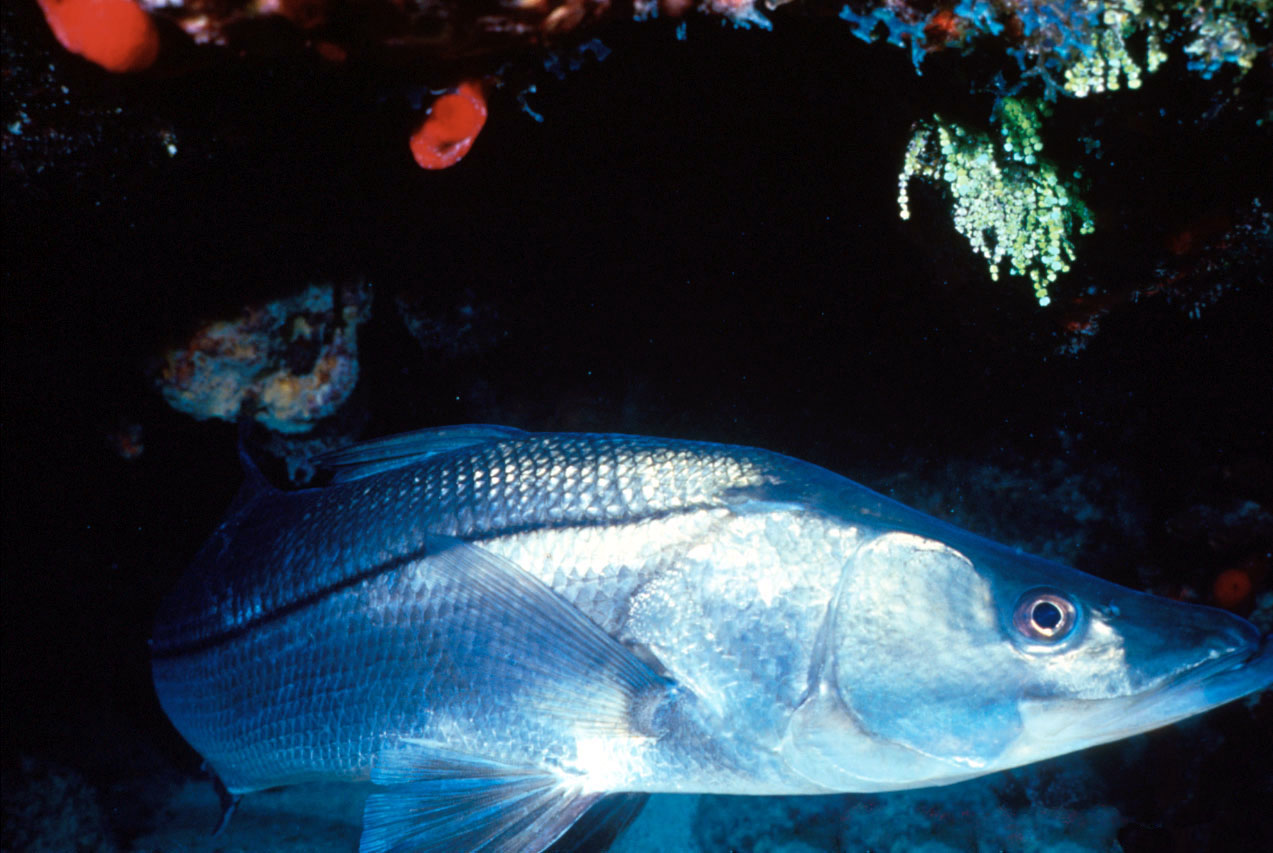
Common Snook
A structure-obsessed ambush predator with a razor gill plate and a hard head-shaking fight — the defining inshore gamefish of south Florida.
Centropomus undecimalis
- Range
- Florida, Texas, Gulf, Caribbean
- Prime season
- May–September spawning aggregations
- Access
- State license plus a snook permit
- Table quality
- Outstanding — a slot fish worth keeping
Regulations by region
Common Snook rules where you're headed
Seasons, tags, limits, and legal methods for common snook are set jurisdiction by jurisdiction. Pick your state or province and we'll point you at the agency that writes the rules.
Jump to another species
About the common snook
Snook are a structure fish in the most literal sense. They live against mangrove roots, bridge pilings, dock pilings, seawalls, and jetty rock, and the entire fishery is built around presenting a bait tight to that structure and then keeping the fish out of it. They are also temperature-sensitive to a degree that shapes the whole fishery. A hard cold snap in the low 50s kills snook, and Florida closes harvest after major cold events to let the population recover. The night-light fishery is the most accessible way in. Snook stack in the shadow line of dock and bridge lights, and a small white jig or fly presented up-current from the shadow catches fish consistently.
Range, water, and where they live
Snook need warm water and hard structure. Southwest Florida is the heart of it, with fringe fisheries north and west. Ten Thousand Islands, Florida: Endless mangrove shoreline and backcountry fish. Sanibel and Boca Grande passes: Summer spawning aggregations at the mouths. Florida east coast inlets: Jetty and inlet fish on moving tides. Tampa Bay dock lights: Reliable night sight fishing year-round. Lower Laguna Madre, Texas: Northern-fringe population, growing steadily.
Behavior and how they feed
Tide, structure, and a bait that arrives naturally. Snook face into current and expect food to come to them. Fish moving water. A slack tide shuts snook down almost completely; the last two hours of outgoing is prime. Position up-current of the structure and let the bait or lure drift back into the ambush zone. At dock and bridge lights, cast up-current into the dark and swim the lure through the shadow line — never into the bright center. Use live bait — pilchards, threadfins, pinfish, or shrimp — free-lined or under a small float when the bite is tough. On artificials, a white paddle-tail on a 1/4 oz jighead and a walking topwater at dawn cover most situations. Set hard and immediately turn the fish's head. The first three seconds decide whether you land it or lose it in the pilings. Use a 30–40 lb fluorocarbon leader; the gill plate edge is sharp enough to cut lighter line during the fight. In summer, move to the passes and beaches where spawning fish stack in the moving water.
Where they hold
Snook are structure-oriented ambush feeders that face into current and use shadow lines. They are also cold-intolerant, which drives where they are seasonally. Mangrove shorelines — Fish sit inches under the overhang facing the current; accurate casts under the branches matter more than lure choice. Dock and bridge shadow lines — Snook lie on the dark side of a light line and eat bait swept into the glow. Passes and inlets — Fish stage in passes to spawn on the summer new and full moons — closed season in Florida during much of it. Beach troughs — Snook cruise the first trough on the sand, sight-fishable on calm mornings. Rivers and canals — Snook run far up into warmer freshwater when temperatures drop below the low 60s.
What they eat and what they hit
These are the presentations that consistently produce common snook, with the conditions each one is actually for — not a tackle-shop wall. Live pilchard, pinfish, or shrimp — Free-lined on a circle hook near structure — the most reliable snook method there is. Paddle tail on a jig head — 1/4 oz head and a 3–4" tail, cast up-current and swum back with the flow. Suspending twitch bait — Worked in the shadow line with sharp twitches and long pauses. Topwater walker — Along mangrove edges and beach troughs in low light; the strike is unmistakable. White baitfish fly — 9-weight, a 3" white streamer, and a cast tight to the mangrove roots. 30–50 lb fluoro leader — Snook gill plates are razors and their mouths are abrasive; a heavy shock leader is mandatory.
In the field
The take at a dock light is visual and abrupt. You watch the fish materialize out of the shadow, and it is over in a second either way. You will get broken off. Snook go straight for structure, and heavier leader plus immediate pressure is the only counter. Cold fronts change everything. After a hard drop, move to deeper canals and residential basins where fish go to survive.
Licenses, stamps, and limits
Snook are tightly managed with a permit, a narrow slot, and different seasons on each coast. Read the current rules every year. Buy the state saltwater license and add the snook permit — it is a separate purchase in Florida. Check the slot limit for your coast; Gulf and Atlantic slots differ and change with stock assessments. Confirm open season dates. Both coasts close during summer spawning and again in winter. Watch for emergency closures issued after cold-kill events or red tide. Know the one-fish daily bag; snook are a single-fish-per-angler species nearly everywhere.
Landing, release, and cleaning
What happens between the hookset and the cooler decides whether you land the fish and whether it is worth eating. Turn the fish immediately. A hooked snook runs straight for the structure it came out of, and you have about two seconds to stop it. Never grab a snook by the gill plate — it will cut you and injure the fish. Lip grip with a wet hand or use a rubber net. Decide keep or release before you unhook. A common snook you intend to release should never leave the water for more than the length of one held breath. For release: support the belly, keep the fish horizontal, back the hook out with pliers, and hold it into the current until it kicks off on its own. Florida requires a snook permit, enforces a tight slot, and closes the season for large parts of the year. Verify before you keep anything. To keep the fish, dispatch it immediately — a firm rap with a priest or knife spine at the top of the skull, just behind and above the eyes. A common snook killed instantly tastes better than one that suffocates in a bucket. Cleaning a common snook the right way takes about four minutes once you know the sequence.
On the table
Snook is among the best-eating inshore fish in the Gulf — white, mild, and firm, often compared favorably to grouper. You must remove the skin. Snook skin carries a strong soapy flavor that ruins an otherwise perfect fillet. The bag is one fish inside a narrow slot, which is exactly the point: keep the legal one, release everything else quickly.
Field notes
- 7'0" medium-heavy spinning rod: Backbone to stop a fish before it reaches the pilings.
- 3000–4000 reel with 20–30 lb braid: Enough drag to lean on a fish immediately at close range.
- 30–40 lb fluorocarbon leader: Snook gill plates cut lighter leader during a head shake.
- 1/4 oz jighead with white paddle-tail: The universal dock-light and mangrove bait.
- Walking topwater plug: First and last light along mangrove edges and beaches.
- Live-bait well or flow-through bucket: Live pilchards outfish artificials on pressured fish.
Common Snook questions, answered
- What is the snook slot limit in Florida?
- It differs by coast and is adjusted with stock assessments — historically around 28–33 inches on the Gulf and 28–32 inches on the Atlantic, with a one-fish daily bag. Always check the current FWC page before you keep a fish.
- Do I need a special permit for snook?
- Yes. In Florida a snook permit is required in addition to the saltwater fishing license if you intend to keep one. It is inexpensive and available online.
- What is the best time to catch snook?
- Moving tide at night around dock and bridge lights year-round, and the summer spawning aggregations in the passes and along the beaches from May through September.
- Why do snook break me off so easily?
- They run straight into structure and their gill plate edge cuts line. Use 30–40 lb fluorocarbon leader, keep the drag firm, and turn the fish's head immediately on the hookset instead of letting it run.
- Does snook taste good?
- It is excellent — mild, white, and firm. Remove the skin completely before cooking; snook skin carries a soapy flavor that will ruin the fillet.
Official sources and further reading
- Florida FWC — Snook
Current slot limits, seasons, and permit requirements by coast.
- Snook & Gamefish Foundation
Tagging data, angler reporting, and population research.
- Texas Parks & Wildlife — Snook
Texas regulations for the northern-fringe population.