


From the north · Wildlife
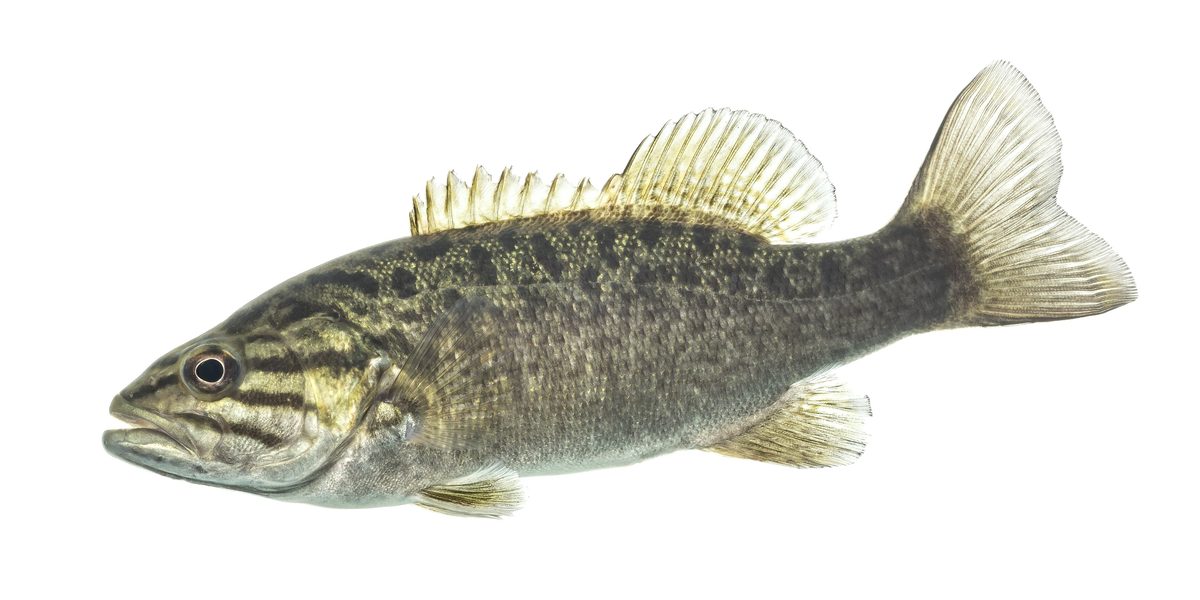
Smallmouth Bass
Pound for pound the hardest-fighting freshwater fish most anglers will ever hook — and it lives in current and clean rock.
Micropterus dolomieu
- Range
- Northern rivers and clear lakes
- Prime season
- May–June and September–October
- Access
- Basic state license, wade or float
- Table quality
- Good; mostly catch and release
Regulations by region
Smallmouth Bass rules where you're headed
Seasons, tags, limits, and legal methods for smallmouth bass are set jurisdiction by jurisdiction. Pick your state or province and we'll point you at the agency that writes the rules.
Jump to another species
About the smallmouth bass
Smallmouth want the opposite of what largemouth want: cool, clean water over rock and gravel, usually with current or wind moving across it. Where those two habitats overlap in a lake, the fish separate by exactly that preference. They are the best fighting freshwater fish in North America by most anglers' reckoning — a three-pounder in current fights like a six-pound largemouth and jumps repeatedly. River smallmouth and lake smallmouth are almost different sports. The river fish holds behind current breaks and can be waded to; the lake fish roams offshore rock and takes electronics or a lot of local knowledge to find.
Range, water, and where they live
Smallmouth reach their best size in big, cold, clear water, but the most enjoyable fishing is often a small river you can wade. Lake Erie (Ohio/Pennsylvania/NY): The best average size in the world — 4 lb fish are routine. Lake St. Clair (Michigan): Enormous numbers over vast flats. Susquehanna & Potomac (PA/MD): Classic wadeable river smallmouth. Boundary Waters / Quetico: Wilderness fish that see almost no lures. Ozark streams (MO/AR): Float-trip fishing in gin-clear water.
Behavior and how they feed
River or lake, the process is the same: find rock and current seams, then match your presentation to how aggressive the fish are. Read the water for hard bottom — gravel, cobble, boulder, or ledge. Smallmouth will not hold long over soft mud. In rivers, target the seam where fast water meets slow: behind boulders, at the head and tail of pools, along eddy lines. In lakes, start on wind-blown points and rock humps in 8–25 feet; wind concentrates bait and puts smallmouth on the feed. Search with a moving bait: a jerkbait in cold water, a swimbait or spinnerbait in warm, a topwater walking bait at low light. Once contact is made, slow down with a tube jig, a Ned rig, or a drop shot and work the spot thoroughly. Drag and hop the bottom rather than swimming it — most smallmouth eat crayfish, and crayfish live on the rock. Fish light and clear: 8–10 lb fluorocarbon, or braid to a long fluoro leader, because these fish live in clear water. Expect the fight to run downstream or under the boat; keep the rod low and let the drag do the work on jumps.
Where they hold
Smallmouth are rock and current fish. Where largemouth want cover, smallmouth want hard bottom and something breaking the flow. Current seams — The line between fast water and slack behind a boulder, wing dam, or island point. Fish sit in the slack and eat out of the fast. Rock transitions — Where chunk rock turns to gravel, or gravel to sand, on a main-lake point in 8–20 feet. Shoals and humps — Isolated boulder piles topping out at 10–18 feet hold roaming schools chasing gobies and shad. Bluff and rip-rap edges — Vertical rock lets fish change depth without moving horizontally; deadly in late fall and early spring.
What they eat and what they hit
These are the presentations that consistently produce smallmouth bass, with the conditions each one is actually for — not a tackle-shop wall. Ned rig — A 2.75" stick on a 1/10–3/16 oz mushroom head, dragged on rock. The most consistent smallmouth bait in North America. Tube jig — Hop-and-drag on gravel; the spiral fall imitates a fleeing crayfish better than anything else. Drop shot with a 4" minnow — For fish you can see on electronics in 15–35 feet that will not chase. Jerkbait — Suspending, hard pause of 5–15 seconds in 45–55°F water. The pause is the presentation. Swimbait on a jig head — A 3.5–4.5" paddle tail swum just above the rock finds active fish fast on a new shoal. Topwater walker / popper — Smallmouth will come twenty feet up for a walking bait over a hump on calm mornings.
In the field
A day of river smallmouth is more like wade-fishing for trout than bass fishing. You move constantly, cast short, and read current. Lake Erie in June is the other extreme — offshore, wind-dependent, and physically demanding, with an average fish larger than most people believe. Fall is the underrated window everywhere. As water drops through the 60s, smallmouth group up hard and eat with real aggression.
Licenses, stamps, and limits
As with all black bass, no tag or draw — but smallmouth waters carry more closed seasons and slot rules than largemouth waters do. Buy a state fishing license online before you travel; most are valid the moment you pay. Check whether the water has a spring catch-and-release-only season protecting spawning fish — many northern states do. Confirm the slot or minimum length; 14-inch minimums and 12–20 inch protected slots are both common. On border waters (Erie, St. Clair, Rainy), verify which jurisdiction's rules apply where you launch. Buy an Ontario Outdoors Card separately if you're crossing for Canadian water.
Landing, release, and cleaning
What happens between the hookset and the cooler decides whether you land the fish and whether it is worth eating. Expect jumps. Drop the rod tip when a smallmouth clears the water so it cannot land on a tight line and snap the hook free. Keep the rod loaded and the smallmouth bass coming toward you. Most fish are lost in the last ten feet, when an angler high-sticks the rod and gives the fish a straight-line shot at throwing the hook. Have the net in the water before the fish is ready, and lead the fish head-first into it. Never stab at a fish tail-first — it swims away from the frame every time. Wet your hands or your glove before you touch the fish. Dry hands strip the slime coat, and the slime coat is the fish's infection barrier. Decide keep or release before you unhook. A smallmouth bass you intend to release should never leave the water for more than the length of one held breath. For release: support the belly, keep the fish horizontal, back the hook out with pliers, and hold it into the current until it kicks off on its own. Cleaning a smallmouth bass the right way takes about four minutes once you know the sequence.
On the table
Smallmouth from cold, clean water are excellent — firmer and cleaner-tasting than largemouth. River populations are small and slow-growing; releasing everything over about 15 inches is the norm and keeps those stretches good. If keeping fish, bleed and ice them immediately — smallmouth flesh softens fast in a warm livewell.
Field notes
- 6'10" medium spinning rod: Light enough to work a tube or Ned rig, strong enough for a 4 lb fish in current.
- 2500-size spinning reel: Smooth drag matters more here than in any other freshwater bass fishing.
- 10 lb braid to 8 lb fluorocarbon leader: Sensitivity for bottom contact plus invisibility in clear water.
- 3" tube jig: The purest crayfish imitation there is; drag it on rock and hold on.
- Ned rig, 1/10 oz: Catches fish when nothing else will, especially in cold or pressured water.
- Suspending jerkbait: The cold-water and pre-spawn answer; long pauses are what triggers the strike.
Smallmouth Bass questions, answered
- What's the difference between smallmouth and largemouth?
- The jaw hinge. On a smallmouth it ends under the eye; on a largemouth it extends past it. Smallmouth are also bronze with vertical bars, and they prefer cooler, rockier, clearer water.
- Best bait for river smallmouth?
- A tube jig or a small crayfish-colored soft plastic dragged across gravel. In summer, a topwater walking bait at dawn is close behind.
- How big is a good smallmouth?
- Three pounds is a very good fish almost anywhere. Four is a trophy in most rivers, and Lake Erie and St. Clair are the places where five and six pounders genuinely happen.
- Do smallmouth bite in cold water?
- Yes, and some of the biggest fish of the year come in 40-degree water on a suspending jerkbait fished with 10-second pauses. The bite is subtle — often just weight on the line.
Official sources and further reading
- Ohio DNR — Lake Erie Fishing Reports
Weekly Erie smallmouth locations and current regulations.
- Pennsylvania Fish & Boat Commission
Susquehanna smallmouth seasons and catch-and-release stretches.