


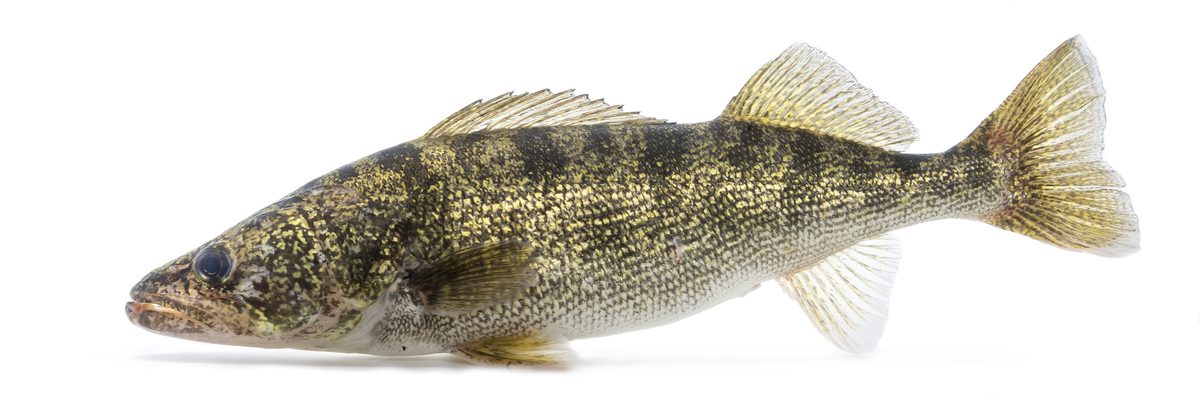
From the north · Wildlife
Walleye
The best-eating fish in fresh water, and the one most tied to light, wind, and depth.
Sander vitreus
- Range
- Great Lakes, upper Midwest, Canada
- Prime season
- April river run; June–August offshore
- Access
- State license; some waters need a stamp
- Table quality
- Excellent — the benchmark
Regulations by region
Walleye rules where you're headed
Seasons, tags, limits, and legal methods for walleye are set jurisdiction by jurisdiction. Pick your state or province and we'll point you at the agency that writes the rules.
Jump to another species
About the walleye
Walleye are a light-sensitive fish. That single fact explains almost everything about them: they feed at dawn, dusk, night, and under wind or stained water, and they sit deeper and tighter to bottom when the sun is high. They are also a structure fish. Rock reefs, sand-to-mud transitions, river current seams, and the deep edges of weed flats hold them, and open basin water usually does not — except in summer, when suspended fish chase bait high in the water column. And they are the reason a whole region fishes. In Minnesota, Ontario, and the Dakotas, walleye are the target, the shore lunch, and the standard by which every other fish gets judged at the table.
Range, water, and where they live
Walleye water ranges from vast Great Lakes basins to small Canadian Shield lakes. These are the fisheries with both numbers and consistency. Lake Erie (western basin): The most productive walleye water in the world. Lake of the Woods (MN/ON): Reliable year-round including a huge ice fishery. Devils Lake (North Dakota): Flooded timber and structure, generous limits. Bay of Quinte (Ontario): Trophy fish in late fall and early winter. Missouri River reservoirs (SD): Oahe and Sharpe — big water, huge numbers.
Behavior and how they feed
Match the method to the season. Jig in spring and fall, troll or drift in summer, and follow the light. Start on wind-blown structure — the walleye chop pushes bait against a rock reef or point and turns the fish on. In spring, fish the rivers and shoreline rock in 4–10 feet with a 1/8–1/4 oz jig and a minnow or plastic tail. Cast upstream in current, let the jig hit bottom, and lift-drop it back to you; the bite is a soft tick or just added weight. In summer, find the depth of the bait on electronics and troll crankbaits or spinner-and-crawler harnesses at 1.0–1.8 mph. Use lead-core or bottom bouncers to hold your bait at the exact depth the fish are marking — walleye rarely move far vertically. In fall, work sharp breaks and rock with larger baits; fish are grouped and feeding heavily before ice. Fish the last hour of daylight and the first hour after dark whenever you can — that is the highest-percentage window. Set the hook on any hesitation. Walleye inhale and spit; a delayed hookset is a missed fish.
Where they hold
Walleye are light-sensitive structure fish. They sit deep or in stained water by day, then push up onto flats and shoreline breaks at dusk. Break lines — The first sharp depth change off a flat — 12–22 feet on most lakes — held all day and left at dark. Rock and gravel points — Wind-blown points with current and rubble bottom, especially near spawning reefs. Weed edges — Cabbage and coontail edges hold walleye that most anglers troll right past looking for deep fish. River wing dams and dams — Fish stack on the upstream face and the downstream eddy; the tailrace below a dam is a spring classic. Mud basin — Suspended fish over 25–40 feet of soft bottom chasing bugs and bait — trolling water, not casting water.
What they eat and what they hit
These are the presentations that consistently produce walleye, with the conditions each one is actually for — not a tackle-shop wall. Jig and minnow — 1/8–3/8 oz jig, matched to depth and wind, dragged and pounded on bottom. Feel for weight, not a tap. Live-bait rig (Lindy rig) — A slip sinker, 4–6 foot leader, and a leech or crawler is the answer when they will not chase. Bottom bouncer + spinner — Trolled at 1.0–1.5 mph across flats and breaks in summer; a blade finds fish a jig would miss. Crankbait trolling — Shallow shad-shaped divers on planer boards at 1.8–2.5 mph for basin and shoreline fish at dusk. Blade bait / jigging rap — Vertical snap-and-drop over deep structure in late fall and through the ice. Slip bobber and leech — For rock piles and reef tops where you need the bait to hover at exactly one depth.
In the field
The classic walleye day is slow, methodical, and weather-driven. Flat calm and blue sky is the worst combination; grey, breezy, and rough is the best. Shore lunch on a Canadian lake — fish caught, cleaned, and fried within an hour — is the single most-cited reason people make the drive. Ice fishing is a legitimate second season. Walleye feed hard at first light and last light through the hardwater months, and a portable shelter changes the whole experience.
Licenses, stamps, and limits
No draws, but walleye waters carry the tightest and most-changed regulations in fresh water. Read the specific lake page every season. Buy the state or provincial license; Canada also requires an Outdoors Card in Ontario. Check whether that lake has a protected slot — 17–26 inch protected slots are common on managed walleye lakes. Note the daily and possession limits separately; possession limits matter on multi-day trips. Confirm the season dates — many northern lakes close in spring to protect spawning walleye. If crossing borders on Lake of the Woods or Rainy, know which side of the line you're fishing at all times.
Landing, release, and cleaning
What happens between the hookset and the cooler decides whether you land the fish and whether it is worth eating. Walleye have a soft, papery mouth. Keep steady pressure and never let the line go slack, but do not horse them — trebles tear out. Net every fish worth keeping. A lipped walleye is a lost walleye, and the teeth are real. Keep the rod loaded and the walleye coming toward you. Most fish are lost in the last ten feet, when an angler high-sticks the rod and gives the fish a straight-line shot at throwing the hook. Have the net in the water before the fish is ready, and lead the fish head-first into it. Never stab at a fish tail-first — it swims away from the frame every time. Wet your hands or your glove before you touch the fish. Dry hands strip the slime coat, and the slime coat is the fish's infection barrier. To keep the fish, dispatch it immediately — a firm rap with a priest or knife spine at the top of the skull, just behind and above the eyes. A walleye killed instantly tastes better than one that suffocates in a bucket. Cleaning a walleye the right way takes about four minutes once you know the sequence.
On the table
Walleye is the benchmark freshwater fish: white, firm, flaky, and completely mild. Fillet, remove the rib cage, and take the small strip of dark lateral meat if you want the cleanest possible flavor. Simple is best — flour, egg wash, cracker crumb, hot oil. Anything heavier buries the fish. Keep fish within the slot where slots exist, and ice everything immediately; walleye flesh is delicate.
Field notes
- 6'6" medium-light spinning rod, fast tip: Sensitive enough to feel a jig tick and detect a light take.
- 10 lb braid to 8 lb fluorocarbon leader: Zero stretch for hooksets at depth, invisible at the bait.
- 1/8–3/8 oz jig heads: Match weight to depth and wind — heavy enough to feel bottom, no heavier.
- Spinner harness and bottom bouncers: The summer workhorse: crawler harness behind a 1–3 oz bouncer.
- Deep-diving crankbaits: Cover water and trigger the fish suspended over basins in midsummer.
- Quality fillet knife and cooler: Walleye are kept fish; ice them whole and fillet at the cleaning station.
Walleye questions, answered
- What's the best time of day for walleye?
- The two hours around sunset and the hour after dark, in most seasons. Overcast, windy days extend that window through the afternoon.
- Jig or troll?
- Jig in spring and fall when fish are shallow and grouped on structure. Troll in summer when they scatter and suspend — trolling covers water and finds the depth band fast.
- Why do walleye bite so lightly?
- They inhale a bait and hold it, rather than striking hard. Anything that feels like extra weight, a tick, or your jig 'not falling' is a fish — set the hook.
- Are walleye good to eat?
- They are widely considered the best-eating freshwater fish in North America. Check the state's fish consumption advisory for mercury guidance on very large fish.
Official sources and further reading
- Minnesota DNR — Walleye
Lake-specific regulations, slot limits, and stocking reports.
- Ontario Fishing Regulations Summary
Zone-by-zone seasons, limits, and license requirements.