


What Happened
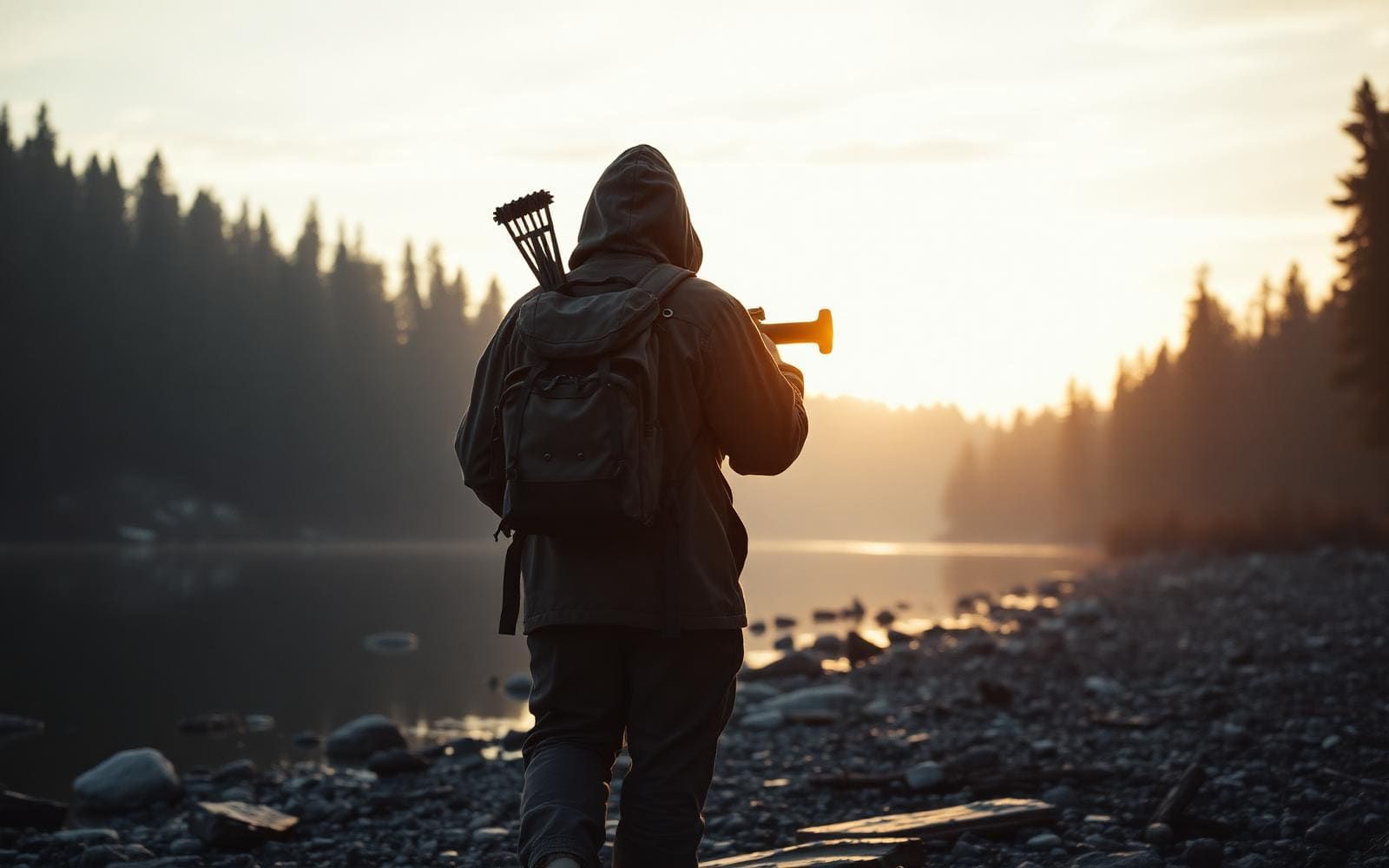
Season 6 of Alone shifts the proving ground to the eastern arm of Great Slave Lake in Canada’s Northwest Territories. In Episode 2, titled "Tainted," the realities of early-stage subarctic adaptation begin extracting an uncompromising toll. While contestants battle dipping autumn temperatures and establish camp perimeters amid prominent apex predator populations, the episode’s pivotal turn centers on biological vulnerability rather than physical injury.
On Day 8, survival instructor Donny Dust suffered an abrupt end to his expedition when acute food poisoning triggered an emergency medical evacuation. Dust, known for his primitive skills fluency, was halted not by structural shelter collapse or freezing exposure, but by internal distress that made self-stabilization impossible. Severe gastrointestinal infection in a subarctic environment creates a compounding downward spiral: rapid fluid depletion, loss of electrolyte equilibrium, and an inability to retain calories. When your core temperature depends entirely on metabolic furnace fueled by food, violent emesis and diarrhea will compromise a participant faster than ambient windchill. Dust’s extraction on Day 8 marks a severe, early reminder that primitive food processing carries zero tolerance for error.
Who Is Under Pressure
With Dust's sudden departure, the psychological pressure on the remaining participants ratchets up considerably. An early medical tap forces everyone still standing on Great Slave Lake to scrutinize their own camp hygiene, water purification protocols, and food storage strategies.
At this stage in a subarctic deployment, pressure manifests in three interconnected ways:
-
Caloric Urgency vs. Food Safety: Contestants entering their second week face rapidly burning glycogen stores. The drive to consume anything procured—be it small game, scavenged carrion, forage, or poorly preserved fish—pushes individuals toward dangerous compromises. Dust’s evacuation highlights the acute risk of rushing meat processing or undercooking suspect proteins. When starvation begins whispering in your ear, taking five extra minutes to maintain rolling boils or sanitize your cutting edges feels inconvenient. Yet ignoring those steps proves catastrophic.
-
Thermoregulation and Dehydration: Fluid loss from foodborne illness in subarctic conditions is frequently fatal without clinical intervention. Cold air is inherently dry air; participants lose significant volumes of moisture purely through respiratory exhalation. Layering gastrointestinal fluid loss on top of cold-induced diuresis strips the body of its capacity to regulate peripheral blood flow. Anyone experiencing even low-grade digestive issues at Great Slave Lake is fighting a war on two fronts: hypothermia and internal systemic collapse.
-
Predator Coexistence: The local wildlife around Great Slave Lake—specifically black bears, grizzly bears, and wolves—dictates camp layout. Food odors can no longer be tolerated near the sleeping area. If an illness leaves a contestant bedridden or incapacitated inside their shelter, managing an active perimeter or securing bear hangs becomes mechanically impossible.
Gear That Mattered
Episode 2 serves as a case study in how simple utility gear dictates survival outcomes when biological hazards arise.
-
The Cook Pot (Anodized Aluminum vs. Stainless Steel): The primary defense against bacterial infection, protozoa, and parasitic cysts is heat. A two-quart pot is not just a cooking vessel; it is a clinical sterilization unit. In subarctic climates, boiling water requires enormous thermal energy. If a participant cuts fire times short to conserve firewood, the water or broth may reach a simmer without achieving a true rolling boil long enough to neutralize spore-forming bacteria or heat-tolerant enterotoxins. In Dust’s scenario, whether the vector was tainted meat, cross-contaminated cookware, or insufficiently boiled water, the pot is the literal barrier between systemic health and a medevac call.
-
Cutting Tools (Knives and Saws): Field dressing wild game demands strict knife hygiene. Using a primary belt knife to eviscerate an animal and subsequently using that same unsterilized blade to slice cooked meat or prepare shelter poles creates high vectors for cross-contamination. Fixed-blade bushcraft knives with synthetic handles (like Micarta or G10) can be boiled or scorched clean over flame, whereas wooden handles or porous leather sheaths can harbor microbial bio-films if game blood seeps into the grain.
-
Firestarters (Ferrocerium Rods): The ability to summon high heat rapidly determines how well a participant eats. Relying purely on primitive friction fires when digestive illness sets in is impossible; weakness strips the physical capability required to run a bow drill or hand drill. The standard ferro rod guarantees that an ailing participant can produce the fire required to boil water, provided they have dry tinder prepared in advance.
-
Water Collection Vessels: Clean versus dirty water separation is a fundamental wilderness medicine discipline often compromised on Alone. Carrying water back to camp in flexible bladders or improvised containers requires strict discipline: the collection container must never contaminate the clean boiling vessel, and drinking directly from untreated sources—even an apparently pristine subarctic lake—exposes the hunter to Giardia lamblia or Cryptosporidium.
Standings
The field thins early in the Northwest Territories as the environment claims its second operational casualty of the season:
- Donny Dust: Tapped / Medically Evacuated (Day 8). Struck down by severe food poisoning. Despite deep primitive survival expertise, acute gastrointestinal illness incapacitated his physiological baseline, requiring medical extraction.
- Remaining Roster: Nine contestants continue their builds, food procurement, and preparations for the impending subarctic freeze, now hyper-aware of the micro-biological margins.
Bottom Line
Survival television often dramatizes external forces: charging bears, falling deadfall, biting blizzards, and plummeting mercury. But Donny Dust’s eight-day run on Great Slave Lake illustrates that the deadliest hazards are frequently microscopic. In wilderness contexts, food poisoning is not a two-day inconvenience spent on a bathroom floor; it is a rapid depletion of hydration, sodium, and metabolic fuel that completely disables the human machine in sub-freezing air.
Dust had the skills to endure the physical wilderness, but wilderness survival is an ecosystem of small, unforgiving details. Rushing the cooking process, cross-contaminating equipment, or underestimating municipal-grade pathogens in the wild will end an expedition faster than an empty stomach. As winter advances on Great Slave Lake, the margin for error has dropped to absolute zero.
Build the kit you just watched
Every item below is ranked from field use — no filler, no budget picks.
- The 10 items, rankedWhat actually survives 100 days — our tested picks for every slot on the list.
- Best bushcraft axesThe axe is the highest-leverage pick in the game. Here are the ones worth the weight.
- Best bushcraft knivesEvery winner carried one. These are the fixed blades that hold up to a full season.
- What the winners carriedSeason-by-season loadout analysis of every Alone champion.