



What Happened
By Day 19 in the subarctic setting of Great Slave Lake, the initial adrenaline of drop day has long evaporated. In Episode 3 of Season 6, titled 'Up in Flames,' the operational realities of surviving deep into autumn take full command. Contestants are forced to confront the harsh arithmetic of calorie expenditure versus thermal protection. At this phase of the competition, shelter construction transitions from basic weatherproofing to full-scale winter readiness, and the continuous need for reliable fire becomes an exhausting daily labor.
The central development of the episode is the tap out of Ray Livingston. Livingston officially ended his run on Day 19, articulating that he simply had nothing left to give. Lasting nearly three weeks in the Northwest Territories is a formidable achievement, but Day 19 represents a notorious threshold in the Alone trajectory. It is the window where stored glycogen reserves have vanished, systemic ketosis has settled in, and any structural calorie deficit begins taking a direct toll on cognitive stability and motor stamina. When the reservoir of reserves empties out entirely and day-to-day procurement fails to offset metabolic requirements, the physical engine shuts down. For Livingston, the balance sheet finally hit zero, prompting the call for the extraction boat.
For the competitors remaining on the shores of the lake, the workload only intensifies. Sub-zero temperatures, dropping water levels, and shifting weather patterns demand immediate upgrades to camp infrastructure. The focus centers on locking down dependable hearth systems and establishing draft-free living quarters before deep freeze locks the boreal forest.
Who Is Under Pressure
With Livingston out of the field, every remaining participant faces heightened scrutiny from both the elements and their own minds. Entering the three-week threshold is historically where early structural flaws in camp strategy compound into terminal errors.
The pressure at this point is bifurcated between physiological exhaustion and psychological isolation. Anyone who invested heavy labor into elaborate log cabins or massive earthworks without landing consistent, protein-rich catches is operating on borrowed time. The daily requirement to fell, limb, buck, and transport timber burns between 3,000 and 5,000 calories depending on cold exposure and terrain. If those calories are not replaced by gillnet hauls or successful big-game hunting, muscular atrophy accelerates rapidly.
Isolation is the second compounding factor. In the subarctic autumn, daylight hours begin to decline noticeably. As darkness expands, competitors spend increasingly longer stretches confined to their sleeping bags. Without constant task-oriented momentum to keep the mind occupied, psychological distress takes over. When physical stamina bottoms out, mental resistance follows almost immediately. Livingston's departure demonstrates how completely physical depletion can strip away the emotional will to push forward. Those still standing must actively manage both their resting heart rates and their internal monologues to avoid the same fate.
Gear That Mattered
In an episode defined by the struggle to secure warmth and domestic stability, tools related to fire craft and thermal retention dictate success or failure.
Cutting Tools: The Axe and Saw Combination
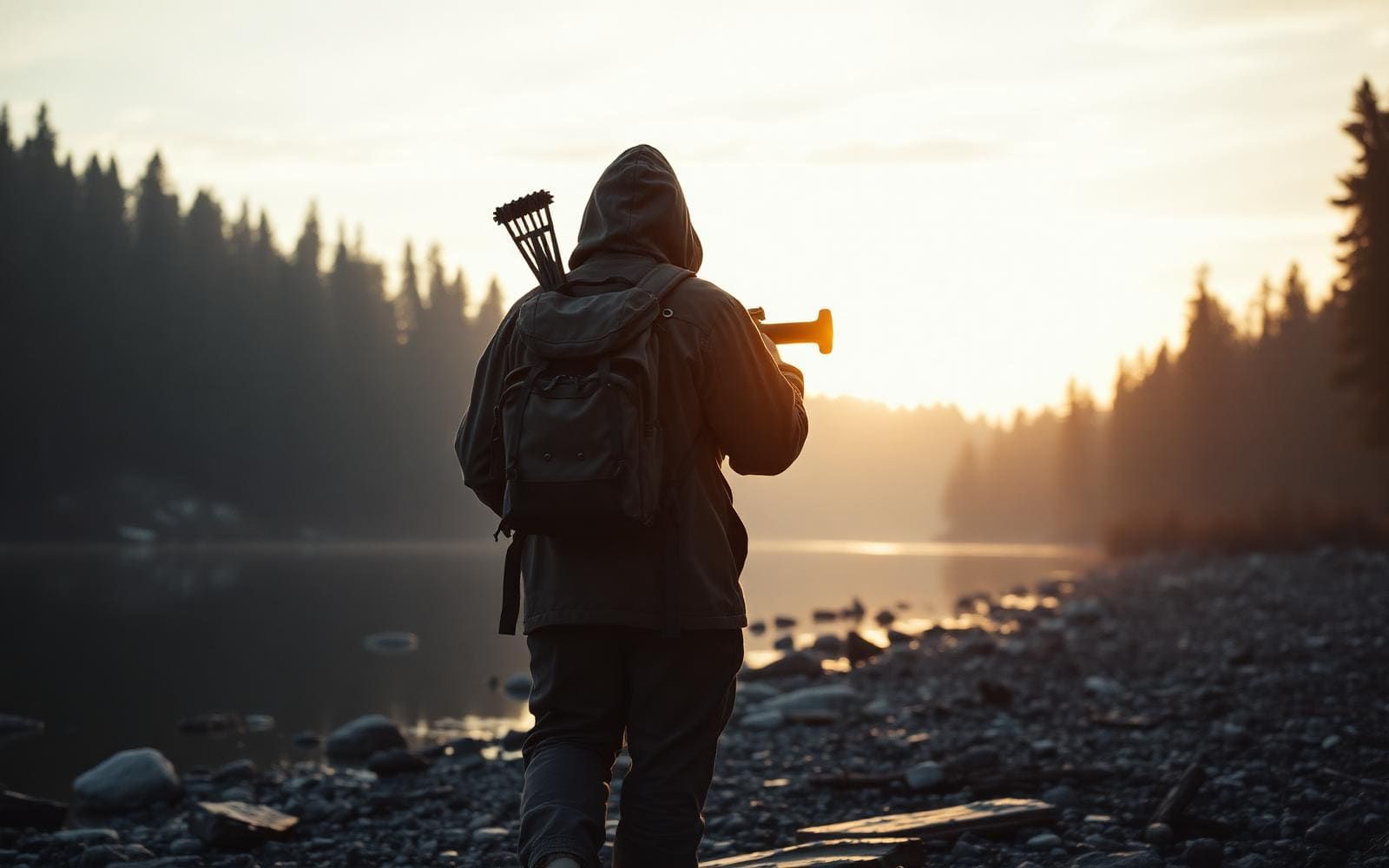
Processing deadfall for sustained overnight burns is unmanageable without heavy-duty cutting tools. A standard two-handed felling axe or heavy boy's axe delivers the split-wood volume needed to keep moisture-heavy boreal timber burning, while a high-tension bow saw or folding crosscut saw minimizes energy expenditure during bucking cuts. Competitors who rely primarily on chopping rather than sawing waste massive reserves of energy. An axe is efficient for splitting, limbing, and carving stakes, but cross-cutting firewood with an axe blade burns roughly three times the caloric energy required by a sharp, clean saw blade. At Day 19, that mechanical efficiency can dictate whether a contestant stays or taps.
Sleep Systems and Thermal Barriers
A multi-layered sleeping bag rated for extreme sub-zero conditions serves as the ultimate insurance policy. When fire goes out—whether due to exhausted wood piles or shifting winds—the sleep system is the sole barrier against hypothermia. Furthermore, insulation from the frozen ground is just as vital as loft above the body. A high-grade insulated sleeping pad, supplemented by thick boughs of spruce or woven willow beds, prevents conductive heat loss into the permafrost-adjacent soil.
The Ferrocerium Rod and Fire Infrastructure
While matches provide fast ignition, the ferrocerium rod remains the gold standard for long-term fire reliability under wet, freezing conditions. A spark source that operates regardless of ambient moisture allows survivalists to light tinder bundles made of processed birch bark, dried usnea lichen, or feather sticks even after heavy freezing rain. However, the tool is only as good as the hearth design. Creating an interior reflector wall using green logs or stone ensures that radiant heat bounces back into the sleeping footprint rather than escaping through the roof vent. A poorly drafted hearth fills the shelter with blinding smoke, forcing the occupant to ventilate the space and dump valuable heat.
Standings
Following the third episode, the Season 6 roster shrinks by one:
- Ray Livingston: Tapped out on Day 19. Stated clearly that he had nothing left to give, succumbing to the combined weight of physical depletion and relentless environmental pressure.
- Remaining Field: Continues onward past the Day 19 mark. With the subarctic winter bearing down, every surviving contestant must shift their strategy from transitional camp setups to deep-winter survival mode.
Livingston's extraction marks an important transition point for the season. The competition now leaves the preliminary attrition phase and enters the mid-game, where only sustainable food systems and hardened shelters will keep participants on the board.
Bottom Line
Episode 3 reinforces the core lesson that makes Great Slave Lake one of the most punishing locations in Alone history: physical grit cannot override thermodynamic reality. Ray Livingston pushed his body to the absolute limit for 19 days, but once a survivalist runs completely out of fuel, mental resolve will not sustain camp operations. Moving forward, the surviving participants must balance the ongoing energy costs of processing winter firewood with the absolute necessity of securing reliable food. If they burn more calories gathering wood and building hearths than they pull from the lake or forest, more taps are guaranteed in short order.
Build the kit you just watched
Every item below is ranked from field use — no filler, no budget picks.
- The 10 items, rankedWhat actually survives 100 days — our tested picks for every slot on the list.
- Best bushcraft axesThe axe is the highest-leverage pick in the game. Here are the ones worth the weight.
- Best bushcraft knivesEvery winner carried one. These are the fixed blades that hold up to a full season.
- What the winners carriedSeason-by-season loadout analysis of every Alone champion.