


Lightning in the backcountry is more than just a passing storm; it's a serious threat demanding respect and a clear plan. Unlike being near a car or structure, open country leaves you exposed. Your decisions when a storm rolls in can directly impact your safety. We'll cover how to assess the situation and what actions to take.
Understanding the Threat
Lightning can strike miles from the main rain shaft. If you can hear thunder, you are within striking distance. The "30/30 rule" is a good guideline: if the time between seeing lightning and hearing thunder is 30 seconds or less, seek shelter immediately. Wait 30 minutes after the last thunderclap before resuming activity. However, in the backcountry, ideal shelter isn't always available, so you need more nuanced strategies.
Key considerations:
- Elevation: High points, exposed ridges, and peaks are extremely dangerous.
- Water: Lakes, rivers, and even wet ground can conduct electricity.
- Tall Objects: Isolated trees, power poles, or rock spires act as natural lightning rods.
- Group Size: Spreading out your group can reduce the chance of multiple casualties from a single strike.
When to Move (and Fast)
Immediate movement is critical when you are in an obviously dangerous location and you have a safer, closer option. This isn't about outrunning the storm, but about getting to a less exposed position before the peak threat arrives.
- If on an exposed ridge or peak: Descend immediately. Even a few hundred feet of elevation loss can significantly lower your risk.
- If near a body of water: Get away from shorelines, out of boats, and if possible, away from wet ground.
- If among scattered, tall trees: Look for denser stands of shorter trees. A uniform forest canopy offers slightly better protection than isolated tall trees.
- If in a wide-open area with no cover: Look for a ditch, gully, or depression. Lie low, minimizing your profile.
Prioritize getting off the highest ground. If you're caught on an exposed summit with no immediate escape, look for a low spot a short distance away. Drop metal items like trekking poles or pack frames a safe distance from you.
When to Wait (and Where)
Sometimes, moving can put you in greater danger, or there's simply no better option available. In these cases, waiting out the storm responsibly is the best strategy.
- In a dense forest: If the trees around you are of uniform height and not significantly taller than their neighbors, this can be a relatively safer place. Get away from the tallest trees in the stand. Crouch low to the ground on a foam pad or other insulating material, keeping your feet together.
- In a depression or gully: If you've found a low spot, stay there. Crouch down. Avoid overhanging rocks or cliffs that could shed debris.
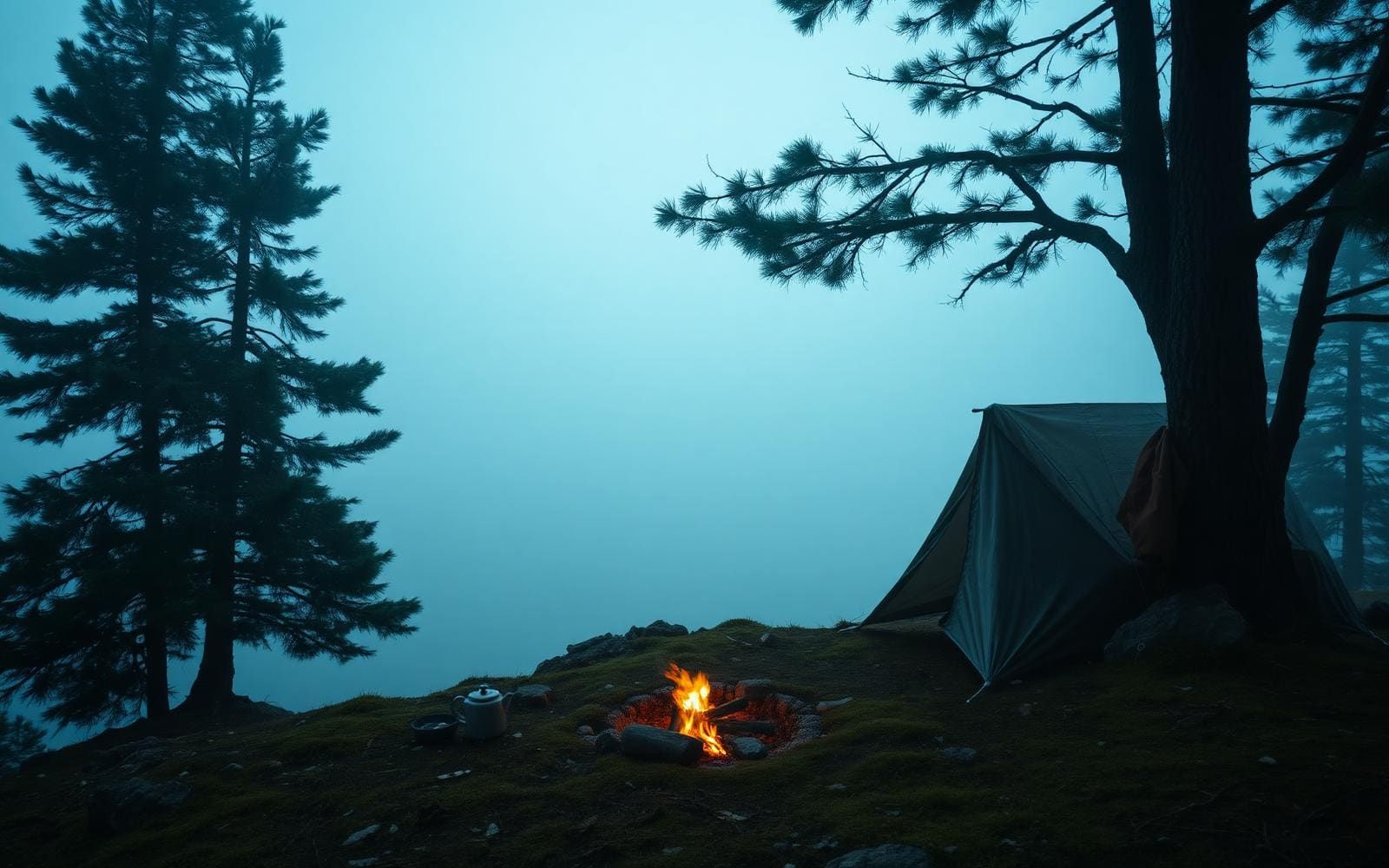
- Inside a tent (as a last resort): A tent offers no protection from a direct strike, but it keeps you dry and can prevent ground current from traveling through you if you insulate yourself properly. Sit or lie on a sleeping pad. Do not touch the tent poles or walls. Keep electronics and metal objects away from your body.
Avoid huddling in a cave opening, as ground current can arc across the entrance. Better to be deeper inside, away from the opening, if possible. If in a group, spread out by at least 20 feet to prevent a single strike from affecting everyone.
Post-Storm Actions
Once the thunder has passed for at least 30 minutes, slowly assess your surroundings. Look for downed trees or potential hazards created by the storm. Check on your group members. Rushed actions post-storm can lead to accidents. Re-evaluate your route and your plans. Sometimes, the best decision after a close call is to make camp or change your objective to a safer one.
Lightning is unpredictable. The core of backcountry lightning safety is constant awareness, proactive decision-making, and a healthy respect for the unpredictable power of nature. Equip yourself with knowledge, and you'll be better prepared to make critical choices when the skies turn dark.