


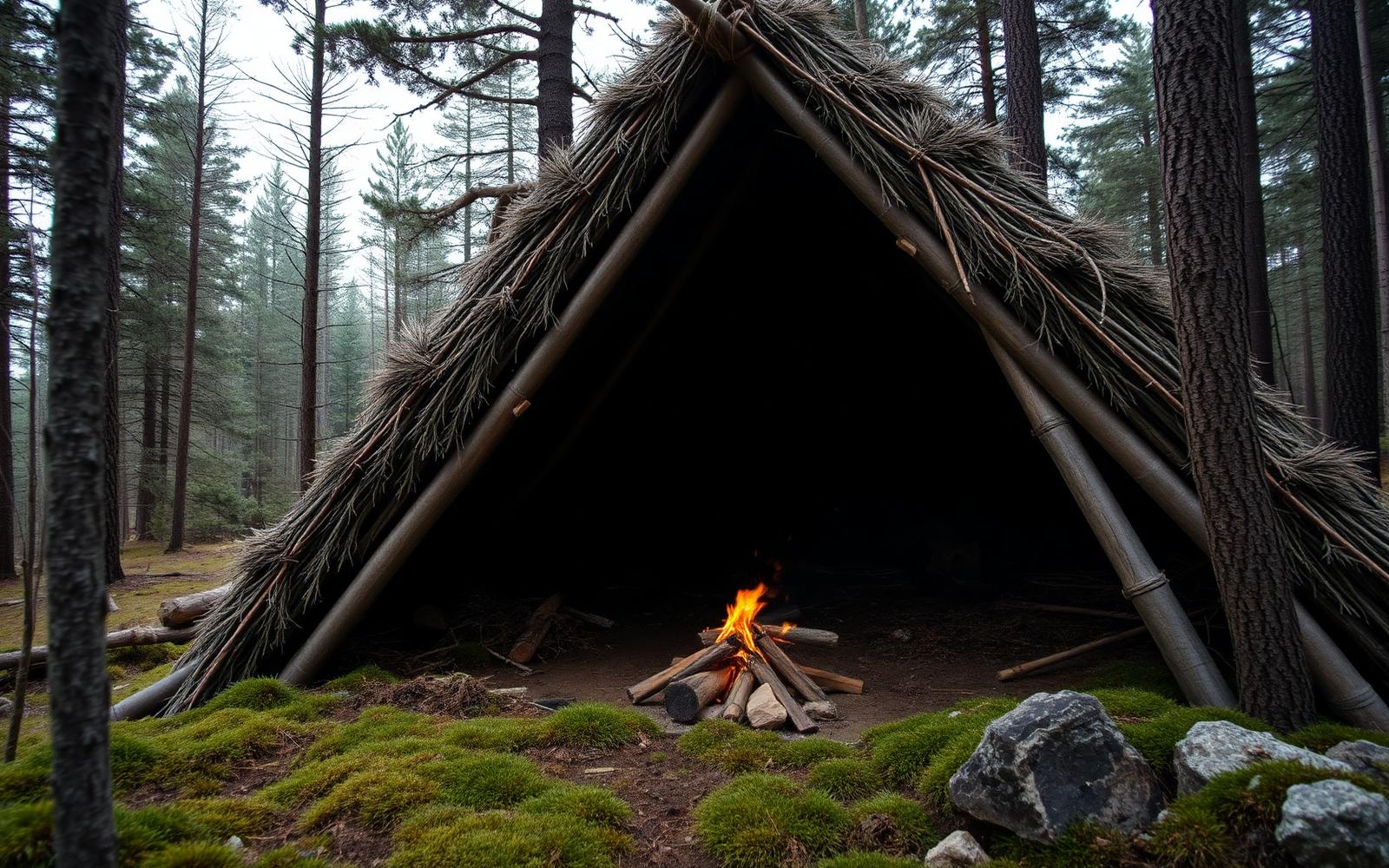
A shelter on Alone is never just a roof. It is a forecast, a budget, a risk decision, and a psychological statement. Some participants build compact structures quickly. Others invest heavily in elaborate homes. Every approach reveals what the builder believes about weather, energy, time, fire, and the length of the stay. The shelter becomes character development made from poles, cordage, moss, and stubbornness.
Design exposes priorities
A low shelter can conserve heat and materials. A larger structure can improve workspace, storage, and morale. A chimney may create a warmer interior while adding construction time and fire-management complexity. There is no free improvement. Each feature spends energy now in hopes of saving energy later.
Site choice comes before craftsmanship
The prettiest structure cannot fix a hazardous location. Drainage, wind exposure, falling timber, water access, animal travel, and available materials all shape the decision. Strong participants read the site before they commit. That invisible work is often more important than the visible walls.
Maintenance tells the longer story
Shelters settle, leak, smoke, sag, and collect moisture. The real test is not the reveal after construction; it is the thirtieth wet morning. Participants who inspect lashings, improve roofing, manage fire safely, and adapt ventilation show that survival structures are systems, not one-time projects.
The shelter changes morale
A dry sleeping area and organized workspace can reduce friction in every other task. Conversely, an oversized project can become an energy debt that never quite pays off. The show captures both possibilities. Building can create purpose and pride, but it can also become a refuge from more urgent problems.
No two shelters tell the same story
Even when materials look similar, personal style appears in tool racks, doors, beds, food storage, decoration, and the path worn between camp and water. Over time, the shelter becomes a physical diary. Its improvements mark good days; its unfinished corners record changing priorities.
Final word
Shelter sequences work because construction is both practical and revealing. Viewers see engineering under constraint, but they also see temperament: cautious or ambitious, minimalist or expansive, methodical or improvisational. On Alone, a wall is never merely a wall. It is a decision that will keep answering back.
Editorial note: This is original, positive commentary. Series and season information was checked against official HISTORY episode guides on July 14, 2026.
Build the kit you just watched
Every item below is ranked from field use — no filler, no budget picks.
- The 10 items, rankedWhat actually survives 100 days — our tested picks for every slot on the list.
- Best bushcraft axesThe axe is the highest-leverage pick in the game. Here are the ones worth the weight.
- Best bushcraft knivesEvery winner carried one. These are the fixed blades that hold up to a full season.
- What the winners carriedSeason-by-season loadout analysis of every Alone champion.