


Local species you're likely to meet
Four families cover most of the water on this site. Know which one your destination holds before you pack the tackle box.
Trout, salmon & char
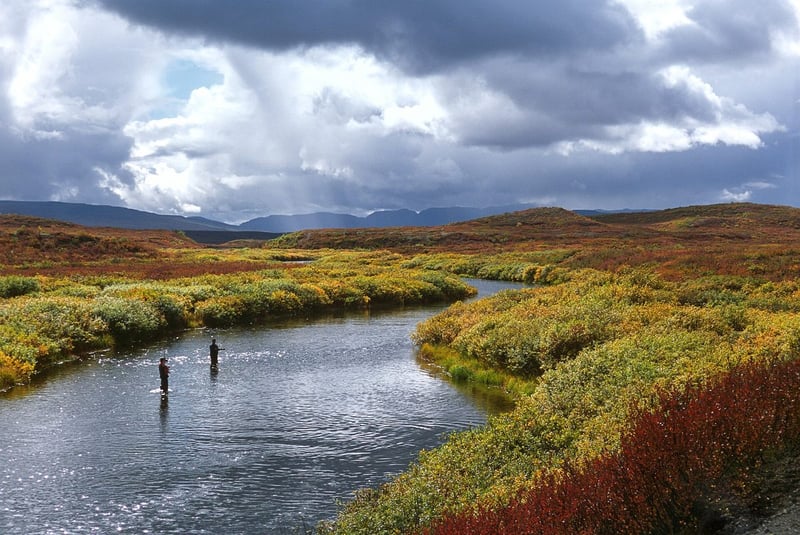
Cold, clean, moving water. Brook and rainbow trout take small spinners, spoons, and flies; lake trout and salmon run deep in summer and demand downriggers or heavy jigs. In the far north, Arctic char and grayling are the prize — short seasons, remote water, unforgettable fishing.
Bass, pike & walleye
The warm-water predators. Largemouth hold to cover and hit topwater at dawn; smallmouth prefer rock and current. Northern pike ambush anything shiny in weedy bays, and walleye feed low-light on wind-blown points — a jig and minnow remains the standard.
Panfish & family water
Bluegill, crappie, and perch are where new anglers are made. A light rod, a small hook, and a worm under a bobber will outfish expensive tackle on most evenings. These species tolerate warm summer water when everything else goes deep and sullen.
Saltwater & coastal
Striped bass, redfish, sea trout, and salmon runs on the coasts; halibut and lingcod in the Pacific northwest. Tides matter more than time of day — moving water is feeding water. Check marine regulations separately; they often differ from freshwater rules in the same state.
Best times to fish
The daily windows
Dawn and dusk are the reliable feeding windows almost everywhere — low light makes predators bold and baitfish careless. Midday belongs to deep water, shade lines, and slow presentations. Overcast days extend the morning bite; bright high pressure shuts it down early.
The seasonal arc
Spring brings fish shallow to spawn and feed aggressively after ice-out. Summer pushes most species deep or into current during the day, with the best action at first and last light. Fall is the trophy season — fish feed heavily ahead of winter. Winter is ice-fishing time across the north, or tailwater and southern trips for everyone else.
Weather and water
A falling barometer ahead of a front turns fish on; the bluebird day after it turns them off. Rising, off-color water after rain can be excellent for catfish and pike but tough for sight-feeding trout. Wind is your friend on clear lakes — it breaks up the surface and positions baitfish on windward shores.
Why we don't list local seasons here
Open seasons, catch limits, and slot sizes are set annually by each fisheries agency and change with population assessments. The only authoritative source is the current-year regulation booklet from the agency for the water you're standing on — every destination page on Wild10 links to it.
Gear that catches fish
Rods, reels & line
A medium-light spinning combo covers 80% of freshwater fishing. Add a medium-heavy baitcaster for pike, bass cover, and big water. Match line to the water: 6–8 lb monofilament or fluorocarbon for clear lakes, braid with a leader for weeds and toothy fish.
Lures that always earn a place
A handful of patterns catch fish across the continent: a silver spoon, an inline spinner, a curly-tail jig, a diving crankbait, and a topwater popper. Learn each one thoroughly before buying the eleventh color of anything.
Knots and rigging
Three knots cover nearly everything: the improved clinch for terminal tackle, the Palomar for braid, and a loop knot for lures that need action. Tie them cold and wet, and retie after every snag or fish of note.
The rest of the kit
Polarized sunglasses are not optional — they let you see fish, structure, and depth changes. Add needle-nose pliers, a net sized to your target species, a measuring tape, and a small first-aid kit. On remote water, a personal locator beacon belongs in the dry bag.
Licenses & regulations: the official agencies
Open seasons, catch limits, and slot sizes are set annually by these authorities. Their current-year regulation booklets are the only authoritative source — bookmark yours.
United States — by state
- AlabamaAlabama Dept. of Conservation & Natural Resources
- AlaskaAlaska Dept. of Fish and Game
- ArizonaArizona Game and Fish Department
- ArkansasArkansas Game and Fish Commission
- CaliforniaCalifornia Dept. of Fish and Wildlife
- ColoradoColorado Parks and Wildlife
- ConnecticutConnecticut DEEP
- DelawareDelaware Division of Fish & Wildlife
- FloridaFlorida Fish and Wildlife Conservation Commission
- GeorgiaGeorgia DNR Wildlife Resources Division
- HawaiiHawaii Division of Aquatic Resources / DOFAW
- IdahoIdaho Fish and Game
- IllinoisIllinois DNR
- IndianaIndiana DNR
- IowaIowa DNR
- KansasKansas Dept. of Wildlife & Parks
- KentuckyKentucky Dept. of Fish & Wildlife Resources
- LouisianaLouisiana Dept. of Wildlife and Fisheries
- MaineMaine Dept. of Inland Fisheries & Wildlife
- MarylandMaryland DNR
- MassachusettsMassWildlife
- MichiganMichigan DNR
- MinnesotaMinnesota DNR
- MississippiMississippi Dept. of Wildlife, Fisheries & Parks
- MissouriMissouri Dept. of Conservation
- MontanaMontana Fish, Wildlife & Parks
- NebraskaNebraska Game and Parks
- NevadaNevada Dept. of Wildlife
- New HampshireNew Hampshire Fish and Game
- New JerseyNJ Division of Fish & Wildlife
- New MexicoNew Mexico Dept. of Game & Fish
- New YorkNew York State DEC
- North CarolinaNC Wildlife Resources Commission
- North DakotaNorth Dakota Game and Fish
- OhioOhio DNR Division of Wildlife
- OklahomaOklahoma Dept. of Wildlife Conservation
- OregonOregon Dept. of Fish and Wildlife
- PennsylvaniaPA Game Commission / Fish & Boat Commission
- Rhode IslandRhode Island DEM
- South CarolinaSouth Carolina DNR
- South DakotaSouth Dakota Game, Fish and Parks
- TennesseeTennessee Wildlife Resources Agency
- TexasTexas Parks and Wildlife
- UtahUtah Division of Wildlife Resources
- VermontVermont Fish & Wildlife
- VirginiaVirginia DWR
- WashingtonWashington Dept. of Fish & Wildlife
- West VirginiaWest Virginia DNR
- WisconsinWisconsin DNR
- WyomingWyoming Game and Fish
Canada — by province & territory
- AlbertaAlberta Fishing & Hunting (My Wild Alberta)
- British ColumbiaBC Fishing & Hunting (Gov. of BC)
- LabradorNL Wildlife Division
- ManitobaManitoba Fish & Wildlife
- New BrunswickNB Fish & Wildlife
- Newfoundland and LabradorNL Wildlife Division
- Northwest TerritoriesGNWT Environment & Climate Change
- Nova ScotiaNova Scotia Hunting & Fishing
- NunavutGovernment of Nunavut — Wildlife
- OntarioOntario Fishing & Hunting
- QuebecQuébec Hunting & Fishing
- SaskatchewanSaskatchewan Fishing & Hunting
- YukonYukon Hunting & Fishing
International
- AustraliaCheck the state fisheries authority (e.g. NSW DPI Fishing)
- FinlandEräluvat (Metsähallitus permits)
- IcelandEnvironment Agency of Iceland
- MexicoCONAPESCA (sport-fishing permits)
- New ZealandFish & Game New Zealand / DOC hunting permits
- NorwayInatur (landowner hunting & fishing permits)
- ScotlandFisheries Management Scotland
- SwedenSwedish Agency for Marine and Water Management
- UKRod licence (England & Wales) — gov.uk
- United KingdomRod licence (England & Wales) — gov.uk
Questions
Frequently asked
- Do I need a fishing license?
- In nearly every US state and Canadian province, yes — anyone over the local youth age needs a fishing license, and some species (salmon, steelhead, sturgeon) require an additional tag or endorsement. Buy it from the official state or provincial agency, not a third-party reseller.
- What is the best time of day to fish?
- Dawn and dusk, almost everywhere. Low light triggers feeding in most predator species. In summer heat, night fishing can outproduce both. In spring and fall, the midday window often stays productive because water temperatures are moderate all day.
- What is the best all-around fishing setup for a beginner?
- A 6–7 foot medium-light spinning rod with a 2500-size reel spooled with 8 lb monofilament. It handles panfish, bass, walleye, and average trout, casts light lures well, and forgives the mistakes every new angler makes.
- How do I find out what species are in a lake or river?
- State and provincial fisheries agencies publish lake surveys, stocking reports, and fish-community data for most managed waters — start there. Local bait shops and recent fishing reports fill in what the surveys miss.
- Can I keep the fish I catch?
- Only within the current regulations: catch limits, size slots, and catch-and-release-only waters vary by species, water body, and year. Many trophy waters are artificials-only or barbless-hook. Check the current-year booklet for the specific water before you keep anything.
- What should I do about invasive species?
- Clean, drain, and dry your boat, waders, and gear between every water body — it is the law in many states and provinces. Never move live bait or fish between waters, and dispose of unwanted bait on land, well away from the shore.
Keep planning
- The fishing hub — species guides, knots, lures, and the lure planner.
- The Hunting Guide — gear, permits, seasons, and regulations for the other half of field sports.
- Build a trip plan — itinerary, menu, and packing list for your fishing dates.