Skip to content
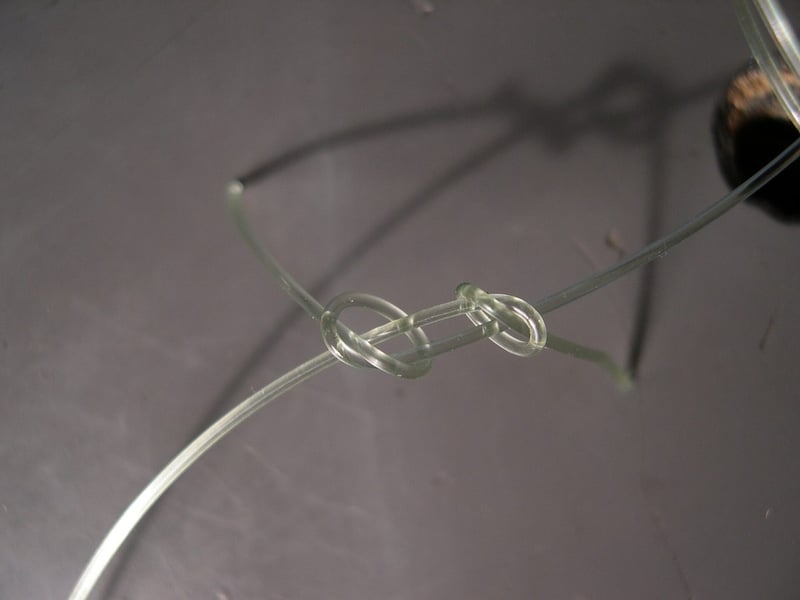
Fishing knot tied loosely in monofilament line

Fishing · Skills

Twelve fishing knots, and when each one earns its place

Your knot is the weakest point in the entire system. These are the connections that hold under a hard hookset, and the four habits that keep them from failing.

Nobody loses a fish to a rod. They lose it to a knot they tied dry, cinched hard, and trimmed too close. Learn three knots properly and you will land more fish than someone who half-knows twelve.

Everything below is organized by job — terminal connections, line-to-line joins, and the loop knots that free a lure to swim. Each entry notes the approximate strength retention and which line types it suits.

Knots covered
12 essential
Core rules
4 universal
Line types
Mono, fluoro, braid
Drill
Palomar in the dark

01

Four rules that apply to every knot

Wet before you tighten. Always. Dry friction is the single largest cause of unexplained break-offs, and it happens invisibly at the moment you seat the knot.

Seat slowly and evenly. Pull with steady pressure on both the standing line and the tag, letting the wraps stack in order. A hard jerk crosses coils and creates a stress point.

Inspect the finished knot. Coils should look like a neat barrel, not a tangle. If a wrap crossed over another, cut it off and retie — that knot will fail at roughly half its rated strength.

Leave a tag end of about 2 mm and retie after any fish over a few pounds, after a snag, and after every hour of casting in abrasive cover. Line is the cheapest part of your setup.

Fishing knot tied loosely in monofilament line
Bernhard Kuemel Darsie42 / CC BY-SA 3.0 · Wikimedia Commons

02

Terminal knots — line to hook, lure, or swivel

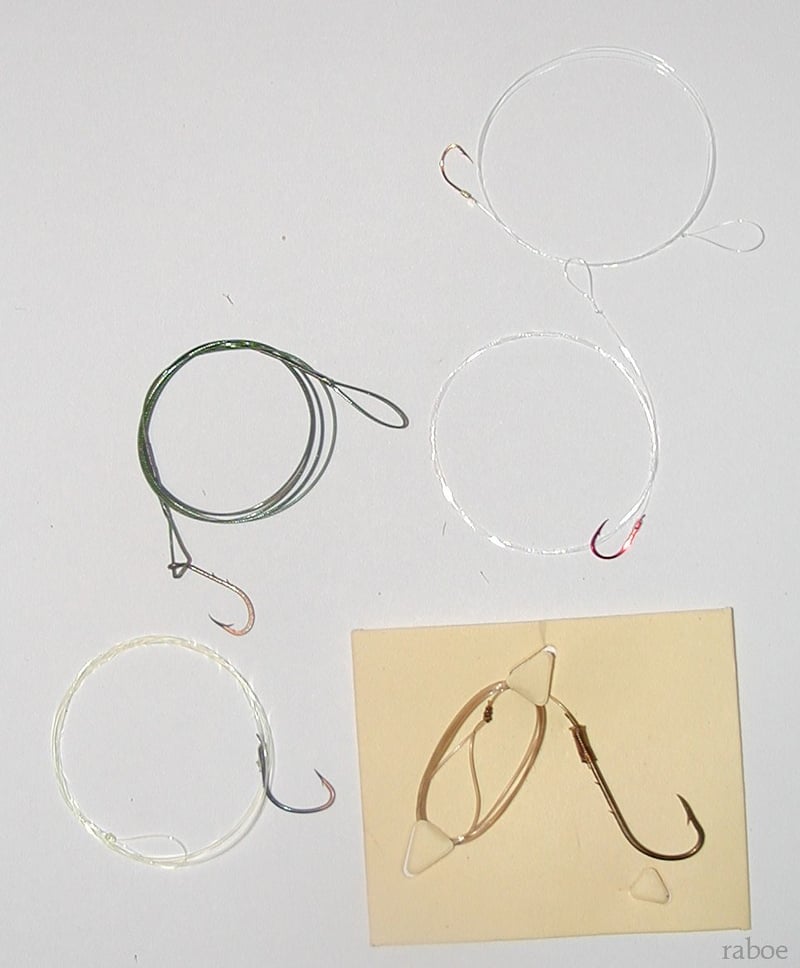
These attach your line to something with an eye. Start with the Palomar.

Fishing tackle: hooks, weights, and terminal gear
Raboe001 / CC BY-SA 2.5 · Wikimedia Commons

Palomar Knot

95–100% strength · all lines

Double about six inches of line, pass the loop through the hook eye, tie a loose overhand knot with the doubled line, then pass the entire hook through the loop and cinch both the tag and standing line. Nearly foolproof and the best braid knot in the box.

  • Best for hooks, jigs, and swivels
  • Does not work on very large lures — the loop has to clear the whole bait

Improved Clinch Knot

85–95% · mono & fluoro

Pass the tag through the eye, twist five to seven wraps up the standing line, feed the tag through the small loop by the eye, then back through the large loop just created. Wet and pull. The classic, and still excellent in mono.

  • Use 5 wraps in heavy line, 7 in light
  • Slips in braid — use the Palomar instead

Uni Knot (Duncan)

85–90% · everything

Run the tag through the eye, double it back to form a loop alongside the standing line, and make five to six wraps inside that loop before pulling the tag to close it. Slide the knot down to the eye, or stop it short to leave a sliding loop.

  • One knot, many uses
  • Doubles as the building block for line-to-line joins

Non-Slip Loop Knot (Kreh Loop)

Free lure action

Tie a loose overhand knot in the line, pass the tag through the lure eye and back through the overhand, wrap four to five times around the standing line, come back through the overhand, and cinch. Leaves an open loop so a jerkbait, streamer, or jig swings freely.

  • Adds noticeable action to suspending baits
  • The standard for saltwater flies and topwater

Snell Knot

Straight-line hooksets

Wraps the line around the hook shank rather than the eye, so pulling pressure drives the hook point up and into the fish. Standard for offset worm hooks, circle hooks, and catfish rigs.

  • Only for hooks with an upturned or straight eye
  • Noticeably improves circle-hook hookup rates

Loop Knot for Braid (Double Palomar)

Braid terminal

A Palomar tied with an extra pass of the loop over the bait before seating. The additional wrap gives slick braid the bite it needs and eliminates the slow creep that causes an otherwise perfect Palomar to fail under sustained load.

  • Use with 30 lb+ braid
  • Trim tags flush — braid tags catch weeds

03

Line-to-line and leader knots

Joining a main line to a leader is where most anglers lose fish. Pick one and get good at it.

Surfcaster fishing the beach break
TheSurfcaster at English Wikipedia / Public domain · Wikimedia Commons

FG Knot

Strongest braid-to-fluoro

A woven knot where the braid alternately wraps the leader under tension, then locks with half hitches. It is essentially a friction splice — thin enough to pass through guides, and it retains nearly the full strength of the weaker line.

  • Takes practice; use a tool or your rod tip for tension
  • The choice for inshore and offshore leaders

Double Uni Knot

85–90% · easiest join

Two uni knots tied facing each other on overlapping lines, then pulled together into a compact barrel. Fast, reliable, and easy to tie cold or in the dark. Use extra wraps on the braid side — six on braid, four on mono.

  • Good up to about a 3:1 diameter difference
  • Bulkier than the FG through small guides

Blood Knot

Fly leaders & tippet

Five wraps of each tag around the opposing standing line, tags passed through the center gap in opposite directions, then seated. Produces a slim, straight join — the standard for building tapered fly leaders.

  • Best when both lines are similar diameter
  • Poor with braid

Alberto (Modified Albright)

Braid to heavy leader

Form a loop in the leader, wrap the braid up the loop twelve times and back down seven, then exit through the loop the same side it entered. Handles big diameter mismatches better than the double uni and passes guides cleanly.

  • Great for wire-shy toothy fish leaders
  • Common in surf and pike fishing

Surgeon's Knot

Fastest tippet change

Overlap the two lines, tie a simple overhand with both, then pass through a second time (triple for a stronger version). Ten seconds to tie with cold hands and strong enough for trout and panfish tippet.

  • Slightly weaker than the blood knot
  • Ideal when the fish are rising and you are in a hurry

Arbor Knot

Line to spool

An overhand knot around the spool arbor plus a stopper overhand in the tag, so it cinches down and cannot slip when you crank line on. Not a strength knot, just the one that starts the spool correctly.

  • Put a strip of tape under braid so it cannot spin on the spool

04

Tie a Palomar in the dark

Practice this with a piece of paracord until your hands know it without your eyes.

  1. 1Double six inches of line and pass the resulting loop through the hook eye.
  2. 2Tie a loose overhand knot with the doubled line, leaving the hook hanging in the middle of a large open loop.
  3. 3Pass the entire hook or lure through that open loop.
  4. 4Wet the knot thoroughly.
  5. 5Pull the standing line and the tag end at the same time, evenly, until the coils seat neatly against the hook eye.
  6. 6Check that no wrap crossed another, then trim the tag to about 2 mm.
Fishing knot tied loosely in monofilament line
Bernhard Kuemel Darsie42 / CC BY-SA 3.0 · Wikimedia Commons

05

Pick a knot by job

When you are unsure, use this row.

JobKnotNotes
Hook or jig on braidPalomarHighest strength, simplest to tie
Hook on mono/fluoroImproved clinch5–7 wraps by line weight
Lure that needs free swingNon-slip loopAdds action to jerkbaits and flies
Braid to fluoro leaderFG knotThinnest, strongest; practice required
Braid to leader, in a hurryDouble uni6 wraps braid, 4 wraps leader
Fly tippet to leaderBlood or surgeon'sSurgeon's when speed matters
Circle hook rigSnellRotates the point into the jaw hinge
Line onto a new spoolArbor knotTape the spool first when using braid
Rack of fishing rods and reels
Alabama Extension / CC0 · Wikimedia Commons

Questions

Frequently asked

What is the strongest fishing knot?
For terminal connections the Palomar retains close to 95–100% of line strength and is hard to tie wrong. For joining braid to a fluorocarbon leader, the FG knot is the strongest and thinnest, though it takes practice; the double uni is the easier 85–90% alternative.
Why do my knots keep breaking?
Almost always one of three causes: you did not wet the knot before cinching, so friction heat weakened the line; you tightened by yanking instead of pulling smoothly; or the tag end was trimmed too close and slipped. Wet it, seat it slowly, and leave a 2 mm tag.
How many knots do I actually need to know?
Three will cover 95% of fishing: the Palomar for hooks and lures, the double uni for line-to-line, and a non-slip loop knot for lures that need free movement. Learn those cold, then add the rest as your fishing gets more specialized.
Should I use a different knot for braided line?
Yes. Braid has no stretch and a slick coating, so knots designed for mono can slip. Use the Palomar (doubled) for terminal ties and the FG or double uni for leaders. Adding one or two extra wraps to any mono knot also helps it bite.
Why wet a knot before tightening it?
Cinching a dry knot generates friction heat that can permanently weaken monofilament and fluorocarbon by 20% or more, and it causes the coils to bind unevenly. Saliva or water lets the wraps slide into their final seated position smoothly.


Also on The Wild10

Hunting Guides

Same field-tested approach, applied to game species, rifles, shotguns, and bows — from scouting through meat care.

Open the hunting hub →
Hardwood forest in peak autumn color