


From the north · Wildlife
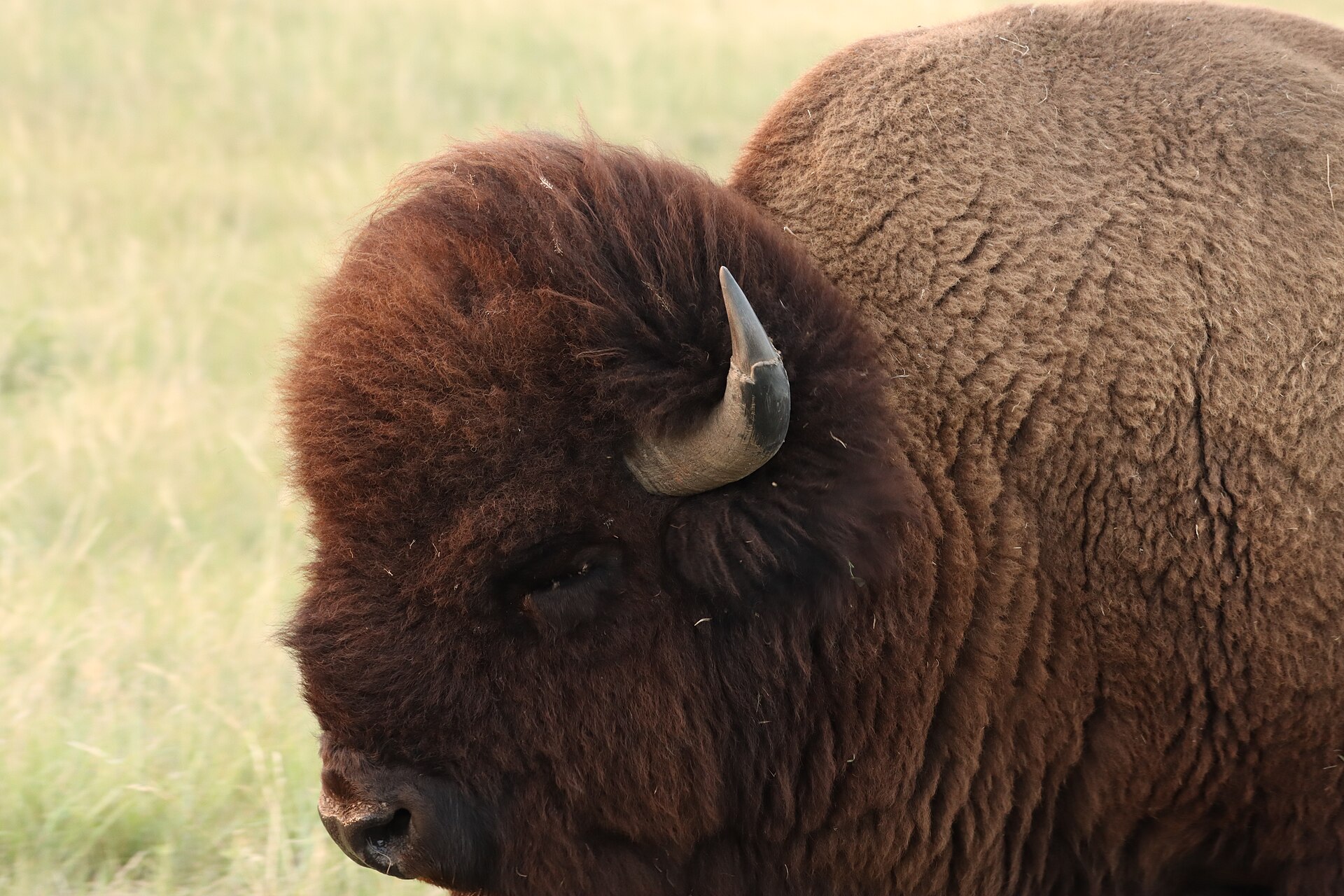
Bison
North America's largest land animal, a genuine once-in-a-lifetime public-land tag in most states, and a pack-out that dwarfs even moose or elk.
Bison bison
- Range
- Utah, AZ, AK herds & tribal/private
- Peak season
- Fall – winter, herd specific
- Tag access
- Lottery draw or private herd purchase
- Live weight
- 900–2,000+ lb
Regulations by region
Bison rules where you're headed
Seasons, tags, limits, and legal methods for bison are set jurisdiction by jurisdiction. Pick your state or province and we'll point you at the agency that writes the rules.
Jump to another species
About the bison
Wild, huntable bison herds are a small but real part of North American hunting — public herds exist in Utah's Henry Mountains and Book Cliffs, Arizona's House Rock Valley and Raymond Ranch, and Alaska's Delta and Copper River herds, alongside numerous tribal and private-ranch hunts. A mature bull can weigh over a ton, making it the largest animal a North American hunter can legally pursue, and the difficulty of the hunt is almost entirely in logistics rather than in finding or approaching the animal, since wild bison in managed herds are often not particularly wary of vehicles or people at moderate distance. Public-land bison tags are among the hardest in North America to draw — some Utah and Arizona hunts have odds under 1% — while private ranch hunts and some tribal lands offer a guaranteed, if expensive, hunt.
Range and habitat
Genuine wild, free-ranging bison hunting is limited to a handful of managed public herds plus tribal and private-ranch options that guarantee access. Utah — Henry Mountains & Book Cliffs: Free-ranging, genetically pure herds in rugged high-desert terrain. Arizona — House Rock Valley & Raymond Ranch: Managed public herds with a real fair-chase hunt. Alaska — Delta & Copper River herds: Wild herds in genuine wilderness setting. Custer State Park, SD & other state-managed herds: Periodic public hunts on managed conservation herds. Tribal lands & private ranches nationwide: Guaranteed hunts, often on large fenced or semi-wild range.
Behavior and field method
Bison hunting is less about finding and approaching the animal — herds are often locatable and visible — and much more about picking the right animal, making a precise close-range shot, and being fully prepared for the enormous job that follows. Use the managing agency's herd location data, recent sighting reports, and terrain knowledge to find the herd, which may require significant driving or hiking in rugged high-desert or wilderness terrain. Glass the herd from a respectful distance to identify bulls versus cows and calves, and to judge age and body condition before committing to a stalk. Approach using terrain and wind, keeping in mind that bison have good hearing and smell despite sometimes appearing unbothered by distant vehicles or people. Get within a range that guarantees a precise, well-placed shot — bison are enormous and can absorb a poorly placed hit, so closer, high-percentage shots are strongly preferred over long ones. Aim for the vitals just behind the shoulder, avoiding the thick boss of muscle and hide over the front shoulder hump that can deflect or fail to penetrate with an underpowered rifle. Use an adequately powerful cartridge and premium, deep-penetrating bullets — many hunters use magnum rifles specifically because of the animal's sheer size and dense frame. Have your full team, vehicle access, and processing plan in place before the shot; break the animal down promptly with enough hands and equipment, since a single bison can take a full day or more to quarter and haul out.
Tracks, droppings, and sign
Bison sign is unmistakable and larger than anything else on the continent. In wild-herd units, you are usually following a herd rather than an individual. Tracks — Big, round, and blunt — nearly circular, wider than a moose track and far less pointed. Herd trails churn ground into a wide braided path. Droppings — Large flat pats when green-fed, drying into the classic 'buffalo chip.' Fresh ones are dark and wet; a chip you can pick up whole is days old. Wallows — Dusty, bowl-shaped depressions 10–15 feet across where bulls roll. Old wallows persist on prairie for a century and hold rainwater. Rubs — Fence posts, boulders, and lone trees polished smooth with hair caught in the bark, sometimes rubbed hard enough to break the post. Grazing sign — Wide swaths of prairie cropped short with heavy trampling — a grazing pattern no other North American animal produces.
In the field
Compared to most western big game, locating a huntable bison is often the easy part — managed herds live in known ranges, and hunters frequently see animals from a truck or a short hike. The real hunt is patience and judgment: picking the right bull from a herd, positioning for a clean and close shot, and resisting the urge to rush given how forgiving bison can seem at moderate distance. The moment of the shot demands total focus — bison are famously tough, and shot placement into the vitals matters more here than with almost any other North American animal. What follows the shot is the defining memory of a bison hunt for most people: hours of hard physical work quartering an animal that can weigh a ton or more, with meat, hide, and head requiring multiple vehicle loads or a serious hauling plan. It's a hunt best done with a full crew — family, friends, or a hired processing team — because the volume of meat and work is genuinely beyond what one or two people can comfortably handle in a day.
Regulations, tags, and seasons
Public wild-bison tags are a long-odds lottery. A guaranteed hunt means going through a tribal program or a private ranch, at a real financial cost. Apply annually in Utah, Arizona, and any other state with a public bison draw; odds are very low but the application cost is modest. Watch for Alaska's Delta and Copper River bison permits, which use a mix of drawing and registration hunts depending on the year — check current regulations before applying. Research tribal bison hunts (several plains tribes offer hunts on tribal herds) as a realistic, bookable alternative to the public lottery. If pursuing a private-ranch hunt, vet the outfitter carefully — hunt quality, herd genetics, and the amount of true fair-chase pursuit vary enormously between operations. Budget accordingly: a public-land Utah or Arizona hunt costs little beyond the tag, while a private or tribal guaranteed hunt commonly runs $5,000–$15,000+ depending on the ranch and bull size. Plan your recovery logistics — vehicle access, a trailer or heavy-duty game cart, and enough help — before you ever pull the trigger; this is decided well before the hunt, not after.
Harvest and processing
A bison is 1,200–2,000 pounds. Everything about the harvest is a logistics problem you must solve in advance. Watch the bison after the shot instead of running to the spot. Mark the exact stance with a landmark, note the direction of travel, and listen — a crash you hear is worth more than a blood trail you guess at. Give a body-hit animal 30–45 minutes before you take up the trail, and a gut-hit animal 6–8 hours. Pushing a wounded animal is the single most common way hunters lose one. Trail with flagging tape at each blood spot so you can see the line of travel and back up to the last sign if you lose it. Bright blood with bubbles is lungs; dark blood with green flecks is paunch. Confirm the animal is dead by touching an open eye with a stick or the muzzle before you set the gun down and start handling it. Tag the animal immediately if your state requires it, and photograph it where it fell before you move anything — that photo is also your proof of legal harvest in most jurisdictions. Roll the animal onto its back or downhill on its side. Ring the anus with a knife and tie it off with a zip tie or twine so nothing spills into the body cavity. This is butchery at livestock scale. Most hunters skin, quarter, and immediately deliver to a processor.
Meat care and what you take home
A mature bison can yield 400–600+ pounds of boneless meat — more than double a bull elk and the largest single-animal meat haul in North American hunting. Cool the meat as quickly as possible given the animal's size; quartering promptly and getting pieces into shade and airflow (or straight to a processor) matters even more than with elk or moose given the sheer mass of each piece. Bison meat is lean, mild, and beef-like, and is widely regarded as some of the best-eating big game available — steaks and roasts from the hindquarters and loin, with the rest suited to grinding, sausage, and slow braising.
Field notes
- Powerful rifle: A magnum-class cartridge with premium, deep-penetrating bullets is standard; bison are dense and thick-hided, and underpowered rifles risk poor penetration.
- Binoculars: Used to pick out and judge bulls within a herd before committing to an approach, even though the animals themselves are often easy to spot.
- Heavy-duty knives & a bone saw: A full processing kit including multiple sharp blades, a saw for the massive bones, and enough game bags for hundreds of pounds of meat.
- Trailer or high-capacity vehicle: A single bison can produce 400–600+ pounds of meat plus a heavy hide and skull — plan a vehicle and trailer setup, not a backpack, for hauling it out.
- Extra hands: Recruit help before the hunt. Quartering and hauling a bison is a multi-person, multi-hour job even with the right equipment.
- Cooler capacity: Arrange chest freezers, a processor, or multiple large coolers well in advance — the sheer volume of meat outstrips what most households can handle without planning.
Bison questions, answered
- Can I really hunt wild bison?
- Yes — Utah, Arizona, and Alaska all manage huntable wild or free-ranging bison herds with public draws, and several tribes and private ranches offer additional hunts. It's a small but genuine part of North American big-game hunting.
- How hard is it to draw a public bison tag?
- Very hard. Utah's Henry Mountains hunt and similar premium public draws can have odds well under 1%, comparable to or worse than bighorn sheep in some units.
- Is a private-ranch bison hunt 'real' hunting?
- It varies enormously by ranch — some offer genuine fair-chase pursuit across large acreage, others offer much less challenging conditions. Research the specific operation, herd size, and land area before booking.
- What rifle do I need?
- A magnum-class cartridge (.300 Win Mag or larger) with premium, deep-penetrating bullets is the standard recommendation given the animal's size, dense muscle, and thick hide.
- How do I get a ton of meat off the mountain?
- With a vehicle, trailer, and a full crew. This is the single biggest logistical difference between bison and every other North American big game — plan the hauling and processing operation before the hunt, not after.
- Is bison meat good?
- Excellent — lean, mild, and widely considered some of the best-tasting big game in North America, comparable to or better than elk.
Official sources and further reading
- Utah Division of Wildlife Resources — bison
Henry Mountains and Book Cliffs draw details and odds.
- Arizona Game & Fish Department — bison
House Rock Valley and Raymond Ranch hunt structure and draw information.
- Alaska Department of Fish & Game — bison
Delta and Copper River herd permit and registration hunt details.
- InterTribal Buffalo Council
Information on tribal bison herd management and hunting programs.