


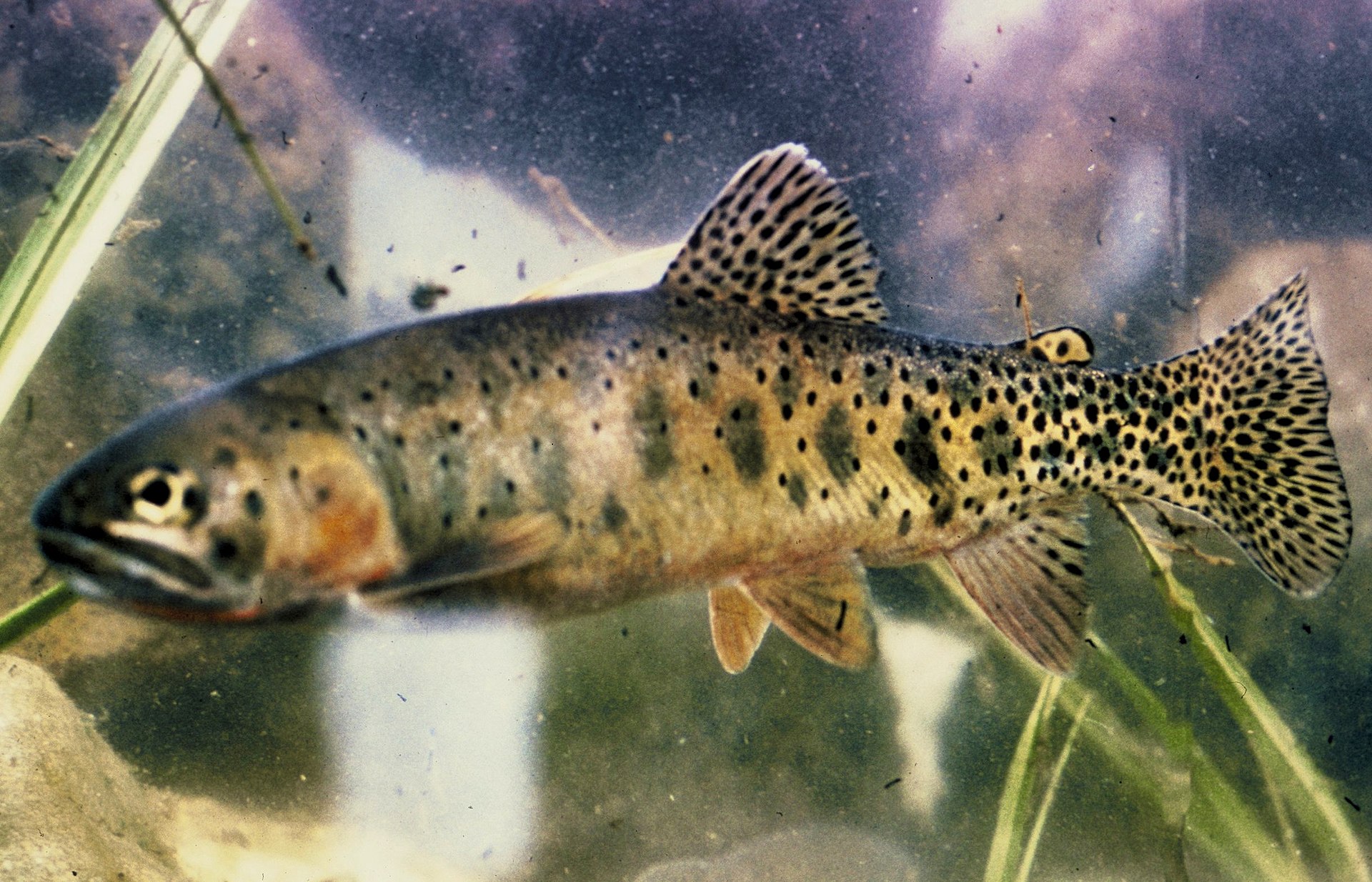
From the north · Wildlife
Cutthroat Trout
The native trout of the American West — willing on a dry fly, gorgeous in the hand, and almost always found in the prettiest water on the map.
Oncorhynchus clarkii
- Range
- Rockies, Great Basin, Pacific Northwest, coastal
- Prime season
- July–September after runoff
- Access
- State license; much of the water is public land
- Table quality
- Excellent, but release native strains
Regulations by region
Cutthroat Trout rules where you're headed
Seasons, tags, limits, and legal methods for cutthroat trout are set jurisdiction by jurisdiction. Pick your state or province and we'll point you at the agency that writes the rules.
Jump to another species
About the cutthroat trout
Cutthroat are the West's native trout, and there are more than a dozen recognized subspecies — Yellowstone, westslope, Lahontan, Rio Grande, Bonneville, Snake River fine-spotted, coastal, greenback, and more. Each one is tied to a specific drainage, and chasing them one at a time is a genuine lifetime pursuit. What unites them is temperament. Cutthroat are the most opportunistic surface feeders among North American trout. In small headwater streams they will eat a size 14 attractor dry with almost no hesitation, which makes them the best fish in the country for learning to fly fish. They are also the most vulnerable. Hybridization with introduced rainbows and competition from brown and brook trout have pushed many subspecies into short headwater reaches above natural barriers. Catch and release is not a preference here; on most native water it is the point.
Range, water, and where they live
Cutthroat live where the water is cold and the road ends. These are the drainages where healthy native populations are still accessible to a walking angler. Yellowstone River, Wyoming/Montana: Yellowstone cutthroat on classic dry-fly water. Bob Marshall & Flathead drainage, Montana: Strong native westslope populations above barriers. Pyramid Lake, Nevada: Lahontan cutthroat that exceed 15 pounds. Rio Grande headwaters, Colorado/New Mexico: Rio Grande cutthroat in small, high, wild creeks. Olympic Peninsula, Washington: Sea-run coastal cutthroat in tidewater and lower rivers.
Behavior and how they feed
Small-stream cutthroat fishing is walking, reading water, and short accurate casts. Distance is nearly irrelevant. Wait out runoff. High-country streams are unfishable until flows drop, usually early to mid July. Walk upstream and fish upstream so you approach fish from behind their blind spot. Read each pool as three parts: the head where food enters, the seam beside the fast water, and the tailout where fish sit exposed. Cast a high-floating attractor dry — Royal Wulff, Stimulator, Parachute Adams, size 12–16 — with a short drag-free drift. If the dry gets refused, drop a beadhead nymph 18 inches below it and fish the same seams. Set softly. Cutthroat rise slowly and deliberately, and a fast strike pulls the fly out of an open mouth. Cover water. In a small stream, three casts per pool is plenty; the fish either eat or they don't. On lakes like Pyramid, strip large streamers along drop-offs from a ladder or shoreline shelf.
Where they hold
Cutthroat hold in the softest water that still delivers food, and they are the least selective and most willing of the trout family. Pocket water — Small soft spots behind boulders in a fast run; each one holds one or two fish. Pool tailouts — Cutthroat sit in the slick before the drop and rise slowly, often refusing anything dragging. Beaver ponds and meadow bends — Deep undercut meadow bends in high country hold the biggest fish in a small drainage. Lake shoals and inlets — Lahontan and Yellowstone cutthroat cruise shoreline shelves and creek mouths.
What they eat and what they hit
These are the presentations that consistently produce cutthroat trout, with the conditions each one is actually for — not a tackle-shop wall. Attractor dry fly — A #12–#14 Chubby Chernobyl, Stimulator, or Parachute Adams covers most cutthroat water all summer. Dry-dropper rig — A visible dry with a small beadhead 16–24 inches below covers two columns at once. Woolly bugger — Olive or black, stripped slowly along drop-offs and undercut banks. Small inline spinner — #1 gold or copper blade in freestone streams, cast upstream and retrieved at current speed. Small spoon — 1/8 oz spoons cast and counted down along shoreline shelves for cruising fish.
In the field
Cutthroat water is usually the best scenery in the drainage. Plan the day around the walk as much as the fishing. The rise is slow and confident, and beginners consistently pull the fly away. Count one full second before lifting. Altitude and weather matter more than fly selection up high. Afternoon thunderstorms build fast above 9,000 feet.
Licenses, stamps, and limits
Licensing is straightforward, but cutthroat water carries more special regulations than any other trout fishery in the country. Buy the state fishing license and add the trout or conservation stamp where required. Check whether the stream is catch-and-release, artificial-only, or barbless — native cutthroat reaches frequently are all three. For Pyramid Lake, buy the tribal permit directly from the Paiute Tribe; a Nevada license does not cover it. In national parks, buy the park's own fishing permit and read the native-species handling rules. Note seasonal closures protecting spawning fish, which run March through June depending on elevation.
Landing, release, and cleaning
What happens between the hookset and the cooler decides whether you land the fish and whether it is worth eating. Cutthroat take slowly. Pause a beat before you set on a dry fly or you will pull it out of the fish's mouth. Many cutthroat populations are native, threatened, or under special regulation. Assume catch-and-release unless the regulations say otherwise. Decide keep or release before you unhook. A cutthroat trout you intend to release should never leave the water for more than the length of one held breath. For release: support the belly, keep the fish horizontal, back the hook out with pliers, and hold it into the current until it kicks off on its own. To keep the fish, dispatch it immediately — a firm rap with a priest or knife spine at the top of the skull, just behind and above the eyes. A cutthroat trout killed instantly tastes better than one that suffocates in a bucket. Bleed it right away: cut the two gill arches on one side, or make a single cut behind the pectoral fin to the artery, and hold it in the water for thirty seconds while it pumps out. Cleaning a cutthroat trout the right way takes about four minutes once you know the sequence.
On the table
Cutthroat are excellent eating — delicate, sweet, and perfect over a fire — but most of the water worth fishing holds native populations that should not be harvested. Where harvest is legal and encouraged, it is usually on stocked or hybridized fish; read the regulation page before keeping anything. If you release, keep the fish in the water, use barbless hooks, and skip the long photograph. Headwater fish have no margin.
Field notes
- 8'0" 4-weight fly rod: Short enough for brushy creeks, enough line control for a clean drift.
- Floating line with 9 ft 5X leader: All the delicacy small-stream cutthroat require.
- Attractor dries, size 12–16: Royal Wulff, Stimulator, and Parachute Adams cover the season.
- Beadhead pheasant tail, size 16–18: The dropper that saves a slow afternoon.
- Rubber landing net: Protects the slime coat on fish that must go back.
- Wading boots with a hiking sole: You will walk more miles than you wade.
Cutthroat Trout questions, answered
- What is the difference between cutthroat and rainbow trout?
- Cutthroat have a red or orange slash under the lower jaw, heavier black spotting concentrated toward the tail, and small basibranchial teeth at the back of the tongue. Rainbows have the pink lateral stripe and no throat slash. Hybrid 'cutbows' show both traits, which is exactly the conservation problem.
- When is the best time to fish for cutthroat?
- July through September, once snowmelt runoff clears. High-country streams fish best from late morning through afternoon when insects are active and the water warms a few degrees.
- What fly should I start with?
- A size 14 Parachute Adams or Royal Wulff. Cutthroat in small streams are opportunistic, and a visible high-floating attractor solves both presentation and strike detection.
- Where can I catch a really big cutthroat?
- Pyramid Lake, Nevada, for Lahontan cutthroat — a strain that regularly exceeds ten pounds. It requires a tribal permit and a very different approach: stripping streamers from a ladder along shoreline drop-offs.
- Should I keep cutthroat trout?
- Generally no. Most remaining populations are native and isolated above barriers, and several subspecies are listed or petitioned for listing. Keep fish only where the regulations explicitly encourage harvest of stocked strains.
Official sources and further reading
- Montana FWP — Westslope Cutthroat
Native fish conservation status, closures, and regulations.
- Pyramid Lake Paiute Tribe Fisheries
Permits, seasons, and rules for Lahontan cutthroat.
- Trout Unlimited — Native Trout
Subspecies range maps and restoration project reporting.