Mangrove shorelines
Backcountry
Fish sit inches under the overhang facing the current; accurate casts under the branches matter more than lure choice.
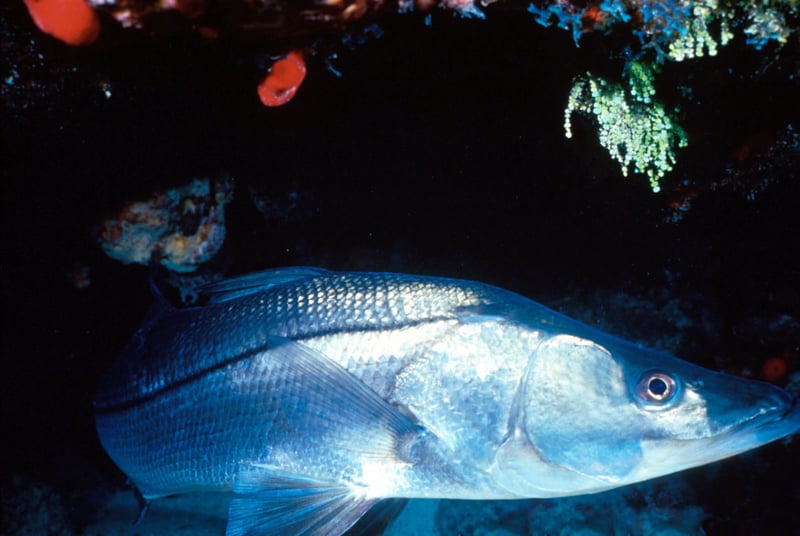
Fishing · Species · Common Snook
A structure-obsessed ambush predator with a razor gill plate and a hard head-shaking fight — the defining inshore gamefish of south Florida.
Snook are a structure fish in the most literal sense. They live against mangrove roots, bridge pilings, dock pilings, seawalls, and jetty rock, and the entire fishery is built around presenting a bait tight to that structure and then keeping the fish out of it.
They are also temperature-sensitive to a degree that shapes the whole fishery. A hard cold snap in the low 50s kills snook, and Florida closes harvest after major cold events to let the population recover.
The night-light fishery is the most accessible way in. Snook stack in the shadow line of dock and bridge lights, and a small white jig or fly presented up-current from the shadow catches fish consistently.
01
Snook need warm water and hard structure. Southwest Florida is the heart of it, with fringe fisheries north and west.
| Water & region | Why it's worth your time | Access & license |
|---|---|---|
| Ten Thousand Islands, Florida | Endless mangrove shoreline and backcountry fish | FL saltwater license plus snook permit |
| Sanibel and Boca Grande passes | Summer spawning aggregations at the mouths | FL license; seasonal closures apply |
| Florida east coast inlets | Jetty and inlet fish on moving tides | FL license; Atlantic season differs from Gulf |
| Tampa Bay dock lights | Reliable night sight fishing year-round | FL license; respect private dock boundaries |
| Lower Laguna Madre, Texas | Northern-fringe population, growing steadily | TX license with saltwater stamp |
02
Tide, structure, and a bait that arrives naturally. Snook face into current and expect food to come to them.
03
Snook are structure-oriented ambush feeders that face into current and use shadow lines. They are also cold-intolerant, which drives where they are seasonally.
Backcountry
Fish sit inches under the overhang facing the current; accurate casts under the branches matter more than lure choice.
Night
Snook lie on the dark side of a light line and eat bait swept into the glow.
Summer spawn
Fish stage in passes to spawn on the summer new and full moons — closed season in Florida during much of it.
Summer
Snook cruise the first trough on the sand, sight-fishable on calm mornings.
Winter
Snook run far up into warmer freshwater when temperatures drop below the low 60s.
04
These are the presentations that consistently produce common snook, with the conditions each one is actually for — not a tackle-shop wall.
Bait
Free-lined on a circle hook near structure — the most reliable snook method there is.
Artificial
1/4 oz head and a 3–4" tail, cast up-current and swum back with the flow.
Docks
Worked in the shadow line with sharp twitches and long pauses.
Dawn
Along mangrove edges and beach troughs in low light; the strike is unmistakable.
Fly rod
9-weight, a 3" white streamer, and a cast tight to the mangrove roots.
Terminal
Snook gill plates are razors and their mouths are abrasive; a heavy shock leader is mandatory.
05
Snook are temperature-limited: they die in prolonged cold, so the whole year revolves around water temperature and the spawning migration.
| Season | Where the fish are | What works |
|---|---|---|
| Spring | Moving out of the backcountry toward passes and beaches as water warms | Live baits along mangrove shorelines, jigs at bridges, plugs at dawn |
| Summer (spawn) | Staged in passes, on the beaches, and at inlets in large numbers | Free-lined pilchards and threadfins in the pass; beach sight-fishing with flies and small jigs |
| Fall | Moving back inside to the bays, creeks, and rivers, feeding on the mullet run | Big swimbaits and live mullet along the beach in the mullet run; docks and bridges inside |
| Winter | Deep in the rivers, canals, and residential basins seeking warmth; power-plant outflows | Slow-worked jigs and live shrimp in the deepest, warmest water; the fish are lethargic |
06
Night and moving tide, especially around structure with lights.
Best
Snook sit in the dark side of a light line facing the current and pick off shrimp and baitfish. The most reliable snook fishing there is.
Key
Fish ambush at creek mouths and mangrove points as bait flushes out.
Topwater along mangroves and beaches in the first hour.
07
Snook have abrasive jaws and gill plates that cut line; leader is non-negotiable.
30–40 lb fluorocarbon leader, 2–3 ft, to a 2/0–3/0 circle hook through the nose of a live pilchard or shrimp. No weight; let the current carry it into the strike zone.
1/4–1/2 oz jighead with a shrimp or shad body on 30 lb fluoro; cast up-current at a light line and let it drift down naturally.
Egg sinker riding directly on the hook eye with 40 lb leader; for fishing live bait tight to bridge pilings and inlet rocks in current.
9 wt, intermediate line, 30 lb bite tippet, white baitfish pattern; dead-drift it into the shadow line at a dock light.
08
Live bait, matched to size.
#1
Cast-netted and chummed; free-lined into passes and along mangroves.
Year-round, especially in winter when snook are slow and won't chase.
Fall
The mullet-run bait; big snook on the beach eat them all fall.
Cut bait on the bottom at inlets at night for large fish.
09
Fish the shadow line and match the drift.
10
Snook are tightly managed with a permit, a narrow slot, and different seasons on each coast. Read the current rules every year.
11
The take at a dock light is visual and abrupt. You watch the fish materialize out of the shadow, and it is over in a second either way.
You will get broken off. Snook go straight for structure, and heavier leader plus immediate pressure is the only counter.
Cold fronts change everything. After a hard drop, move to deeper canals and residential basins where fish go to survive.
12
The rod, line, and terminal choices that actually change your hookup rate — with the numbers, not vague categories.
Core rod
Backbone to stop a fish before it reaches the pilings.
Enough drag to lean on a fish immediately at close range.
Required
Snook gill plates cut lighter leader during a head shake.
The universal dock-light and mangrove bait.
First and last light along mangrove edges and beaches.
Live pilchards outfish artificials on pressured fish.
13
What happens between the hookset and the cooler decides whether you land the fish and whether it is worth eating.
14
Cleaning a common snook the right way takes about four minutes once you know the sequence.
15
Snook is among the best-eating inshore fish in the Gulf — white, mild, and firm, often compared favorably to grouper.
You must remove the skin. Snook skin carries a strong soapy flavor that ruins an otherwise perfect fillet.
The bag is one fish inside a narrow slot, which is exactly the point: keep the legal one, release everything else quickly.
Size limits, creel limits, and seasons are set water by water and change every year. These agencies publish the current rules.
Current slot limits, seasons, and permit requirements by coast.
Tagging data, angler reporting, and population research.
Texas regulations for the northern-fringe population.
Questions
Where every fishing guide on The Wild10 starts.
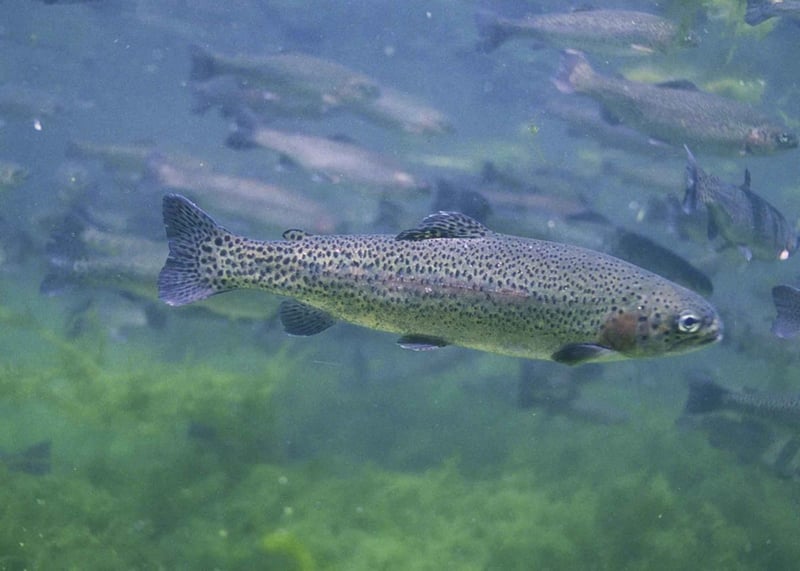
Body shape, fins, mouth, and markings for 30+ North American gamefish.
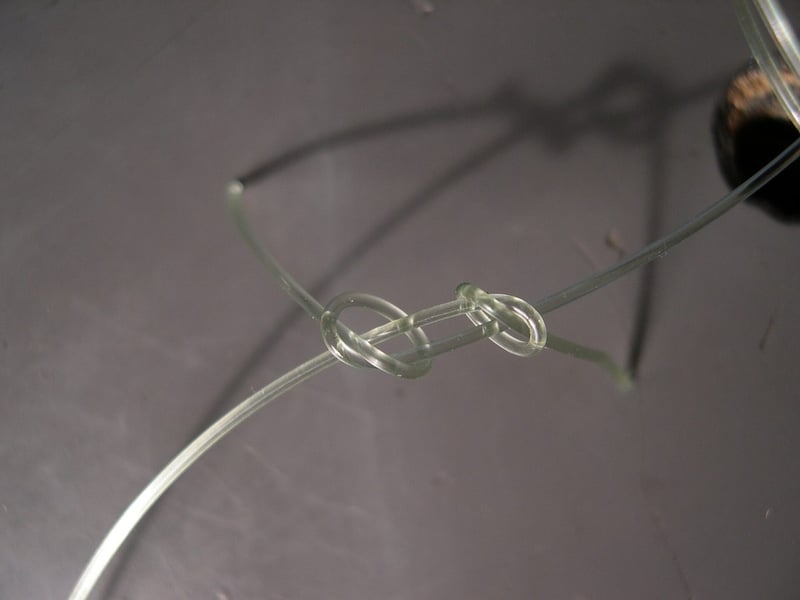
Twelve knots covering every hook, leader, and loop connection you need.
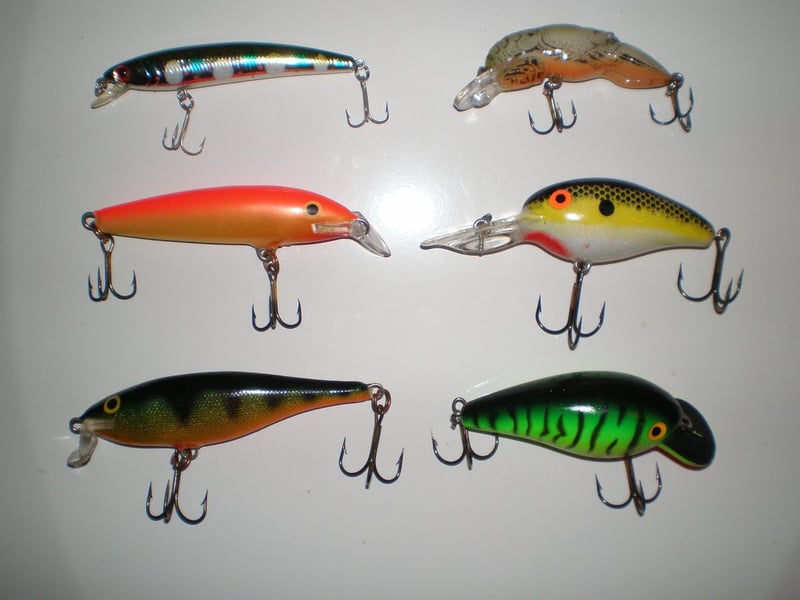
Matching lure category to temperature, clarity, depth, and season.
Reading water, timing the bite, and fixing a slow day on the spot.
Keep going
Tell lookalike species apart by fins, mouth, and markings.
Read →Match lure category to depth, clarity, and water temperature.
Read →The connections that keep big fish attached.
Read →Reading water and fixing a slow day on the spot.
Read →Top 10 lists
Ranked picks with real product photos, specs, and editor notes — the buying side of everything covered in these guides.
Bass, walleye, trout, and panfish rods ranked on feel.
See the ranking →Jig, crank, and heavy-cover rods by blank and taper.
See the ranking →Drag smoothness, line management, and long-haul gears.
See the ranking →Brake systems, backlash control, and drag under load.
See the ranking →Also on The Wild10
Same field-tested approach, applied to game species, rifles, shotguns, and bows — from scouting through meat care.
Open the hunting hub →