


From the north · Wildlife
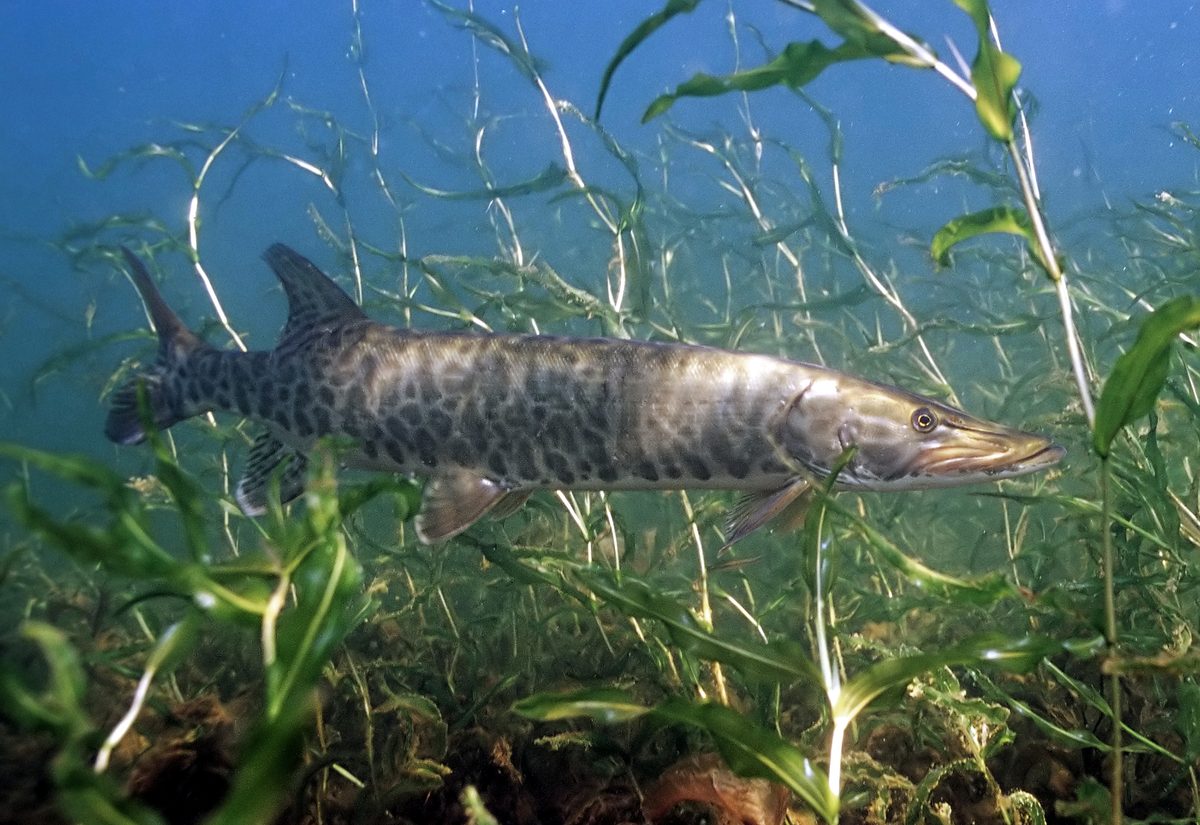
Muskellunge
The fish of ten thousand casts — and the reason a whole subculture of anglers throws baits the size of a walleye.
Esox masquinongy
- Range
- Great Lakes basin, upper Midwest, Ontario
- Prime season
- September–November
- Access
- License plus muskie stamp in some states
- Table quality
- Release — do not keep
Regulations by region
Muskellunge rules where you're headed
Seasons, tags, limits, and legal methods for muskellunge are set jurisdiction by jurisdiction. Pick your state or province and we'll point you at the agency that writes the rules.
Jump to another species
About the muskellunge
Muskie fishing is a deliberate choice to fish for very few, very large fish. A good day is one follow and one bite; a great day is two fish in the net. The payoff is scale. A 50-inch muskie is a genuinely large animal, and the strike — usually visible, often at the boat — is unlike anything else in fresh water. It is also the most gear-dependent freshwater fishery. Undersized rods, nets, and pliers get fish killed and anglers hurt, and the community takes that seriously.
Range, water, and where they live
Muskie waters are specific and well known. These are the ones with both a real population and public access. Lake St. Clair (MI/ON): Highest catch rate in the world. Green Bay, Wisconsin: Trophy-class fish over 55 inches. Vilas & Oneida Counties, WI: Classic small-lake muskie fishing. Lake of the Woods (ON/MN): Big structure fish in cold water. St. Lawrence River (NY/ON): Big-river fish on current structure.
Behavior and how they feed
Cover water, fish the whole cast to the boat, and be ready for the strike at your feet. Pick structure with deep-water access nearby: weed edges, rock bars, points, and river current breaks. Cast large baits — bucktails, gliders, rubber, topwater — and retrieve steadily and fast enough to keep the blade or body working. Finish every single cast with a wide, deep figure-eight at boatside; a large share of muskie bites happen there. Change speed and direction constantly; muskie commit on the change, not the steady swim. In warm water, run fast bucktails and topwater. In cold late-fall water, slow down and fish big rubber deep. Troll big crankbaits along breaklines in October and November when fish spread out and suspend. Use a 300+ size net, keep the fish in the water in the net, and have hook cutters ready before you reach in. Revive fully — hold the fish upright in the water until it kicks off on its own, which can take several minutes.
Where they hold
Musky are low-density, high-effort fish. They relate to structure that holds forage and to the deep edges beside it. Weed edges and points — Green cabbage or coontail edges adjacent to deep water; fish the corners of the weed bed, not the middle. Rock bars and reefs — Main-lake rock topping out at 8–20 feet near a basin break holds big fall fish. Open-water basins — Fish suspended over 30–60 feet following ciscoes; trolling and casting large soft baits. River holes and current breaks — Deep bends, bridge pilings, and dam eddies concentrate musky in flowing water.
What they eat and what they hit
These are the presentations that consistently produce muskellunge, with the conditions each one is actually for — not a tackle-shop wall. Bucktail — Double 8s and 10s burned along weed edges cover more water than anything else in the box. Glide bait — A wide-tracking glider with long pauses pulls fish that follow bucktails without eating. Rubber (Bulldawg-style) — Big soft baits pulled and dropped along breaks and over basins in October and November. Topwater walker or tail-spinner — Warm-water evenings over shallow weed flats; keep the retrieve rhythmic and constant. Crankbait trolling — Large deep divers at 3–5 mph on planer boards to find suspended basin fish. Sucker rig — A live sucker on a quick-strike rig is the highest-percentage trophy method after turnover.
In the field
Expect long blank stretches. The mental game — keeping the retrieve sharp on cast four hundred — is most of the skill. The follow is its own event. A muskie appearing behind the bait five feet from the boat is why people keep doing this. October and November are cold, wet, and by far the best time. Dress for the weather and fish the whole day.
Licenses, stamps, and limits
Some states require a separate muskie stamp on top of a license. Minimum lengths are high and enforced. Buy the fishing license, then add the muskellunge stamp if that state requires one (Minnesota and others). Check the minimum length — 50 to 54 inches on managed waters; almost nothing is legal to keep. Confirm the season; many muskie waters open late spring and close December 1 to protect the fish. Read the water's live-bait and sucker-rig rules before fishing a fall live-bait pattern. Register for any local release-reporting program — muskie fisheries are managed on angler data.
Landing, release, and cleaning
What happens between the hookset and the cooler decides whether you land the fish and whether it is worth eating. Finish every cast with a figure-8 at boatside. A large share of musky are hooked in the last ten feet of the retrieve. Have the tools ready before you hook one: an oversized rubber net, long-nose pliers, hook cutters, and jaw spreaders in the boat, not in the bag. Keep the fish in the net in the water while you unhook. Cut hooks rather than fighting them; hooks are cheap. Do not lift the fish out of the water at all if it is a big one. Take the photo boat-side, remove the hook with pliers or a de-hooker, and cut the leader if the hook is deep. Revive it by holding it upright, facing into current or by idling the boat forward slowly, until it clamps down and swims off under its own power. Use single, barbless or crushed-barb hooks and circle hooks with bait to cut deep hooking and mortality. Cleaning a muskellunge the right way takes about four minutes once you know the sequence.
On the table
Muskie are not a table fish in practice. Populations are small, growth to trophy size takes over a decade, and the entire fishery runs on release. Keep the fish in the water, unhook in the net, and limit air exposure to a few seconds for a photo. Revive properly in cool water; a fish released too fast in warm water often does not survive.
Field notes
- 8'6" extra-heavy muskie rod: Throws 8-ounce baits and gives the leverage for a proper figure-eight.
- 80–100 lb braid: No stretch, and the strength to turn a fish that runs under the boat.
- 130 lb fluorocarbon or wire leader: Long leader, quality swivel, welded rings — this is where cheap gear fails.
- Large bucktail: The most-cast muskie bait; covers water and triggers hot fish.
- 10" soft rubber swimbait: The cold-water big-fish bait for late fall.
- Large cradle net, hook cutters, jaw spreaders: Non-optional. Fish and hands both depend on it.
Muskellunge questions, answered
- Is 'ten thousand casts' real?
- It's exaggerated but directionally honest. On good water with good technique, a dedicated angler averages a fish or two a day; on tough water it can genuinely be days between bites.
- What is the figure-eight and why does it matter?
- At the end of every retrieve you sweep the rod tip in a deep, wide figure-eight beside the boat, keeping the bait moving. Muskie that follow the lure in will frequently strike only on that turn.
- When is the best season?
- September through November. Cold water concentrates fish, they feed heavily before winter, and the largest fish of the year are caught in the last few weeks of the season.
- Can I use bass gear?
- No. Bass tackle can't cast the baits, can't set the hook through that jaw, and can't land the fish quickly enough for it to survive. Proper muskie gear is a safety and conservation requirement.
Official sources and further reading
- Muskies Inc. — Conservation & Release
Release handling standards and volunteer data programs.
- Wisconsin DNR — Muskellunge Management
Water-by-water minimum lengths and stocking plans.