


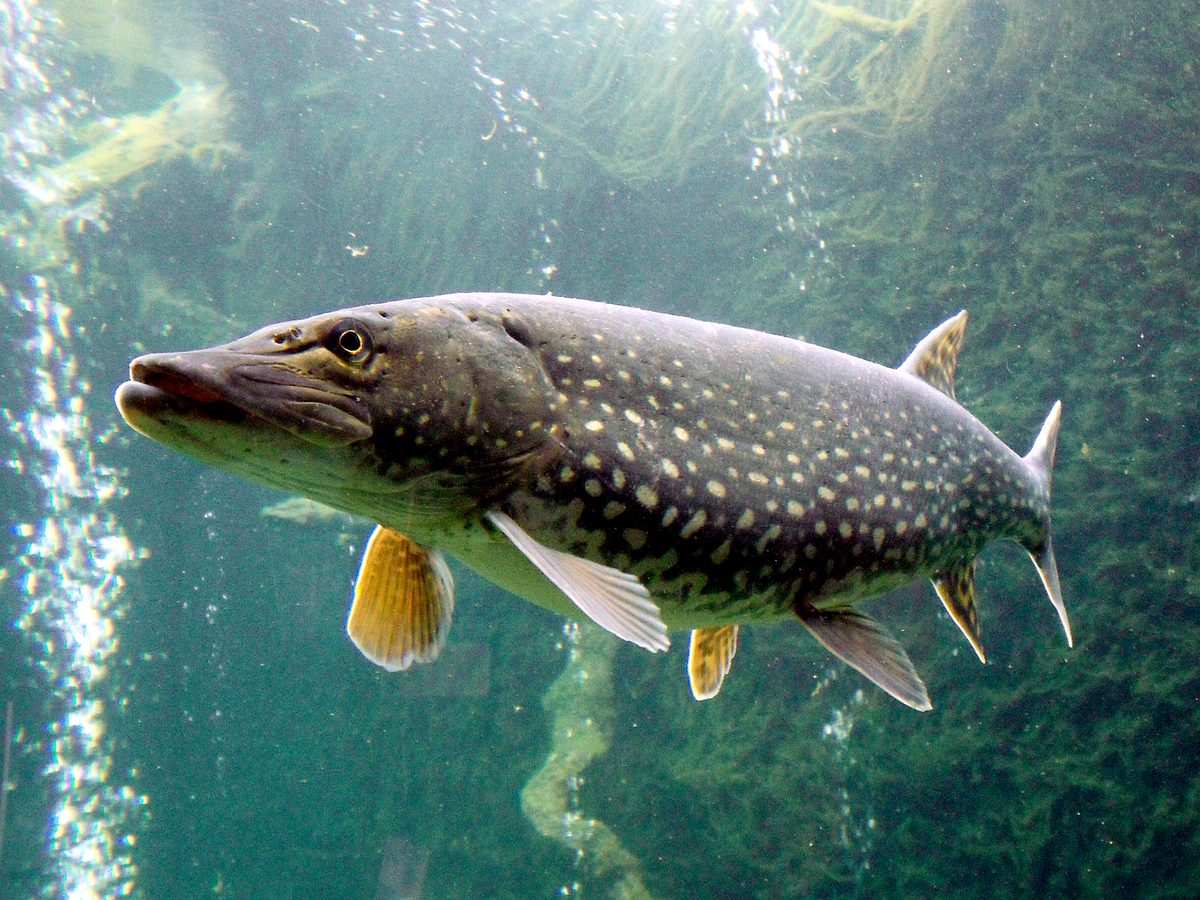
From the north · Wildlife
Northern Pike
A weed-edge ambush predator that will eat a lure half its own length and cut your line doing it.
Esox lucius
- Range
- Northern US, all of Canada
- Prime season
- Post-ice spring and late fall
- Access
- State/provincial license
- Table quality
- Excellent if you Y-bone them
Regulations by region
Northern Pike rules where you're headed
Seasons, tags, limits, and legal methods for northern pike are set jurisdiction by jurisdiction. Pick your state or province and we'll point you at the agency that writes the rules.
Jump to another species
About the northern pike
Pike are the most cooperative big predator in fresh water. They sit on weed edges in relatively shallow water and attack anything that looks injured, which makes them the fish that saves a slow day. They also demand different terminal tackle than everything else — a mouth full of teeth means a wire or heavy fluorocarbon leader on every single bait, no exceptions. The seasonal pattern is simple: shallow and shallow-warm right after ice-out, deeper and cooler through midsummer, then back to the weed edges and feeding hard in October.
Range, water, and where they live
Pike are widely distributed, but genuine big-fish water is northern, cold, and often remote. Northwest Territories (Great Slave): True 45-inch-plus fish. Northern Saskatchewan / Manitoba: Trophy pike over shallow bays in June. Minnesota / Wisconsin lakes: Accessible numbers with real trophy potential. Green Bay, Lake Michigan: Big fish in shallow marsh water in spring. Alaska interior lakes and sloughs: Untouched populations, easy fish.
Behavior and how they feed
Cover shallow water fast with a flashy bait, then slow down and get in the fish's face when the water is cold. Right after ice-out, fish the shallowest, darkest-bottomed bays on the lake — they warm first and pike stage there to spawn. Cast a large spoon, spinnerbait, or glide bait along the outside edge of any weed line and retrieve at a steady, moderate pace. Add a hard pause or a direction change every few cranks; most pike strikes come on the change, not the steady retrieve. Always run a 12–18 inch wire or 80 lb fluorocarbon leader — a pike will cut straight braid on a head shake. In midsummer, follow them deeper: work the 12–20 foot weed edge and the first break with a big paddle-tail swimbait. In late fall, fish big and slow — a suspended dead bait (where legal) or a slow-rolled 8-inch swimbait takes the largest fish of the year. Use a large rubber landing net and long pliers; never lift a pike vertically by the jaw alone. Unhook in the water when you can — pike are hard on themselves and on you if handled dry and slow.
Where they hold
Pike are ambush predators that sit in or beside cover in water cooler than a largemouth will tolerate. Shallow weed bays — First warm bays and back channels, 2–6 feet, right after ice-out — the whole population is there for weeks. Cabbage edges — Broadleaf cabbage in 6–12 feet with open pockets; fish the pockets and the outside line. Points and saddles — Big pike leave the shallows in midsummer for 15–30 foot structure near ciscoes and whitefish. River backwaters — Slack water behind islands and in flooded timber holds pike out of the main flow.
What they eat and what they hit
These are the presentations that consistently produce northern pike, with the conditions each one is actually for — not a tackle-shop wall. Large spoon — A red-and-white or five-of-diamonds spoon fished with a fast, wobbling retrieve over weed tops. Spinnerbait / bucktail — Comes through cabbage without fouling and calls fish from a distance in stained water. Glide bait / large jerkbait — 6–8 inch hard baits worked with hard pulls and long pauses; the pause is when they eat. Soft swimbait — A 5–7" paddle tail rolled slowly along the deep weed edge when they quit chasing fast baits. Dead bait on a quick-strike rig — A smelt or herring suspended under a float is the trophy method in late fall and through the ice. Topwater prop bait — Loud surface baits over 3–6 feet of weeds produce the most violent strikes in freshwater.
In the field
A good pike day is visual and violent. You watch a wake appear behind the bait, and the strike happens at the boat as often as at distance. Figure-eight your bait at boatside every cast. A remarkable number of pike follow to the boat and eat only on the turn. Handling is the real skill. Jaw spreaders, long-nose pliers, and a plan before you land the fish keep both of you intact.
Licenses, stamps, and limits
No draw or tag. Pike regulations mostly concern length protections designed to keep large fish in the system. Buy the state or provincial license online before travel. Check for protected slots — many lakes protect 24–36 inch fish and allow one over. Confirm whether the water restricts live bait or requires barbless hooks. On fly-in trips, confirm whether the lodge's water is catch-and-release only for pike over a set length. Verify spring season opening dates; some jurisdictions close for the pike spawn.
Landing, release, and cleaning
What happens between the hookset and the cooler decides whether you land the fish and whether it is worth eating. Always fish a wire or heavy fluorocarbon leader. Pike teeth cut straight line, and a bitten-off fish swims off with a lure in its jaw. Net pike head-first in a large rubber net, or grip behind the head with a jaw spreader and long pliers ready. Never put fingers inside the gill plate. Decide keep or release before you unhook. A northern pike you intend to release should never leave the water for more than the length of one held breath. For release: support the belly, keep the fish horizontal, back the hook out with pliers, and hold it into the current until it kicks off on its own. To keep the fish, dispatch it immediately — a firm rap with a priest or knife spine at the top of the skull, just behind and above the eyes. A northern pike killed instantly tastes better than one that suffocates in a bucket. Bleed it right away: cut the two gill arches on one side, or make a single cut behind the pectoral fin to the artery, and hold it in the water for thirty seconds while it pumps out. Cleaning a northern pike the right way takes about four minutes once you know the sequence.
On the table
Pike is excellent — firm, white, and sweet — and it suffers only from its reputation for bones. The Y-bones run in a row above the lateral line; learn the five-cut fillet method once and the problem disappears permanently. Smaller fish (24–30 inches) are the best eaters; release the large females that carry the fishery. Pickled pike is a genuine northern tradition and the brine dissolves any remaining small bones.
Field notes
- 7'6" heavy casting rod: Throws big baits all day and drives a hook through a bony jaw.
- 50–65 lb braid: Non-negotiable in weeds; pike bury themselves at the strike.
- Wire or 80 lb fluoro leader: Every bait, every cast. Straight line to lure loses fish and leaves hooks in them.
- Large casting spoon (1 oz): The most efficient pike search bait ever made — flash, flutter, and distance.
- 6–8" paddle-tail swimbait: The big-fish bait for deep weed edges and late fall.
- Jaw spreaders, long pliers, rubber net: Protects the fish and your hands; carry them before you catch one.
Northern Pike questions, answered
- Do I really need a leader for pike?
- Yes, every cast. Pike teeth cut braid and light fluorocarbon instantly. Twelve to eighteen inches of wire or 80 lb fluorocarbon costs nothing and saves both fish and lures.
- What's the best pike lure?
- A large casting spoon covers more water and catches more pike than anything else. For big fish specifically, an 8-inch soft swimbait fished slowly along deep weed edges.
- How do you deal with the Y-bones?
- Fillet normally, then make an angled cut along the row of Y-bones above the lateral line to lift them out in one strip. There are five cuts total and it takes one practice fish to learn.
- Where are pike right after ice-out?
- In the shallowest dark-bottom bays on the lake, often in less than three feet of water. That is the single most reliable pattern of the entire year.
Official sources and further reading
- Wisconsin DNR — Northern Pike
Lake-specific pike length limits and season dates.
- Manitoba Angling Guide
Trophy water rules, barbless requirements, and licenses.