


From the north · Wildlife
Rainbow Trout
The most widely stocked trout in the world and, in the right river, one of the hardest fighting.
Oncorhynchus mykiss
- Range
- Nationwide via stocking; wild in the West
- Prime season
- Spring and fall; tailwaters year-round
- Access
- License plus trout stamp in most states
- Table quality
- Very good, especially stockers
Regulations by region
Rainbow Trout rules where you're headed
Seasons, tags, limits, and legal methods for rainbow trout are set jurisdiction by jurisdiction. Pick your state or province and we'll point you at the agency that writes the rules.
Jump to another species
About the rainbow trout
Rainbow trout are the introduction to moving-water fishing for most of the country. Hatchery programs put them in reach of nearly every population center, and they bite readily enough to teach the basics. Wild rainbows in a western river are a different animal — selective, fast, and prone to running downstream through a rapid the moment they're hooked. In both cases the fish are telling you the same thing: they need cold, clean, oxygen-rich water, and they hold where current delivers food without costing them energy.
Range, water, and where they live
You can catch a stocked rainbow almost anywhere. These are the places where you can catch a memorable one. Bighorn River, Montana: Enormous wild trout density in a tailwater. White River, Arkansas: Year-round tailwater with trophy potential. Alaska (Kenai, Bristol Bay): Huge wild rainbows keyed on salmon eggs. Great Lakes tributaries: Migratory steelhead runs in fall and spring. Local stocked streams and lakes: Weekly stocking through spring.
Behavior and how they feed
Read the current, get your offering to the trout's depth, and present it drifting at the speed of the water. Find the seam: the line between fast current and slow water, where food funnels and fish can hold without working. Fish the head of the pool, the deepest slot, and the tailout in that order — each holds fish at different times of day. Approach from downstream and stay low; trout in clear water face into current and see movement on the bank. Nymph the majority of the time. A weighted nymph under an indicator, drifted drag-free, catches far more trout than dry flies. Adjust depth before you change flies. Most failed nymph drifts are too shallow, not the wrong pattern. Switch to a dry fly when you see consistent rises and can identify what's on the water. With spinning gear, cast a 1/8 oz inline spinner upstream and across, and retrieve just fast enough to keep the blade turning. Set the hook with a smooth lift, not a snap — trout tippets and small hooks don't survive hard hooksets.
Where they hold
Rainbows hold where food arrives with the least effort — the seam, the cushion, and the tailout. Learn to read those three and you can fish any river cold. Current seams — The line between fast and slow water: fish hold in the slow side and eat drift out of the fast side. Riffle heads and tailouts — Oxygenated broken water at the top of a run and the slick before the next drop both hold actively feeding fish. Undercut banks and wood — Big fish tuck under grass banks and root wads and slide out to feed at dawn and dusk. Lake inlets and drop-offs — Stream mouths, spring seeps, and the first break off a shoreline shelf in stocked and wild lakes.
What they eat and what they hit
These are the presentations that consistently produce rainbow trout, with the conditions each one is actually for — not a tackle-shop wall. Nymph under an indicator — Pheasant tail, hare's ear, or a beadhead perdigon drifted dead-drift at the fish's depth catches the most trout, most days. Dry fly — Match the size first, silhouette second, color last — an Adams or elk hair caddis in the right size covers most hatches. Streamer — Woolly bugger or sculpin pattern swung and stripped along banks in high or off-color water. Inline spinner — A #1–#3 spinner cast upstream and retrieved just faster than the current is deadly in small water. Small spoon — 1/8–1/4 oz casting spoons for cruising stocked and wild fish along shoreline breaks. Bait under a float — A single egg, worm, or dough bait fished off the bottom where bait is legal — check regulations first.
In the field
Trout fishing is the most place-driven fishing there is. The river, the light, and the water sound are half of why people go. Stocked-water fishing is social and easy; wild-water fishing is quiet, technical, and can humble you for an entire day. Wading is the real hazard. Felt or rubber studded soles, a wading staff, and a habit of not crossing above rapids matter more than any tackle choice.
Licenses, stamps, and limits
Trout are the most commonly stamped species in the country. Most states require a trout permit on top of a basic license. Buy the state fishing license and add the trout stamp or permit in the same transaction. Check the stocking schedule — many states publish exact dates and locations weekly. Verify the water's tackle rules: artificial-only, fly-only, and single-barbless stretches are common. Note whether the section is catch-and-release, delayed harvest, or general regulation. Add a Great Lakes or steelhead stamp separately if you're fishing tributary runs.
Landing, release, and cleaning
What happens between the hookset and the cooler decides whether you land the fish and whether it is worth eating. Fight trout quickly. A long fight builds lactic acid and kills fish after release, even fish that swim off looking fine. Keep the rod loaded and the rainbow trout coming toward you. Most fish are lost in the last ten feet, when an angler high-sticks the rod and gives the fish a straight-line shot at throwing the hook. Have the net in the water before the fish is ready, and lead the fish head-first into it. Never stab at a fish tail-first — it swims away from the frame every time. Wet your hands or your glove before you touch the fish. Dry hands strip the slime coat, and the slime coat is the fish's infection barrier. Decide keep or release before you unhook. A rainbow trout you intend to release should never leave the water for more than the length of one held breath. For release: support the belly, keep the fish horizontal, back the hook out with pliers, and hold it into the current until it kicks off on its own. Cleaning a rainbow trout the right way takes about four minutes once you know the sequence.
On the table
Stocked rainbows are excellent eating — mild, delicate, and best cooked whole or as skin-on fillets. Wild trout in small streams are slow to replace; most anglers release them and keep hatchery fish instead. Kill cleanly, gut immediately, and get the fish on ice; trout deteriorate faster than almost any other freshwater fish.
Field notes
- 9' 5-weight fly rod: The single most versatile trout setup for nymphs, dries, and small streamers.
- 6'6" ultralight spinning rod: For spinners and bait; 4–6 lb line keeps presentations natural.
- Tapered leader, 4X–6X tippet: Go lighter in clear, low water; 5X handles most situations.
- Bead-head nymphs (Pheasant Tail, Hare's Ear, Perdigon): Sizes 14–18 cover most western and eastern water.
- Inline spinner, 1/8 oz: The most effective non-fly trout lure in moving water.
- Studded wading boots and a staff: The difference between a good day and a swim in cold water.
Rainbow Trout questions, answered
- Do I need a fly rod to catch trout?
- No. Inline spinners, small spoons, and bait catch plenty of trout on spinning gear. A fly rod matters most on technical wild water where fish are eating small insects.
- How do I tell a rainbow from a brown trout?
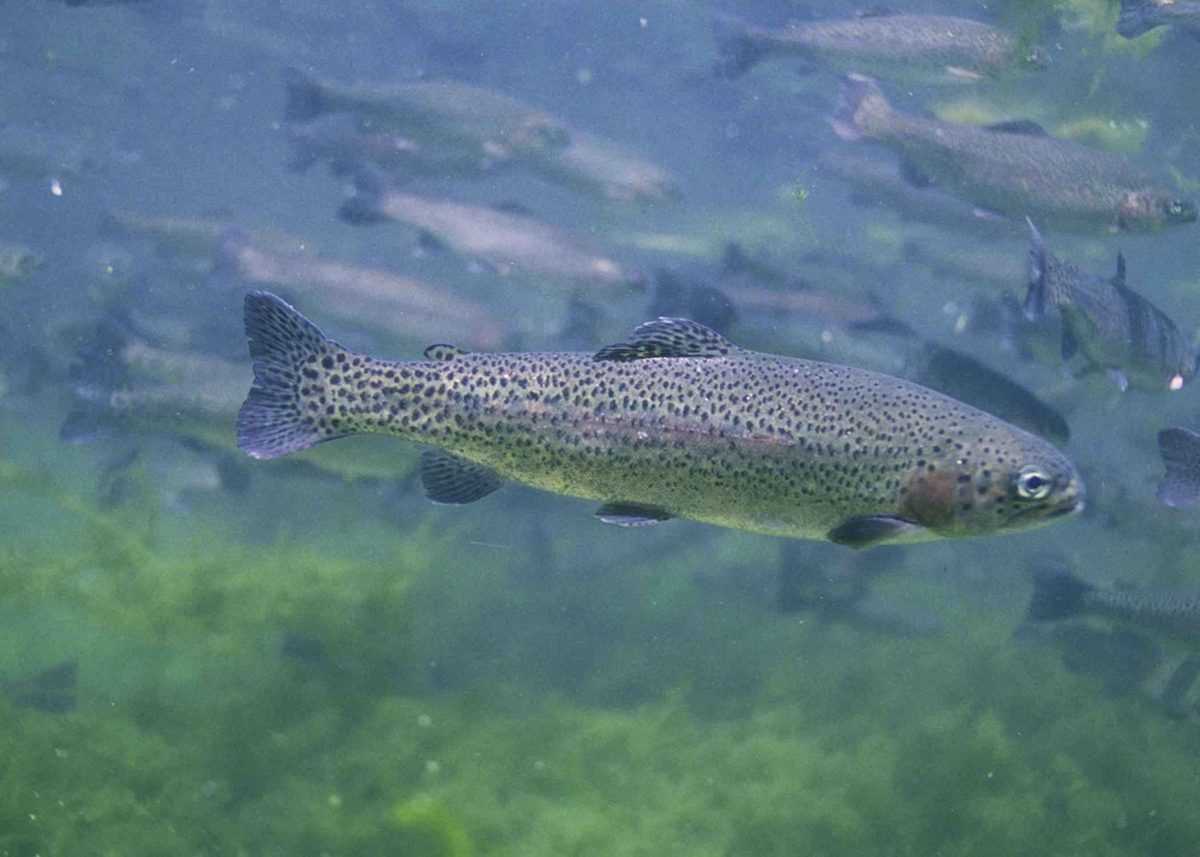
- Rainbows have small black spots over the body and tail and a pink lateral stripe. Browns have larger black and red spots with pale halos and almost no spotting on the tail.
- Where do trout hold in a river?
- On current seams, behind and in front of boulders, at the head and tailout of pools, and under undercut banks. They want food delivered by current with somewhere to rest out of it.
- What's the best time of year?
- Spring and fall, when water is cold and flows are moderate. Tailwaters below dams fish well year-round because the release keeps temperature stable.
Official sources and further reading
- Trout Unlimited
Coldwater conservation, stream reports, and local chapters.
- Montana FWP — Fishing Regulations
Stream-by-stream rules, closures, and hoot-owl restrictions.