


From the north · Wildlife
Pacific Salmon
Five species, one life cycle, and a run calendar that organizes the entire Pacific Northwest fishing year.
Oncorhynchus spp.
- Range
- Alaska to California; Great Lakes transplants
- Prime season
- May–October depending on species
- Access
- License plus salmon stamp/tags
- Table quality
- Outstanding — chinook and sockeye best
Regulations by region
Pacific Salmon rules where you're headed
Seasons, tags, limits, and legal methods for pacific salmon are set jurisdiction by jurisdiction. Pick your state or province and we'll point you at the agency that writes the rules.
Jump to another species
About the pacific salmon
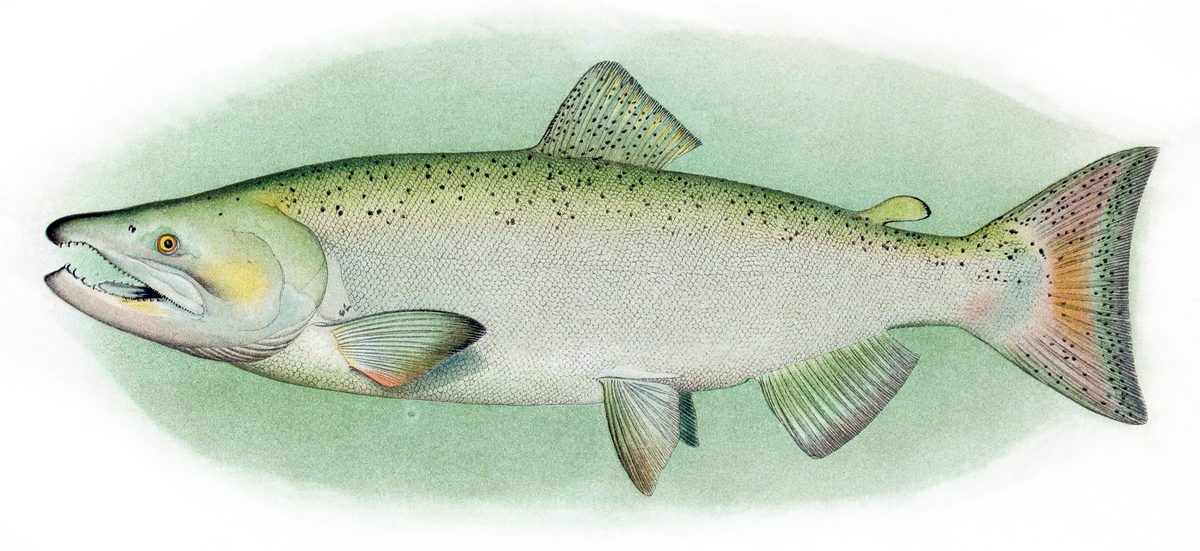
Salmon fishing runs on a calendar. Each species and each river system has a return window, and being on the water in that window matters far more than technique. Chinook (king) are the largest and most prized, coho (silver) the most aggressive on a lure, sockeye (red) the best on the grill, pinks the most numerous, and chum the hardest fighting per pound in fresh water. Fish are also fundamentally different in salt versus fresh water. Ocean and estuary fish are feeding and eat readily; upriver fish are not feeding and are triggered by aggression, territoriality, and the right drift.
Range, water, and where they live
The runs are the destination. These fisheries combine reliability with public access. Kenai River, Alaska: Sockeye in July, silvers in August, world-famous. Bristol Bay, Alaska: The largest sockeye run on earth. Columbia River (OR/WA): Spring, summer, and fall chinook plus coho. Puget Sound, Washington: Saltwater trolling and jigging for kings and coho. Lake Michigan tributaries: Transplanted chinook and coho runs each fall.
Behavior and how they feed
Intercept the run where it concentrates, and present at the depth and speed the fish are traveling. Check the run timing and fish counts for your river before committing; a week early or late is the difference between a limit and an empty day. In saltwater, troll a flasher and hoochie or cut-plug herring at 2–3 mph, keeping the gear near bottom for kings and higher for coho. In the estuary and lower river, cast spoons and spinners into moving tide where fish stage before pushing up. Upriver, drift-fish: a small weight, a short leader, and a bead, egg cluster, or yarn drifting naturally at the pace of the current. Fish the traveling lanes — the inside of bends, the tailouts of holding pools, and the seams beside fast water. Swing a fly through the same holding water on a sink-tip; hit the fish's face, not its back. For sockeye specifically, use the flossing/short-leader technique legal on Alaskan rivers: they don't eat lures readily. Bleed and ice every fish you keep immediately; salmon quality degrades faster than any other decision you'll make.
Where they hold
Salmon are moving toward a destination, so you are intercepting a migration rather than fishing a residence. Find the travel lane and the resting water. Saltwater structure and rips — Kelp lines, banks, and tide rips where bait balls hold feeding kings and coho. River mouths and estuaries — Fish stage and hold on the tide before running; the most consistent hookups of the season. Holding pools — Deep, slow pools between rapids where salmon rest during the day. Tailouts and slots — Fish move through the deepest slot; find the travel line and swing through it repeatedly. Confluences — Where a clear tributary meets a murky main stem, coho stack in the seam.
What they eat and what they hit
These are the presentations that consistently produce pacific salmon, with the conditions each one is actually for — not a tackle-shop wall. Trolled flasher + hoochie or spoon — The standard Pacific troll: a flasher for attraction and a squid skirt or spoon behind it. Cut-plug herring — A bevel-cut herring rolling slowly behind a flasher is still the best chinook bait there is. Spinner (size 4–6) — Cast across and swung through the slot; the number one river salmon lure for coho and kings. Casting spoon — Heavy spoons cast and counted down for staging fish in tidewater. Egg cluster / bead under a float — Cured roe or a bead drifted at the fish's depth is the highest-percentage in-river presentation. Swung fly / intruder — Two-hand rod, sink tip, and a large profile swung slowly through a tailout.
In the field
The best salmon days are crowded ones — combat fishing on the Kenai in July is a genuine cultural experience and a lot of fish. Coho on a fly or a spinner in a small coastal stream is the opposite: quiet, mobile, and technically satisfying. The physical side is real. Cold water, heavy fish, and long days of casting take a toll, and waders and rain gear are the actual essential equipment.
Licenses, stamps, and limits
Salmon are the most paperwork-heavy fishery in North America: licenses, stamps, tags, catch cards, and emergency in-season closures. Buy the state license and the salmon-specific stamp or endorsement for that water. Get the catch record card or harvest tag and record each retained fish immediately, before moving. Check in-season emergency regulations the morning you fish — salmon fisheries open and close on run counts, sometimes with a day's notice. Verify whether hatchery-only rules apply (clipped adipose fin) on that river; wild fish must often be released. Confirm gear rules — single barbless hooks and bait bans are common on salmon rivers.
Landing, release, and cleaning
What happens between the hookset and the cooler decides whether you land the fish and whether it is worth eating. Salmon run hard and change direction. Keep the rod at 45 degrees, let the drag do the work, and follow the fish downstream if you can. Net fish head-first with a large rubber net, or beach them on a gravel bar rather than dragging them over rocks. Fish that are dark and colored up are near spawning and poor eating — release them if you have the option. On a keeper, ike jime is worth learning: drive a spike into the brain (a soft spot above and slightly behind the eye) so the salmon dies instantly, then bleed and chill it. Bleed by cutting the gill arches or the artery behind the pectoral, and let it drain into the water or a bucket for a full minute before icing. Bury the fish in a slurry of ice and seawater. Warm fish on a deck in the sun loses quality by the minute, especially in the belly meat. Cleaning a pacific salmon the right way takes about four minutes once you know the sequence.
On the table
Chinook and sockeye are the premium table fish — chinook rich and fatty, sockeye deep red and firm. Coho are excellent and slightly leaner; pinks and chum are best canned, smoked, or made into cakes. Bleed at the gills the moment the fish is dispatched, then ice it whole. Quality is won on the boat, not in the kitchen. Fish caught near or in spawning color have poor flesh quality — keep bright, chrome fish and release dark ones.
Field notes
- 9' medium-heavy salmon rod: Length to control a drift and cushion a heavy fish on light leader.
- 8-weight or 8/9 switch fly rod: The standard for coho and chum, and for swinging flies for kings.
- 30 lb braid to 20 lb fluorocarbon leader: Hooking power at distance with an abrasion-resistant business end.
- Flasher and hoochie / cut-plug herring: The workhorse trolling combination through the whole Pacific coast.
- Spoons, spinners, and bead rigs: Cover cast, swing, and drift presentations in the river.
- Cooler, ice, and a bleeding knife: Determines the quality of your fish more than anything in the kitchen.
Pacific Salmon questions, answered
- Which salmon is best to eat?
- Chinook for richness, sockeye for firm red flesh and grilling. Coho is excellent and leaner. Pink and chum are best smoked or canned rather than served as fillets.
- Why won't sockeye bite a lure?
- They feed on plankton in the ocean and effectively stop feeding on the return. That's why Alaskan sockeye fishing uses a short-leader drift technique that puts the line in their open mouths rather than a conventional lure presentation.
- How do I know when the run is in?
- State and tribal agencies publish daily or weekly fish counts at dams and weirs. Watch the counts and the water temperature, and fish the days after a rain bump when fish push upriver.
- What does the clipped fin mean?
- A missing adipose fin marks a hatchery fish. On many rivers you may keep hatchery fish only and must release wild fish with the adipose intact — check that river's rule before keeping anything.
Official sources and further reading
- Alaska Dept. of Fish & Game — Sport Fishing
Run timing, emergency orders, and license/stamp requirements.
- Washington DFW — Salmon Fishing
Catch record cards, in-season rule changes, and area openings.