


From the north · Wildlife
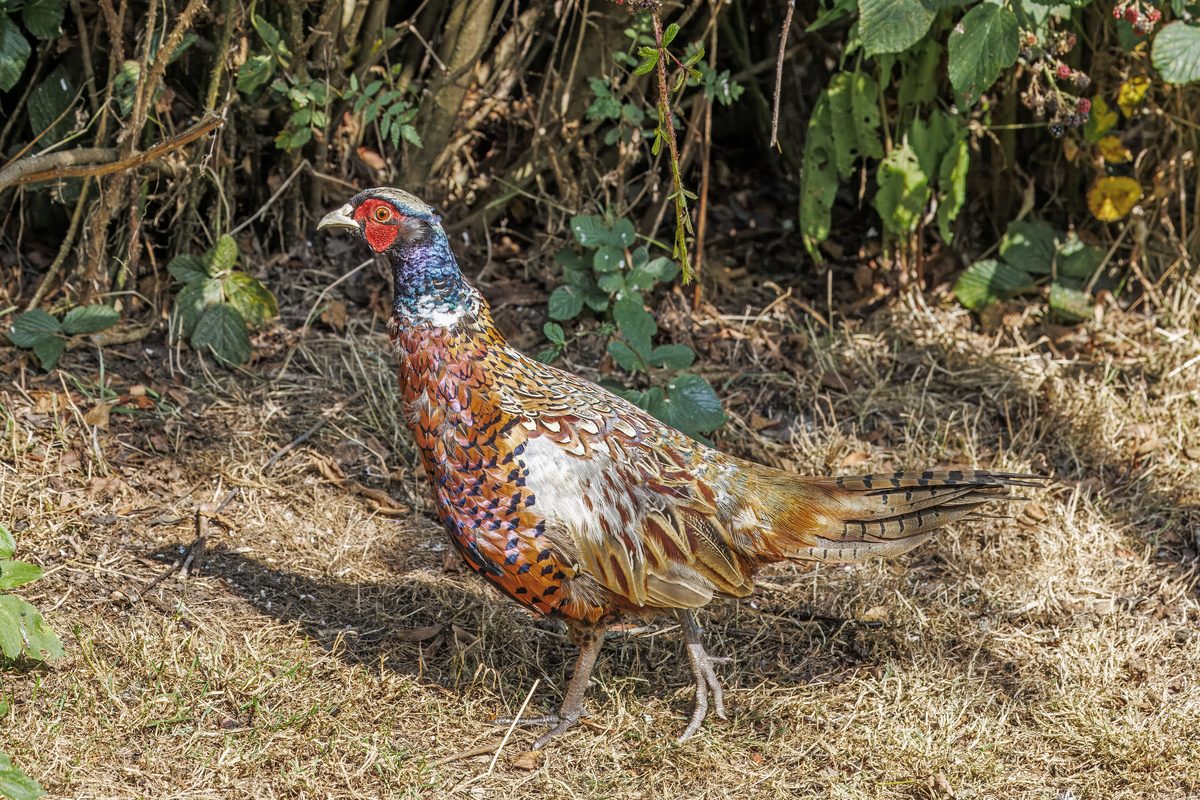
Ring-Necked Pheasant
A cackling flush out of thick grass, a hard crossing shot, and the reason wingshooters plan whole vacations around South Dakota every fall.
Phasianus colchicus
- Range
- Northern Plains & Midwest
- Peak season
- Oct – Jan
- Tag access
- Over-the-counter
- Live weight
- 2–3 lb roosters
Regulations by region
Ring-Necked Pheasant rules where you're headed
Seasons, tags, limits, and legal methods for ring-necked pheasant are set jurisdiction by jurisdiction. Pick your state or province and we'll point you at the agency that writes the rules.
Jump to another species
About the ring-necked pheasant
Pheasants are an introduced species, first released from Asia in the late 1800s, that thrived in the grain-and-grassland landscape of the northern Plains and Midwest so completely that South Dakota alone releases over a million birds worth of harvest most falls. They live in CRP grass, cattail sloughs, shelterbelts, and standing corn, and they run before they fly — a rooster will often sprint the length of a field ahead of dogs and hunters before flushing wild well out of range. The classic hunt is a walking line of hunters and dogs pushing a strip of cover toward blockers standing at the far end, turning a bird's instinct to run into a flush it cannot avoid.
Range and habitat
Pheasant numbers track CRP grassland acreage and winter cover almost exactly — the best states rotate year to year with weather and farm-bill enrollment. South Dakota: The best wild-bird numbers in the country and a huge hunting economy. Iowa: Strong wild-bird recovery on public wildlife management areas. Kansas: Underrated wild-bird numbers in the northwest part of the state. Nebraska: Excellent public access through the Open Fields and Waters program. North Dakota: PLOTS program opens huge acreage of private land to public hunting.
Behavior and field method
Pheasant hunting is a team sport built around dogs, cover, and pushing birds toward a blocking line rather than a stationary stand hunt. Hunt with a flushing dog (Lab, springer) or a pointer that will hold a running rooster — dogless walking works but flushes far fewer birds. Post blockers at the downwind end of a cover strip before the walking line moves in, since roosters run ahead and try to flush wild at the far edge. Walk into the wind when possible so dogs can scent birds ahead rather than behind the line. Zigzag through heavy cover rather than walking straight lines — pheasants tuck tight and a straight pass can walk right past a holding bird. Slow down and stop periodically; a sudden pause often triggers a nervous rooster to flush that would otherwise sit tight. Focus on cover edges — where CRP grass meets a slough, cornfield, or shelterbelt — since birds concentrate there for food and escape cover. Be ready for a hard crossing shot; roosters flush explosively and accelerate fast, so lead generously and don't stop your swing. Hunt heavier cover and midday hours after opening weekend, when birds relocate away from pressured open fields.
Tracks, droppings, and sign
Rooster sign lives in the transition between crop, cover, and grit. Learn to read it in the first hour of the morning before the birds move. Tracks — Slender three-toed prints in mud, snow, and field dust, usually in long running lines rather than clusters — pheasants walk and run far more than they fly. Roosters leave a slightly larger track with a longer middle toe. Droppings — Small greenish-brown coils with white urate caps, dropped in roosting cover and along field edges. Piles concentrated in grass mean a night roost. Dusting bowls — Shallow scooped-out dust hollows on sunny south edges and two-track roads, littered with small body feathers. Roost & loafing cover — Flattened pockets in switchgrass, CRP, and cattail sloughs, with droppings and feathers. Cattails hold birds through the coldest weather in the region. Crowing & flush behavior — Roosters crow at dawn and dusk and after loud noises. The cackle at the flush is the audible signature — hens flush silently, which is your legal identification cue.
In the field
A pheasant hunt is a long walk through waist-high grass with a dog working back and forth ahead of you, scent-cutting for the birds that ran in ahead of you at first light. The flush is the whole show: a sudden cackling roar of wings from underfoot, a blur of bronze and green, and a half-second window to mount the gun and find the bird before it's forty yards out and dropping toward cover. Group hunts with blockers turn quiet grass into chaos — multiple roosters flushing at once, several guns going, a dog making three retrieves in five minutes. It is loud, social, and physically demanding across long fields.
Regulations, tags, and seasons
Pheasant tags are inexpensive and unrestricted by draw — the real logistics are picking a state with strong public or walk-in access and timing the trip to the cover conditions. Buy a small-game or upland bird license online from the state wildlife agency; nonresident licenses typically run $100–$150 for the season. Download the state's public/walk-in access map — South Dakota's GFP atlas and Kansas WIHA maps are essential planning tools. Confirm shooting hours and bag limits, which are usually roosters-only with a 2–3 bird daily limit. Book kennel-friendly lodging if bringing a dog, and check any additional habitat stamp or preserve permit requirements. Scout cover type ahead of time — cattail sloughs and shelterbelts hold birds after opening weekend pressure pushes them out of open grass.
Harvest and processing
Pheasant recovery is a running-bird problem. Assume every downed rooster is a runner until you have it in hand. Mark the fall the moment the rooster folds. Pick a landmark behind the bird — a stump, a color change in the cover — and walk straight to it without taking your eyes off it. Send the dog immediately if you have one; a runner covers a shocking amount of ground in thirty seconds. If you are hunting without a dog, walk a tight grid from the fall and look for feathers, not the whole bird. Identify the bird before the shot and again on the ground: roosters have the white neck ring, iridescent head, and long barred tail. Hens are legal in almost no state. Dispatch a cripple immediately by pressing your thumb behind the head and firmly extending the neck, or by cervical dislocation with a quick pull. Do not wring wings or crush the breast. Check your bird against the daily limit and, where required, leave a fully feathered wing or head attached for species identification during transport. Field dress hot birds right away: open the vent, hook two fingers in, and pull the entrails out in one motion. This drops core temperature immediately and keeps the meat sweet. A whole plucked pheasant roasted with the skin on is a genuinely great meal — do not default to breasting it.
Meat care and what you take home
A rooster yields lean, mild breast and leg meat, similar to chicken but firmer, usually 1–1.5 pounds of usable meat per bird. Breasts are excellent pan-seared, wrapped in bacon, or braised with cream and mushrooms; older birds do best slow-cooked to avoid drying out. Pluck rather than skin if roasting whole for the best texture and presentation; skinning is faster if the meat is headed straight into a skillet.
Field notes
- 12- or 20-gauge with modified choke: Pheasants flush close and fast; a more open choke than you'd use for waterfowl helps on the close, quick crossing shots.
- Upland vest with game bag: A blaze-orange vest keeps shells accessible and has a back pouch for downed birds during a long walk.
- Briar-resistant brush pants: CRP grass and cattails are full of thorns and burrs; faced brush pants save your legs and your regular pants both.
- Good upland boots: Waterproof, over-the-ankle boots with aggressive tread; a day of pheasant hunting easily covers 8–10 miles.
- Bird dog: A trained flushing or pointing dog finds birds hunters would otherwise walk past, especially running roosters in heavy cover.
Ring-Necked Pheasant questions, answered
- Do I need a dog to hunt pheasant?
- No, but a good dog dramatically increases your flush rate, especially on running roosters that would otherwise escape ahead of walking hunters unseen.
- Can I tell roosters from hens in flight?
- Yes — roosters are larger, more colorful with a long tail and white neck ring, and cackle loudly on the flush; hens are mottled brown and mostly silent. Most states are roosters-only.
- What's the best time of day to hunt pheasant?
- Early morning and late afternoon see the most bird movement between roosting and feeding cover; midday birds tend to be tucked tight in heavy cover, which can favor slow, methodical dog work.
- Is public land pheasant hunting any good?
- Yes, particularly in South Dakota, Kansas, and Nebraska's walk-in access programs, though pressure is heavy on weekends near population centers — weekday hunts and less obvious cover produce better results.
- What choke and shot size for pheasant?
- A modified choke with 4 or 5 shot in a 12- or 20-gauge handles the vast majority of pheasant shooting distances.
- When does pheasant season typically run?
- Most states open mid-to-late October and run through late December or January; check your specific state for exact dates, which shift slightly each year.
Official sources and further reading
- Pheasants Forever
Habitat programs, public land maps, and state season summaries.
- South Dakota Game, Fish & Parks
Nonresident licensing and the public/walk-in hunting atlas.
- Kansas Dept. of Wildlife & Parks — WIHA
Walk-in hunting access maps for public pheasant ground.
- USFWS — Hunting
Federal public land hunting access information.