


From the north · Wildlife
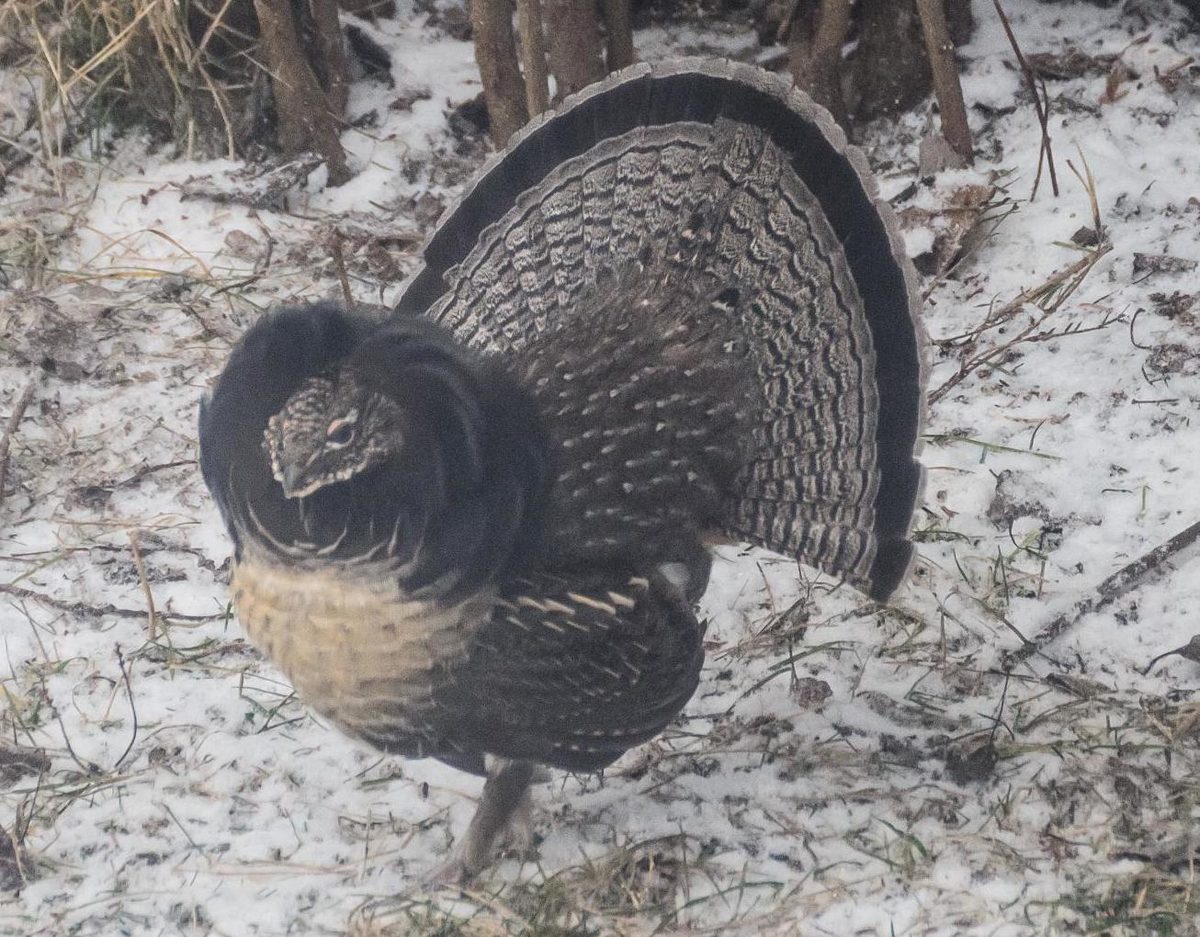
Ruffed Grouse
The 'king of game birds' — a thunderous wild flush from thick aspen cover that gives you a half-second snap shot and nothing more.
Bonasa umbellus
- Range
- Northern hardwoods & boreal forest
- Peak season
- Sept – Dec
- Tag access
- Over-the-counter
- Live weight
- 1–1.5 lb
Regulations by region
Ruffed Grouse rules where you're headed
Seasons, tags, limits, and legal methods for ruffed grouse are set jurisdiction by jurisdiction. Pick your state or province and we'll point you at the agency that writes the rules.
Jump to another species
About the ruffed grouse
The ruffed grouse lives in dense young forest — regenerating aspen, alder thickets, and brushy edges — across the northern tier of the U.S. and much of Canada, and its population famously cycles up and down on a roughly ten-year rhythm tied to predator and food dynamics. Unlike open-country birds, grouse hunting is a forest game: you walk logging roads, old skid trails, and young clear-cuts, and the bird flushes explosively from cover so thick you rarely see it before the shot. It has earned the nickname 'king of game birds' for exactly that reason. Grouse tags are cheap and seasons are long, but the birds themselves are the challenge — a healthy adult grouse can put a tree trunk between itself and the gun in the same motion as the flush.
Range and habitat
Grouse hunting quality tracks young-forest habitat — recently logged or naturally disturbed aspen and alder stands 5–20 years old hold the most birds. Minnesota: Largest managed grouse habitat program in the country and huge public forest. Wisconsin: Excellent aspen management on county forest land, especially the north woods. Michigan (Upper Peninsula): Vast public forest with strong grouse numbers on a healthy cycle year. Maine & New Hampshire: Classic New England grouse cover in mixed hardwood-conifer forest. Pennsylvania: Extensive state game lands with good young-forest habitat programs.
Behavior and field method
Ruffed grouse hunting means walking dense young cover slowly with a dog or alone, ready for an instant, close-range flush. Target young aspen and alder stands 5–15 years post-cut — the densest stem count per acre usually holds the most birds. Walk logging roads, skid trails, and cover edges slowly, since grouse hold tight in thick brush and a fast pace walks past birds. Hunt with a close-working flushing dog or pointing breed that won't range beyond gun range in thick cover. Stop periodically and stand still for 10–15 seconds — a nervous grouse will often flush on the pause rather than let a hunter close the last few yards. Keep the gun up and ready at all times in likely cover — grouse flushes give almost no warning and are usually gone in under two seconds. Shoot fast at the sound and motion of the flush rather than waiting to fully identify the bird visually — hesitation costs the shot in thick cover. Focus on drumming logs, forest edges, and areas with berry-producing shrubs like dogwood in early season. Move to south-facing conifer cover in late season as leaves drop and grouse shift toward thermal protection.
Tracks, droppings, and sign
Grouse sign is subtle and small, and finding it means learning to read young aspen. If you find drumming logs and clover-edge droppings in a ten-year-old cut, you have found the birds. Tracks — Small three-toed prints, most visible in fresh snow along logging trails and cut edges. In winter, the feet grow comb-like pectinations that widen the track noticeably. Droppings — Small, dry, curved cylinders of fibrous plant matter about an inch long, often in piles under a roost or scattered along a feeding edge. A winter roost under snow leaves a compact heap. Drumming logs — A mossy downed log with a bare, packed spot on top and droppings alongside, usually with good overhead cover and a view. Males use the same log for years. Dusting & grit — Small dust bowls with feathers along old logging grades, and grit-picking sign on gravel roads at dawn and last light. Snow roosts — Small burrows and craters in powder where a bird plunged in to roost, with a distinctive wing-print explosion where it burst out.
In the field
Grouse hunting is a quiet forest walk punctuated by heart-stopping surprise. You move slowly through thick young timber, gun ready, and most of the walk is simply that — walking, listening, watching a dog's tail. Then a grouse erupts from three feet away in a roar of wings, and you have perhaps a second and a half before it's screened by a tree trunk. Most shots are instinctive, close, and taken on birds you barely saw. It's a hunt of low percentages — many experienced hunters flush ten birds for every one that ends up in the bag — but the fall woods, the dog work, and the occasional clean double make it one of the most satisfying wingshooting pursuits there is.
Regulations, tags, and seasons
Grouse hunting requires only a basic small-game license in most states — the planning effort goes into finding young-forest cover, not securing a tag. Buy a small-game hunting license online from the state wildlife agency; usually bundled with other upland species. Check whether your state requires a separate migratory bird or habitat stamp if hunting woodcock alongside grouse, which share cover. Identify public forest with active young-growth management — state forestry agency aspen-management maps are the best planning tool. Confirm season dates and daily bag limits, typically 3–5 birds per day depending on the state's population cycle. Check whether your state is in a grouse population high or low year via the agency's drumming-count survey — it changes hunting expectations significantly.
Harvest and processing
Grouse are shot fast and close in thick cover. Marking the fall is harder than making the shot. Mark the fall the moment the grouse folds. Pick a landmark behind the bird — a stump, a color change in the cover — and walk straight to it without taking your eyes off it. Send the dog immediately if you have one; a runner covers a shocking amount of ground in thirty seconds. If you are hunting without a dog, walk a tight grid from the fall and look for feathers, not the whole bird. Stop walking and stand still the instant you shoot. Grouse fall into ferns and blowdown, and the only way to find one is to walk a straight line to the mark you fixed with your eyes. Dispatch a cripple immediately by pressing your thumb behind the head and firmly extending the neck, or by cervical dislocation with a quick pull. Do not wring wings or crush the breast. Check your bird against the daily limit and, where required, leave a fully feathered wing or head attached for species identification during transport. Field dress hot birds right away: open the vent, hook two fingers in, and pull the entrails out in one motion. This drops core temperature immediately and keeps the meat sweet. Ruffed grouse has the mildest white meat of any North American game bird and it is worth plucking whole.
Meat care and what you take home
Ruffed grouse yields small but exceptional breast meat, mild and slightly nutty, typically 6–8 ounces per bird. Breasts are best pan-seared quickly to medium and rested, since the lean meat dries out fast if overcooked; legs are tough and better used in stock. Bag two to four birds and cook them together for a proper meal — a single grouse breast makes a good appetizer, not a full plate.
Field notes
- Light 20-gauge or 28-gauge: A light, quick-pointing gun with an open cylinder or skeet choke matters more than gauge — shots are close and instantaneous.
- Small shot (7.5 or 8): Grouse flush inside 20 yards most of the time; smaller shot gives a denser pattern for the split-second shot.
- Briar-proof upland vest and pants: Alder and aspon regrowth is full of whips and thorns; faced brush pants and a tough vest prevent shredded clothing.
- Bell or beeper collar for the dog: Visibility in dense young forest is often under 20 feet; a bell or beeper collar tells you where the dog is at all times.
- Blaze orange hat and vest: Grouse cover often overlaps with deer season in many states — high-visibility orange is essential.
Ruffed Grouse questions, answered
- Why do grouse populations rise and fall so much?
- Ruffed grouse follow a roughly 10-year population cycle driven by predator populations, especially snowshoe hare and raptor dynamics, and habitat quality. Check your state's drumming-count survey to know whether you're hunting a high or low year.
- Do I need a dog to hunt grouse?
- No, many hunters walk cover without a dog successfully, but a close-working dog finds birds that would otherwise be missed entirely in dense young forest.
- What cover should I look for?
- Aspen and alder stands 5–15 years after a cut or natural disturbance, with dense stem counts, near a mix of conifer for winter cover and openings with berry shrubs.
- How close do grouse flush?
- Often inside 15 yards, sometimes underfoot. This is why gun readiness and a light, fast-handling shotgun matter more than reach or gauge.
- Can grouse and woodcock be hunted together?
- Yes, their habitat overlaps heavily in young mixed forest, and many hunters take both species on the same walk — check if your state requires a separate migratory bird stamp for woodcock.
- What's the best time of year to hunt grouse?
- Early season (September–October) catches birds in family groups near summer cover; late season after leaf-drop pushes birds toward dense conifer, which changes the hunt but often improves visibility.
Official sources and further reading
- Ruffed Grouse Society
Habitat programs, population cycle data, and state cover maps.
- Minnesota DNR — Grouse Hunting
Drumming-count survey data and public forest access.
- USDA Forest Service — find a forest
Locate national forest land open to grouse hunting.
- USFWS — Hunting
Federal hunting resources and public land access information.