Tracks
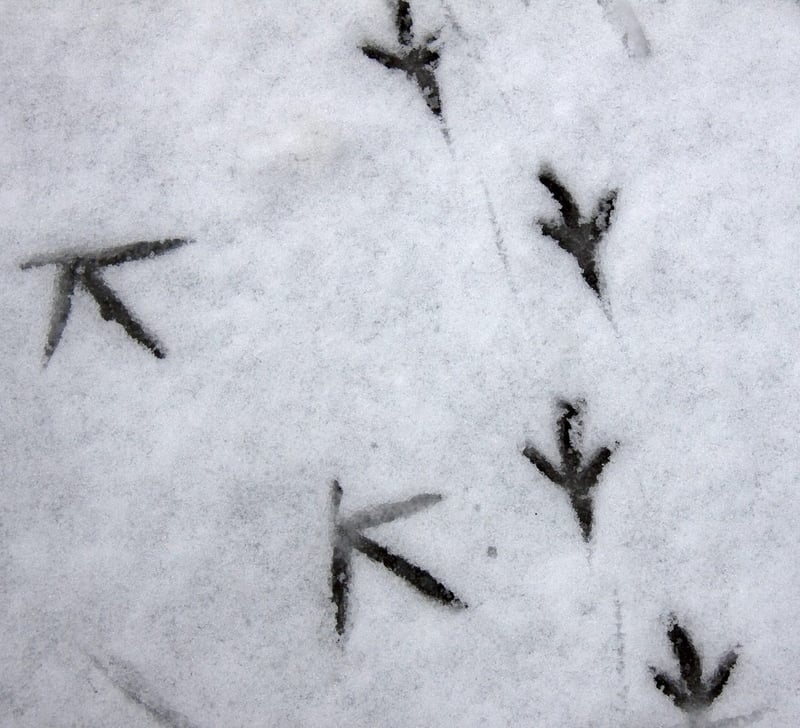
2–2.5 in.
Slender three-toed prints in mud, snow, and field dust, usually in long running lines rather than clusters — pheasants walk and run far more than they fly. Roosters leave a slightly larger track with a longer middle toe.
Hunting · Small Game & Birds · Ring-Necked Pheasant
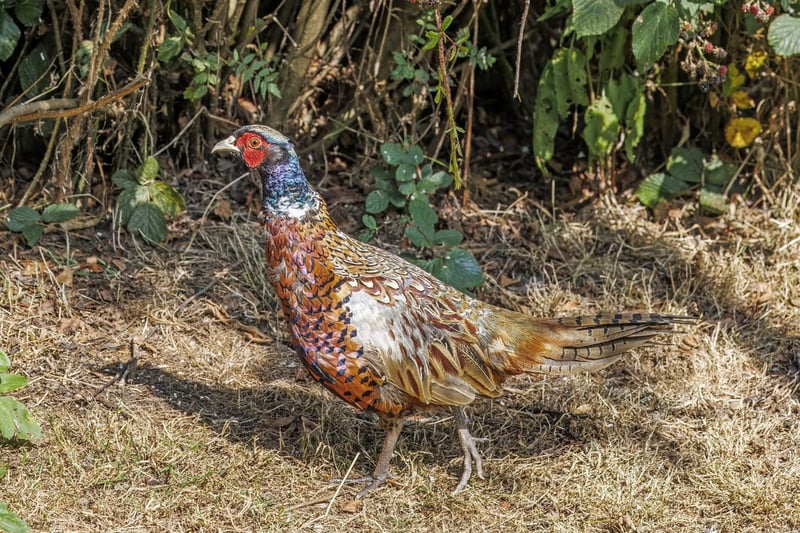
A cackling flush out of thick grass, a hard crossing shot, and the reason wingshooters plan whole vacations around South Dakota every fall.
Pheasants are an introduced species, first released from Asia in the late 1800s, that thrived in the grain-and-grassland landscape of the northern Plains and Midwest so completely that South Dakota alone releases over a million birds worth of harvest most falls.
They live in CRP grass, cattail sloughs, shelterbelts, and standing corn, and they run before they fly — a rooster will often sprint the length of a field ahead of dogs and hunters before flushing wild well out of range.
The classic hunt is a walking line of hunters and dogs pushing a strip of cover toward blockers standing at the far end, turning a bird's instinct to run into a flush it cannot avoid.
01
Pheasant numbers track CRP grassland acreage and winter cover almost exactly — the best states rotate year to year with weather and farm-bill enrollment.
| Place | Why it's worth your time | How you get a tag |
|---|---|---|
| South Dakota | The best wild-bird numbers in the country and a huge hunting economy | Over-the-counter nonresident license, some counties require a habitat stamp |
| Iowa | Strong wild-bird recovery on public wildlife management areas | Over-the-counter resident and nonresident licenses |
| Kansas | Underrated wild-bird numbers in the northwest part of the state | Over-the-counter; check walk-in hunting access (WIHA) maps |
| Nebraska | Excellent public access through the Open Fields and Waters program | Over-the-counter licenses; program lands are free to hunt |
| North Dakota | PLOTS program opens huge acreage of private land to public hunting | Over-the-counter; PLOTS guide published each fall |
02
Pheasant hunting is a team sport built around dogs, cover, and pushing birds toward a blocking line rather than a stationary stand hunt.
03
Rooster sign lives in the transition between crop, cover, and grit. Learn to read it in the first hour of the morning before the birds move.
2–2.5 in.
Slender three-toed prints in mud, snow, and field dust, usually in long running lines rather than clusters — pheasants walk and run far more than they fly. Roosters leave a slightly larger track with a longer middle toe.
Small cylinders
Small greenish-brown coils with white urate caps, dropped in roosting cover and along field edges. Piles concentrated in grass mean a night roost.
Field edges
Shallow scooped-out dust hollows on sunny south edges and two-track roads, littered with small body feathers.
Matted grass
Flattened pockets in switchgrass, CRP, and cattail sloughs, with droppings and feathers. Cattails hold birds through the coldest weather in the region.
Sound
Roosters crow at dawn and dusk and after loud noises. The cackle at the flush is the audible signature — hens flush silently, which is your legal identification cue.
04
Pheasant tags are inexpensive and unrestricted by draw — the real logistics are picking a state with strong public or walk-in access and timing the trip to the cover conditions.
05
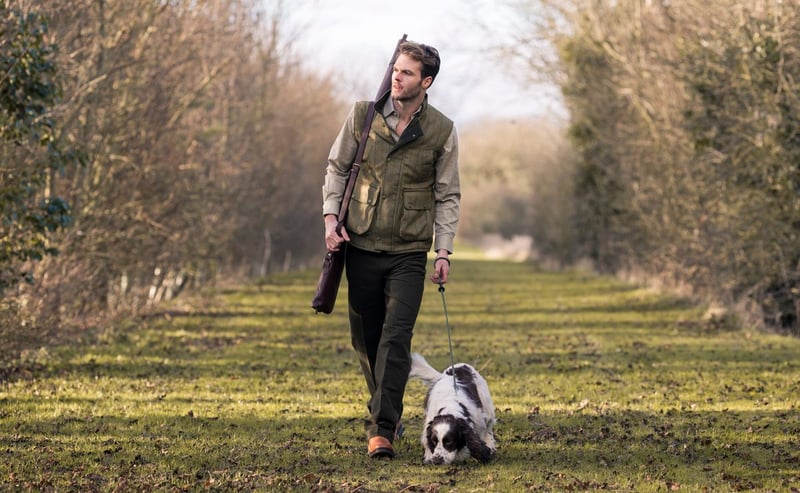
A pheasant hunt is a long walk through waist-high grass with a dog working back and forth ahead of you, scent-cutting for the birds that ran in ahead of you at first light.
The flush is the whole show: a sudden cackling roar of wings from underfoot, a blur of bronze and green, and a half-second window to mount the gun and find the bird before it's forty yards out and dropping toward cover.
Group hunts with blockers turn quiet grass into chaos — multiple roosters flushing at once, several guns going, a dog making three retrieves in five minutes. It is loud, social, and physically demanding across long fields.
06
Not a shopping list — the handful of items that change whether you fill the tag and whether the meat gets home in good condition.
Wide pattern
Pheasants flush close and fast; a more open choke than you'd use for waterfowl helps on the close, quick crossing shots.
Carry birds and shells
A blaze-orange vest keeps shells accessible and has a back pouch for downed birds during a long walk.
Protects legs
CRP grass and cattails are full of thorns and burrs; faced brush pants save your legs and your regular pants both.
Miles on your feet
Waterproof, over-the-ankle boots with aggressive tread; a day of pheasant hunting easily covers 8–10 miles.
Massively improves success
A trained flushing or pointing dog finds birds hunters would otherwise walk past, especially running roosters in heavy cover.
07
Pheasant recovery is a running-bird problem. Assume every downed rooster is a runner until you have it in hand.
08
A whole plucked pheasant roasted with the skin on is a genuinely great meal — do not default to breasting it.
09
A rooster yields lean, mild breast and leg meat, similar to chicken but firmer, usually 1–1.5 pounds of usable meat per bird.
Breasts are excellent pan-seared, wrapped in bacon, or braised with cream and mushrooms; older birds do best slow-cooked to avoid drying out.
Pluck rather than skin if roasting whole for the best texture and presentation; skinning is faster if the meat is headed straight into a skillet.
Seasons, bag limits, and shell restrictions change every year — especially for migratory birds. Confirm with these agencies before you hunt.
Habitat programs, public land maps, and state season summaries.
Nonresident licensing and the public/walk-in hunting atlas.
Walk-in hunting access maps for public pheasant ground.
Federal public land hunting access information.
Questions
Where every hunting guide on The Wild10 starts.
Big game, small game, upland birds, and waterfowl — habitat and season.
Deer, elk, moose, bear, hog and sheep — where to hunt, tags, and what to expect.
All 50 states — seasons, tags, laws, public land and tactics.
Calling, shotguns, bows, camo, blinds, scouting, and spring vs fall.
Search every species and filter by tracks, droppings and sign, harvest, or skinning.
Cartridges, zero, field positions, wind, and shot placement.
Gauges, chokes, shot size, and lead for birds and slug country.
Instinctive shooting, draw weight, arrow spine, and close-range craft.
Eleven recurve and longbow guides: form, aiming, spine, tuning, and building tackle.
Draw length, sight and rest setup, broadhead tuning, and shot process.
Wind discipline, stand placement, blood trailing, and meat care.
Keep going
Search every game profile by tracks, sign, harvest, and skinning guides.
Read →Gauges, chokes, and shot size for birds and small game.
Read →Deer, elk, bear and more — tags, seasons, and tactics.
Read →Wind, scent, and getting game home in good condition.
Read →What to do with the birds and small game you bring home.
Read →Top 10 lists
Ranked picks with real product photos, specs, and editor notes — the buying side of everything covered in these guides.
Sitka and the rest: kickstands, call storage, all-day carry.
See the ranking →Upland and utility vests with shell and game carry.
See the ranking →Upland guns that swing fast on flushing roosters.
See the ranking →Bolt guns from budget workhorses to mountain rifles.
See the ranking →Over-unders and light autos built to carry all day.
See the ranking →3.5-inch guns that keep cycling through mud and ice.
See the ranking →Also on The Wild10
Fish identification, the knots that hold, lure selection by conditions, and the habits that fill a stringer.
Open the fishing hub →