Current seams
Rivers
The line between fast and slow water: fish hold in the slow side and eat drift out of the fast side.
Fishing · Species · Rainbow Trout
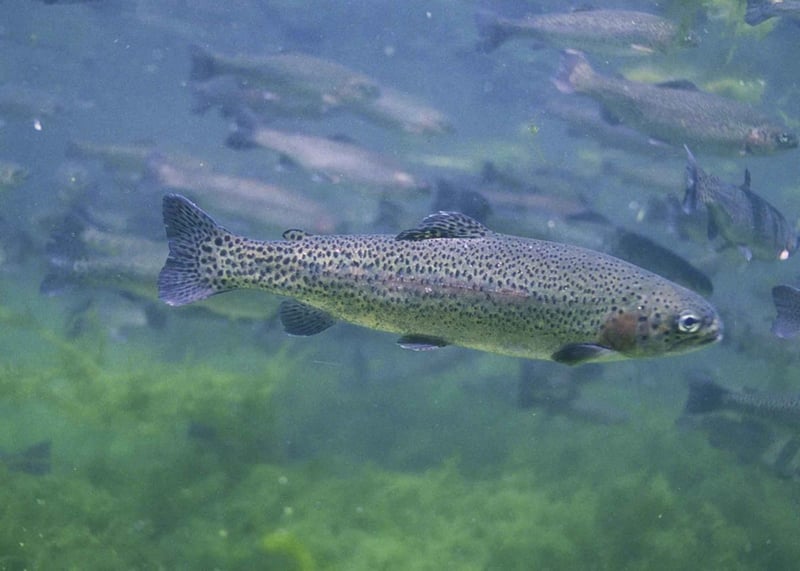
The most widely stocked trout in the world and, in the right river, one of the hardest fighting.
Rainbow trout are the introduction to moving-water fishing for most of the country. Hatchery programs put them in reach of nearly every population center, and they bite readily enough to teach the basics.
Wild rainbows in a western river are a different animal — selective, fast, and prone to running downstream through a rapid the moment they're hooked.
In both cases the fish are telling you the same thing: they need cold, clean, oxygen-rich water, and they hold where current delivers food without costing them energy.
01
You can catch a stocked rainbow almost anywhere. These are the places where you can catch a memorable one.
| Water & region | Why it's worth your time | Access & license |
|---|---|---|
| Bighorn River, Montana | Enormous wild trout density in a tailwater | MT license; float or wade, guides widely available |
| White River, Arkansas | Year-round tailwater with trophy potential | AR license plus trout permit |
| Alaska (Kenai, Bristol Bay) | Huge wild rainbows keyed on salmon eggs | AK license; king salmon stamp not needed for trout |
| Great Lakes tributaries | Migratory steelhead runs in fall and spring | State license plus a Great Lakes/steelhead stamp |
| Local stocked streams and lakes | Weekly stocking through spring | State license plus trout stamp; check the stocking schedule |
02
Read the current, get your offering to the trout's depth, and present it drifting at the speed of the water.
03
Rainbows hold where food arrives with the least effort — the seam, the cushion, and the tailout. Learn to read those three and you can fish any river cold.
Rivers
The line between fast and slow water: fish hold in the slow side and eat drift out of the fast side.
Feeding lanes
Oxygenated broken water at the top of a run and the slick before the next drop both hold actively feeding fish.
Cover
Big fish tuck under grass banks and root wads and slide out to feed at dawn and dusk.
Stillwater
Stream mouths, spring seeps, and the first break off a shoreline shelf in stocked and wild lakes.
04
These are the presentations that consistently produce rainbow trout, with the conditions each one is actually for — not a tackle-shop wall.
Bread and butter
Pheasant tail, hare's ear, or a beadhead perdigon drifted dead-drift at the fish's depth catches the most trout, most days.
Hatch
Match the size first, silhouette second, color last — an Adams or elk hair caddis in the right size covers most hatches.
Big fish
Woolly bugger or sculpin pattern swung and stripped along banks in high or off-color water.
Spin gear
A #1–#3 spinner cast upstream and retrieved just faster than the current is deadly in small water.
Lakes
1/8–1/4 oz casting spoons for cruising stocked and wild fish along shoreline breaks.
Stocked water
A single egg, worm, or dough bait fished off the bottom where bait is legal — check regulations first.
05
Rainbows are spring spawners that feed most actively when water is 45–60°F. Stocking schedules also drive the calendar on many waters.
| Season | Where the fish are | What works |
|---|---|---|
| Spring (40–55°F) | Rivers: riffles and runs; lakes: shallow shorelines, inlets, and stocking points | Small spinners and spoons, nymphs and egg patterns, PowerBait and worms on stocked water |
| Summer | Cooler, deeper water — lake thermocline (15–35 ft), spring-fed streams, tailwaters, high-elevation lakes | Trolling flashers and spoons on downriggers, dry flies at dawn and dusk, slip-sinker rigs off the bottom |
| Fall | Feeding heavily in cooling water; shallow again in lakes, aggressive in rivers | Streamers, larger spinners, egg patterns behind spawning salmon or browns |
| Winter | Slow, deep pools in rivers; near-shore in ice-covered lakes | Small jigs and wax worms through the ice; midges and small nymphs fished deep and slow |
06
Trout feeding is tied to insect activity and light.
Best
Low light and cool water; rainbows cruise shallows in lakes and feed in riffles. First hour is prime for spinners and dries.
In spring and fall, midday is the peak of insect hatches — mayflies and caddis. In summer, fish deeper or in shade.
Best
Evening hatches and spinner falls bring fish to the surface; the best dry-fly window of the day.
Rainbows feed all day under cloud cover. Rain that raises and colors a river triggers a worm and streamer bite.
07
Trout rigs are light and simple. Fluorocarbon leaders and small hooks make the difference.
1/4 oz egg sinker, bead, swivel, 18–36 in of 4 lb fluoro to a #10–#14 bait hook. Float PowerBait or an inflated worm off the bottom. The stocked-lake standard.
Small fixed float, split shot, #10–#12 hook with a worm, salmon egg, or small jig, set 2–6 ft deep; drift it through slow pools.
9 ft 5X leader, strike indicator, split shot, two nymphs 18 in apart (pheasant tail, hare's ear, egg). Dead-drift at the speed of the bubbles.
#1–#2 spinner on 4–6 lb line, cast up and across, retrieved just fast enough to spin the blade through the run.
Small dodger or lake troll ahead of a wedding-ring spinner and worm, or a small spoon on lead core or a downrigger at the thermocline.
08
Natural baits work anywhere they are legal; check for artificial-only water.
Universal
Half a crawler threaded on a #10 hook, drifted or fished off the bottom. The most reliable trout bait in existence.
Single eggs on a #14 egg hook or spawn sacs, drifted through runs, especially in fall and spring.
Stocked fish
Molded around a treble or single on a slip-sinker rig; floats up off the bottom. Works on hatchery fish, rarely on wild ones.
Small live minnows under a float for bigger holdover rainbows in lakes.
Summer terrestrials fished on the surface or under a float along grassy banks.
09
Presentation quality — drift, depth, stealth — matters more than lure choice.
10
Trout are the most commonly stamped species in the country. Most states require a trout permit on top of a basic license.
11
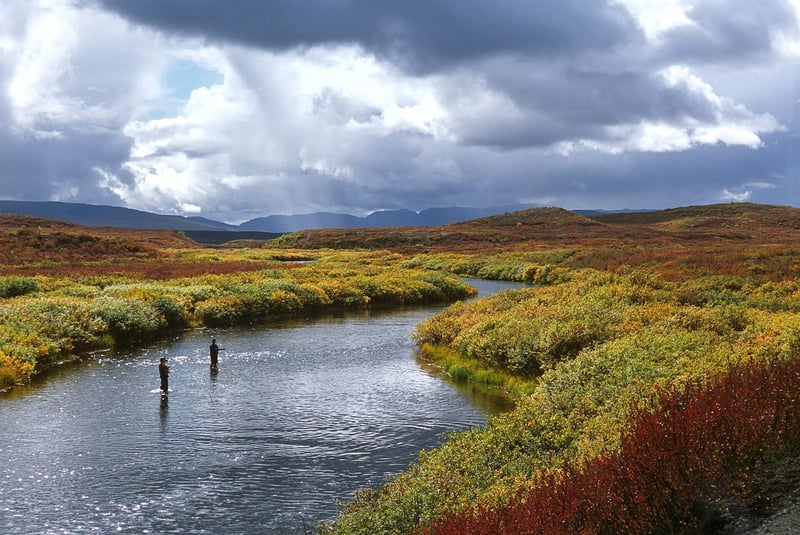
Trout fishing is the most place-driven fishing there is. The river, the light, and the water sound are half of why people go.
Stocked-water fishing is social and easy; wild-water fishing is quiet, technical, and can humble you for an entire day.
Wading is the real hazard. Felt or rubber studded soles, a wading staff, and a habit of not crossing above rapids matter more than any tackle choice.
12
The rod, line, and terminal choices that actually change your hookup rate — with the numbers, not vague categories.
Standard
The single most versatile trout setup for nymphs, dries, and small streamers.
For spinners and bait; 4–6 lb line keeps presentations natural.
Go lighter in clear, low water; 5X handles most situations.
Core flies
Sizes 14–18 cover most western and eastern water.
The most effective non-fly trout lure in moving water.
Safety
The difference between a good day and a swim in cold water.
13
What happens between the hookset and the cooler decides whether you land the fish and whether it is worth eating.
14
Cleaning a rainbow trout the right way takes about four minutes once you know the sequence.
15
Stocked rainbows are excellent eating — mild, delicate, and best cooked whole or as skin-on fillets.
Wild trout in small streams are slow to replace; most anglers release them and keep hatchery fish instead.
Kill cleanly, gut immediately, and get the fish on ice; trout deteriorate faster than almost any other freshwater fish.
Size limits, creel limits, and seasons are set water by water and change every year. These agencies publish the current rules.
Coldwater conservation, stream reports, and local chapters.
Stream-by-stream rules, closures, and hoot-owl restrictions.
Questions
Where every fishing guide on The Wild10 starts.
Body shape, fins, mouth, and markings for 30+ North American gamefish.
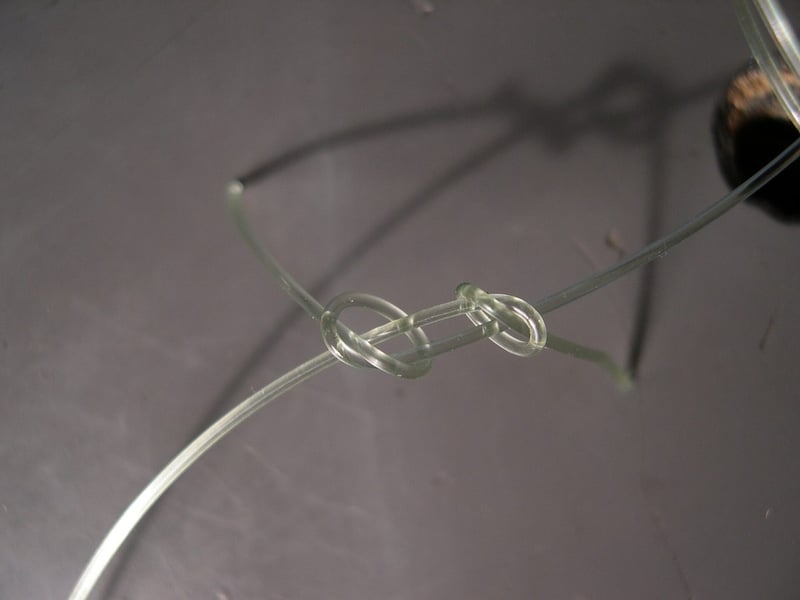
Twelve knots covering every hook, leader, and loop connection you need.
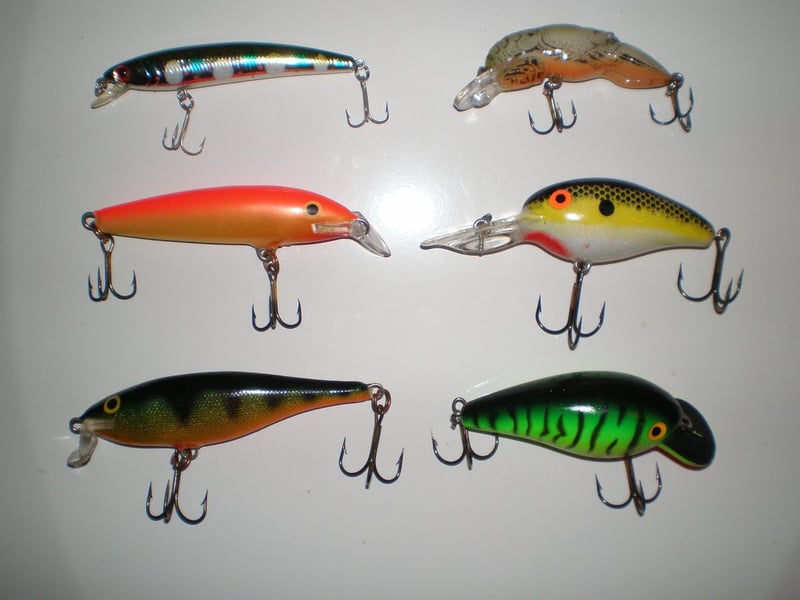
Matching lure category to temperature, clarity, depth, and season.
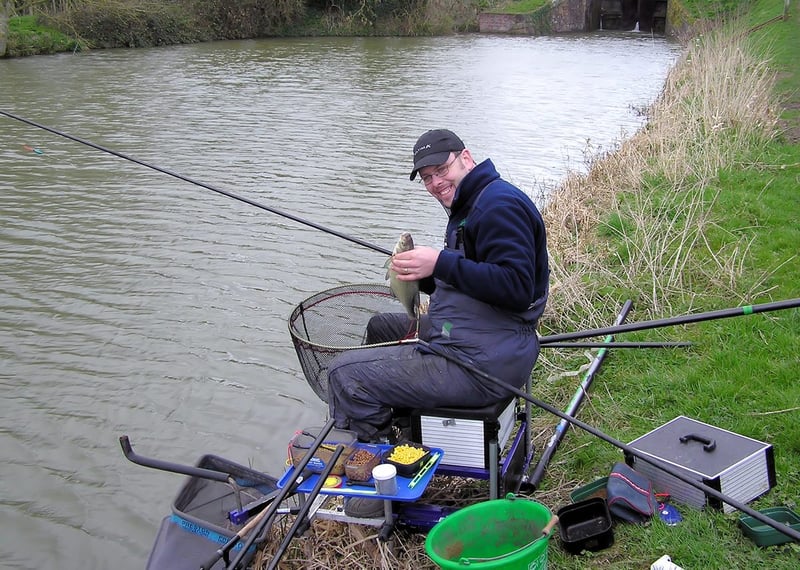
Reading water, timing the bite, and fixing a slow day on the spot.
Keep going
Tell lookalike species apart by fins, mouth, and markings.
Read →Match lure category to depth, clarity, and water temperature.
Read →The connections that keep big fish attached.
Read →Reading water and fixing a slow day on the spot.
Read →Top 10 lists
Ranked picks with real product photos, specs, and editor notes — the buying side of everything covered in these guides.
Bass, walleye, trout, and panfish rods ranked on feel.
See the ranking →Jig, crank, and heavy-cover rods by blank and taper.
See the ranking →Drag smoothness, line management, and long-haul gears.
See the ranking →Brake systems, backlash control, and drag under load.
See the ranking →Also on The Wild10
Same field-tested approach, applied to game species, rifles, shotguns, and bows — from scouting through meat care.
Open the hunting hub →