


From the north · Wildlife
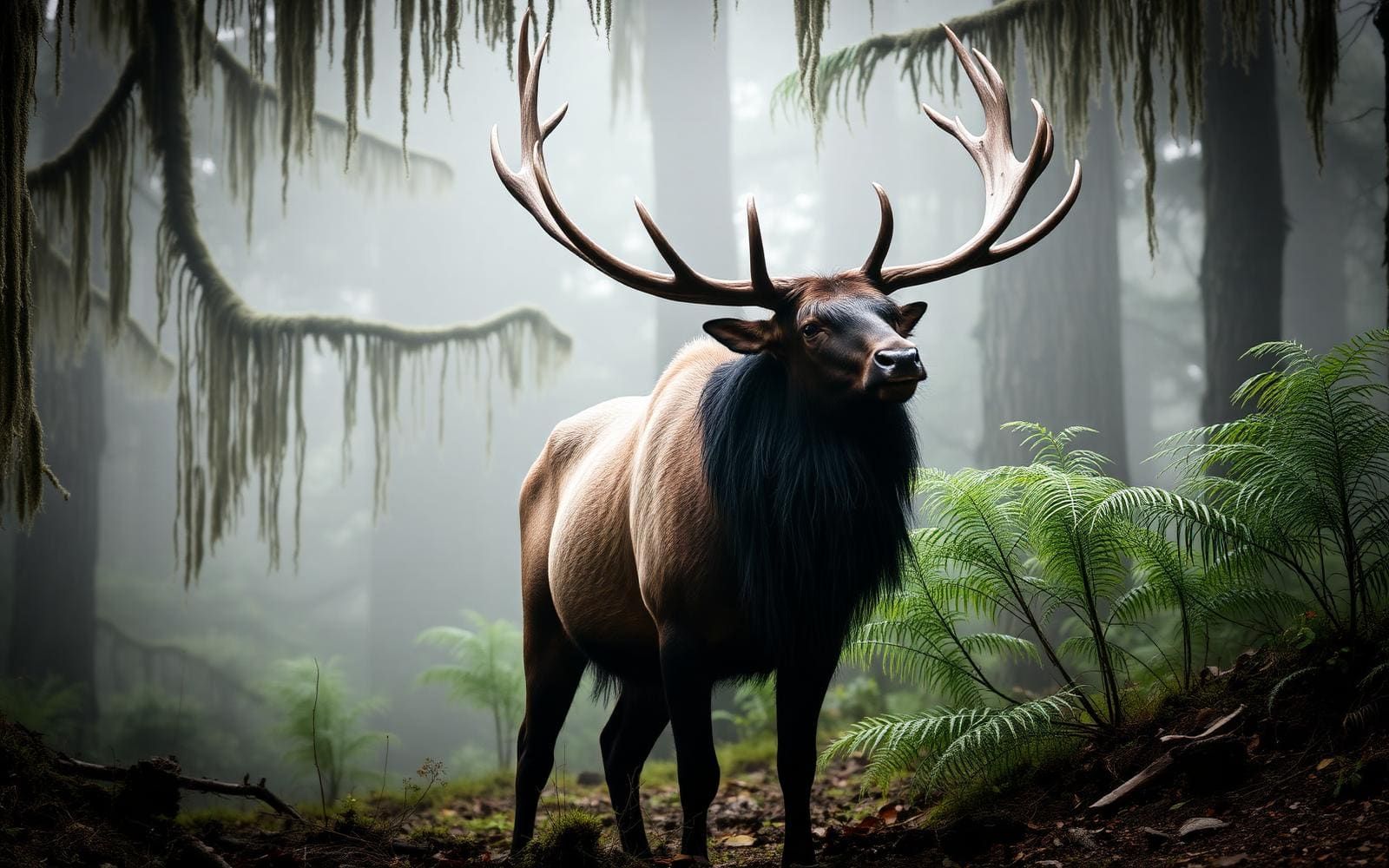
Roosevelt elk
The largest elk subspecies in North America — a rainforest specialist bigger than a Rocky Mountain bull and unique to Vancouver Island's old-growth.
Cervus canadensis roosevelti
- Weight
- 700–1,300 lb (bulls); 500–800 lb (cows)
- Shoulder height
- 4.5–5.5 ft
- Antlers
- Crown/palmated tips, up to 4 ft spread
- Lifespan
- 12–15 yr wild
- Habitat
- Coastal temperate rainforest, cutover, meadow
- Group size
- Cow-calf harems of 10–25; bachelor bull groups in summer
- Calves
- 1 per yr, born late May–June
- Range
- Vancouver Island, coastal BC, Olympic Peninsula, coastal OR/CA
Regulations by region
Roosevelt elk rules where you're headed
Seasons, tags, limits, and legal methods for roosevelt elk are set jurisdiction by jurisdiction. Pick your state or province and we'll point you at the agency that writes the rules.
Jump to another species
Why Vancouver Island bulls are bigger
The temperate rainforest supports a year-round green browse layer and mild winters — Roosevelt elk never face the calorie deficit that limits Rocky Mountain elk. Bulls put weight and antler mass into a longer growing window and grow larger overall, with heavier, more palmated antler crowns. A mature Vancouver Island bull is one of the largest wild deer in the world by body mass.
Country to expect them
Old-growth Sitka spruce and western hemlock with a fern understory, road-edge cuts in second-growth, estuary sedge meadows at dawn, and clearcut regeneration in the 8–20-year window. In summer, cow-calf herds work the coastal meadows; bulls stay in bachelor groups in higher, shadier drainages. In September–October rut they descend and consolidate into harems.
Rut behavior
Roosevelt elk bulls bugle from mid-September to late October. The Vancouver Island bugle tends to be lower and less musical than the Rocky Mountain bugle — a groaning roar rather than a high whistle. A bugling bull is defending a harem of 10–25 cows and will not tolerate rival bulls or humans between him and them. Never step into a meadow between a bugling bull and his cows.
Sign and tracking
Cloven tracks are large (4–5 in) and squared-off; runs and beds are packed into fern and salal patches. Rubs on 4–8 in diameter alder saplings in August–September mark bulls polishing antlers; wallows are round, muddy, urine-stinking pits at the base of old-growth trees. A fresh wallow with hoofprints all around the rim means a bull is inside 100 yards.
Encounter safety
Rutting bulls have killed hunters and hikers on Vancouver Island. Give any bull 100+ yards; give a bugling bull with a harem 200+ yards. A cow will defend a calf with a front-hoof strike — do not approach any small elk you find bedded in ferns; the mother is nearby.
Male vs. female
How to tell a male from a female
Male
Bulls carry heavy antlers June–March with distinctive crown palmation at the tips (a Roosevelt trait), a dark shaggy neck mane, and in rut a swollen neck and urine-blackened belly hair. 40–50% heavier than cows.
Female
Cows are antlerless, tawny with a pale rump patch, and live in matriarchal harems year-round. A single cow with a red-brown, white-spotted calf in June is common; a lone bedded calf means its mother is within 100 m.
At a distance
Antlered animals in July–March are bulls. A group of 10+ antlerless elk with small calves at heel is a cow-calf herd, usually led by an older cow — the bull may be nearby only during rut.
Field notes
- A bull bugling from a meadow in October has a harem out of sight — do not cross the opening.
- Fresh rub on an 8-inch alder with the bark peeled to breast height is a mature bull marking territory.
- A cow-calf herd feeding a road edge at dusk in June often has more calves bedded 50 yards in — never approach.
Where you'll find it
Filming locations with roosevelt elk

On screen