


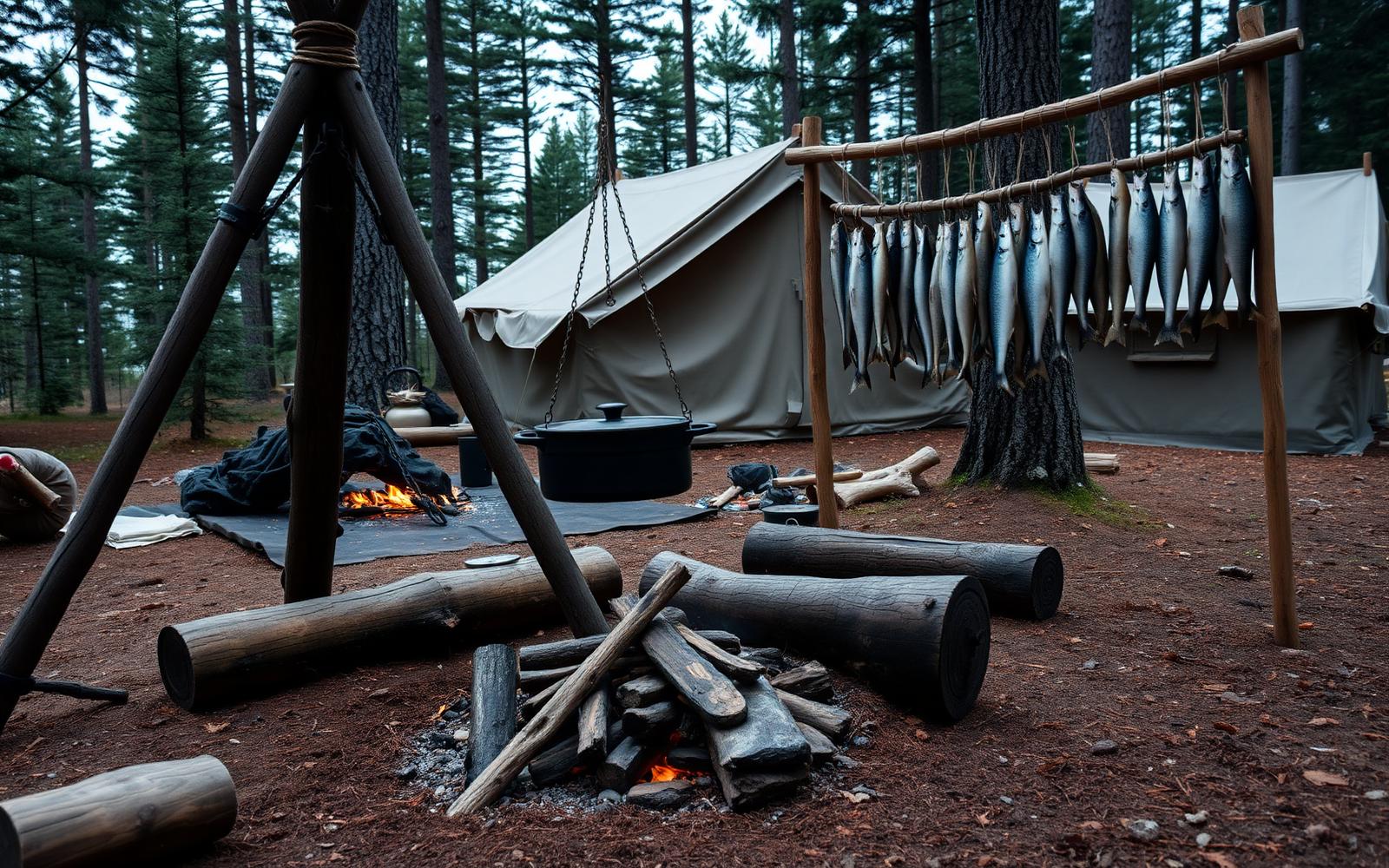
A shelter is successful when it controls the hazards that matter: precipitation, wind, ground heat loss, falling material, insects, and poor drainage. The most impressive structure is not automatically the best. In many real situations, a small tarp pitched in ten minutes is wiser than a natural shelter that consumes hours, calories, and half the nearby forest floor.
Choose the site before choosing the design
Avoid dead limbs, leaning trees, unstable rock, flood channels, tide zones, avalanche paths, exposed ridges, and depressions that collect cold air or water. Look for durable ground, natural wind protection, drainage, and a safe distance from water and wildlife travel corridors. Site selection can outperform an elaborate shelter placed badly. Verify local camping rules and avoid modifying vegetation unless the activity is explicitly permitted.
Use a tarp when speed and low impact matter
A tarp is usually the most efficient bushcraft shelter. An A-frame offers balanced weather protection; a lean-to provides ventilation and a view but needs careful wind orientation; a low storm pitch reduces exposed surface area. Keep fabric tensioned, protect tie-out points, and place the lowest edge toward prevailing weather. Add a groundsheet and insulation because overhead cover does little to stop conductive heat loss into cold soil.
Build a lean-to only where materials and rules allow
A natural lean-to can teach useful construction and roofing principles, but it requires substantial material. A ridge support must be stable, structural poles should not be precariously balanced, and roofing must shed water rather than funnel it inside. Use dead and down material where lawful. Do not cut live trees or leave a permanent-looking fort in a high-use area. Dismantle practice structures when required.
Reserve debris huts for specific training
A properly built debris hut can insulate a person without a sleeping bag, but it demands a deep, dry layer and a surprisingly large volume of leaves or similar material. It should be small enough to warm, thick enough to reduce airflow, and built on safe ground. In damp climates, debris can hold moisture, insects, and mold. For routine camping, carried shelter and insulation are usually more reliable and less damaging.
Shelter type comparison
| Shelter | Best use | Advantages | Tradeoffs |
|---|---|---|---|
| Tarp A-frame | Rain and mixed weather | Fast, low impact, adjustable | Needs cordage, anchors, and ground insulation |
| Tarp lean-to | Mild weather and fire-side camp where legal | Ventilated and spacious | More exposed to shifting wind and rain |
| Natural lean-to | Supervised skills practice | Teaches structure and roofing | High material use and slower construction |
| Debris hut | Emergency-insulation practice | Can retain body heat | Labor intensive, site dependent, and often damp |
Common mistakes to avoid
- Ignoring overhead hazards: A dry roof is irrelevant beneath a falling limb.
- Building too large: Extra volume takes more time to construct and more heat to warm.
- Confusing shelter with insulation: A roof blocks rain; a sleeping pad and dry layers protect against ground and air heat loss.
Field checklist
- Inspect overhead, uphill, and drainage hazards
- Orient the opening away from prevailing weather
- Secure every anchor and protect fabric from abrasion
- Insulate underneath the sleeper
- Leave the site as required by land rules
Frequently asked questions
What is the fastest bushcraft shelter?
A familiar tarp configuration is usually fastest. Practice knots and pitches before relying on it in bad weather.
Can I sleep directly on leaves?
Dry leaves can add insulation where gathering is permitted, but a sleeping pad is cleaner, more reliable, and less disruptive.
How thick should a debris hut be?
Thickness depends on material and conditions; effective huts require far more debris than beginners expect. Treat the skill as controlled practice, not an excuse to strip a site.
Final word
Shelter is an exercise in hazard reduction, not architecture. Pick a safe site, use the least disruptive design that solves the problem, and save the wilderness condominium for television.