Skip to content
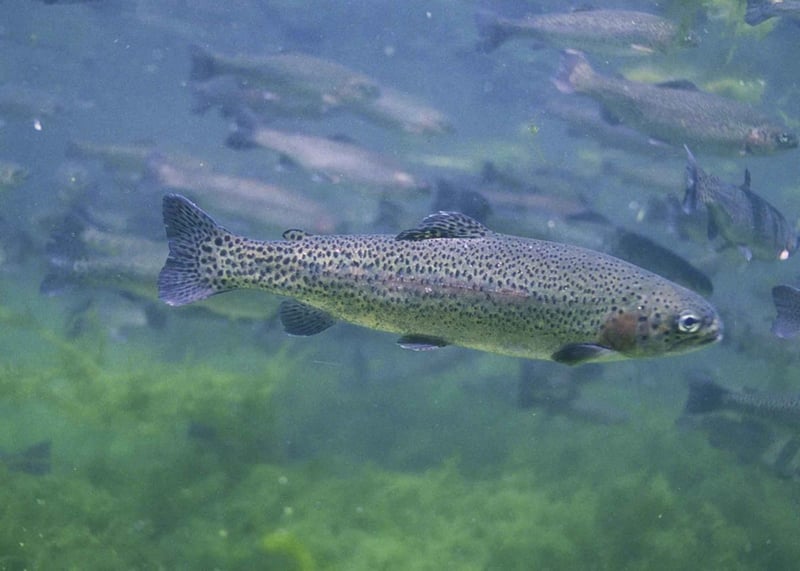
Rainbow trout underwater showing black spotting and pink lateral band

Fishing · Reference

Fish identification, resolved in five seconds

Body shape, mouth position, fins, markings, tail. Run those five cues in order and you will name almost any fish in North America before you unhook it.

Identifying a fish correctly is not trivia. It decides whether you can legally keep it, how you should handle it, how it will taste, and — most usefully — what it eats and where it lives, which tells you how to catch the next one.

This guide is organized the way you will use it streamside: the universal ID sequence first, then the species you are most likely to be holding, then the look-alike pairs that trip up experienced anglers and game wardens alike.

Species covered
18 profiled
ID cues
5-step sequence
Look-alike pairs
10 resolved
Photos
Real, field-verified

01

The five-second ID sequence

Every fish ID comes down to the same ordered checklist, run top to bottom. Body shape first: torpedo, compressed and deep, or elongated and snake-like. Then mouth position: upturned means it feeds up, terminal means it feeds level, and downturned means it feeds on the bottom.

Third, the dorsal fin — is it one continuous fin, two separate fins, a spiny front and soft rear, or a small fleshy adipose fin behind it? An adipose fin instantly narrows the field to trout, salmon, char, and catfish.

Fourth, markings: spots on light or dark ground, vertical bars, horizontal stripes, or none. Finally, the tail: forked, square, or rounded. Run those five and you will land on the right family every time, even before the species.

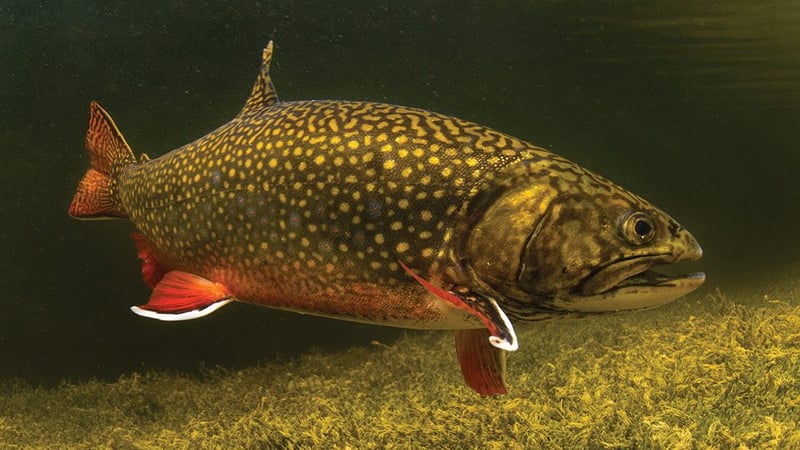
Brook trout in clear water showing worm-track vermiculation and white-edged fins
Jay Fleming (US Nat'l Park Svc) / Public domain · Wikimedia Commons

02

Freshwater gamefish

The species you are most likely to encounter across North American lakes, rivers, and reservoirs.

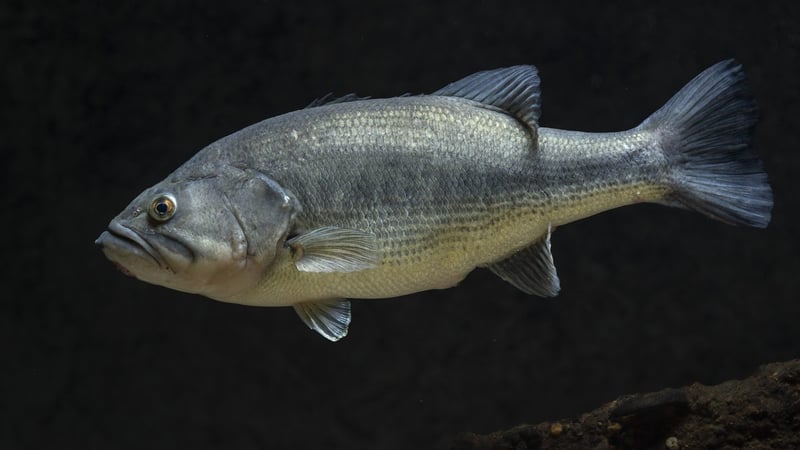
Largemouth bass held broadside showing the jaw hinge behind the eyeWarm lakes & ponds

Largemouth Bass

Deep-bodied, olive-green with a broken horizontal stripe down the side. The jaw hinge extends behind the eye, and the dorsal fin is nearly split into two lobes. Ambush predator that lives tight to cover — wood, weed edges, docks, and rock.

  • Prime bite 65–80°F
  • Spawns on shallow flats in spring
  • Holds under any shade line it can find

USFWS Mountain Prairie / Public domain · Wikimedia Commons
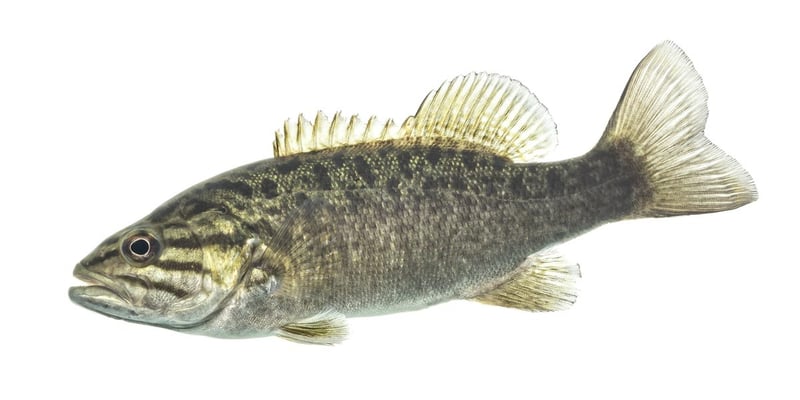
Bronze smallmouth bass with vertical barringRock & current

Smallmouth Bass

Bronze to brown with vertical bars and red-tinged eyes. Jaw stops under the eye. Prefers cooler, clearer water with rock, gravel, and current — river seams and main-lake points rather than the back of a weedy bay.

  • Prime bite 58–72°F
  • Crayfish is the primary forage
  • Pound for pound the hardest fighter in fresh water

USFWS Mountain Prairie / Public domain · Wikimedia Commons
Rainbow trout underwater showing black spotting and pink lateral bandCold streams & lakes

Rainbow Trout

Silver body with heavy black spotting over the back, dorsal, and tail, plus a pink to red lateral band that intensifies on spawning fish. Adipose fin present. Feeds on insects, small baitfish, and eggs.

  • Prime bite 50–60°F
  • Sea-run form is the steelhead
  • Spring spawner in moving water

Engbretson Eric, U.S. Fish and Wildlife Service / Public domain · Wikimedia Commons
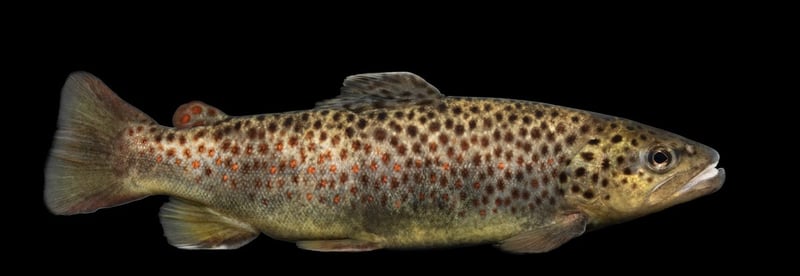
Brown trout with black and red haloed spotsWary & nocturnal

Brown Trout

Buttery brown to gold with both black and rust-red spots, most surrounded by pale halos. The tail carries few or no spots. The most cover-oriented and light-shy of the trout — big browns feed hardest at night and in high, off-color water.

  • Prime bite 54–65°F
  • Fall spawner
  • Turns piscivorous above about 16 inches

USFWS Mountain Prairie / Public domain · Wikimedia Commons
Brook trout in clear water showing worm-track vermiculation and white-edged finsHeadwater char

Brook Trout

Technically a char. Dark olive with pale worm-track vermiculation on the back, red spots ringed in blue, and unmistakable white leading edges on the lower fins. Requires cold, clean, well-oxygenated water — its presence is a water-quality indicator.

  • Prime bite 48–60°F
  • Rarely tolerates water above 68°F
  • Fall spawner over gravel seeps

Jay Fleming (US Nat'l Park Svc) / Public domain · Wikimedia Commons
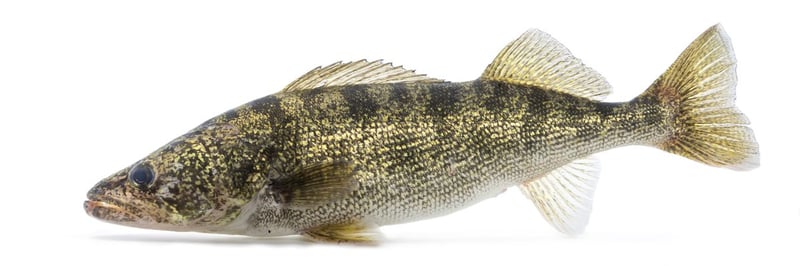
Walleye showing two dorsal fins and the reflective glassy eyeLow-light feeder

Walleye

Olive-gold, two distinct dorsal fins, large glassy eye with a reflective tapetum, and a white tip on the lower lobe of the tail. That eye lets them hunt in dark, wind-stirred, or stained water when their prey cannot see them coming.

  • Prime bite 55–70°F
  • Feeds hardest at dawn, dusk, and on windy days
  • Sauger look-alike has spotted dorsal, no white tail tip

USFWS Mountain Prairie / Public domain · Wikimedia Commons
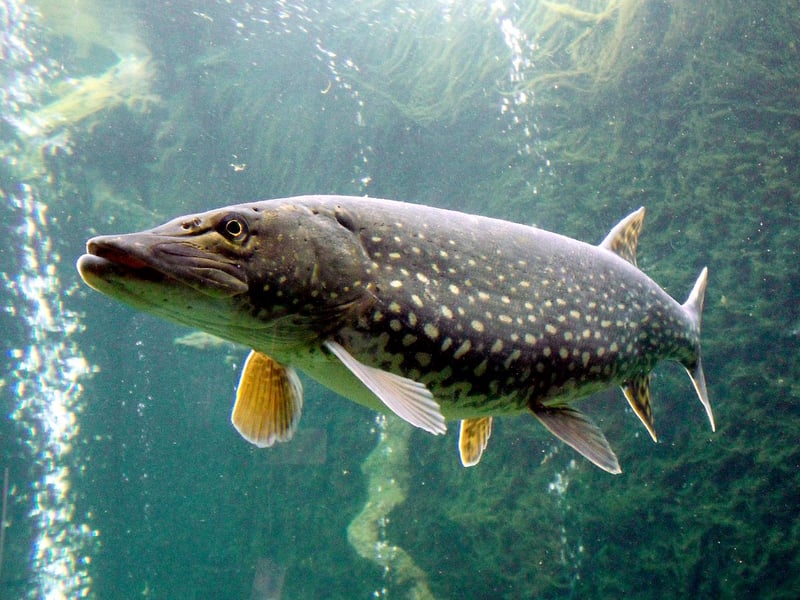
Northern pike showing duck-billed jaw and light bean-shaped spotsWeed-edge ambush

Northern Pike

Long, cylindrical, duck-billed jaw full of teeth. Dark green body with light bean-shaped spots in rows. Cheeks and gill covers are fully scaled — the fastest way to separate pike from muskie in hand.

  • Prime bite 55–65°F
  • Sits motionless on weed lines
  • Use a wire or heavy fluoro bite leader

Jik jik / CC BY-SA 3.0 · Wikimedia Commons

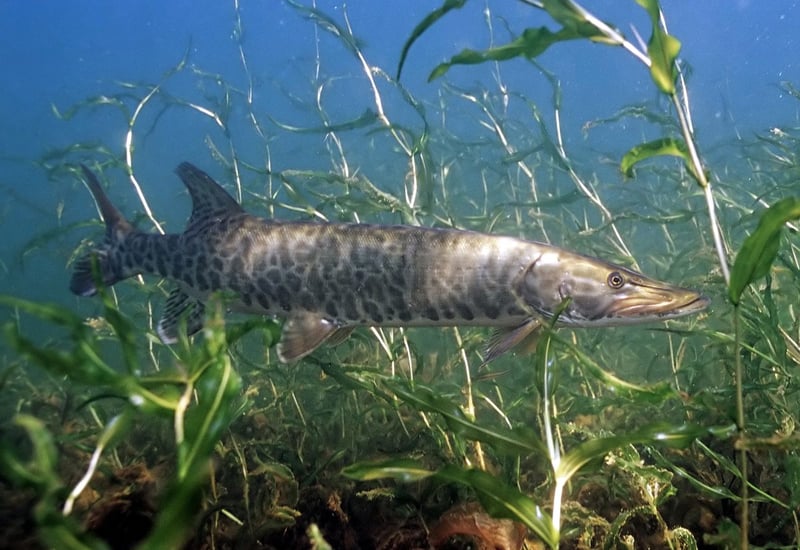
Muskellunge with dark barring over a light bodyFish of ten thousand casts

Muskellunge

Bigger, paler cousin of the pike with dark bars or spots over a light background and only the upper half of the cheek scaled. Six or more pores under each side of the jaw. Follows lures to the boat constantly — always finish with a figure eight.

  • Prime bite 60–72°F
  • Peak season is fall
  • Oversized net and long pliers are mandatory

Engbretson, Eric / U.S. Fish and Wildlife Service / Public domain · Wikimedia Commons
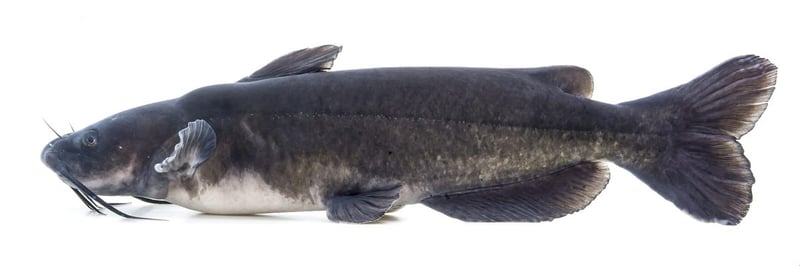
Channel catfish showing barbels and deeply forked tailBottom scavenger

Channel Catfish

Slate to blue-grey with scattered dark spots on juveniles, deeply forked tail, and a rounded anal fin with 24–29 rays. Barbels around the mouth are chemoreceptors — this is a fish that hunts by smell in zero visibility.

  • Feeds all summer, best at night
  • Flathead has a squared tail and flat head
  • Blue cat has a straight-edged anal fin with 30+ rays

USFWS Mountain Prairie / Public domain · Wikimedia Commons
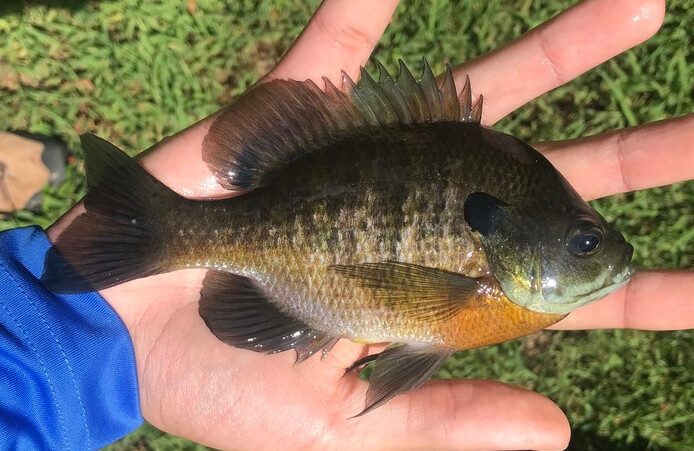
Bluegill panfish with a solid black gill flapKid-proof action

Bluegill & Panfish

Deep, coin-shaped body, tiny mouth, and a solid black flap on the gill cover. Crappie are taller and silvery with black speckling; pumpkinseed carry orange spotting and a red-orange crescent on the ear flap.

  • Spawns in visible shallow beds
  • Best first fish for a kid
  • Small jigs, worms, and micro spinners

Paleo1954 / CC BY-SA 4.0 · Wikimedia Commons

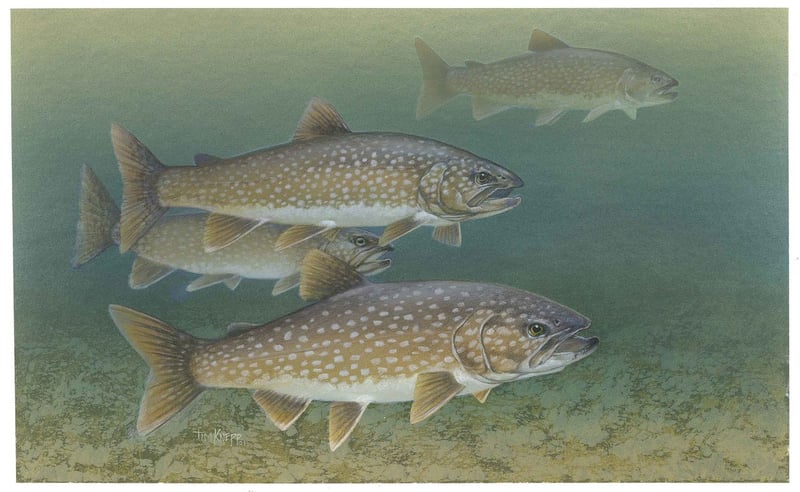
Lake trout with pale cream spotting on a dark bodyDeep & cold

Lake Trout

Char with pale cream spotting on a dark grey-green body and a deeply forked tail. Lives in the deep, cold basin of big northern lakes, moving shallow only just after ice-out and immediately before fall spawn.

  • Prime bite 45–52°F
  • Trolled deep or jigged vertically
  • Slow-growing — release the big ones

Knepp Timothy, U.S. Fish and Wildlife Service / Public domain · Wikimedia Commons
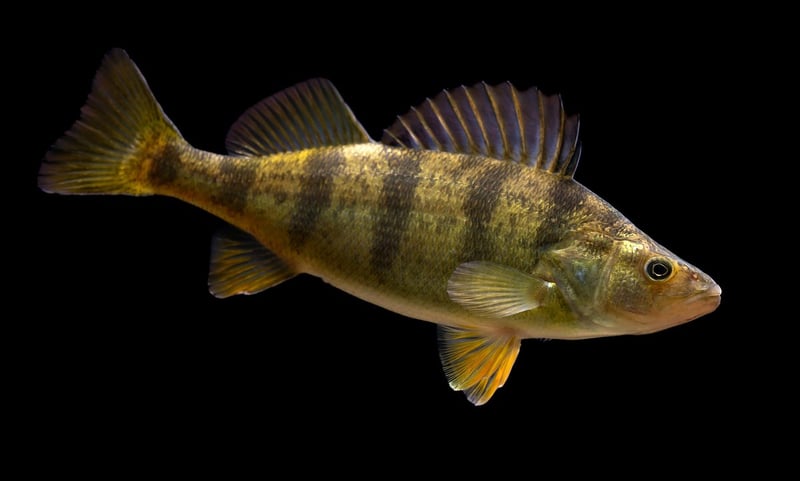
Yellow perch with bold vertical bars and orange finsSchooling

Yellow Perch

Golden-yellow with six to eight bold vertical bars and orange lower fins. Two separate dorsal fins. Travels in tight schools, so the second one comes fast after the first — mark the spot and stay on it.

  • Active through the entire ice season
  • Excellent table fare
  • Tiny hooks and minnow pieces

USFWS Mountain Prairie / Public domain · Wikimedia Commons
03

Saltwater & inshore species

Common coastal catches from the surf, flats, jetties, and nearshore reefs.

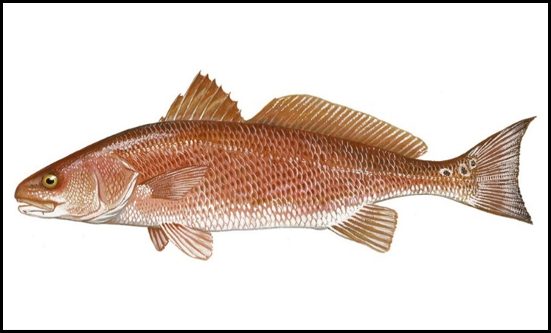
Red drum showing the black eyespot at the base of the tailFlats & marsh

Red Drum (Redfish)

Copper-bronze with at least one black eyespot at the base of the tail — a decoy that redirects predator strikes. Downturned mouth for rooting crabs and shrimp out of the mud; tailing fish in shallow grass are the classic sight-fishing target.

  • Strict slot limits in most states
  • Black drum has chin barbels and no eyespot

Noaa / Public domain · Wikimedia Commons
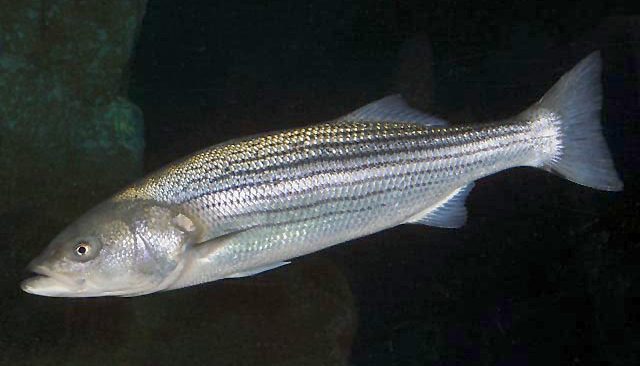
Striped bass with clean unbroken horizontal stripesSurf & estuary

Striped Bass

Silver with seven or eight clean, unbroken horizontal stripes. Migratory and structure-driven — rips, bars, and bridge lights at night. Big fish move on moving tide, almost never on slack water.

  • Fishes best on a running tide
  • Night bite in summer heat

D Ross Robertson / Public domain · Wikimedia Commons
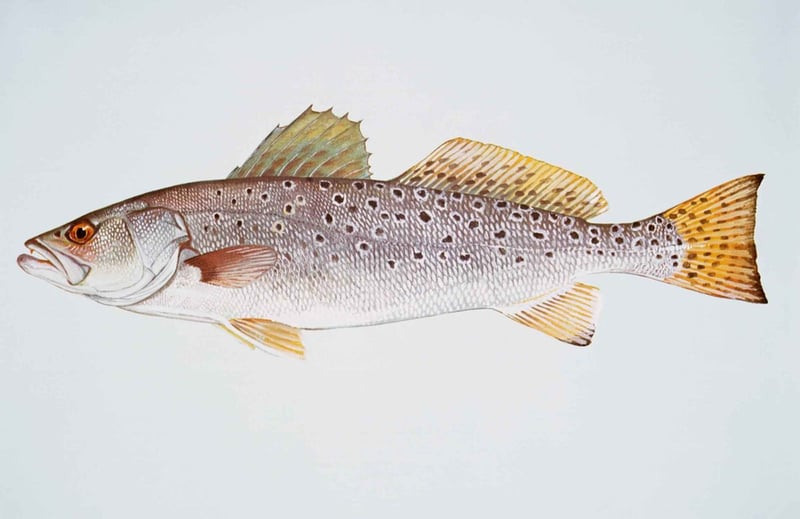
Spotted seatrout with black spotting over the back and tailGrass flats

Spotted Seatrout

Silver-grey with distinct black spots over the back, dorsal, and tail, plus a pair of prominent canine fangs in the upper jaw. Sits over sand potholes inside seagrass beds and hits soft plastics under a popping cork.

  • Fragile — wet hands before handling
  • Best on the first two hours of incoming tide

Raver Duane, U.S. Fish and Wildlife Service / Public domain · Wikimedia Commons
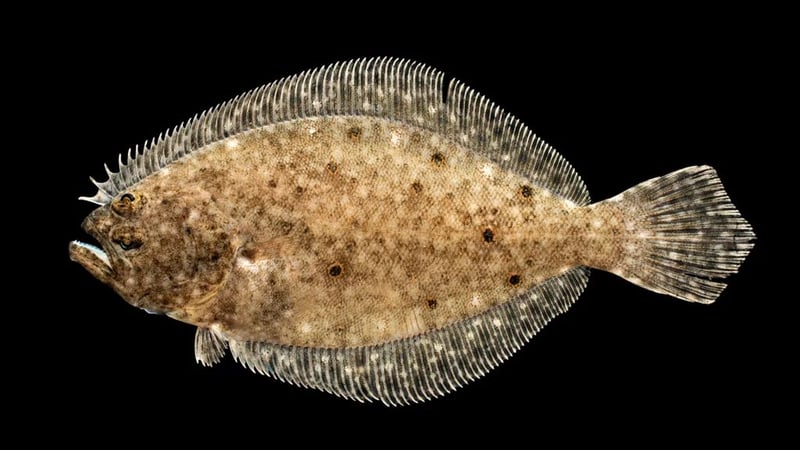
Summer flounder lying flat with both eyes on one sideAmbush bottom

Flounder

Flattened, both eyes on one side, and able to change color to match the bottom in seconds. Summer flounder lie left-eyed, winter flounder right-eyed. Buries in sand near channel edges and inlet mouths to ambush passing bait.

  • Drag baits slowly along the bottom
  • Let it eat before setting the hook

Arturodomiao / CC BY-SA 4.0 · Wikimedia Commons

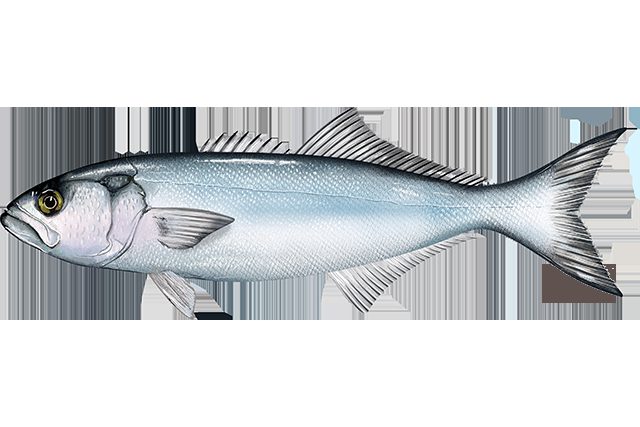
Bluefish showing a forked tail and toothy jawBlitz feeder

Bluefish

Blue-green with a forked tail and a mouth full of razor teeth. Feeds in violent packs that push bait to the surface — birds working over churning water almost always mean bluefish underneath.

  • Use wire leader
  • Bleed and ice immediately for the best flavor

Unknown photographer / Public domain · Wikimedia Commons
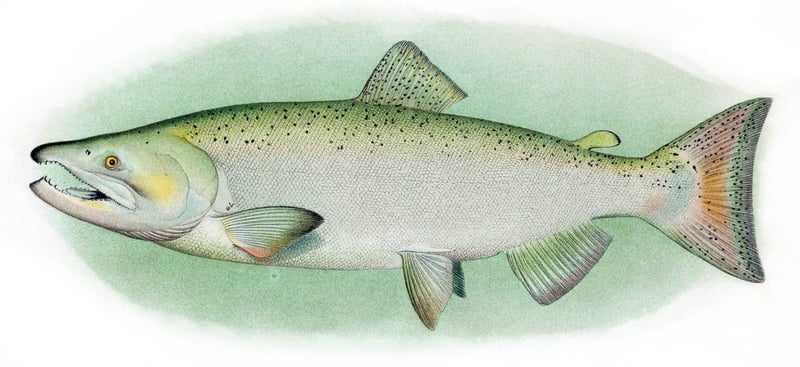
Adult male chinook salmon in spawning colorAnadromous

Pacific Salmon

Five species, separated by mouth and tail cues: chinook have black gums and heavy tail spotting, coho have white gums with spots only on the upper tail lobe, and pinks show huge oval spots plus a humped back on spawning males.

  • Runs are timed by river and by season
  • Check the daily species-specific regulations

A. Hoen and Co. / Public domain · Wikimedia Commons
04

Look-alike pairs and the single cue that splits them

When two species share a body plan, one feature resolves it. Memorize the right column.

Confusing pairThe deciding cue
Largemouth vs Smallmouth BassJaw hinge past the eye = largemouth
Northern Pike vs MuskellungeFully scaled cheek = pike; half-scaled = muskie
Walleye vs SaugerWhite tip on lower tail lobe = walleye
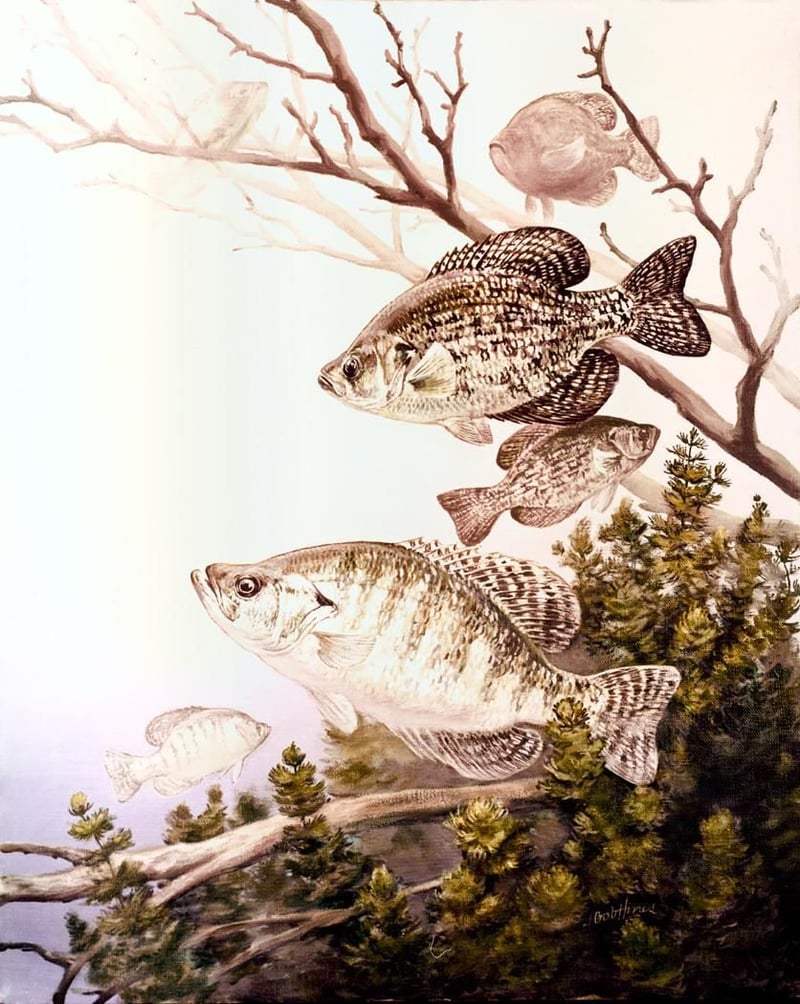
Black Crappie vs White CrappieVertical bars and 6 dorsal spines = white crappie
Channel vs Blue CatfishRounded anal fin under 30 rays = channel
Brook Trout vs Brown TroutWhite-edged lower fins = brook trout
Red Drum vs Black DrumChin barbels = black drum
Coho vs Chinook SalmonBlack gum line = chinook
Bonefish vs LadyfishDownturned snout and blunt nose = bonefish
Atlantic vs Spanish MackerelDark blotch on the front dorsal = Spanish
Black crappie and white crappie side by side for comparison
Robert W. Hines, U.S. Fish and Wildlife Service / Public domain · Wikimedia Commons
05

Photograph and release a fish you cannot identify

If you are not certain of the species, treat it as protected until proven otherwise.

  1. 1Keep the fish in the water while you get the camera ready — every second out of water measurably reduces survival.
  2. 2Wet your hands or gloves. Dry hands strip the protective slime coat that keeps bacteria and fungus out.
  3. 3Support the fish horizontally with one hand under the belly. Never hang a big fish vertically by the jaw; it dislocates the jaw and damages internal organs.
  4. 4Shoot three frames: full broadside, head close-up showing the jaw and eye, and dorsal plus tail fins spread.
  5. 5Return the fish head-first into the current and hold it upright until it kicks free on its own.
  6. 6Compare your photos against this guide and your state agency's regulation booklet before you keep anything on a later trip.
Fly angler landing a fish in shallow water
Virginia State Parks staff / CC BY 2.0 · Wikimedia Commons
Questions

Frequently asked

How do I tell a largemouth bass from a smallmouth bass?
Close the fish's mouth: on a largemouth the rear edge of the upper jaw extends past the back of the eye, on a smallmouth it stops under the eye. Largemouth are green with a solid horizontal stripe; smallmouth are bronze with vertical bars.
What is the easiest way to identify a trout species?
Look at the spots. Brook trout have light spots on a dark body with red dots ringed in blue and white-edged fins. Rainbows have black spots on a silver body with a pink lateral stripe. Browns have both black and red spots with pale halos.
How can I tell a pike from a muskellunge?
Count the sensory pores under the jaw — pike have five or fewer per side, muskie have six or more. Pike also show light bean-shaped markings on a dark body; muskie show dark bars or spots on a light body, and their cheeks are only scaled on the top half.
Why does correct fish identification matter legally?
Slot limits, daily bag limits, and closed seasons are written per species. Misidentifying a lake trout as a landlocked salmon, or a protected redfish as a black drum, is still a violation. Photograph the fish, check the ID cues, and release anything you cannot confirm.
What features should I photograph for a later ID?
Take a broadside shot of the whole fish flat against a neutral background, a close-up of the head showing jaw and eye position, and one of the dorsal and tail fins spread. Those three frames resolve almost every look-alike pair.

Also on The Wild10

Hunting Guides

Same field-tested approach, applied to game species, rifles, shotguns, and bows — from scouting through meat care.

Open the hunting hub →
Hardwood forest in peak autumn color