


Skip to content
Wild10

Destination guide

Everglades Wilderness Waterway

A roughly 99-mile mangrove and open-bay maze governed by tides, wind, scarce fresh water, bugs, and exact campsite reservations.

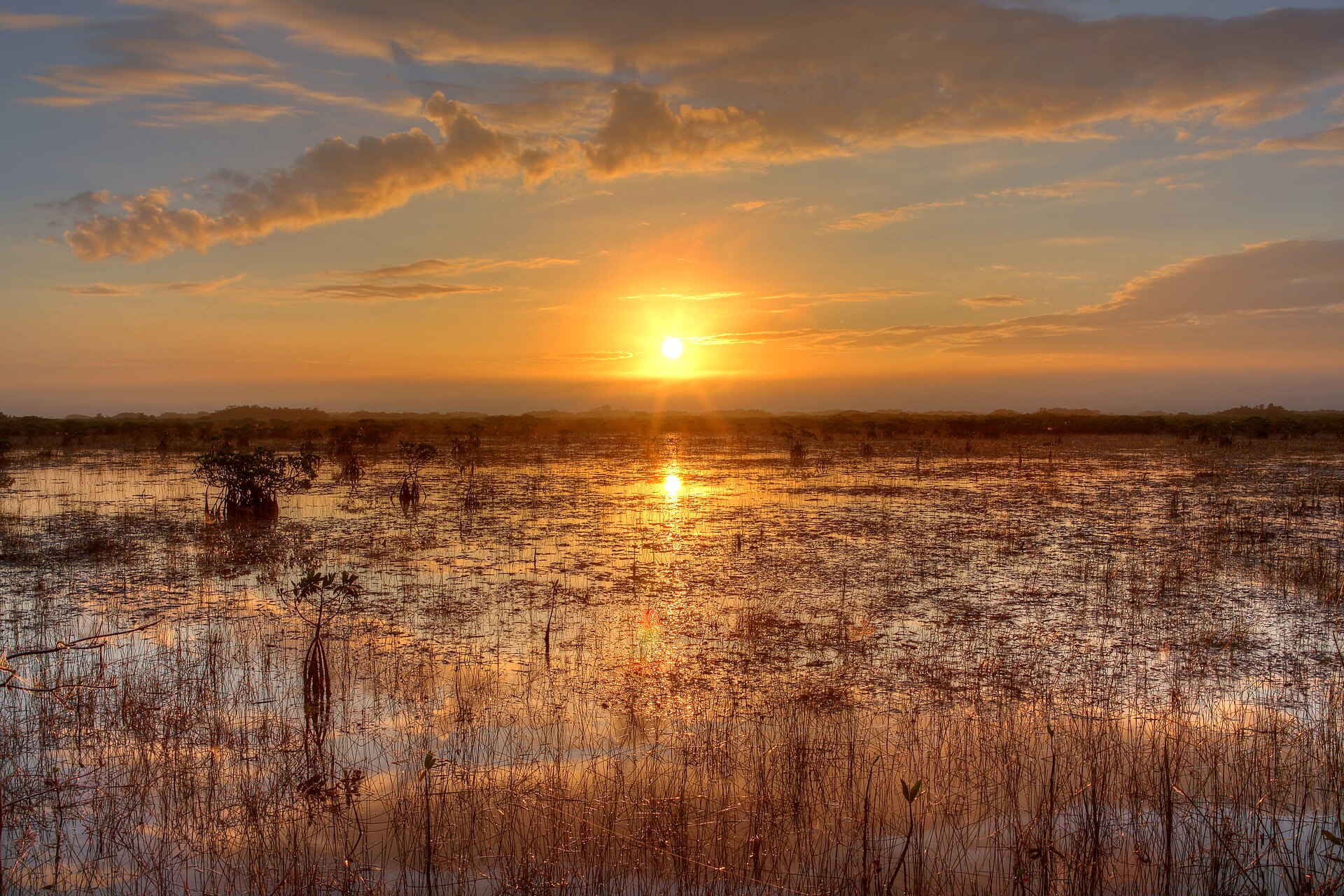
Sunset over the sawgrass River of Grass in Everglades National Park, Florida
Sunset over the sawgrass River of Grass in Everglades National Park, Florida. Photo: G. Gardner, NPS Photo (Public domain) — source file.

Where this trip runs

Loading official route points…
Verified September 2026

The Waterway threads mangrove rivers and bays between Everglades City and Flamingo, with numbered markers and reserved backcountry campsites. The intermediate points below are official Park Service campsites along the corridor — chickees are platforms, ground sites are the rare patches of dry land. Permits are required for every night out and sites book through the park's backcountry system.

Travel tips before you commit

Copied from the managing agency's own material. Where the agency publishes nothing, this says so.

Best months
January, February, March, April, December
Typical time
7–10 days
Distance
About 99 miles
Difficulty
expert
Permit
A wilderness permit is required for all overnight camping in Everglades National Park, with reservations available on a rolling 90-day window through Recreation.gov. Chickee and ground sites are site-specific — your permit names where you sleep each night.

Recreation.gov — Everglades wilderness permits

Permit window
Not published by the agency.
Cost
Not published by the agency.

Hazards the agency names

  • Strong tidal currents in narrow passes and rivers
  • Dehydration and heat exhaustion — there is no fresh water on the trail
  • Getting lost in the mangrove labyrinth
  • Extreme mosquito and no-see-um pressure outside winter
  • Submerged oyster bars and mud flats at low tide
  • Alligators in fresh and brackish water; American crocodiles nearer salt water

Local culture and history

Calusa, Seminole and Miccosukee

The Park Service records that before the Spanish arrived in 1513 the region was largely inhabited by the Calusa, a highly organised society emerging around 1000 B.C. that left shell works, shell tools, carved wood and long-distance canoe trails — some of the oldest paddling routes in North America.

By the eighteenth century the Seminole and Miccosukee, tribes affiliated with the Creek federation, were in the area. Later came the "Gladesmen": settlers the park describes as thoroughly experienced with the land, who hunted, camped and lived off the Everglades before the park was established in 1947.

Source: NPS — Everglades, People

Three coastal communities

At the end of the nineteenth century only three small communities — Chokoloskee, Cape Sable and Flamingo — existed along the coast of what is now the park, reachable only by boat, with supplies shipped from Key West, Fort Myers or Tampa. Flamingo is still where most Wilderness Waterway trips begin or end.

Source: NPS — Everglades, People

Getting there and who to ask

Park headquarters

Everglades National Park, 40001 State Road 9336, Homestead, FL 33034-6733, phone 305-242-7700 — the office that issues wilderness camping permits for the Waterway.

Source: NPS — Everglades contacts

Voices from the record

Quoted word for word from published accounts. We do not publish invented trip reports.

Since the emergence of the River of Grass, Native Americans and later on Anglo-American settlers known as “Gladesmen” traversed the wild landscape and came to rely on its abundant natural resources.

Plan this trip